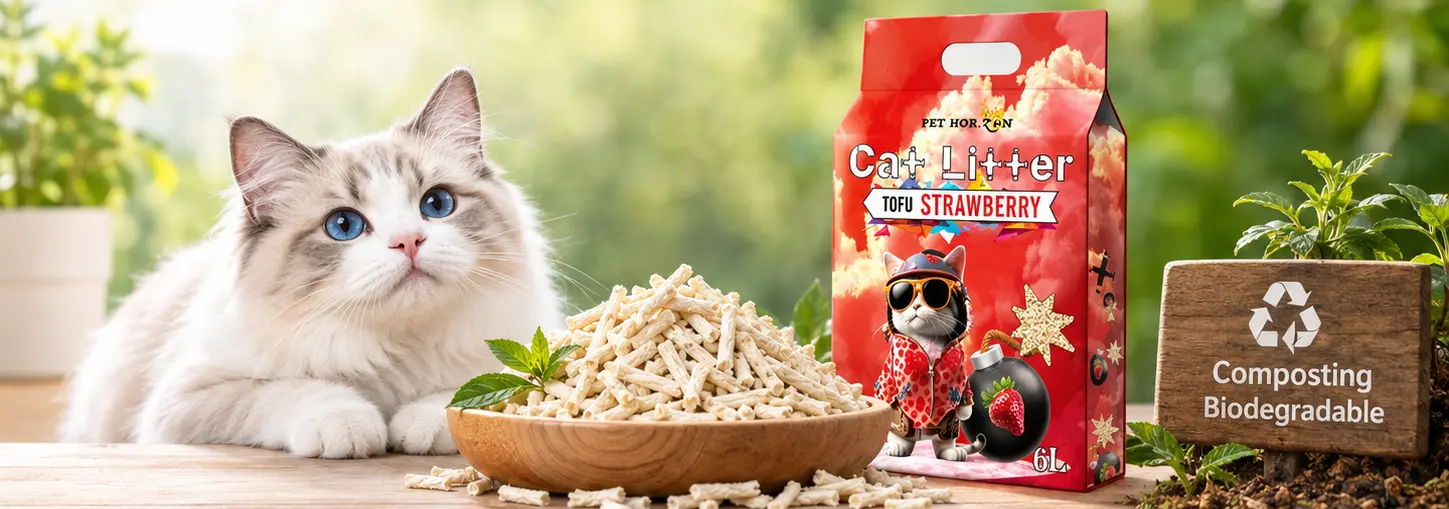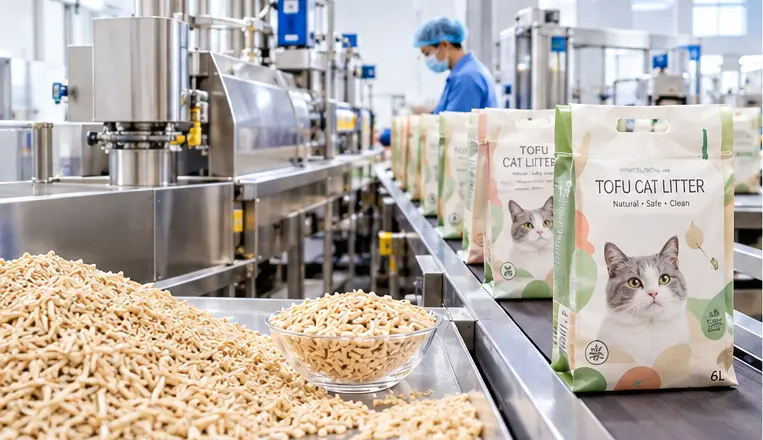





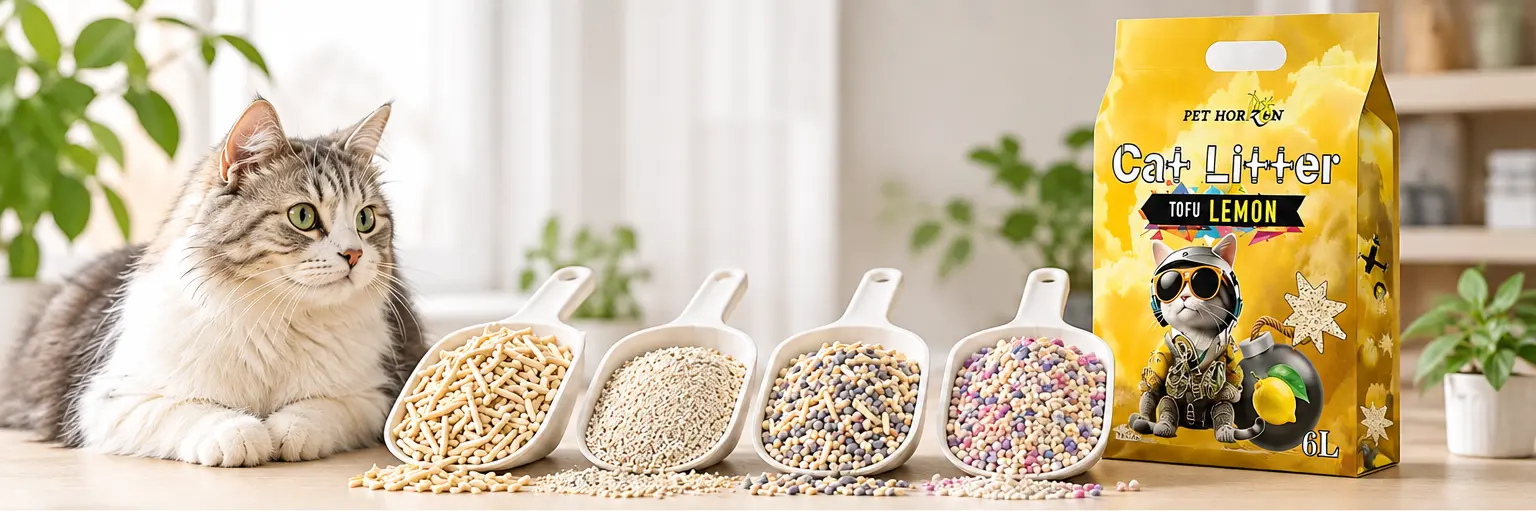
Tofu cat litter in 2026 is defined less by whether it is simply plant-based and more by which new formulations B2B buyers can specify and verify. For importers, distributors, and private-label brands, the focus is shifting toward product engineering: which formulation changes can create a measurable performance or positioning advantage? This guide examines three emerging directions in tofu litter development: pH-responsive health-monitoring features, biological or enzyme-based odor-control systems, and finer or mixed-particle formats designed for specific tracking and automatic-litter-box requirements.
Quick Answer: This guide focuses on three emerging tofu litter specification directions for 2026. First, pH-responsive litter uses an indicator that changes color within a defined urine-pH range, providing a visual cue rather than a medical diagnosis. Second, biological or enzyme-based odor-control systems use specific additives intended to reduce odor through formulation-dependent mechanisms, so buyers should verify the active ingredient and performance test rather than assume one mechanism. Third, finer granules and mixed-particle formats are being developed for specific tracking, clumping, and automatic-litter-box requirements. Each is a specification choice with its own evidence requirement, not a universal upgrade. For the underlying automatic-box compatibility mechanics, see our manufacturer’s compatibility guide.
In this article, “innovation” means a formulation or particle change that a buyer can write into a specification with a defined test method and acceptance limit, rather than a marketing adjective. A product claim without supporting evidence should not be treated as a validated sourcing advantage.
Why Product Engineering Matters in 2026 Tofu Cat Litter
For many tofu litter SKUs, plant-based positioning and low-dust performance are already established selling points rather than sufficient differentiation on their own. What can further separate an SKU in a 2026 RFQ is measurable functional engineering: whether the litter provides a defined visual pH cue, uses a validated odor-control additive system, or delivers particle and clumping characteristics suited to a specific automatic litter box. Clump speed, particle distribution, and dust behavior remain the compatibility foundation; the three directions below are formulation options built on that foundation.
Automatic Litter Box Compatibility Comes First
A tofu litter must first be validated against the target device before any added innovation matters. For the full parameter breakdown, our best cat litter for automatic litter box guide covers clump speed, particle distribution, dust rate, and non-stick behavior in depth. Treat that guide as the hub; this article is the innovation spoke built on top of it. As a product-development starting point, buyers can evaluate shorter strips or fine granules, a supplier-defined clump-time target, and low loose fines, but the acceptable range must be validated against the actual automatic litter box model and its operating cycle.
Innovation 1: pH-Responsive Health-Monitoring Litter
Some suppliers now offer tofu litter formulated with pH-sensitive indicators that change color when urine falls within or outside a defined pH range. The result can provide a visual cue that encourages closer observation or veterinary follow-up, but the color response alone cannot establish a medical condition. For buyers, the important specification is the indicator system, its validated response range, and the conditions under which the color change can be reliably observed.
What buyers should specify
Treat this as an indicator, not a diagnostic: a color shift may warrant closer observation or veterinary follow-up, but it does not confirm a medical condition. Ask the supplier for the exact pH range associated with each color response, the chemistry of the indicator, and the test method used to validate it. Keep any health-related claim clearly framed as a visual cue rather than a medical claim, and confirm the framing complies with the applicable pet-health-claim rules in the markets you sell into. A buyer specification should record the pH response range, color-change criteria, and approved claim language as acceptance criteria.
Innovation 2: Biological and Enzyme-Based Odor Control
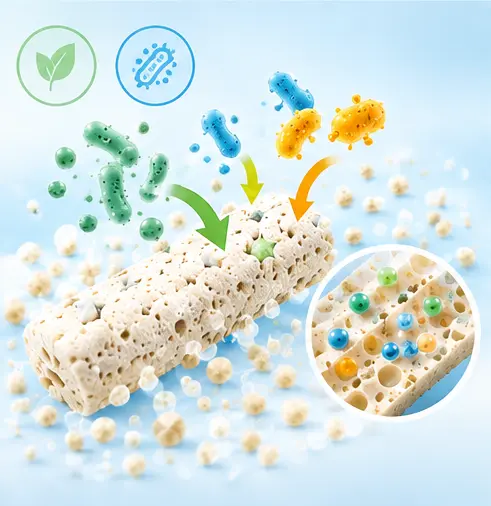
Instead of relying only on fragrance or activated carbon, some tofu formulations use biological or enzyme-based additives as part of a broader cat litter odor control system. The intended mechanism depends on the formulation: probiotic systems may use selected microorganisms, while enzyme-based systems rely on specific enzymatic activity. Because performance is formulation-specific, buyers should verify the active additive, intended mechanism, dosage, storage requirements, and supporting test data rather than treating all biological odor-control systems as equivalent.
What buyers should specify
The odor result is product-specific. It depends on the active additive, dosage, storage conditions, and litter formulation, and should be backed by the supplier’s own batch test data rather than a generic “natural” claim. “Natural” is positioning, not a performance standard. In the EU, environmental claims such as “biodegradable” or “eco” must be assessed against the rules applicable at the sale date; Directive (EU) 2024/825 requires Member States to apply the relevant national measures from 27 September 2026. Write the additive type, the supplier’s batch test method, and the supporting evidence for any environmental claim into the specification.
Innovation 3: Finer Granules, Mixed Formats, and Automatic-Box Compatibility
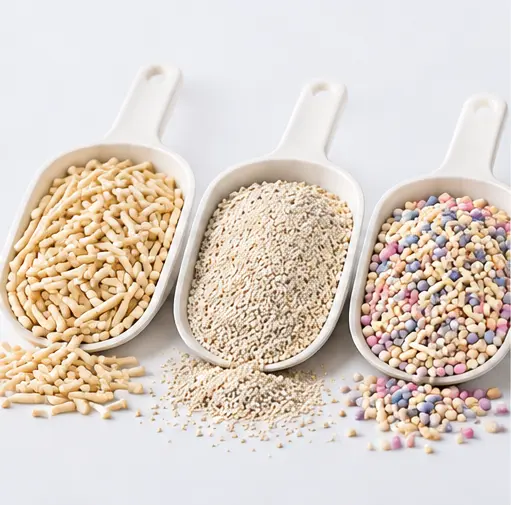
The third direction is particle engineering. Different particle sizes and mixed-particle formats can be developed for specific combinations of tracking, clumping, dust, and automatic-box performance, but finer does not automatically mean less tracking. Very small particles can increase loose fines and carry-out if screening and dedusting are insufficient. Tofu-plus-mineral blends may also change clump strength, density, dust behavior, and disposal characteristics, so each blend should be validated as its own SKU rather than assuming the properties of the base tofu litter remain unchanged.
What buyers should specify
Verify clump strength and dust on the blended format separately, because mixing can change both. Particle size alone does not determine carry-out: screening, dedusting, particle shape, density, and surface characteristics also affect tracking and dust. Define the target particle distribution with a sieve method and acceptance band, set a maximum fines or dust limit, and re-test the finished blended format rather than relying on data from the base tofu litter.
Key takeaway: In 2026, pH-responsive indicators, biological or enzyme-based odor-control systems, and specialized particle formats are emerging tofu litter development directions. None is a universal upgrade: buyers should validate the finished SKU with a defined specification, test method, and acceptance limit.
Buyer Specification Matrix for Innovative Tofu Litter
Use this matrix to turn a trend into a measurable purchase specification. The entries are reference directions to be confirmed by test method and acceptance limit, not fixed industry values.
| Dimension | Reference direction | What the buyer should define |
|---|---|---|
| Particle size | Fine or standard granules selected for the target use case | Target distribution plus sieve method and acceptance band |
| Clump time | Supplier-defined target validated on the intended device or test setup | Clump-time target plus defined test method and acceptance limit |
| Fines or dust | Low loose fines with a defined measurement method | Maximum fines or dust value plus test method and acceptance limit |
| Moisture | Formula-specific QC target | Measurement method plus batch acceptance range |
| Odor control | Activated carbon, biological, enzyme, fragrance, or combination system | Additive type, dosage, storage conditions, and supporting performance data |
| Health cue | Optional pH-responsive color indicator | Indicator chemistry, validated pH response range, color-change criteria, and claim framing |
OEM and Private-Label Considerations
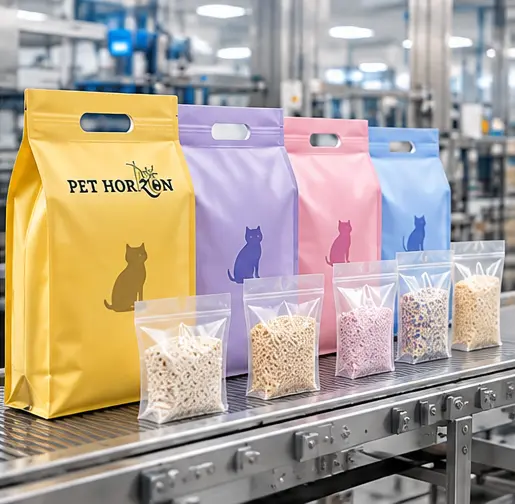
Tofu litter is highly customizable, which makes it suitable for private-label programs: particle size, additive package, color, fragrance, and packaging can be adjusted by SKU, although formulation development, testing, packaging, and minimum-order requirements vary by project. When an RFQ calls for a probiotic or pH-responsive tofu formula, translate the requirement into the matrix above and confirm that the manufacturer can provide a specification sheet, approved sample, and batch QC records before the first production run. Our OEM cat litter programs support custom tofu formulations, and our tofu cat litter range covers configurable tofu formats.
MOQ and lead time vary by formulation, packaging format, and production requirements. If a project requires a custom additive or particle format, confirm the minimum order quantity, sample approval process, production lead time, and packaging requirements during the RFQ stage so sourcing and freight planning are aligned.
Conclusion
Tofu cat litter in 2026 is increasingly an engineering and specification category, not only a plant-based positioning. The emerging directions covered here, pH-responsive indicators, biological or enzyme-based odor-control systems, and particle formats developed for specific tracking and automatic-box requirements, can support differentiated SKUs when their performance and claims are properly validated. For B2B buyers, the practical step is to turn each innovation into a measurable specification with a defined test method, acceptance limit, and claim framework before approving a production run.
Frequently Asked Questions
Three emerging directions: pH-responsive indicators that provide a visual urine-pH cue, biological or enzyme-based odor-control systems, and finer or mixed-particle formats developed for specific tracking, clumping, and automatic-box requirements. Each is a specification option, not a universal standard.
No. It is an indicator, not a diagnostic. A color change may warrant closer observation or veterinary follow-up, but it does not confirm a condition. Keep any health-related claim framed as a cue and confirm the pH range and test method with the supplier.
The mechanism depends on the formulation. Probiotic systems may use selected microorganisms, while enzyme-based systems rely on specific enzymatic activity. Because odor-control performance varies with additive type, dosage, storage, and litter formulation, buyers should request the active ingredient information and supporting batch or performance test data rather than relying on a generic “natural” claim.
Not automatically. Particle size, shape, density, surface characteristics, screening, and dedusting all affect tracking. Finer granules can improve the fit for some automatic litter boxes, but excessive fines may increase carry-out and dust. Define the target particle distribution and maximum fines level, then validate the finished SKU in the intended litter box and use scenario.
Yes, but compatibility must be validated by device rather than assumed from the litter material alone. Buyers should define particle distribution, clump behavior, loose fines, density, and non-stick performance against the target machine. Added features such as pH indicators or odor-control additives should then be evaluated to confirm that they do not change the base litter’s operating performance.
Environmental and sustainability claims should be specific to the formulation and supported by appropriate evidence under the rules applicable in the destination market. In the EU, Directive (EU) 2024/825 requires Member States to apply the relevant national measures from 27 September 2026. The UK has a separate consumer-protection framework, so buyers should review UK requirements independently rather than treating EU and UK rules as identical.
Turn the trend into measurable requirements: particle size with a sieve method, clump time with a defined test method, maximum fines with an acceptance limit, moisture with a specified measurement method, additive type with supporting batch data, and, if used, the pH response range and approved claim language for any health cue. Request specification sheets, approved samples, and batch QC records from the first run.
MOQ and lead time vary by formulation, packaging format, and production requirements. For a custom additive or particle format, confirm the minimum order quantity, sample approval process, production lead time, and packaging requirements during the RFQ stage so sourcing and freight planning are aligned.