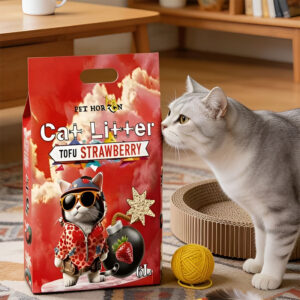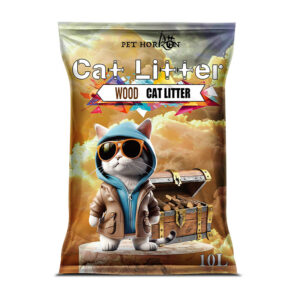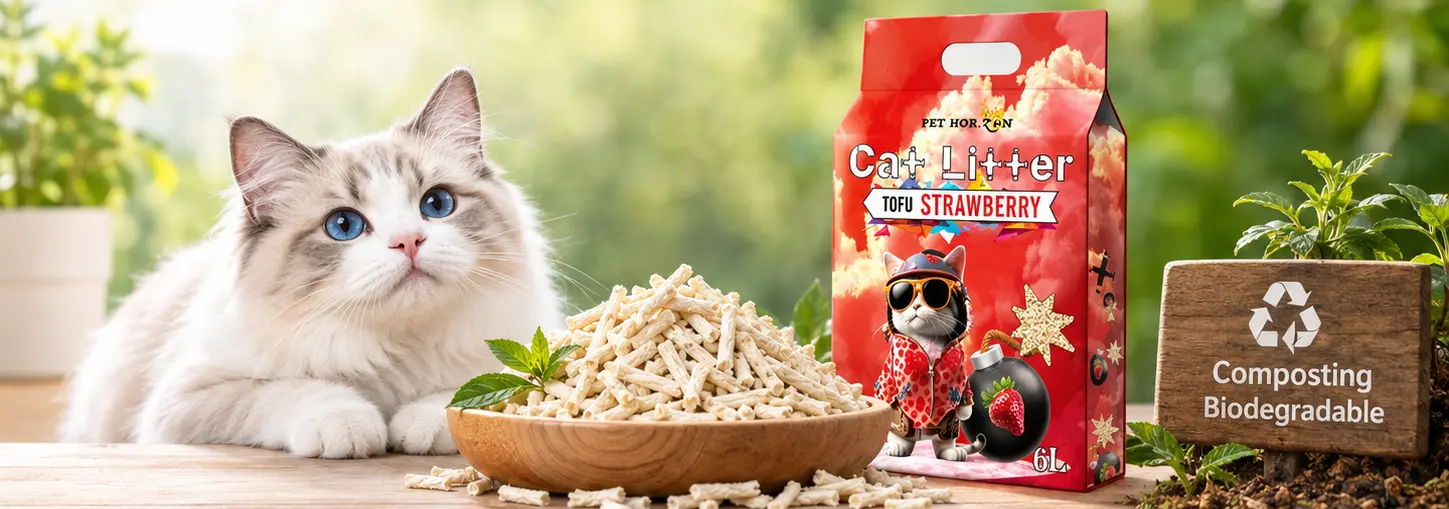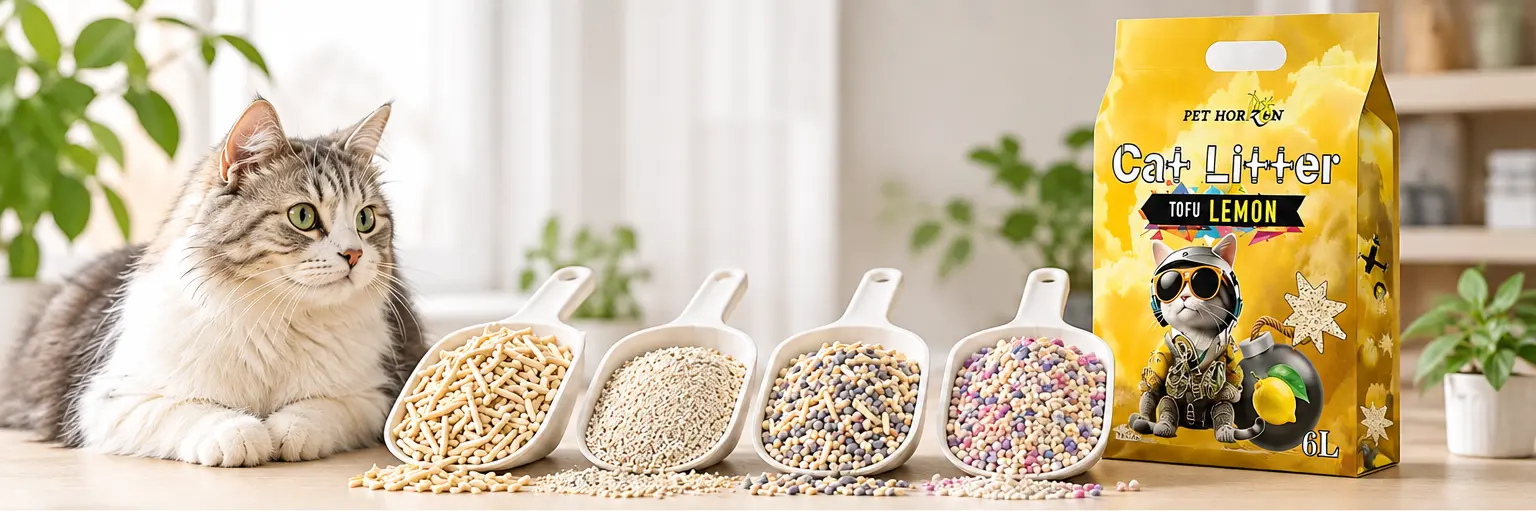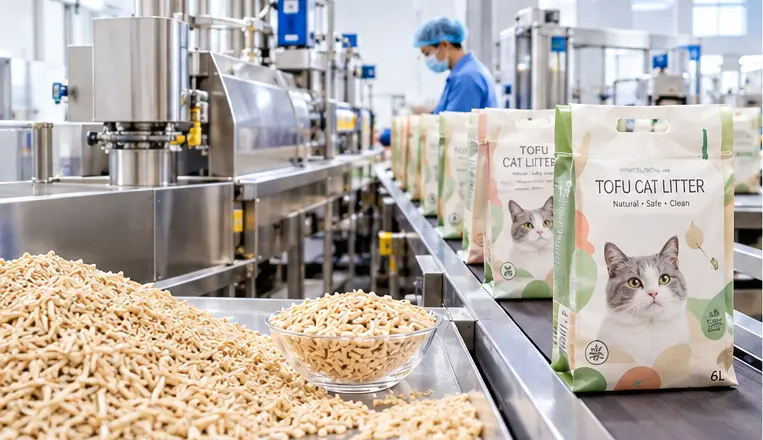






Tofu cat litter is typically a plant-based, extruded litter made from soybean residue and/or other plant-derived ingredients, and many formulations are designed to clump. A 600 g/L bulk-density specification can be used as a product example, but density varies by formulation and particle size. Pine cat litter is commonly made from compressed pine wood or sawdust pellets and usually absorbs moisture rather than forming a conventional clump. For B2B sourcing, compare clumping performance, bulk density, dust, disposal claims, raw-material specifications, and landed cost rather than assuming one material is always lighter, more biodegradable, or flushable.
What Are Tofu and Pine Cat Litter?
Tofu cat litter is typically a plant-based litter made from soybean residue such as okara and other plant-derived ingredients, then formed by extrusion and drying into strips or other particles. It is commonly formulated as a clumping litter. Pine cat litter is made from pine wood, sawdust, or related wood-processing feedstock that is compressed into pellets; it generally absorbs moisture and breaks down as the pellets become wet rather than forming a conventional scoopable clump.
Both are plant-based alternatives to mineral litters, but they come from different raw materials and behave differently during handling and use. The choice affects clumping, dust, weight, disposal, and price for an importer.
Clumping and Absorption
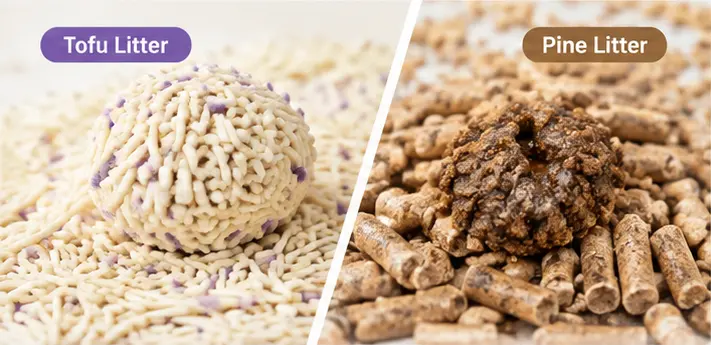
Tofu litter commonly forms a clump when wet, which makes scooping straightforward for the end user. Pine pellets absorb liquid and break down into sawdust as they get wet; many pine products are not designed to clump, so the used portion is removed by sifting or full change. Some pine-based litters now add binders to clump, but the traditional pellet form absorbs rather than clumps.
Dust and Fines
Both tofu and pine litters can be formulated as low-dust products, but dust performance depends on particle size, fines content, raw-material processing, and handling. Tofu strips may generate fine powder during extrusion, screening, filling, or transport, while pine pellets can release wood dust when they fracture. B2B buyers should define a measurable dust or fines acceptance limit in the product specification and verify it with the agreed test method and batch or pre-shipment test reports.
Weight and Bulk Density
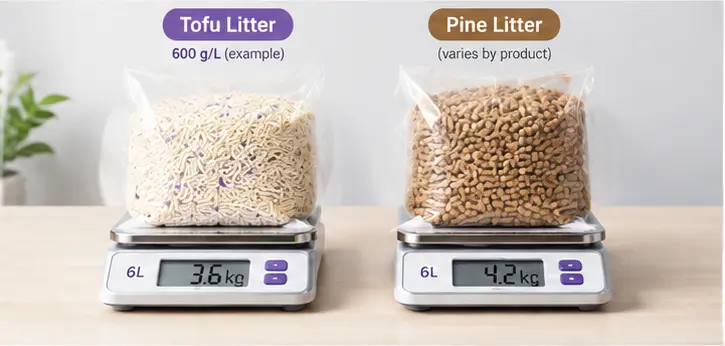
Bulk density varies by formulation, particle size, moisture content, and processing, so buyers should compare measured values rather than assume tofu or pine is always lighter. For example, a tofu specification of 600 g/L would mean about 3.6 kg for a 6 L bag. The actual density of a pine product should be measured separately and stated in the product specification. These values affect pack weight, container loading, freight cost, and retail positioning.
Biodegradability and Disposal
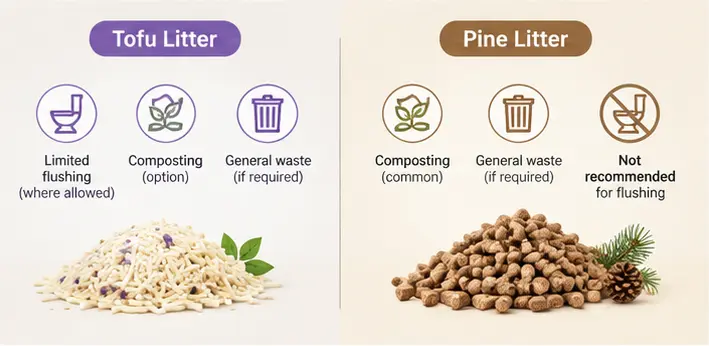
Tofu and pine litters use plant-derived feedstocks, but biodegradability, compostability, and disposal suitability should be assessed for the finished formulation rather than assumed from the raw material alone. Tofu products may be marketed as flushable or compostable only where the specific formulation, testing, labeling, and destination-market rules support the claim. Pine pellets are commonly positioned for organic-waste or composting routes, but the suitability depends on the formulation, contamination level, local waste system, and applicable rules. B2B buyers should require evidence for any environmental or disposal claim before using it on packaging or in marketing.
For European retail, review environmental and disposal claims against the applicable EU and destination-market requirements, and keep supporting test data or documentation for claims such as biodegradable, compostable, or flushable. Generic environmental claims should not be used without appropriate substantiation.
Cost and OEM Sourcing
Price depends on raw-material cost, formulation, particle size, packaging format, and order volume rather than litter type alone. Tofu litter is linked to soybean and other plant-based feedstock costs, while pine litter is linked to wood feedstock and pellet processing. Both can be offered through OEM or private-label programs, but MOQ should be confirmed by product specification, packaging format, and production setup. Compare landed cost rather than ex-works price alone because bulk density and pack weight affect freight and container utilization.
How Should a B2B Buyer Compare Tofu and Pine Cat Litter?
| Factor | Tofu litter | Pine litter |
|---|---|---|
| Clumping | Commonly formulated to clump | Traditional pellets usually absorb rather than clump |
| Bulk density | Varies by formulation and particle size; 600 g/L can be a product specification | Varies by wood feedstock, pellet size, and moisture content |
| Dust | Depends on fines, extrusion, screening, and handling | Depends on pellet strength, fines, and breakage |
| Disposal | Disposal claims are formulation- and market-specific | Often positioned for organic-waste or composting routes, subject to local rules |
| Typical buyer considerations | Clumping, particle format, private label | Wood-based positioning, absorbency, pellet format, disposal requirements |
See our tofu vs bentonite comparison for how tofu performs against mineral litter, and visit the tofu cat litter product page for the current specification. Our tofu cat litter OEM service builds clumping, weight, and dust limits into one agreement with packaging and logistics.
Conclusion
Tofu vs pine cat litter is primarily a specification and market-positioning decision for B2B buyers. Tofu is commonly used for clumping formats, while pine is commonly used for wood-based pellet formats and absorbency. Before placing an OEM order, compare bulk density, clumping or absorption performance, dust or fines, disposal claims, packaging, MOQ, and landed cost for the exact SKU. This approach makes the tofu vs pine cat litter comparison more reliable than choosing by raw material alone.
Frequently Asked Questions
Tofu cat litter is typically a plant-based, extruded litter made from soybean residue and/or other plant-derived ingredients, while pine cat litter is commonly made from compressed pine wood or sawdust pellets. Tofu is commonly formulated to clump, whereas traditional pine pellets generally absorb moisture and break down rather than form a conventional clump.
Tofu litter is commonly formulated to clump when wet, which supports scoopable waste removal. Traditional pine pellets usually absorb liquid and break down rather than form a conventional clump, although some pine formulations use binders or other designs to provide clumping. Buyers should compare the actual clumping test result for each SKU.
Dust performance depends on the supplier, particle size, fines content, pellet strength, and handling conditions. Tofu litter can generate fine powder during processing and transport, while pine pellets can release wood dust when they fracture. B2B buyers should specify a measurable dust or fines limit and an agreed test method.
Neither material is always heavier. Bulk density varies by formulation, particle size, moisture content, and processing. A tofu product specified at 600 g/L would weigh about 3.6 kg in a 6 L bag, but the comparable pine density should be measured for the specific SKU. Use actual bulk-density data when calculating freight and container loading.
Disposal suitability depends on the finished formulation, local waste system, and destination-market rules. Some tofu products are marketed for limited flushing, but this claim should be supported by product-specific evidence and local requirements; the U.S. EPA advises against flushing cat litter into septic systems. Pine pellets are often positioned for composting or other organic-waste routes, but the suitability depends on the product and local rules. B2B buyers should verify the disposal claim before using it on packaging or marketing materials.
Cost tracks raw material, formulation, density, packaging, and order volume, not litter type alone. Compare landed cost including freight, because bulk density and pack weight affect container utilization. Both are available as OEM or private-label with MOQ confirmed per product and packaging.
Compare clumping or absorption performance, bulk density, dust or fines, disposal claims, packaging, MOQ, and landed cost for the exact SKU rather than choosing by raw material alone. Match the choice to retail claims you can substantiate, then fix clumping, dust, and weight in the specification.