




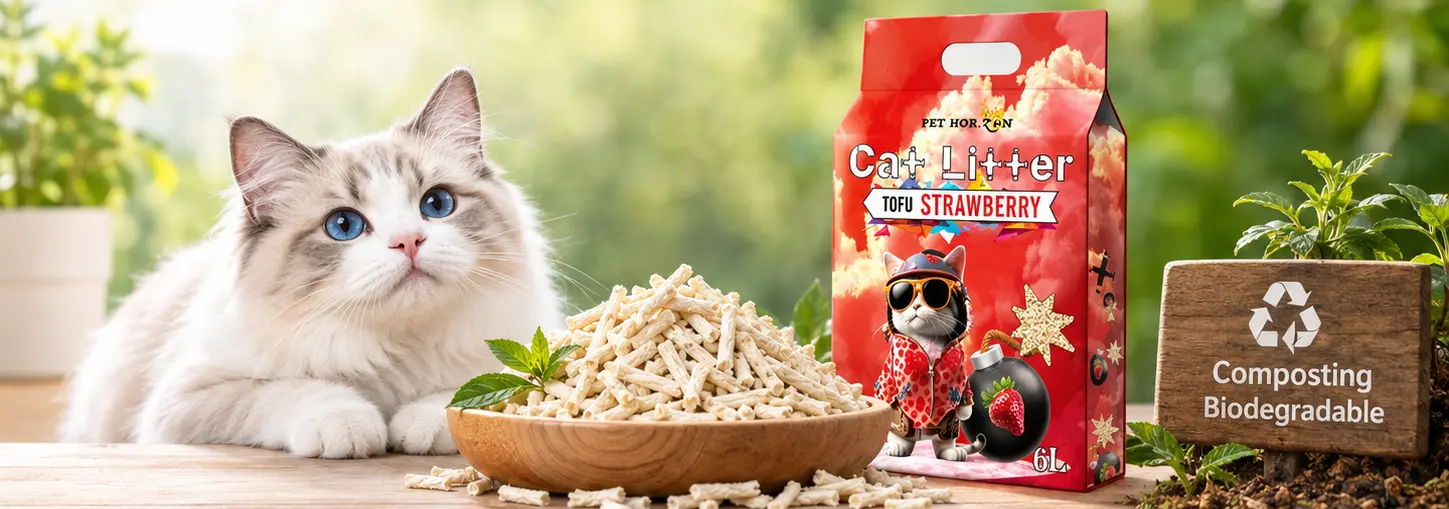
Biodegradable tofu cat litter is typically made from soybean residue and other plant-based ingredients that can biodegrade under suitable conditions. However, biodegradability does not automatically mean that a product is certified compostable or suitable for flushing. For B2B buyers, the OEM specification should define the claimed property, disposal condition, test method, and supporting evidence before an environmental claim is printed on packaging.
What Makes Tofu Cat Litter Biodegradable?
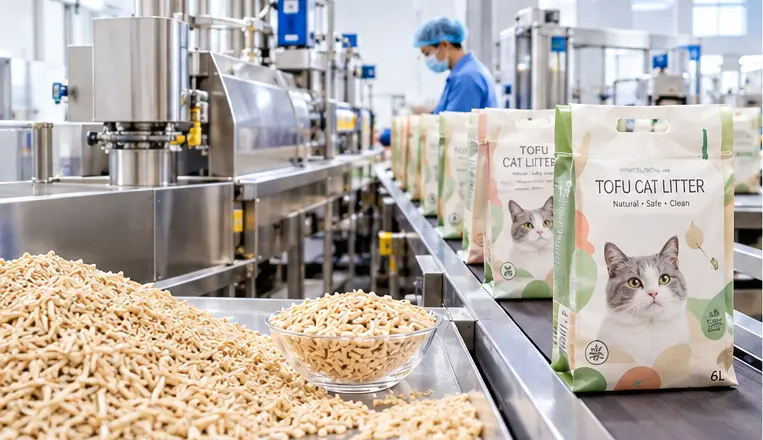
Tofu cat litter starts from soybean residue (okara), the pulp left after making soy milk or tofu. The residue is typically processed, extruded, and dried into litter particles or strips. Its plant-based raw material can support biodegradation, but the finished product should be evaluated as a complete formulation because binders, additives, and deodorizing ingredients can affect its disposal and degradation behavior.
Biodegradation Timeline and Conditions
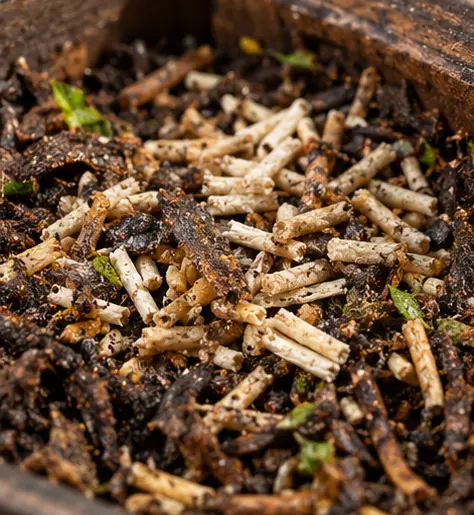
Biodegradation time depends on the test environment rather than the tofu material alone. Controlled composting can provide conditions that support faster organic-matter breakdown, while landfill disposal may behave differently because moisture, oxygen, temperature, and microbial activity vary. For B2B claims, specify the disposal environment and test method instead of using a fixed decomposition time unless the product has supporting test data.
Flushability and Disposal
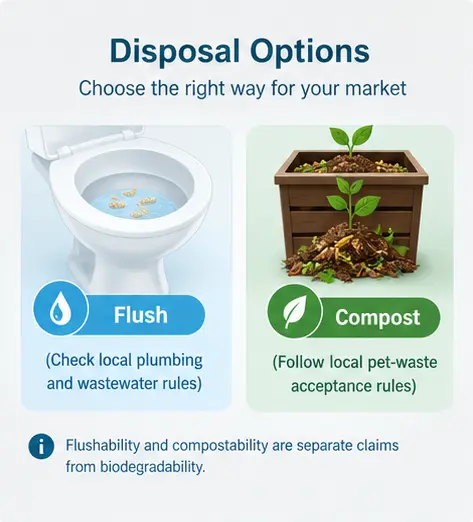
Many tofu litters are marketed as flushable in small amounts, but flushability is a separate product claim from biodegradability and depends on local plumbing, wastewater, and septic-system requirements. Buyers should not infer flushability from the use of plant-based ingredients. Composting may be an option where the product and local waste system allow it, but pet-waste acceptance rules should be checked before making a composting claim.
For European retail, disposal and environmental claims should be reviewed against the applicable market rules and substantiated for the finished product. Do not rely on pet-food labeling guidance as evidence for cat-litter biodegradability, compostability, or flushability claims.
Tofu vs Other Biodegradable Litters
Tofu, corn, wheat, and pine litters can all be plant-based alternatives, but their product characteristics and disposal requirements differ. For B2B buyers, the comparison should cover clumping, absorbency, dust, odor control, bulk density, particle format, supply consistency, and the evidence supporting any biodegradability or compostability claim. See how tofu cat litter is made for the soybean-residue process behind the material.
Eco Claims and Compliance
Environmental claims should be supported by evidence and framed no more broadly than the evidence allows. For European retail, buyers should review applicable EU and national rules governing environmental marketing claims, including Directive (EU) 2024/825 where applicable, and keep the supporting test method, certification, or technical documentation on file. A plant-based raw material does not by itself substantiate a claim such as “biodegradable,” “compostable,” or “flushable.”
Sourcing Biodegradable Tofu Litter for B2B
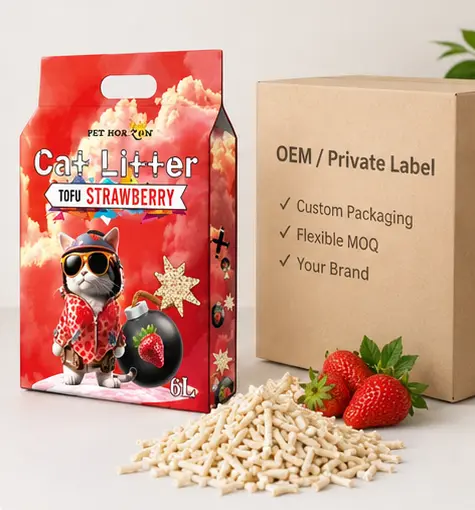
Biodegradable tofu litter can be developed through OEM or private-label programs with specifications agreed between the buyer and supplier. Define biodegradability or compostability claims alongside clumping performance, dust level, moisture, bulk density, particle size, packaging, and disposal instructions so the factory and buyer evaluate the same product requirements.
How to Verify Biodegradability Claims
Request a test report or certificate that identifies the tested product, test method, standard, and condition, such as industrial composting or home composting where applicable. A supplier statement alone is not a technical standard; verify the laboratory, test scope, product identity, and validity of the supporting evidence before printing an environmental claim on retail packaging. Visit the tofu cat litter product page for the current specification, and review our private label cat litter program for packaging and claim review.
Frequently Asked Questions
Tofu cat litter uses soybean residue and other plant-based ingredients that can biodegrade under suitable conditions. Biodegradability is a property of the finished formulation and the disposal environment, not a guarantee for every product or setting; confirm the claimed condition and test method.
There is no single decomposition time for all tofu cat litter. The result depends on temperature, moisture, oxygen, microbial activity, formulation, and the test method. A B2B specification should state the tested condition and supporting standard rather than use a universal time estimate.
Flushability and compostability are separate claims from biodegradability. Some tofu products are marketed for limited flushing, but this depends on local plumbing, wastewater, and septic-system rules; the U.S. EPA advises against flushing cat litter. Composting may be an option where the product and local waste system allow it, but pet-waste acceptance rules vary. B2B buyers should require evidence for any disposal claim before printing it on packaging.
Tofu, corn, wheat, and pine litters are all plant-based alternatives with different product characteristics and disposal requirements. For B2B buyers, compare clumping, absorption performance, dust, odor control, bulk density, particle format, supply consistency, and the evidence behind any biodegradability or compostability claim rather than assuming one breaks down faster.
Environmental claims should be substantiated with evidence and framed no more broadly than the evidence allows. For European retail, review the applicable EU and national rules such as Directive (EU) 2024/825 governing environmental marketing claims, and keep the supporting test method, certification, or technical documentation on file.
Specify the claimed property, test method, acceptance criteria, and supporting documentation. For example, define whether the requirement concerns biodegradability or certified compostability and under which conditions it must be demonstrated. Agree with the supplier on the appropriate testing and documentation frequency before the claim is printed on packaging.