




لم تعد فئة فضلات القطط عنصرًا أساسيًا هادئًا في متاجر بيع الحيوانات الأليفة بالتجزئة. في جميع أنحاء أمريكا الشمالية وأوروبا، يتم إعادة تشكيل هذا القطاع حول المواد الأخف وزنًا والتركيبات النباتية وموجة جديدة من الشركات المصنعة الآسيوية التي تدخل الرفوف الغربية. بعد سنوات من الحركة الثابتة أو البطيئة، تتصرف الفئة الآن مثل سوق النمو مع اضطراب حقيقي في الشكل. تجمع ركيزة الاتجاه السنوي هذه نقاط البيانات لعام 2026 التي تهم المستوردين والموزعين وأصحاب العلامات التجارية والباحثين الذين يحتاجون إلى إحصاءات يمكن الاستشهاد بها لمحتواهم الخاص.
إجابة سريعة
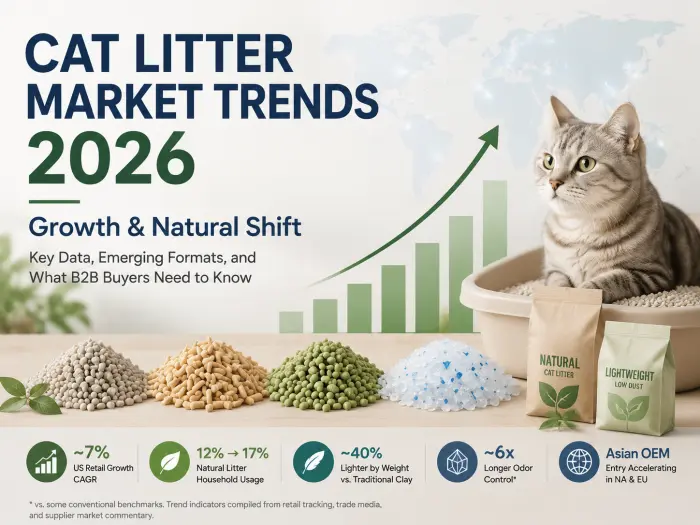
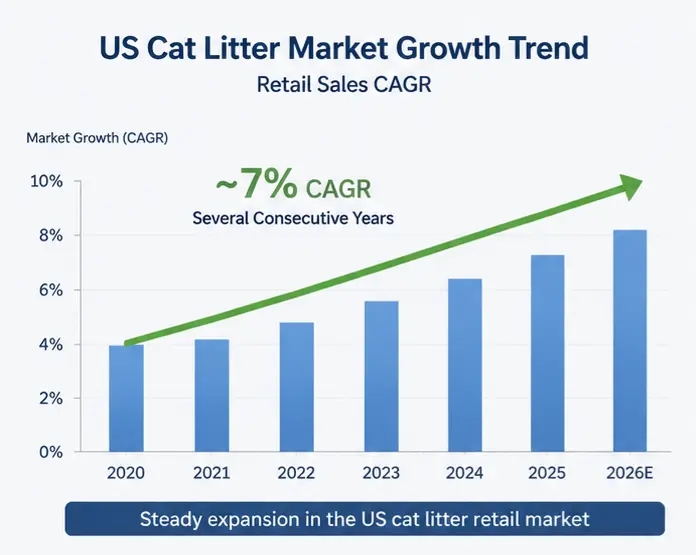
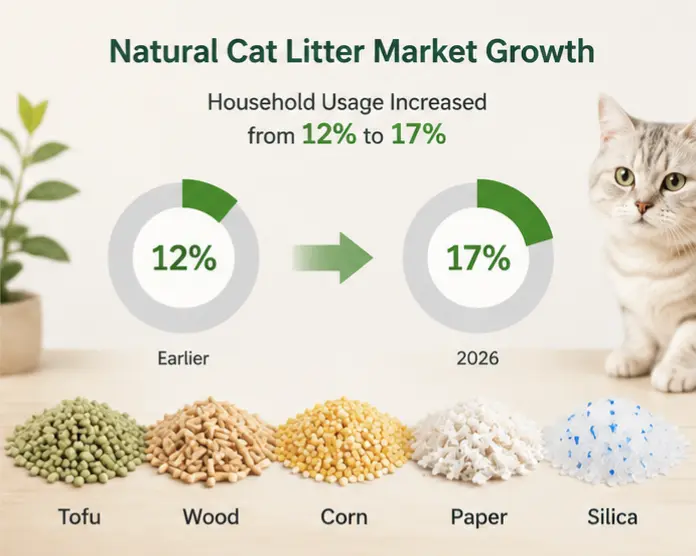
يتم تحديد اتجاهات سوق فضلات القطط في عام 2026 من خلال ثلاثة تحولات رئيسية: النمو المطرد للفئة، وزيادة اعتماد القمامة الطبيعية، وزيادة المنافسة من الشركات المصنعة للمعدات الأصلية الآسيوية. تشمل مؤشرات الصناعة الحالية ما يقرب من 7% من معدل النمو السنوي المركب للبيع بالتجزئة في الولايات المتحدة، وارتفاع استخدام الأسر المعيشية للقمامة الطبيعية من 12% إلى 17%، وتزايد الطلب على التركيبات خفيفة الوزن ومتعددة الوظائف.
تشير اتجاهات سوق فضلات القطط لعام 2026 إلى تفضيلات المستهلك المتغيرة وابتكارات المنتجات وتحولات سلسلة التوريد التي تؤثر على صناعة فضلات القطط العالمية. وتشمل المحركات الرئيسية الطلب على الركائز الطبيعية، والمنتجات الخفيفة، والتحكم بشكل أفضل في الرائحة، وزيادة مصادر العلامات التجارية الخاصة من الشركات المصنعة الآسيوية.
لمحة سريعة عن إحصائيات صناعة فضلات القطط
الأكثر فائدة إحصائيات صناعة فضلات القطط لعام 2026 تأتي من تتبع فئة التجزئة والتقارير الصحفية التجارية بدلاً من التعداد الرسمي الوحيد. الأرقام أدناه هي الأرقام التي يستشهد بها المحللون في أغلب الأحيان ويتم تلخيصها هنا حتى يمكن اقتباسها مباشرة.
| متري | القراءة الأخيرة | اتجاه |
|---|---|---|
| نمو التجزئة في فئة فضلات القطط في الولايات المتحدة | ~7% معدل نمو سنوي مركب لعدة سنوات متتالية | التوسع المطرد |
| الاستخدام المنزلي للقمامة الطبيعية | 12% ترتفع إلى 17% | إلى أعلى |
| الطين الخفيف مقابل الطين التقليدي | ~40% أخف وزنًا | تحول التنسيق |
| المطالبة بالتحكم في رائحة الكريستال المتكتلة | ~6x أطول من بعض المعايير | التنسيق الناشئ |
| دخول الشركة المصنعة الآسيوية إلى NA والاتحاد الأوروبي | تسريع التقارير لكل مورد | الضغط التنافسي |
تم الحصول على هذه الأرقام من التغطية التجارية لدورة شراء SuperZoo وتعليقات سوق الموردين، بما في ذلك معاينة فضلات SuperZoo من Pet Insight ورفيقها معاينة القمامة الطبيعية. يتم تقديمها كدليل على الاتجاه، وليس كتأييد لأي علامة تجارية واحدة. ولأنه لا توجد هيئة واحدة تنشر إحصاء عالمي لنفايات القطط، فإن الإسناد الترافقي لمصادر تجارية متعددة هو الطريقة الأكثر موثوقية لفصل التحولات الدائمة عن البدع لموسم واحد. للحصول على رؤية عالمية أوسع، راجع سوق فضلات القطط العالمية 2026 ملخص.
نمو سوق فضلات القطط الطبيعية
أوضح إشارة في نمو سوق فضلات القطط الطبيعية هو الانتقال في الاستخدام المنزلي من 12% إلى 17%. ويمثل هذا التأرجح المكون من خمس نقاط حصة كبيرة من فئة الشراء الناضجة وعالية التردد. تشمل المنتجات الطبيعية هنا التوفو النباتي، والخشب، والذرة، والورق، والمنتجات المشتقة من السيليكا، وكلها تهدف إلى الاستدامة، وانخفاض الغبار، وسهولة التخلص منها.
هناك عدة قوى تفسر الهجرة. تفضل البلديات في جميع أنحاء أوروبا وأجزاء من أمريكا الشمالية الآن مجاري النفايات القابلة للتحلل، والتي تكافئ الركائز النباتية. يقوم تجار التجزئة بتوسيع الخطوط الطبيعية ذات العلامات التجارية الخاصة لأن الهوامش ومعدلات الشراء المتكررة جذابة. والمشترون الأصغر سنًا يتعاملون مع "الطبيعي" باعتباره توقعًا افتراضيًا وليس قطاعًا متميزًا. بالنسبة للمشترين الذين يقومون بمقارنة الركائز، فإن دليل أنواع فضلات القطط يكسر كيفية أداء كل مادة على التكتل والرائحة والغبار.
فضلات القطط خفيفة الوزن: إيجابيات وسلبيات
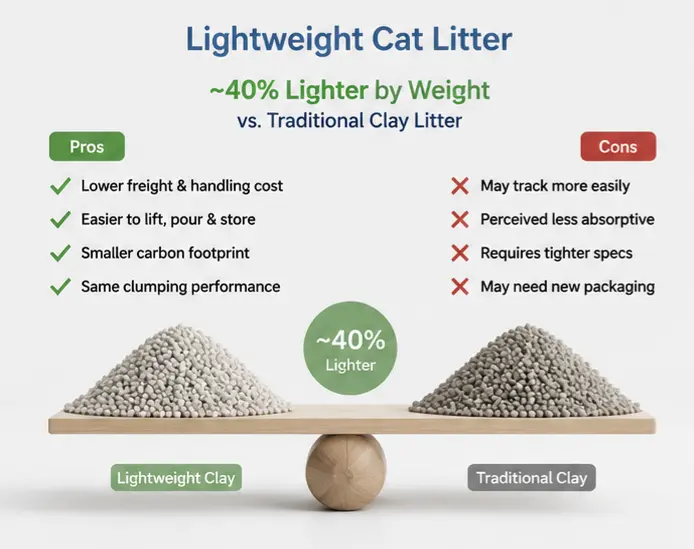
التنسيقات خفيفة الوزن هي المحرك الآخر للنمو في عام 2026. تعتبر فضلات الطين التقليدية ثقيلة ومكلفة للشحن ويصعب على المستهلكين حملها. تكون أنواع الطين خفيفة الوزن أخف بنسبة 40% تقريبًا من الطين التقليدي، وهو فرق ذكره الموردون مثل Oil-Dri كمثال على الميزة اللوجستية للتنسيق (تمت الإشارة إليه هنا كدليل على الاتجاه، وليس كتوصية).
وزن فضلات القطط خفيفة الوزن، إيجابيات وسلبيات يساعد المشترين في مجال B2B على تحديد المكان المناسب لهم:
الايجابيات
- انخفاض تكلفة الشحن والمناولة لكل وحدة من الحجم القابل للاستخدام.
- يسهل على المستهلكين النهائيين رفعه وصبه وتخزينه.
- بصمة كربونية أصغر لكل حقيبة يتم شحنها.
- متوافق مع نفس الأداء المتكتل الذي يتوقعه المشترون.
سلبيات
- يمكن تتبعه بسهولة أكبر إذا لم يتم التحكم في حجم الجسيمات.
- يُنظر إليه أحيانًا على أنه أقل قدرة على الامتصاص لكل لتر من الطين الكثيف.
- يتطلب مواصفات أكثر صرامة للغبار والحبيبات في المصنع.
- قد تحتاج إلى تعبئة منقحة لحماية الحشوات الأخف وزنًا والأكبر حجمًا.
بالنسبة للمصدرين، يعد توفير الشحن هو الميزة الرئيسية، ولكن فقط إذا كانت الشركة المصنعة تتحكم في سلامة الغبار والحبيبات أثناء الإنتاج. ترتبط زاوية الاستدامة أيضًا ارتباطًا مباشرًا بالتعبئة، والتي سيتم تناولها لاحقًا في هذه المقالة وفي اتجاهات تغليف رمل القطط المستدام تقرير.
ظهور فضلات القطط الكريستالية المتكتلة
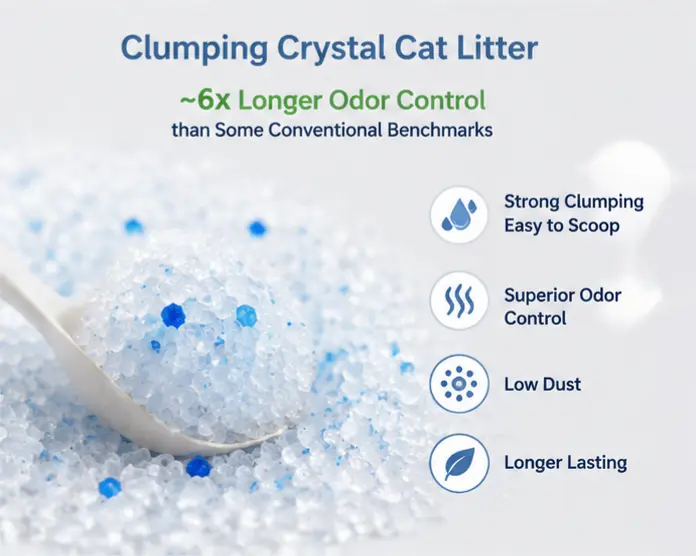
تنسيق 2026 المميز الذي يستحق التتبع هو تكتل فضلات القطط الكريستالية. إن فضلات بلورات هلام السيليكا ليست جديدة، ولكن ظهر نوع مختلف من "البلورات المتكتلة" يجمع بين سلوك البلورات في حبس الرطوبة مع كتل قابلة للمغرفة. يدعي الموردون الذين يروجون لهذا التنسيق ما يصل إلى 6 أضعاف التحكم في الرائحة لفترة أطول تقريبًا من بعض المعايير التقليدية، وهو رقم يجب قراءته على أنه ادعاء تسويقي بدلاً من كونه معيارًا تم التحقق منه.
ما يجعل التنسيق مثيرًا للاهتمام من الناحية الإستراتيجية هو تحديد المواقع. إنه يقع بين الطين المتكتّل الفاخر ولآلئ السيليكا، مما يوفر تتبعًا منخفضًا وعمرًا طويلًا مع معالجة توقعات التحكم في الرائحة التي تدفع إلى إعادة الشراء. بالنسبة للمشترين من العلامات التجارية الخاصة، فإن الكريستال المتكتّل هو عبارة عن وحدة تخزين تخزينية (SKU) تمايز وليس بديلاً حجميًا للطين أو الخطوط النباتية.
يسرّع المصنعون الآسيويون الدخول إلى أمريكا الشمالية وأوروبا
وهناك متغير تنافسي لا يمكن للمشترين الغربيين تجاهله: إذ يعمل المصنعون من آسيا على تسريع دخولهم إلى أمريكا الشمالية وأوروبا. تعليقات الموردين، بما في ذلك الملاحظات من Intersand، تؤطر هذا على أنه تحول هيكلي وليس مجرد تحول لمرة واحدة. يقدم الوافدون الجدد أسعارًا قوية ومصانع متكاملة رأسيًا وتحولًا سريعًا للعلامات التجارية الخاصة.
بالنسبة للموزعين وأصحاب العلامات التجارية، فإن المعنى الضمني مزدوج. فمن ناحية، يعني المزيد من الموردين المؤهلين تكلفة إجمالية أفضل ودورات ابتكار أسرع. ومن ناحية أخرى، يعتمد التمايز الآن على جودة الصيغة والشهادة والموثوقية بدلاً من الجغرافيا وحدها. يجب على المشترين فحص الموردين الآسيويين وغير الآسيويين وفقًا لنفس شريط مراقبة الجودة: قوة الكتلة المتسقة، ومستويات الغبار الموثقة، وإعلانات المواد الموثوقة.
ما الذي يجب على المشترين في مجال B2B تحديد أولوياته في عام 2026
بالنسبة للمستوردين والعلامات التجارية الخاصة، فإن اختيار مورد فضلات القطط المناسب في عام 2026 يتطلب أكثر من مجرد مقارنة الأسعار. يجب على المشترين تقييم خمسة مجالات:
- مصادر مستقرة للمواد الخام واتساق الصيغة.
- أداء موثق للغبار والتكتل.
- الامتثال التعبئة والتغليف للأسواق المستهدفة.
- مرونة OEM للتنسيقات الناشئة.
- قدرة إنتاجية موثوقة ومدة زمنية.
خارطة الطريق الخاصة بصيغة "القمامة الواحدة والعديد من الوظائف".
إن أقوى خارطة طريق للمنتجات في عام 2026 هي صيغة "اللتر الواحد والعديد من الوظائف". بدلاً من تسويق فائدة بطل واحدة، تقوم وحدات SKU الرائدة بتجميع خمس وظائف في حقيبة واحدة: التحكم في الرائحة، والتعامل مع الوزن الخفيف، وانخفاض الغبار، وسهولة المغرفة، والقيمة الإجمالية. هذا ليس مكونًا جديدًا بقدر ما هو نظام مواصفات.
بالنسبة للواضعين، تترجم خارطة الطريق إلى خيارات تصنيع ملموسة:
- التحكم في الرائحة من خلال الكربون المنشط أو الزيوليت أو الخلطات الخاصة.
- مادة أساسية خفيفة الوزن أو كثافة ممزوجة لخفض الوزن.
- تحجيم الحبيبات وطلاءها لمنع الغبار عند الصب والمغرفة.
- تم ضبط سلامة الكتل لإزالة سريعة ونظيفة.
- يتم تحديد السعر مقابل التكلفة الإجمالية للملكية، وليس فقط سعر الرف.
أصبح هذا التوقع متعدد الوظائف الآن هو الأساس لتطوير منتج جديد بدلاً من المستوى المتميز. يجب على المشترين الذين يقومون بتقييم خط جديد أن يسجلوا المرشحين مقابل جميع الوظائف الخمس، لأن المنتج الذي يفوز بالرائحة ولكنه يفشل في الغبار سيستمر في الإنتاج.
تحول الأجيال: خروج جيل الطفرة السكانية، الجيل Z يدفع مقابل الاستدامة
يكمن وراء تغييرات التنسيق تحول في قاعدة المشترين. يخرج أصحاب القطط الأكبر سنًا من فئة "الجيل الجديد" تدريجيًا من مجموعة الشراء الأساسية، بينما يُظهر أصحاب القطط الأصغر سنًا اهتمامًا أكبر بشكل متزايد بمطالبات الاستدامة وميزات الراحة. تشير الدراسات الاستقصائية وتعليقات البيع بالتجزئة إلى أن الجيل Z على استعداد لدفع علاوة على الاستدامة، بشرط أن يكون الادعاء ذا مصداقية وأن المنتج لا يزال يعمل على الرائحة والراحة.
هذا مهم لتحديد المواقع B2B. فالادعاء المستدام الذي لا يمكن إثباته لن ينجح في بيئة الامتثال المقبلة، وخاصة في الاتحاد الأوروبي. التركيبة الفائزة عبارة عن ركيزة ذات تأثير أقل حقًا مقترنة بدليل قابل للتوثيق، والذي يعود إلى استراتيجية التعبئة والتغليف وإصدار الشهادات.
الأخطاء الشائعة عند قراءة اتجاهات سوق فضلات القطط
من السهل إساءة قراءة تقارير الاتجاه. تساعد الأخطاء الشائعة أدناه قراء B2B على تطبيق بيانات 2026 بشكل صحيح:
- التعامل مع مطالبة مورد واحد كمعيار تم التحقق منه على مستوى الصناعة.
- بافتراض أن كلمتي "طبيعي" و"مستدام" تعنيان نفس الشيء دون الحصول على شهادة.
- مقارنة الطين خفيف الوزن والتقليدي حسب سعر الكيس بدلاً من تكلفة الاستخدام.
- تجاهل وزن الشحن عند التنبؤ بالهامش على القمامة المستوردة.
- المبالغة في قراءة مكسب الاستخدام الطبيعي المكون من خمس نقاط باعتباره انهيارًا لقطعة الطين.
- نسخ صيغة منافسة دون التحقق من جودة الغبار والتكتل في المصنع.
- تأخير أعمال الامتثال للتغليف إلى ما بعد تسعير الشحنة الأولى.
حول أفق الحيوانات الأليفة
Pet Horizon هي شركة تصنيع فضلات القطط التي تعمل في مجال B2B وتتمتع بخبرة تزيد عن 20 عامًا في الصناعة وأكثر من 10 سنوات في شراكات تصنيع المعدات الأصلية وتصنيع التصميم الشخصي. تقوم الشركة بالتصدير إلى أكثر من 80 دولة وتدعم العلامات الخاصة والتصنيع التعاقدي عبر أشكال البنتونيت والتوفو والمختلط والصنوبر والكريستال. يركز الإنتاج على التحكم في الغبار وأداء التكتل وجودة الدفعات المتسقة وفقًا للمواصفات المتفق عليها. موك القياسي هو حاوية 1 × 20 قدم وقابل للتفاوض حسب البرنامج والصيغة. لا تقوم شركة Pet Horizon بتصنيع بيانات الاختبار أو الشهادات؛ يتم ذكر القدرات كحقائق تشغيلية لتقييم المشتري.
الخاتمة
تشير اتجاهات سوق فضلات القطط لعام 2026 إلى فئة تنمو وتنوع وتتعولم في نفس الوقت. التوسع في قطاع التجزئة بمعدل نمو سنوي مركب يصل إلى 7% تقريبًا، والاستخدام الطبيعي يصل إلى 17%، وخيار الطين الأخف بنسبة 40%، ووصول الكريستال المتكتل، وتسريع دخول المصنع الآسيوي معًا يعيد رسم خريطة المشتري. إن الصيغة الفائزة هي صيغة متعددة الوظائف ومدعومة بالاستدامة، ومبنية على مراقبة الجودة الحقيقية بدلاً من الادعاءات. المستوردون وأصحاب العلامات التجارية الذين يجمعون بين الركيزة الموثوقة والتعبئة المتوافقة وشريك التصنيع الموثوق بهم هم في وضع أفضل لالتقاط الموجة التالية من الطلب.
الأسئلة المتداولة
نمت تجارة التجزئة في فئة فضلات القطط في الولايات المتحدة بمعدل نمو سنوي مركب يبلغ 7% تقريبًا لعدة سنوات متتالية، مما يشير إلى توسع مطرد بدلاً من فئة أساسية ثابتة أو متراجعة.
ارتفع معدل استخدام الأسر المعيشية للقمامة الطبيعية من 12% إلى 17% في التتبع الأخير، وهو زيادة بمقدار خمس نقاط تشير إلى تحول دائم نحو الركائز النباتية ومنخفضة التأثير.
تشمل الإيجابيات تكلفة شحن أقل، وسهولة التعامل، وبصمة شحن أصغر. وتشمل السلبيات التتبع المحتمل، والتصور المحتمل لامتصاص أقل لكل لتر، واحتياجات التحكم الأكثر صرامة في الغبار والحبيبات في المصنع.
إنه شكل قائم على السيليكا يجمع بين التحكم في الرائحة الكريهة والكتل القابلة للمغرفة. يزعم بعض الموردين أن التحكم في الرائحة أطول بحوالي 6 مرات من المعايير التقليدية، على الرغم من أن هذا الرقم هو ادعاء تسويقي وليس معيارًا تم التحقق منه.
نعم. تشير تقارير الموردين، بما في ذلك الملاحظات الواردة من Intersand، إلى أن الشركات المصنعة من آسيا تعمل على تسريع الدخول إلى أمريكا الشمالية وأوروبا، مما يزيد من الضغط التنافسي ويوسع خيارات العلامات التجارية الخاصة.
إن التحول بين الأجيال جارٍ: يخرج جيل الطفرة السكانية بينما يدخل الجيل Z ويظهرون الاستعداد لدفع علاوة مقابل الاستدامة الموثوقة، مما يدفع المطالبات البيئية المثبتة إلى مركز استراتيجية المنتج.
فهو يصف خارطة طريق تجمع بين التحكم في الرائحة، والتعامل مع الوزن الخفيف، والغبار المنخفض، وسهولة المغرفة، والقيمة في منتج واحد، وهو الآن التوقعات الأساسية بدلاً من الطبقة المتميزة.
يجب على المشترين التأكد من مراقبة جودة الغبار والتكتل، وإعلانات المواد، وشهادة أي مطالبة بيئية، والامتثال للتعبئة، وموعد محدد للطلبات الواقعي والمهلة الزمنية مع الشركة المصنعة.
العديد من الشركات المصنعة B2B، بما في ذلك Pet Horizon، تحدد خطًا أساسيًا لحاوية 1 × 20 قدمًا وتتفاوض على أساس البرنامج والصيغة. تعتمد الشروط الدقيقة على المورد وهيكل الطلب.
ترفع الاتجاهات مستوى جودة الصيغة والشهادة والموثوقية. يحصل المشترون من الشركات المصنعة الأصلية والعلامات التجارية الخاصة على مزيد من الخيارات للموردين ولكن يجب عليهم فحص الشركاء فيما يتعلق بالأداء المتسق والتعبئة المتوافقة بدلاً من السعر وحده.