
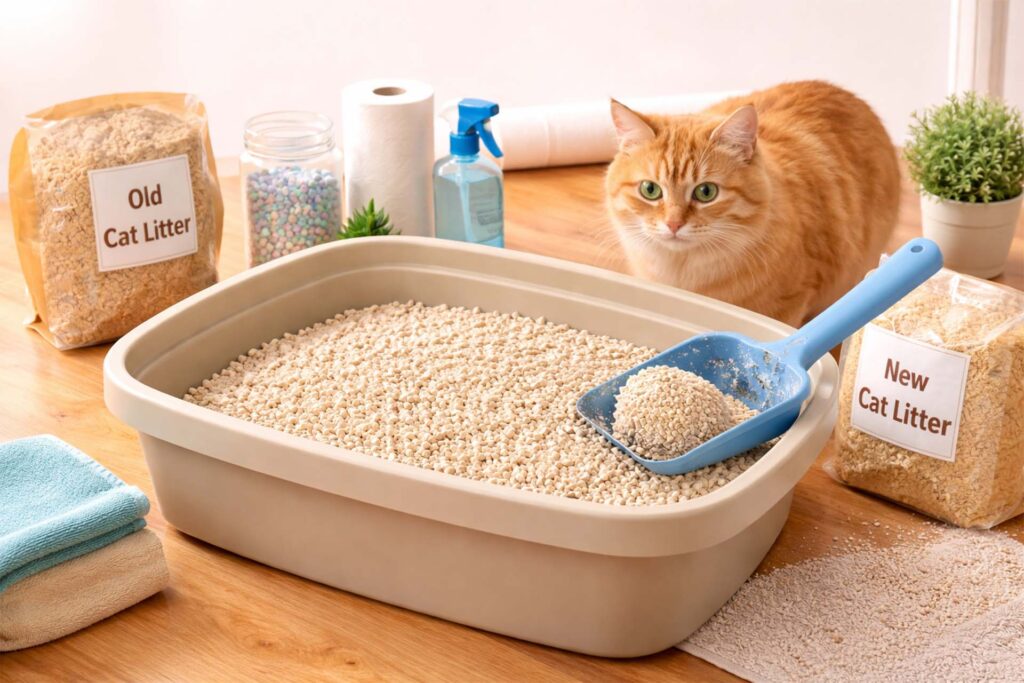
For novice cat owners, learning how to change cat litter properly is essential. Cats rely heavily on familiar smells, textures, and routines. A sudden change in litter can cause stress, leading to litter box avoidance, accidents, or even health issues like diarrhea.
By following a scientific and gradual transition method, you can help your cat accept new litter comfortably and avoid unnecessary problems.
Why You Should Never Change Cat Litter Suddenly
Understanding feline behavior is the first step in mastering how to change cat litter.
Cats depend on:
- Familiar scent to feel safe and mark territory
- Consistent texture for digging and covering waste
- Routine habits that reduce stress
A sudden litter change creates a sense of “strangeness,” which may lead to:
- Refusal to use the litter box
- Urinating or defecating in hidden areas
- Loss of appetite or stress-related diarrhea
- Long-term bad habits that are difficult to correct
👉 The core principle: Always transition gradually over 7–10 days.
How to Change Cat Litter: The 5-Step Scientific Method
Step 1: Prepare Before Changing Cat Litter
Proper preparation makes the transition smoother:
- Keep a portion of the old litter for mixing
- Clean and dry the litter box thoroughly
- Place the new litter nearby so your cat can smell and explore it
This reduces anxiety and builds familiarity.
Step 2: Mix Old and New Litter Gradually (Core Step)
Gradual mixing is the most important part of how to change cat litter.
Day 1–3:
- 70% old litter + 30% new litter
- Observe behavior and ensure normal usage
Day 4–6:
- 50% old litter + 50% new litter
- Expect sensitivity to texture changes
Day 7–10:
- 30% old litter + 70% new litter → full transition
👉 Adjust the pace based on your cat’s reaction. Never rush.
Step 3: Keep the Litter Box Extra Clean
Cleanliness directly affects acceptance.
- Scoop waste at least twice daily
- Replace litter weekly during the transition
- Prevent odor buildup that may discourage use
A clean environment encourages consistent litter box habits.
Step 4: Keep the Litter Box in the Same Location
Location consistency is critical when learning how to change cat litter.
- Avoid moving the litter box during the transition
- Maintain a quiet, familiar environment
Changing both litter and location at the same time can overwhelm your cat.
Step 5: Observe and Adjust Based on Your Cat
Every cat adapts differently.
- If your cat adjusts quickly, you may shorten the timeline
- If resistance appears, return to the previous ratio
- Extend the transition to up to 2 weeks for sensitive cats
Patience ensures long-term success.
How to Change Different Types of Cat Litter
Bentonite to Tofu Cat Litter
- Choose tofu litter with similar particle size
- Use unscented options to avoid rejection
- Reduce texture differences as much as possible
Tofu to Bentonite Cat Litter
- Increase bentonite proportion slightly faster if accepted
- Improve ventilation to reduce dust irritation
- Monitor respiratory sensitivity
Crystal Cat Litter to Other Types
- Start slower (20% new litter)
- Reduce risk of rejection due to texture differences
- For cats that chew litter, switch to soft tofu litter for safety
Common Mistakes When Changing Cat Litter
Avoid these critical errors:
- Replacing all litter at once
- Changing litter and litter box simultaneously
- Punishing your cat for refusing the new litter
These mistakes increase stress and reduce success rates.
Conclusion: Master How to Change Cat Litter Successfully
Learning how to change cat litter the right way helps prevent stress, accidents, and behavioral issues. By using a gradual transition, maintaining cleanliness, and respecting your cat’s habits, you can ensure a smooth and successful change.
Patience is the key. Give your cat time to adapt, and it will confidently accept the new litter—making your pet care routine easier and more enjoyable.
 Arabic
  English
  Spanish
  Russian
  French