




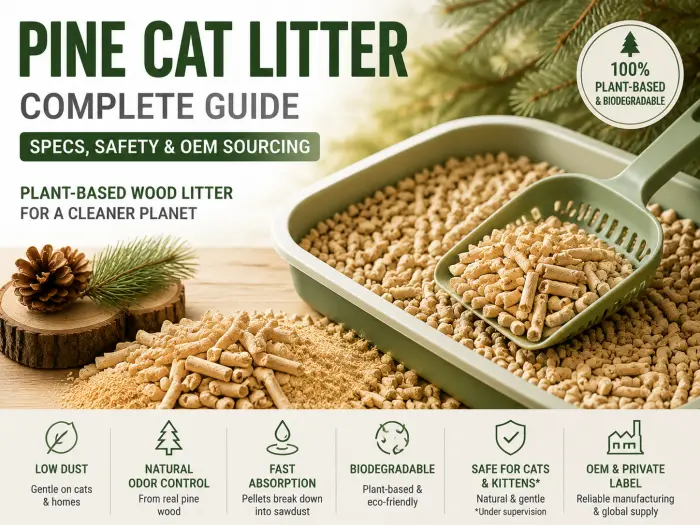
Pine cat litter — a biodegradable, low-dust wood cat litter — is one of the established eco-friendly segments in the global cat litter market. As a renewable alternative to clay, it attracts buyers who want natural odor control without the dust and mining footprint of bentonite. This complete guide covers what pine litter is, whether it is safe for cats and kittens, how it is made, how it compares to bentonite and tofu, and what private-label buyers should specify.
Quick Answer
Pine cat litter is a biodegradable, low-dust litter made from heat-treated pine wood — usually kiln-dried sawdust pressed into pellets (pine pellet litter) or formed into fine fiber. It controls odor with natural pine oils and crumbles rather than forming a hard clump. B2B buyers should specify pellet size (commonly 6–8 mm), moisture (<10%), dust (<1%), and absorbency (2–3× its weight), and confirm biodegradable packaging with the supplier. It is valued for eco-positioning, very low dust, and natural odor control rather than rigid clumping. For private-label programs, partner with a manufacturer that offers 10+ years of OEM/ODM experience and can supply specification sheets and batch QC reports from the first run.
What Is Pine Cat Litter?
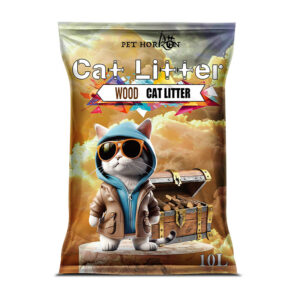
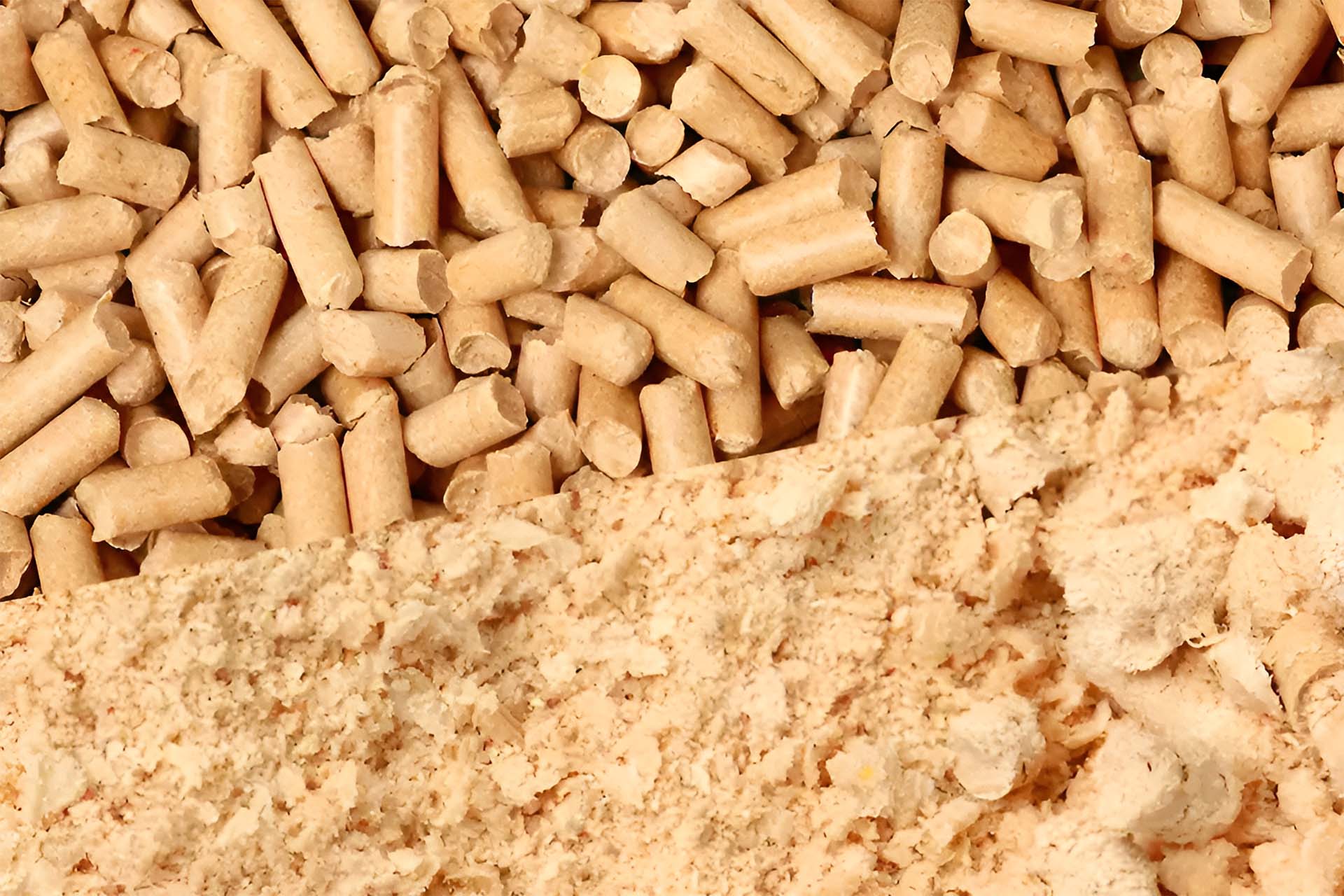
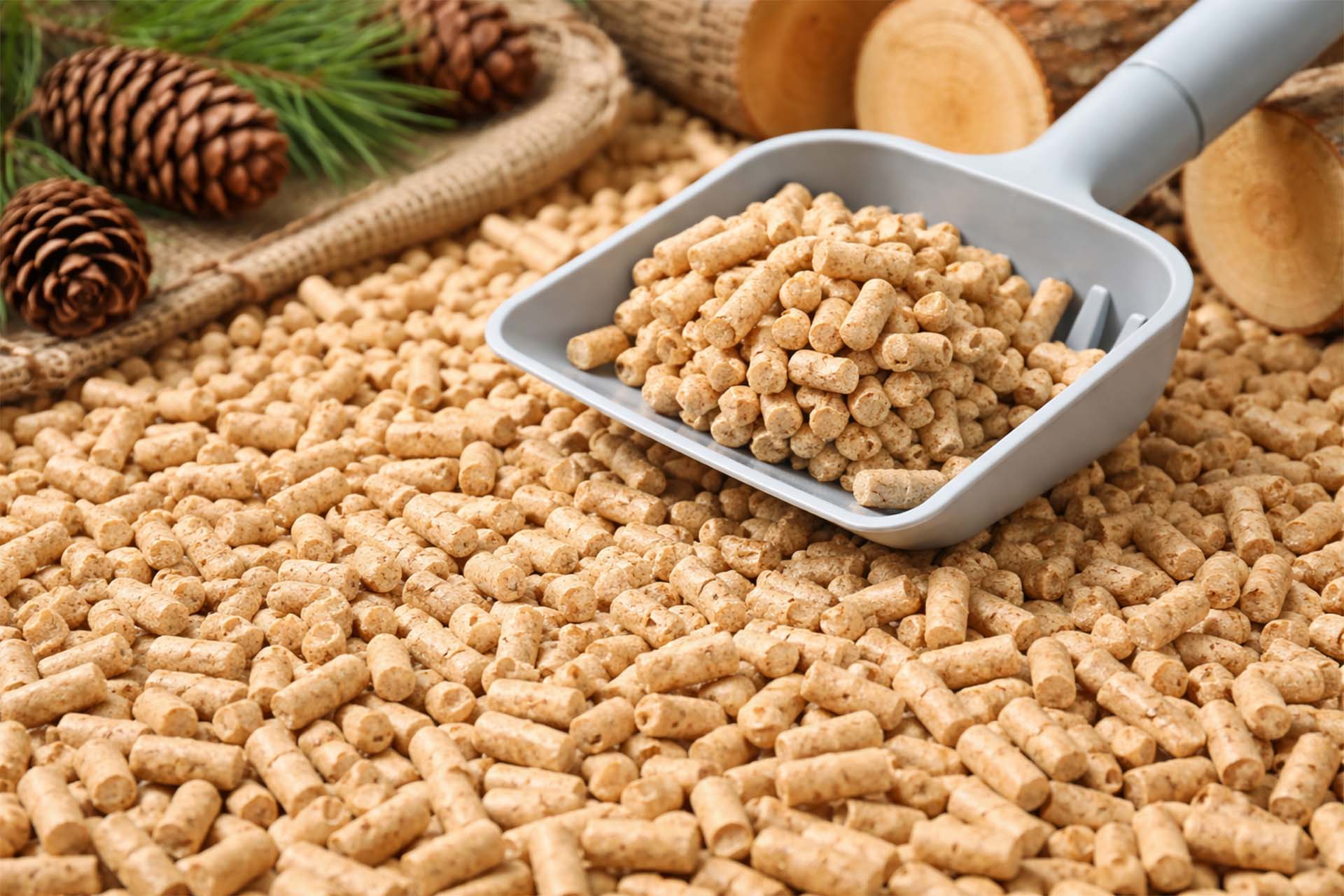
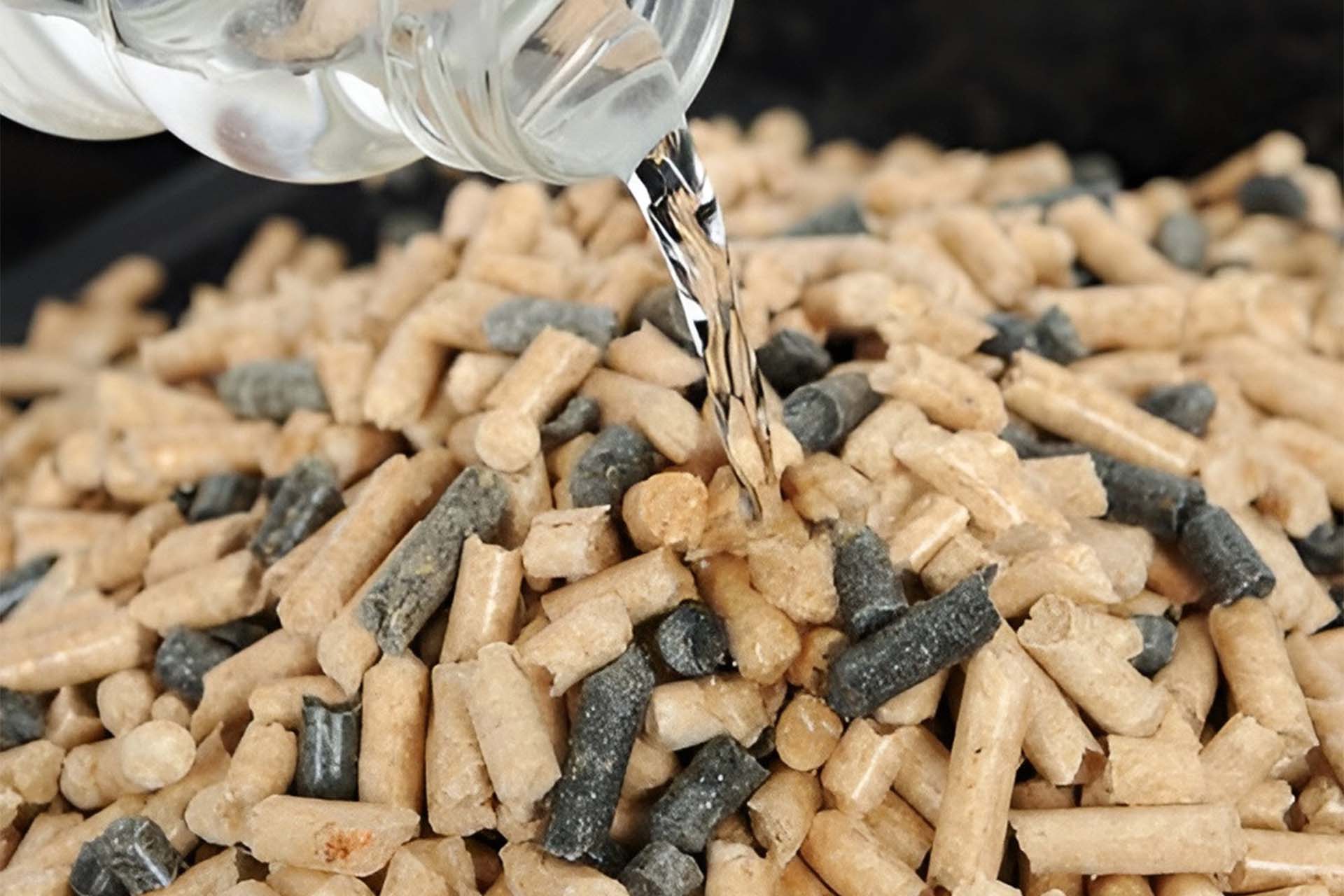
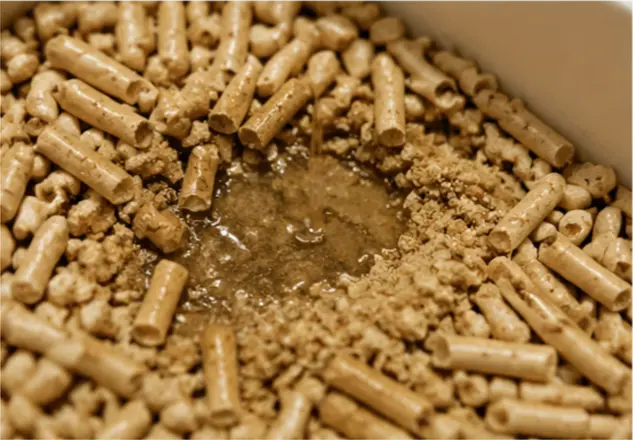
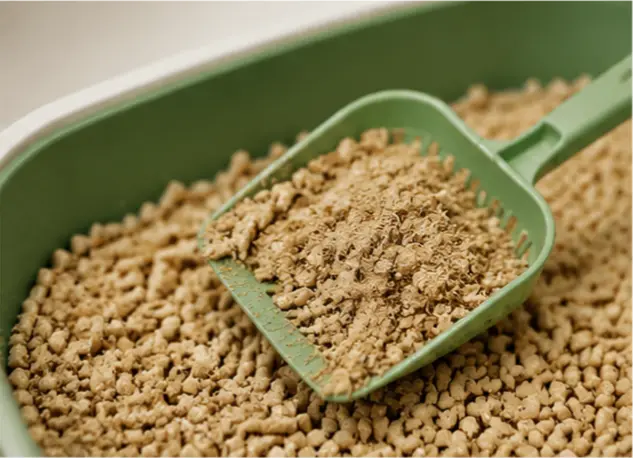
Pine cat litter (sometimes called wood cat litter) is produced from pine wood by-products — sawdust or wood fiber — that is dried, heat-pressed, and formed into pellets or fibrous flakes. The most common form is the kiln-dried pine pellet: when liquid hits it, the pellet softens and breaks down into sawdust instead of forming a scoopable clump. A newer clumping variant uses fine pine fiber so it holds together on contact with liquid. Either way, the natural resins in pine give it odor control without added fragrance, and the material is biodegradable and may be accepted in some composting or green-waste programs depending on local regulations.
Is Pine Cat Litter Safe for Cats?
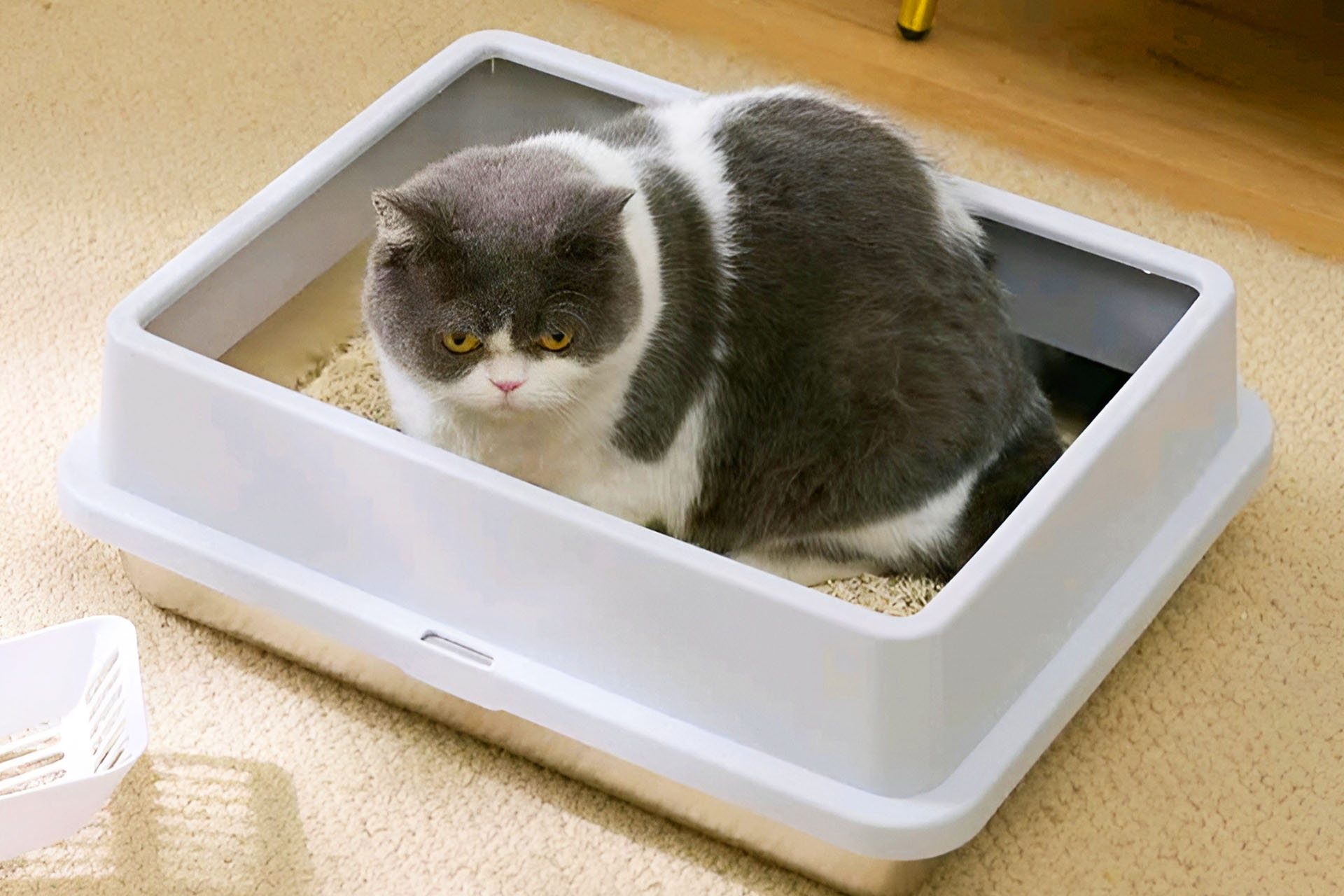
For most cats, yes. Pine litter is natural wood and generally considered low-risk, but a few points matter for buyers and their customers:
- Cats: adult cats tolerate pine litter well; the main issue is the transition, since cats trained on clumping litter may resist pellets at first.
- Kittens: very young kittens are more likely to chew or ingest litter. Hold off on any litter except under supervision, and keep supplier documentation on file as you would for any product.
- Pine oils: the natural resins are what suppress odor. In litter form they are mild; avoid “essential-oil” additives not intended for litter.
- Dust: pine pellets are inherently low dust, which is why they are often recommended for cats (and owners) with respiratory sensitivity.
Safety comes down to sourcing and QC: a reputable manufacturer keeps moisture and dust low and documents the material, so advise buyers on a gradual switch and keep the supplier’s paperwork accessible.
How Pine Cat Litter Is Made
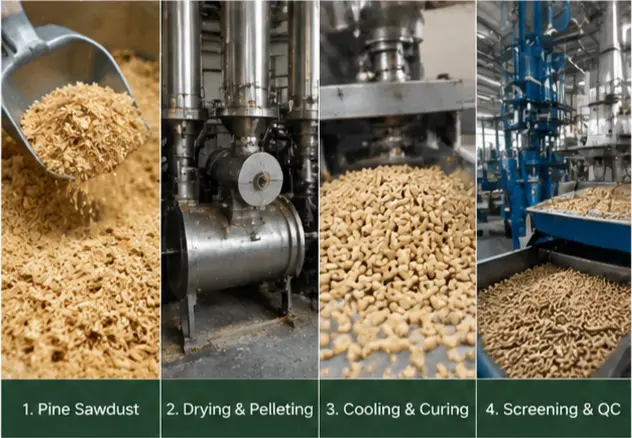
The pellet route is straightforward but equipment-sensitive:
- Material prep: pine sawdust is dried to a controlled moisture level.
- Pelleting: heat and pressure compress the fiber through a die; natural lignin acts as the binder, so no chemical adhesive is needed.
- Cooling & curing: pellets are cooled and stabilized to lock hardness.
- Screening: fines and oversized pieces are removed to keep dust low.
- QC: moisture, dust, pellet integrity, and absorbency are checked per batch before bagging.
Because pellet integrity depends on drying and die calibration, a manufacturer’s process control and in-house QC are the two biggest drivers of batch consistency. Verify both before contracting — see our manufacturing and supplier guides for the full checklist.
Pine Cat Litter Specifications: Moisture, Dust & Pellet Size
Do not order “pine litter” generically. Put these on your specification sheet:
| Spec | Target | Note |
|---|---|---|
| Moisture | < 10% | High moisture = soft, crumbly pellets |
| Dust | < 1% | Pellets are inherently low-dust |
| Pellet size | 6–8 mm | Smaller = faster breakdown; adjust to market |
| Absorbency | 2–3× weight | Drives how long a fill lasts |
| Fragrance | Natural pine / none | Added scent is optional and market-specific |
Pine vs Bentonite: What Buyers Should Know
These serve different buyers. Pine wins on dust, biodegradability, and natural odor control; bentonite wins on clump hardness and price. A detailed bentonite cat litter guide covers the clay side in full.
| Factor | Pine | Bentonite |
|---|---|---|
| Clump type | Absorbs & crumbles | Very hard clump |
| Dust | Very low | Moderate–high |
| Biodegradable | Yes | No |
| Odor control | Natural pine oil | Absorption + scent |
| Best for | Eco / low-dust brands | Max clump, value |
Pine Cat Litter vs Tofu Cat Litter
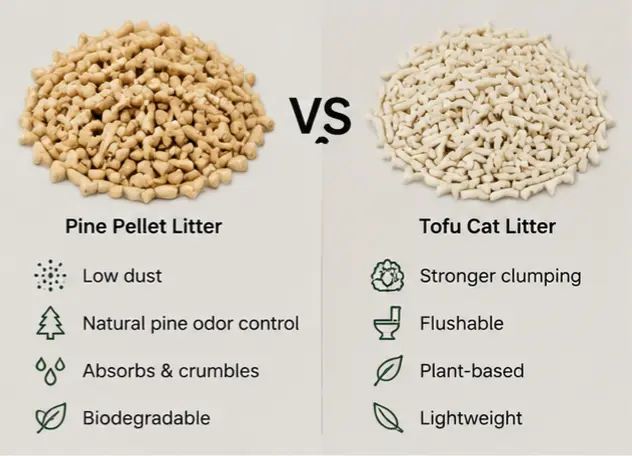
Both are plant-based and low-dust, but they feel very different to the cat and the buyer:
| Factor | Pine | Tofu |
|---|---|---|
| Material | Pine wood pellets | Soybean fiber strips |
| Clump | Crumples, no scoopable clump | Soft-medium scoopable clump |
| Odor control | Natural pine oil | Mild, relies on carbon/additives |
| Flushable | No (compost instead) | Partially (check local rules) |
| Best for | Low-dust, green claim | Eco + scoopable convenience |
Many eco-positioned brands run both: a tofu cat litter guide product for scoopable convenience and a pine SKU for the lowest-dust, fully compostable claim. Some brands also develop pine-based mixed formulas to balance low dust performance and stronger clumping.
OEM & Private Label Considerations
Pine litter is straightforward to private-label: pellet size, fragrance (natural pine or unscented), and bag design are all adjustable at low setup cost. Confirm the manufacturer’s minimum run, lead time, and whether they hold relevant certifications (ISO 9001, BSCI, SGS, and FSC for wood sourcing). Our standard minimum order quantity starts from one 20ft container, and the exact volume is negotiable depending on packaging format and formulation — confirm the MOQ and lead time during the brief stage.
How to Choose a Pine Cat Litter Supplier
Specifying the product is only half the job — the manufacturer determines whether your SKU stays consistent across reorders. Vet suppliers against these six points:
- Track record: ask for 10+ years of OEM/ODM experience and references from comparable private-label programs.
- Certifications: request ISO 9001, BSCI, and SGS documentation, plus FSC if you market the wood sourcing.
- In-house control: confirm owned drying, pelleting, and screening lines — this is what keeps batches uniform.
- QC transparency: the supplier should hand over a full specification sheet and per-batch QC reports without pushback.
- Export readiness: check they can produce destination-market labeling and customs paperwork for your target regions.
- Commercial terms: clarify MOQ, lead time, and private-label packaging support before you sign.
A manufacturer that controls raw material drying, pelleting, screening, and QC in-house is generally more capable of delivering consistent quality over long-term OEM cooperation.
Typical OEM Ordering Process
A standard private-label program runs in eight steps:
- Brief: submit your spec — pellet size, fragrance, color, packaging.
- Quote: the manufacturer returns pricing and the minimum order quantity (MOQ).
- Contract: sign the agreement and confirm artwork and NDA terms.
- Sample: a pre-production batch is pelleted and tested against your spec.
- Approval: you sign off the sample; bulk production is scheduled.
- Production QC: in-process checks and a final batch inspection are recorded.
- Documentation: packing, palletizing, and export papers (SDS, CO) are prepared.
- Shipment: container loading and delivery to your nominated port.
Compliance Notes for Importers
If you sell into the EU, packaging is now a regulated component under the PPWR (from August 2026) — specify mono-material or recycled-content bags from the start. Biodegradability claims also vary by market; confirm what local waste rules allow before advertising “compostable” on the pack. Also request the supplier’s SDS (formerly MSDS) together with the product specification sheet and any other export documents your destination market requires — most importers need it for customs clearance and downstream safety compliance.
Why Partner With Pet Horizon
Pet Horizon has specialized in cat litter manufacturing for more than 20 years and has supported OEM and private-label programs for over 10 years, serving distributors, importers, and retail brands across 80+ international markets. Every production batch is inspected for moisture, dust, clumping performance, and appearance before shipment.
Conclusion
Pine cat litter is the credible eco-middle of a modern cat-litter portfolio — low dust, natural odor control, and full biodegradability at a mid price. Specify moisture, pellet size, and absorbency explicitly, verify the manufacturer’s drying and QC control, and align packaging with PPWR before you import. Pair it with a comparison of all litter types so your buyers can choose the right product for their market. For importers and private-label brands, choosing a manufacturer with stable production, transparent QC, and export experience is often more important than choosing the lowest price.
Frequently Asked Questions
For adult cats, yes — it is natural wood and low-dust. Kittens are more likely to chew litter, so supervise very young cats and keep supplier documentation on file. Transition gradually, since cats used to clumping litter may resist pellets at first.
Standard pine pellets do not form a hard clump — they absorb liquid and crumble into sawdust, which you sift or scoop. A clumping pine-fiber variant exists for buyers who want scoopable performance; specify which type you need.
It controls odor well. The natural resins in pine suppress ammonia and litter-box smell without added fragrance, which is why it is a strong choice for buyers who want a “natural” claim rather than a perfumed box.
No. Pine pellets are wood and should go in the trash or a green-waste/compost stream, not the toilet. Only some plant litters are partially flushable, and local wastewater rules vary — never assume flushing is safe.
Yes, in most municipal green-waste or composting programs, because it is natural wood. Check your destination market’s rules, and avoid composting litter that has been in contact with cat waste in home gardens where food is grown.
Scoop the crumbled sawdust daily and top up with fresh pellets; replace the full tray every 1–2 weeks depending on the number of cats and tray size. Because pellets break down when wet, regular removal of soiled material keeps odor low.
Choose pine for the lowest dust and a fully compostable, natural claim; bentonite for the hardest clump and lowest cost; tofu for a plant-based litter that still scoops like clay. Many brands offer more than one to cover different buyers.
Yes. Pine pellets are among the lowest-dust litters available, which is why they are frequently recommended for cats and owners with respiratory sensitivity. Keep moisture below 10% so dust stays minimal during handling and pouring.