



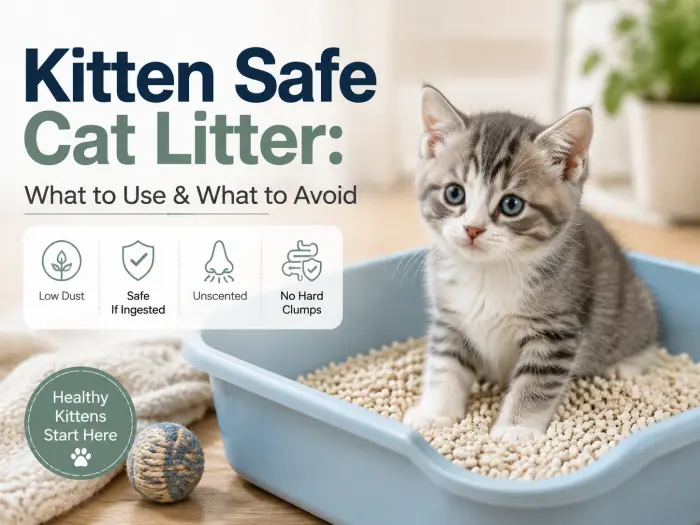
A kitten-safe litter program is one of the highest-intent topics in the cat litter category, and one of the few where a manufacturer’s understanding of formulation directly protects the end user. For importers and private-label buyers, getting the kitten SKU right is also a customer-acquisition play: the first litter a household buys often defines brand loyalty. This guide explains the veterinary consensus, the materials that work, and how to specify a kitten-safe line.
Quick answer: Kitten safe cat litter means a low-dust, unscented formula that will not form a hard mass if ingested. Vets recommend avoiding clumping sodium bentonite for kittens under about 8 to 12 weeks because swallowed clumps can cause intestinal blockage. Non-clumping clay, tofu, wheat, and pine litters are safer choices. Most B2B buyers specify an unscented, plant-based or non-clumping line for the kitten SKU.
Why Kittens Need a Different Litter
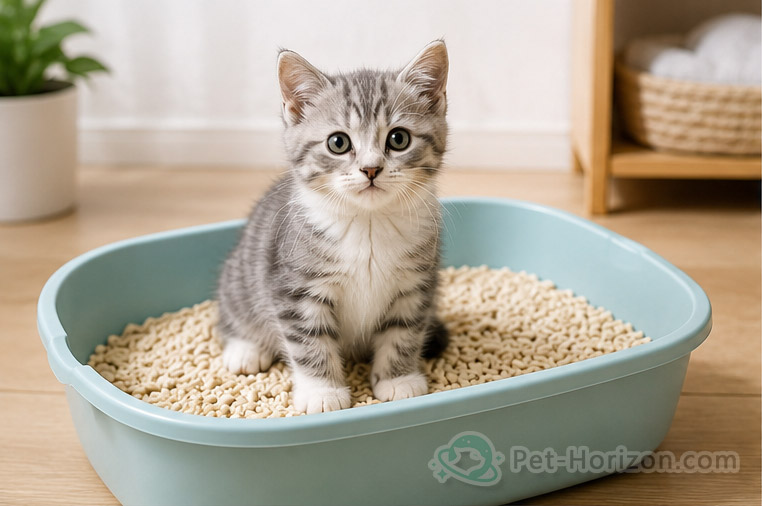
Kittens explore with their mouths. They dig, taste, and sometimes eat litter, especially before litter-box training is reliable. A young cat’s digestive tract is also narrower and less able to pass a hardened mass. The litter choice that is perfectly safe for an adult cat can become a medical risk for a kitten, which is why the kitten SKU is treated as a distinct specification rather than a smaller bag of the adult formula.
Why Vets Warn Against Clumping Bentonite for Kittens
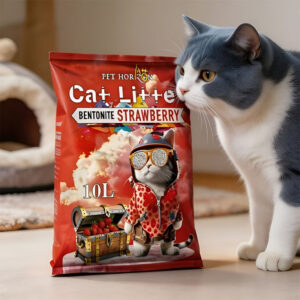
The concern is mechanical, not toxic. Sodium bentonite expands and sets into a firm clump when it contacts moisture. If a kitten ingests enough of it, the material can swell and obstruct the intestine, a condition that may require surgery. Veterinary-reviewed buying guides consistently flag this risk for kittens and post-surgical cats.
Clumping bentonite can expand and harden inside a kitten’s digestive tract if ingested, creating a blockage risk that non-clumping and plant-based litters largely avoid.
The Blockage Mechanism
Once wet, bentonite forms a cohesive mass. In the gut, that mass does not break down the way a digestible plant fiber would. The younger the cat, the higher the consequence. This is why the practical rule for B2B spec sheets is: keep clumping bentonite out of the kitten SKU, or clearly label age guidance on the retail pack.
Best Kitten Safe Cat Litter Options
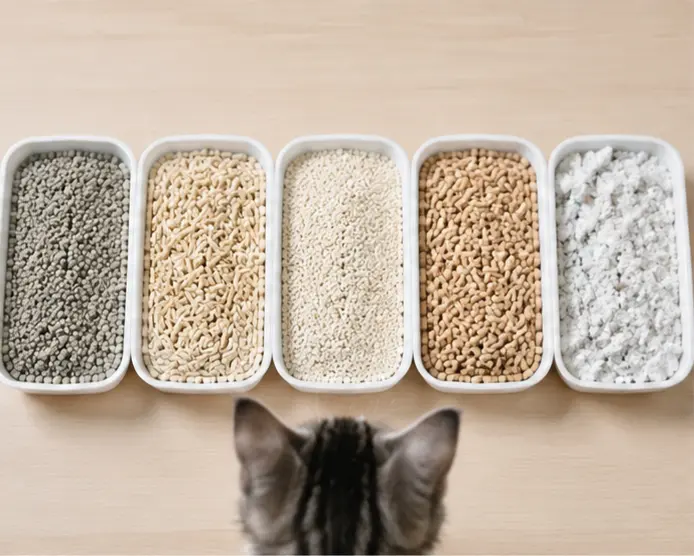
The safer options share two traits: they do not form a hard intestinal mass, and they are low in inhalable dust. The table below compares the common kitten-appropriate formats.
| Format | Clumping? | Why it suits kittens | Watch-outs |
|---|---|---|---|
| Non-clumping clay | No | No hard mass if ingested; cheap and familiar | Still dusty if low grade |
| Tofu litter | Yes (soft) | Plant-based, digestible, low dust | Confirm formulation for young cats |
| Wheat litter | Varies | No sodium bentonite; vet-referenced for kittens | Some cats sensitive to wheat |
| Pine litter | Usually no | Low dust, natural scent, non-clumping pellets | Different look from standard litter |
| Paper litter | No | Very soft, low dust, highly digestible | Lower odor control |
Non-Clumping vs Clumping for Kittens
For the youngest kittens, non-clumping is the conservative choice. The usual transition window is around 8 to 12 weeks, when litter-box habits are established and the risk of eating litter drops. After that, a soft-clumping plant-based litter such as tofu is generally acceptable and far more convenient for the owner. Specifying both a starter (non-clumping) and a follow-on (soft-clumping) SKU lets retailers serve the full kitten-to-adult journey.
Tofu and Plant-Based Litters for Kittens
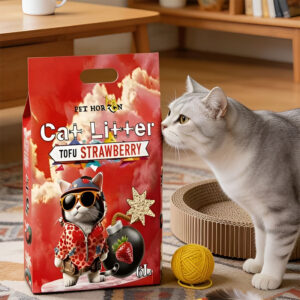
Plant-based litters are among the most kitten-appropriate options because the raw materials are digestible and dust is naturally low. Tofu cat litter, made from soybean residue, clumps softly, flushes in small amounts where permitted, and avoids sodium bentonite entirely. For a private-label kitten line, tofu is a strong base to customize on particle size and fragrance.
Dust, Fragrance, and Other Kitten Safety Factors
Beyond clumping chemistry, two more factors matter for kittens:
- Dust: Fine clay dust irritates developing respiratory systems. Specify a low-dust grade, which plant-based and compressed-pellet litters deliver more easily.
- Fragrance: Kittens have sensitive noses and may avoid a perfumed box. Unscented is the default for the kitten SKU; if a scent is required, keep it minimal and vet the ingredient.
Sourcing a Kitten-Safe Line: OEM and Private Label
A kitten-safe private-label line is a formulation and quality-control exercise, not just a label change. Key specifications to discuss with a manufacturer include particle size (fine enough to be gentle, not powdery), hardness, unscented or low-fragrance profile, and batch dust testing. A factory with dedicated OEM capabilities can adjust formula and packaging to match the target market’s retail expectations.
Pet Horizon is a dedicated cat litter factory near Dalian Port with 10+ years of manufacturing experience and products shipped to 80+ markets. We support full OEM and private-label programs, including plant-based cat litter types such as tofu, pine, and mixed that suit a kitten-safe specification. For a tailored program, the starting point is a formula discussion with an OEM cat litter partner who can document batch consistency and export documentation.
Conclusion
Kitten safe cat litter is defined by what it avoids (clumping sodium bentonite, heavy dust, strong fragrance) more than by a single material. Non-clumping clay, tofu, wheat, pine, and paper litters all meet the core safety bar, and the right choice depends on the retailer’s market and the owner’s routine. For B2B buyers, a clearly specified kitten SKU built on a plant-based or non-clumping base is both a safety win and a loyalty-building acquisition product.
Frequently Asked Questions
Not recommended under about 8 to 12 weeks. Clumping bentonite can cause intestinal blockage if ingested. Soft plant-based clumping litters may be suitable after that window.
Most guidance points to around 8 to 12 weeks, once litter-box habits are established and the risk of eating litter drops. Check with the brand’s veterinary advisor for the specific formula.
Non-clumping clay, tofu, wheat, pine, or paper litters are safer than clumping bentonite. Unscented and low-dust versions reduce respiratory and avoidance risks.
Yes, as a plant-based, digestible, low-dust option without sodium bentonite. Confirm the specific formulation and age guidance with the supplier.
Kittens have sensitive noses and may refuse a perfumed box, undermining litter training. Unscented is the standard for the kitten SKU.
Yes. Specify unscented, low-dust, non-clumping or soft-clumping plant-based formulas with a manufacturer that documents batch consistency and export readiness.
Non-clumping litters control odor less aggressively than clumping types, so more frequent changes are needed. Plant-based options help, and the kitten stage is short.
Often, yes, while exploring. This is exactly why ingestion-safe, non-clumping or plant-based formulas are recommended until they outgrow the habit.