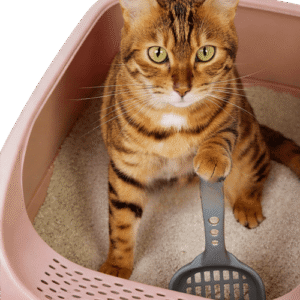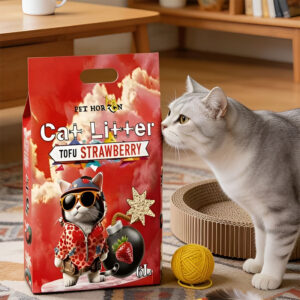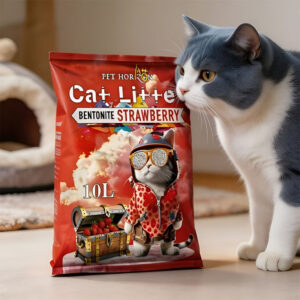





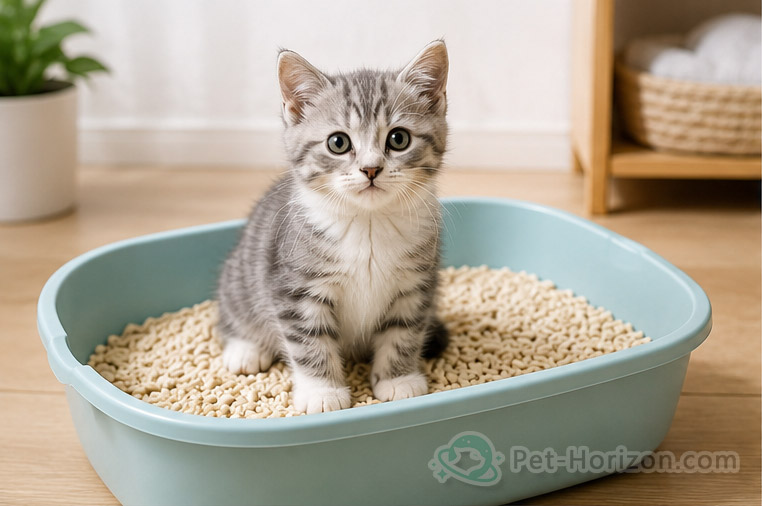
Welcoming a new kitten into your home is one of the happiest moments for any cat owner. That tiny furry companion curling up beside you instantly becomes part of the family. While most people carefully prepare premium cat food, cozy beds, and toys, many overlook one essential product that directly affects a kitten’s daily health — choosing the best kitten cat litter.
Many first-time cat owners assume all cat litter products are basically the same. In reality, kittens have extremely sensitive respiratory systems, delicate paw pads, and fragile digestive systems. Choosing the wrong kitten cat litter can lead to sneezing, coughing, irritated paws, stress-related litter box avoidance, or even digestive problems if litter is accidentally swallowed.
As a professional cat litter company with years of experience in the pet industry, we have seen many kittens develop avoidable health issues because of unsuitable litter choices. Understanding how to choose safe cat litter for kittens is one of the most important parts of responsible pet care.
Today, the cat litter market is filled with products such as tofu cat litter, bentonite cat litter, crystal cat litter, and pine cat litter. Each claims to offer superior odor control, stronger clumping, or lower prices, making it difficult for inexperienced owners to know which type is truly safe for kittens. Many people only realize they chose the wrong litter after their kitten begins sneezing, refusing the litter box, or urinating outside the box.
From weaning until about one year old, kittens are still developing physically and behaviorally. During this period, they naturally explore their environment with their mouths and paws. Many kittens paw at litter, bite small particles, or accidentally ingest litter while grooming themselves. Because of this, choosing low dust cat litter with safe natural ingredients becomes especially important.
A kitten’s respiratory tract is extremely delicate. Even small amounts of dust can trigger sneezing or respiratory irritation. Rough litter particles may also damage soft paw pads over time. For kittens, the ideal cat litter must focus on safety, low dust, softness, and easy adaptation — not just odor control.
Why Choosing the Right Kitten Cat Litter Matters
Many cat owners do not realize that kittens of different ages have slightly different litter needs.
Kittens between one and three months old are just learning litter box habits and are highly sensitive to texture and smell. Strong fragrances or rough particles can make them avoid the litter box entirely.
Kittens from three to six months old become more playful and curious. At this stage, the risk of accidentally eating litter increases significantly because they often dig, bite, or roll inside the litter box.
Although kittens from six to twelve months old are physically stronger, their respiratory and digestive systems are still developing. Using heavy dust cat litter or strongly scented products can still create health risks.
Professional breeders often separate litter types based on kitten age. Most prefer natural cat litter with low dust formulas to reduce stress and minimize illness. This approach is also highly recommended for home cat owners.
Why Tofu Cat Litter Is the Best Cat Litter for Kittens
Among all available litter materials, natural tofu cat litter is widely considered the safest option for kittens.
After years of product testing and feedback from cat-owning families worldwide, we believe high-quality plant-based tofu cat litter is the best kitten cat litter for most homes.
Natural and Safe Ingredients
Premium tofu cat litter is usually made from food-grade plant materials such as peas, soybean fiber, or corn starch. It contains fewer irritating chemicals and avoids the strong artificial fragrances commonly found in cheaper cat litter products.
The mild natural smell is far more suitable for kittens with sensitive noses and helps them adapt to the litter box more easily.
Soft and Comfortable for Sensitive Paws
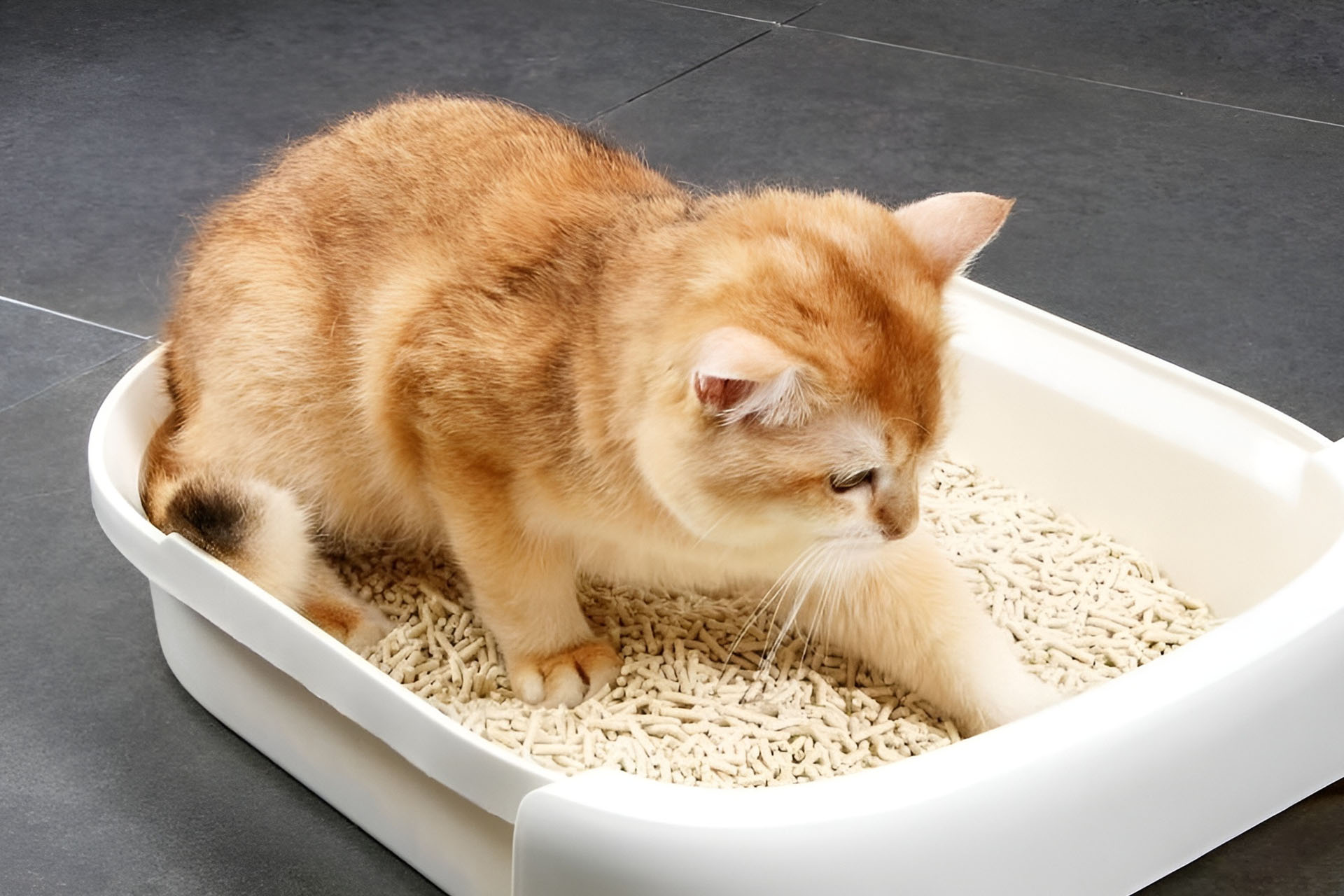
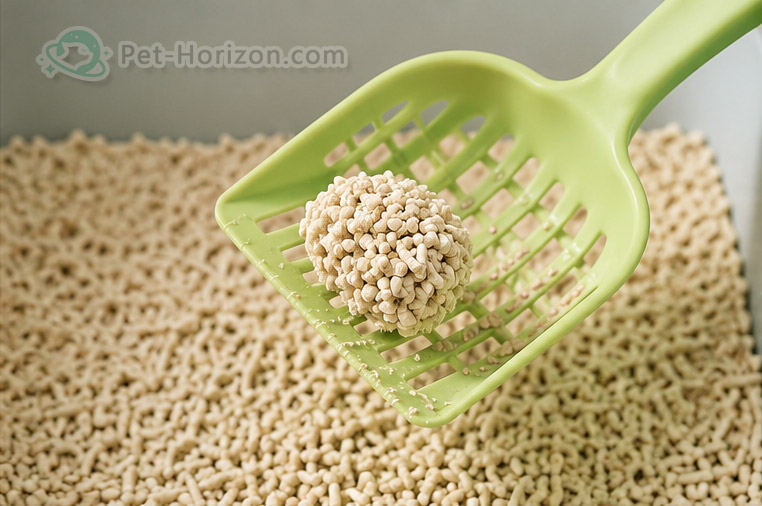
The particles of tofu cat litter are smooth, rounded, and lightweight. They feel soft under a kitten’s paws and reduce irritation during daily use.
Unlike rough clay or crystal particles, tofu litter does not easily scratch delicate paw pads. Even active kittens that frequently dig and play inside the litter box are less likely to develop redness or discomfort.
Safer if Accidentally Swallowed
One of the biggest advantages of tofu cat litter is biodegradability. Since kittens often explore with their mouths, accidental ingestion is common.
Plant-based litter can usually pass through the digestive system more safely than clay or silica products. This greatly reduces the risk of intestinal blockage, vomiting, or constipation.
Low Dust Formula Protects Respiratory Health
Dust control is critical when selecting kitten cat litter.
High-quality low dust tofu cat litter produces minimal airborne particles when poured or scooped. This helps protect kittens from respiratory irritation and supports healthier indoor air quality.
For kittens prone to sneezing or respiratory sensitivity, dust-free cat litter is especially important.
Easy Cleaning and Practical Daily Use
Tofu cat litter also offers reliable clumping performance without sticking excessively to fur or paws. Daily cleaning becomes easier for cat owners, and many flushable tofu cat litter formulas can even be disposed of conveniently in small amounts.
Mixed Cat Litter Can Work for Older Kittens
For kittens older than six months, low dust mixed cat litter can also be a suitable choice.
Many modern mixed cat litter formulas combine tofu cat litter with natural cassava or plant fibers. This improves odor control while maintaining softness and safety.
As kittens mature, waste odor naturally becomes stronger. Pure tofu cat litter may sometimes struggle with odor control in smaller apartments or multi-cat homes. A balanced mixed cat litter can help trap odors more effectively while still remaining relatively safe and low dust.
Many professional breeding facilities also use plant-based mixed cat litter because it balances hygiene, odor management, and kitten safety.
Cat Litter Types Kittens Should Avoid
While some cat litter products work well for adult cats, they may be unsuitable or dangerous for kittens.
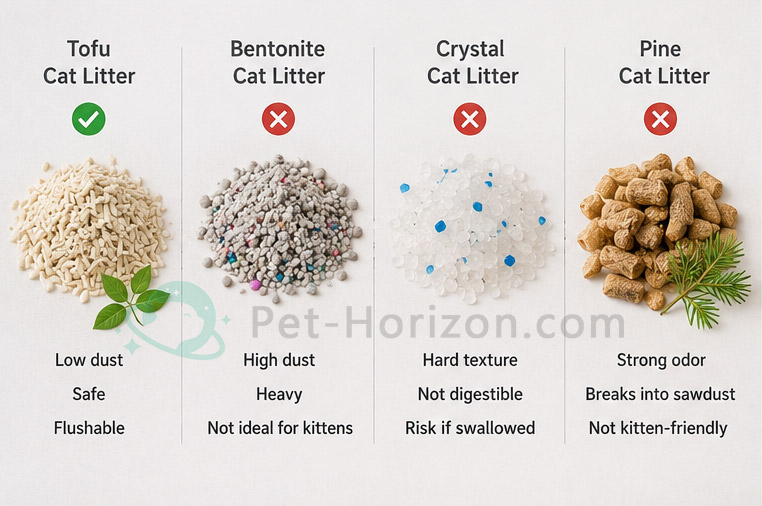
Bentonite Cat Litter
Cheap bentonite cat litter is one of the most common problem products for kittens.
The biggest issue is dust. When poured or scooped, clay dust easily becomes airborne. Long-term exposure can irritate a kitten’s respiratory system and may contribute to chronic breathing issues.
Small bentonite particles also stick easily to paws and fur. During grooming, kittens may swallow large amounts of clay particles, increasing the risk of digestive blockage or constipation.
Some low-cost bentonite cat litter products also contain strong industrial fragrances or chemical additives that can overwhelm sensitive kittens and increase litter box avoidance behavior.
Crystal Cat Litter
Crystal cat litter, also called silica gel cat litter, is another poor choice for kittens.
The particles are hard and often sharp, making them uncomfortable for sensitive paws. More importantly, silica litter cannot be digested if swallowed.
Every year, many kittens require veterinary treatment after accidentally eating crystal cat litter. Intestinal blockage caused by silica litter can become a serious emergency.
Pine Cat Litter
Pine cat litter is generally not recommended for kittens either.
The strong pine scent can overstimulate sensitive noses and increase stress. After absorbing moisture, pine pellets often break into fine wood particles that stick to fur and paws, increasing the risk of accidental ingestion.
Why Kittens Should Not Use Adult Cat Litter
Some owners assume kittens can simply share the same litter as adult cats in the home. However, adult cats tolerate stronger smells, harder textures, and higher dust levels much better than kittens.
Using adult cat litter for young kittens may place unnecessary stress on their respiratory and digestive systems.
Preparing dedicated kitten cat litter is the safer and healthier option.
How to Choose the Best Cat Litter for Kittens
Besides material type, several additional factors are important when selecting kitten cat litter.
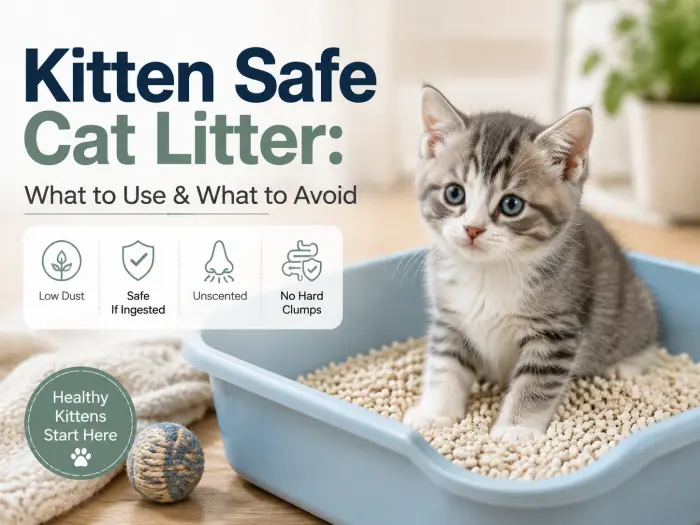
Choose Unscented Cat Litter
Avoid heavily scented cat litter products, including floral or fruit fragrances.
Artificial fragrances may irritate kittens and even trigger allergic reactions. Unscented cat litter is usually the safest choice.
Select the Right Particle Size
Medium-sized rounded particles are ideal.
Very small particles are easier for kittens to accidentally swallow, while oversized pellets may feel uncomfortable and discourage litter box use.
Buy from a Reliable Cat Litter Company
Choose products from professional cat litter manufacturers with transparent ingredient lists and proper quality testing.
Reliable brands generally provide safer raw materials, better dust control, and more stable production quality.
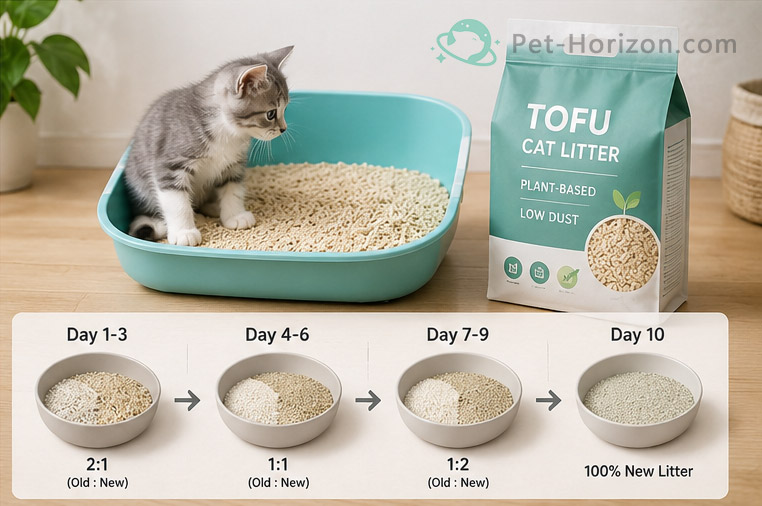
How to Change Cat Litter for Kittens Safely
Kittens adapt slowly to environmental changes. Suddenly switching cat litter may cause stress and litter box accidents.
The safest method is gradual transition:
- Days 1–3: Mix old and new litter at a 2:1 ratio
- Days 4–6: Use a 1:1 ratio
- Days 7–9: Increase the new litter gradually until fully replaced
This process helps kittens adapt comfortably to the new texture and smell.
For kittens raised in breeding facilities, sudden litter changes are especially stressful. A slow transition protects established litter habits.
Final Thoughts on Choosing Kitten Cat Litter
Raising a kitten is a careful and rewarding experience. Every daily product affects long-term health, including cat food, bedding, and especially kitten cat litter.
In many cases, common health issues such as sneezing, litter box avoidance, dusty paws, or digestive discomfort are linked to unsuitable litter choices rather than sudden illness.
As a professional cat litter company, we believe the best kitten cat litter does not need flashy marketing or overpowering fragrances. The safest products focus on natural ingredients, low dust performance, soft texture, and practical daily use.
When choosing cat litter for kittens, the safest approach is simple:
- Prioritize natural tofu cat litter
- Choose low dust and unscented formulas
- Use mixed plant-based litter for older kittens if needed
- Avoid bentonite, crystal, and pine litter for young kittens
By following a natural and safety-focused approach, cat owners can create a cleaner, healthier environment for kittens while also reducing common household problems such as odor, dust, and litter tracking.
Whether you raise one kitten at home or manage multiple cats in a breeding environment, choosing the right kitten cat litter supports healthier growth, better litter habits, and a more comfortable life for both cats and owners.
FAQ
What is the safest cat litter for kittens?
Natural tofu cat litter is generally considered the safest cat litter for kittens because it is low dust, soft on paws, and safer if accidentally swallowed.
Can kittens use bentonite cat litter?
Bentonite cat litter is not recommended for young kittens because it produces dust and may cause digestive problems if ingested.
At what age can kittens use mixed cat litter?
Most kittens over six months old can gradually transition to low dust mixed cat litter with plant-based ingredients.
Is scented cat litter bad for kittens?
Yes. Strong artificial fragrances may irritate a kitten’s respiratory system and increase litter box avoidance behavior.
Why do kittens eat cat litter?
Kittens naturally explore with their mouths. Curiosity, teething, or nutritional imbalance may cause litter eating behavior.
How often should kitten cat litter be changed?
Scoop waste daily and fully replace the litter regularly depending on the litter type and number of cats in the home.
How can I help my kitten adapt to new cat litter?
Gradually mix the old and new litter over about one week to reduce stress and maintain healthy litter box habits.