

The South Korea cat litter market presents sourcing opportunities for international manufacturers, importers, distributors, and private-label buyers. Market entry requires an understanding of local sales channels, product preferences, import classification, applicable tariffs, and labeling requirements. Because cat litter materials differ in composition, performance, and shipping economics, buyers should evaluate each product category separately. This guide explains the key considerations for sourcing cat litter for the South Korean market, from supplier qualification and landed-cost calculations to tariff verification and import compliance.
Quick Answer: The South Korea cat litter market offers opportunities for overseas manufacturers, importers, distributors, and private-label buyers. Importers should evaluate demand by litter type, material, price tier, and sales channel rather than rely on a single market-wide estimate. Before shipping, confirm the product-specific HS classification and applicable Korean tariff, check whether preferential treatment is available under RCEP or another relevant trade arrangement, and verify Korean-language labeling and any applicable product-safety requirements. E-commerce platforms and major retail chains are important potential sales channels, but the best route to market depends on pricing, logistics, product positioning, and buyer requirements.
South Korea Cat Litter Market: Sourcing and Trade
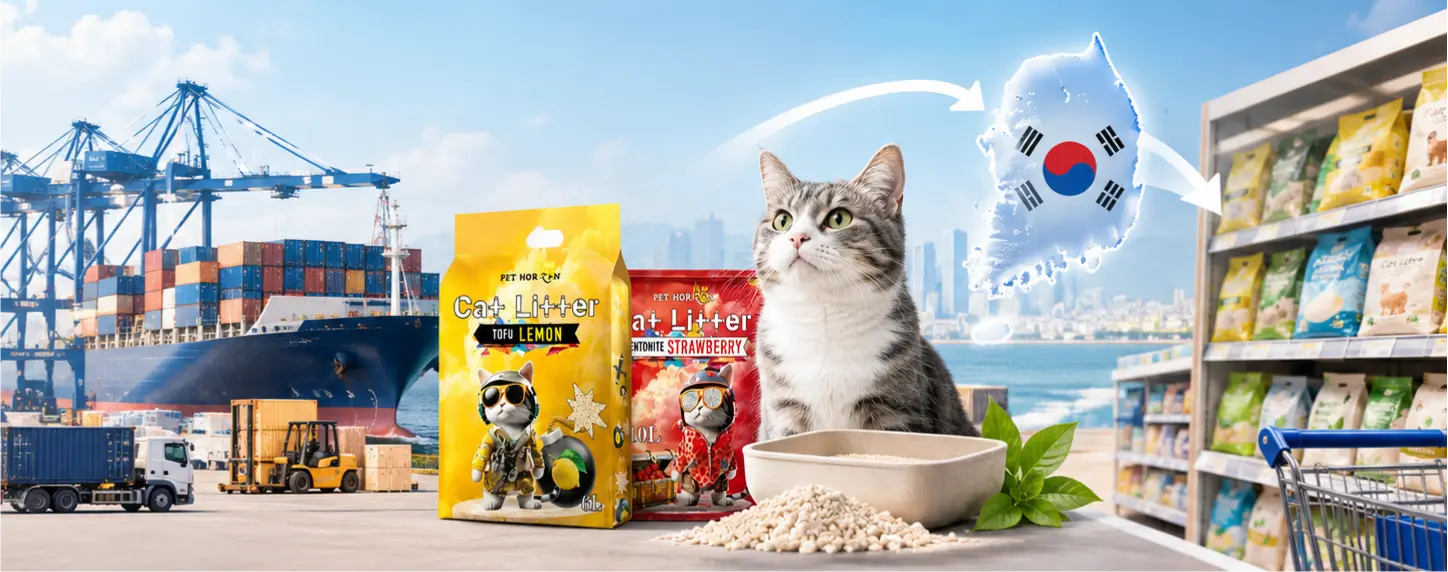
South Korea is a market worth evaluating for overseas cat litter manufacturers and exporters, but its sourcing structure should be assessed using product-specific trade data rather than a single market-wide import estimate. Bentonite, tofu, pine, silica gel, and other litter types may follow different sourcing patterns because their raw materials, production costs, and target price segments differ. Buyers should compare suppliers by material, country of origin, landed cost, product specifications, and private-label capabilities. For a reliable view of import dependence and supplier-country shares, use Korean import statistics for the relevant HS codes and reporting period, while checking whether the selected codes cover cat litter exclusively or include other products.
Distribution Channels Buyers Must Understand
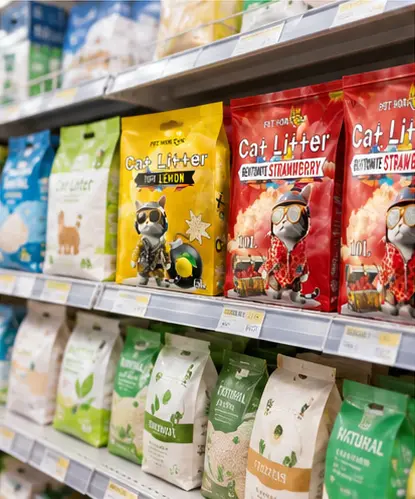
South Korea’s cat litter market should be approached as a multi-channel market, with online marketplaces and established offline retailers offering different routes to consumers. E-commerce platforms such as Coupang, Naver Shopping, and Gmarket are worth evaluating for product discovery, repeat purchases, and delivery-led sales. Hypermarket chains such as E-Mart, Lotte Mart, and Homeplus may offer opportunities for value-oriented products and private-label programs, subject to their supplier requirements. Pet-specialty retailers can be relevant for differentiated products positioned around odor control, dust reduction, material choice, or premium performance. Because cat litter is heavy relative to its retail price, buyers should compare delivered cost, packaging size, fulfillment fees, promotional requirements, and repeat-purchase economics before choosing a channel. These are channel-selection considerations, not verified market-share estimates; suppliers should validate actual shares using current category-specific data.
What Korean Buyers Look For
For Korean importers and distributors, cat litter sourcing decisions typically involve more than consumer-facing features. Buyers need to assess odor control, dust performance, clumping or absorption behavior, moisture stability, packaging durability, and consistency between production batches. For private-label programs, they may also evaluate minimum order quantities, packaging customization, lead times, quality-control procedures, and the supplier’s ability to provide product specifications and export documentation. Plant-based and other differentiated litter formats can be considered where they fit the target price segment and customer demand, but product claims should be supported by appropriate evidence. Suppliers should prepare a clear specification sheet and quotation structure so buyers can compare products on a consistent basis.
What Should Buyers Include in a Cat Litter RFQ?
A request for quotation should specify the litter material, target particle size, clumping or absorption requirements, dust expectations, packaging format, bag weight, order quantity, and destination port. Buyers should also request production lead times, available test reports, quality-control information, and the proposed Incoterms. For private-label orders, include artwork requirements, packaging language, carton specifications, and approval procedures. A complete RFQ helps suppliers quote on a comparable basis and reduces the risk of specification gaps before mass production.
HS Classification and Tariff for Cat Litter
Cat litter does not have one universal HS code or tariff rate for every material type. Classification may differ for bentonite and other mineral litters, silica gel products, tofu-based litter, pine litter, and blended formulations, depending on the product’s composition, processing, and the applicable tariff rules. Importers should identify the appropriate Korean tariff classification for the exact product before calculating customs duty or issuing a landed-cost quotation. Use the Korea Customs Service website and its tariff and customs classification resources to verify the applicable Korean tariff schedule, and seek a formal classification determination or advice from a qualified Korean customs broker when the classification is uncertain. For general background, see our cat litter HS code reference.
RCEP and Preferential Duty Opportunities
South Korea participates in RCEP, but preferential tariff treatment for cat litter must be assessed against the applicable tariff commitment and product-specific rules of origin. Chinese manufacture alone does not establish eligibility for a preferential rate. Importers should first confirm the Korean tariff classification, then check the applicable Korea-China RCEP tariff schedule, the relevant product-specific origin rule, and the documentary requirements for the shipment. Where a preference is available, the exporter and importer should ensure that the origin claim is properly supported and that all applicable procedural requirements are met. Consult the Korea Customs Service FTA Portal before including a preferential rate in a quotation. Do not assume that RCEP automatically reduces the duty to zero.
How to Import Cat Litter into South Korea
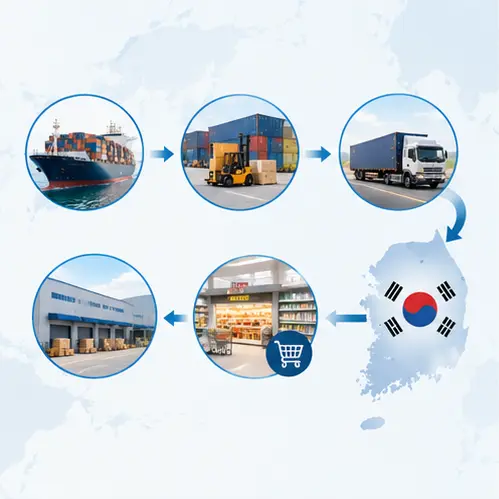
Importing cat litter into South Korea involves product classification, supplier qualification, compliance checks, freight planning, and customs clearance. Buyers should first confirm the product material and specifications, establish the applicable Korean tariff classification, and verify the duty and any available preferential treatment. Next, request a quotation that identifies the product price, packaging, MOQ, production lead time, Incoterms, and shipment assumptions. Calculate landed cost using the relevant freight, insurance, customs duty, import taxes, clearance charges, and domestic delivery expenses. Before mass production, review Korean-language packaging and confirm any product-specific regulatory requirements with the local importer or customs adviser. Finally, agree on quality specifications, batch consistency controls, document responsibilities, and shipment schedules. Our cat litter import guide provides additional background on the sourcing and import process.
Labeling and Compliance Notes
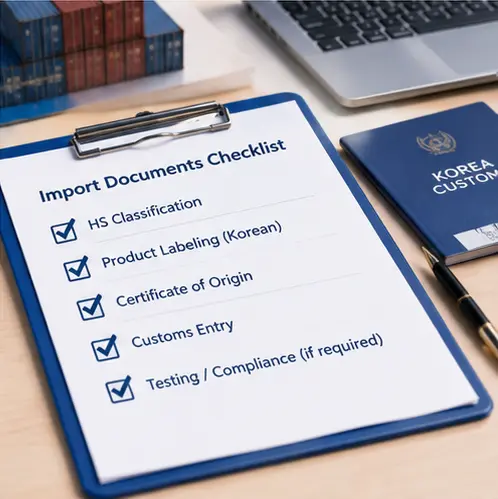
Import compliance for cat litter in South Korea should be checked against the product’s composition, intended use, labeling, and applicable Korean regulations. Do not assume that every cat litter material is subject to the same testing, safety-verification, or labeling requirements. Before shipment, importers should confirm the applicable product classification and mandatory label particulars with Korean customs or a qualified local compliance adviser, and determine whether any product-specific testing, registration, or documentation is required. Korean-language packaging should be reviewed before production. Claims such as “biodegradable,” “flushable,” “non-toxic,” or “environmentally friendly” should be used only when they are accurate, appropriately substantiated, and permitted under the rules applicable to the product and its marketing. Exporters should agree with the Korean importer on responsibility for compliance checks before finalizing packaging or shipment documents.
Sourcing From a Verified Manufacturer
When evaluating a cat litter manufacturer for the South Korean market, buyers should compare product specifications, batch-to-batch consistency, production capacity, packaging options, lead times, and export documentation. The supplier should be able to explain how quality is monitored and which product claims can be supported by available testing or technical records. For example, buyers considering mineral-based products can review our bentonite cat litter range and discuss packaging or specification requirements before requesting a quotation. Private-label and distribution projects should also establish clear responsibilities for Korean labeling, regulatory verification, and shipment documentation before production begins.
Conclusion
Entering the South Korea cat litter market requires product-specific tariff verification, appropriate Korean-language labeling, careful landed-cost calculations, and a clear understanding of the target sales channel. Importers and distributors should assess each litter material against customer needs, price positioning, logistics costs, and supplier reliability rather than rely on broad market-share estimates. For manufacturers seeking private-label or distribution opportunities, a clear product specification, consistent quality controls, and well-prepared export documentation can help establish a stronger basis for long-term cooperation.
Frequently Asked Questions
South Korea is a market for overseas cat litter suppliers, but the degree of import dependence should be assessed using current trade statistics for the relevant product categories. Import volumes and supplier-country shares can differ by material type and HS classification.
There is no single HS code that should automatically be used for every type of cat litter. Classification depends on the product’s composition, processing, and applicable tariff rules. Importers should confirm the Korean tariff classification for the exact product before calculating duty.
The applicable duty depends on the confirmed Korean tariff classification and the relevant tariff treatment. Importers should check the current Korea Customs Service tariff database and verify any preferential rate before preparing a landed-cost quotation.
A preferential RCEP rate may be available when the product meets the applicable tariff commitment, product-specific rules of origin, and documentation requirements. Eligibility and the actual rate must be checked for the exact product; zero duty should not be assumed.
The applicable labeling requirements depend on the product and relevant Korean regulations. Importers should confirm mandatory Korean-language label particulars and any product-specific testing, registration, or safety requirements before packaging is printed or goods are shipped. Environmental and performance claims should be substantiated and reviewed for compliance.
South Korea imports bentonite and other raw materials, as well as finished products, but raw-material trade statistics should not be treated as a direct measure of finished cat litter trade. To assess South Korea’s position as an importer or exporter of cat litter, compare relevant product-level trade data and verify which HS codes cover the specific material or finished product being studied.
Start by confirming the product’s HS classification and duty, prepare Korean-language labeling and claim substantiation, choose a sales channel based on price, logistics, and buyer requirements, and qualify a manufacturer that can support stable specifications and export documents. Verify any market-share or channel-share figures with current category-specific data before relying on them.