

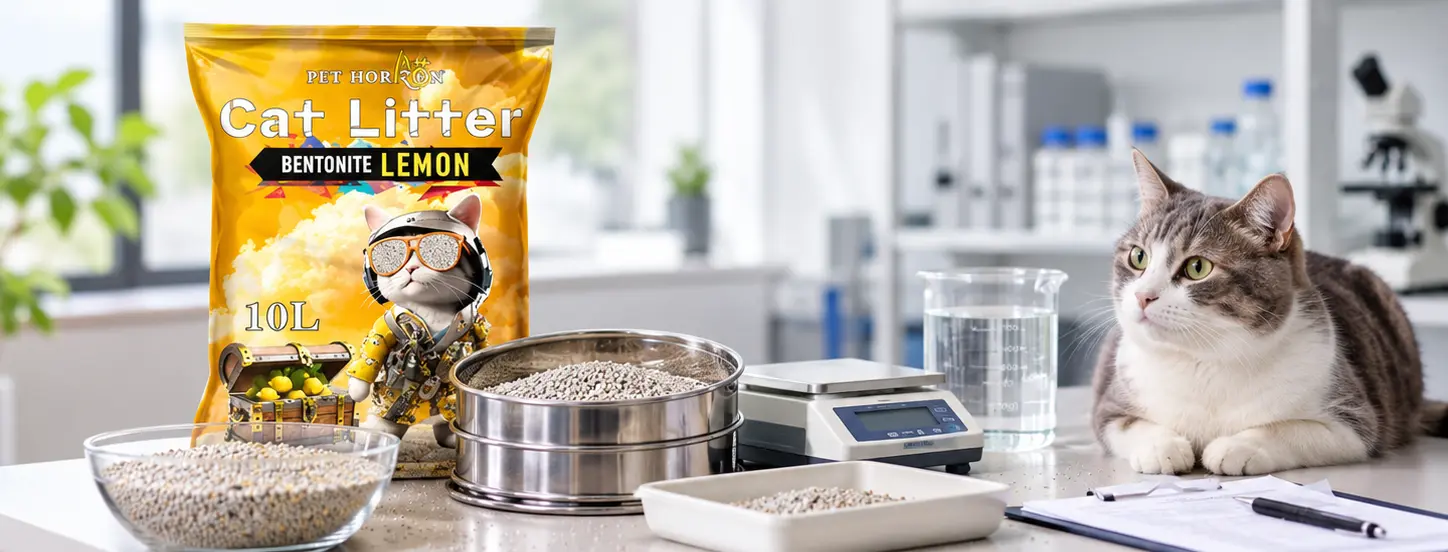
Cat litter sample testing is a structured process buyers use to evaluate a supplier’s product against agreed specifications before placing a bulk or OEM order. A practical evaluation covers clumping performance, liquid absorption and retention, dust and fines, odor control, moisture content, particle-size distribution, and packaging. For importers, distributors, and private-label buyers, documented sample testing helps identify specification gaps and potential quality issues before production or shipment, reducing the risk of costly disputes over product consistency.
Quick Answer: Evaluate a cat litter supplier’s sample against a written specification before approving a bulk or OEM order. Use repeatable procedures to compare clumping, liquid absorption and retention, dust and fines, odor control, moisture, particle size, and packaging. Standardize sample preparation, test conditions, equipment, and acceptance tolerances, then document the results with measurements and photos. Use an independent laboratory for parameters that require validated methods or greater measurement accuracy, and consider pre-shipment inspection to verify production-lot conformity. Sample testing is most useful when the results can be compared with both the agreed specifications and a retained reference sample.
Why a Sample Evaluation Protocol Matters
A pre-production sample may not fully represent the consistency of a later production batch. Differences in raw materials, processing conditions, and quality control can affect dust levels, clump integrity, moisture, and other product characteristics. A documented sample evaluation establishes an agreed reference before production and provides a baseline for reviewing potential deviations in the bulk order. Buyers should also confirm how production batches will be sampled, tested, and accepted before shipment.
Before You Test: Confirm the Specification Sheet
Before testing, obtain a written product specification from the supplier. It should define the particle-size distribution, maximum moisture content, dust or fines measurement method, clumping performance, liquid absorption or retention criteria, odor-control claims, packaging format, and net weight. Confirm the units, test procedures, sampling conditions, and acceptance tolerances for each parameter. Where no recognized method is specified, agree on a repeatable internal screening procedure before comparing samples. Without documented criteria, test results can be difficult to reproduce and disputes over bulk-order conformity are harder to resolve.
| Parameter | What to record | Typical equipment or method |
|---|---|---|
| Particle size | Mass percentage within each size fraction | Specified sieve set and scale |
| Moisture | Moisture percentage by mass | Suitable moisture analyzer or validated oven method |
| Dust and fines | Fines percentage under defined test conditions; airborne dust separately if required | Specified sieve procedure; suitable dust-testing equipment |
| Clumping | Formation time, integrity after a defined waiting period, and breakage under a consistent test | Scale, timer, standardized liquid and test container |
| Liquid absorption and retention | Liquid uptake or retained mass under defined conditions | Scale, measured liquid, drainage setup |
| Odor control | Relative rating under controlled conditions | Standardized test setup and reference sample |
| Packaging and net weight | Seal integrity, artwork conformity, and actual net contents | Visual inspection and calibrated scale |
Clumping Performance Test
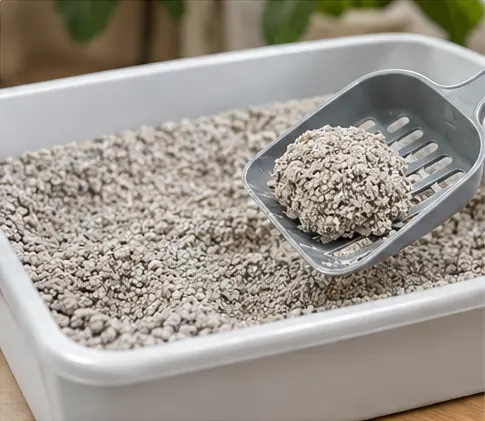
For clumping litters, use a consistent internal screening procedure to compare samples. Weigh a fixed amount of litter into a container at a defined depth, add a measured volume of the same test liquid at a controlled rate, and record the time required for a stable clump to form. After a predefined waiting period, assess clump integrity and breakage using the same handling procedure for each trial. Repeat the test under identical conditions and record individual results. Set acceptance criteria by product type and intended use rather than applying one universal benchmark to tofu, bentonite, and mixed litters. For example, a clumping tofu cat litter sample should be assessed against its own agreed performance specification and approved reference sample.
Liquid Absorption and Retention Test
Liquid absorption and retention should be evaluated under defined conditions. Weigh a fixed mass of litter, add a measured quantity of the specified test liquid, allow a consistent contact period, and apply a standardized drainage or separation procedure before recording the retained liquid or mass change. Keep the liquid type, sample mass, addition rate, contact time, and drainage conditions consistent across tests. Because tofu, bentonite, and mixed litters can absorb, swell, disperse, or form clumps differently, use a method suited to the product and compare the results with the agreed specification. Treat simple in-house results as comparative screening data unless the method has been validated for quantitative performance claims.
Dust and Fines Measurement
Dust and fines should be evaluated separately when the buying specification requires both. A sieve-based screening test measures the proportion of material passing through a defined mesh under specified conditions; it does not directly measure airborne dust generated during pouring or handling. For fines testing, record the initial sample mass, sieve opening, shaking duration, and mass passing through the sieve, then calculate the percentage of fines. If airborne dust performance is a key requirement, use a suitable method designed to measure dust released under controlled handling conditions. Consistent procedures make supplier samples easier to compare. See the cat litter dust test reference for the site’s related testing guidance.

Odor Control Check
Odor-control evaluation should use consistent conditions because odor perception is subjective and can vary between assessors. If conducting an internal comparison, use the same specified test material, sample mass, container type, temperature, exposure period, and evaluation scale for each sample. Compare the results with the approved reference and record the test conditions alongside the rating. A simple sealed-container assessment can support preliminary screening, but it should not be presented as a validated odor-control test unless the procedure has been established for that purpose. Avoid absolute claims such as “eliminates odor” unless supported by appropriate evidence.
Moisture Content and Particle Size
Moisture content and particle-size distribution can affect product consistency, handling, storage, and performance. Measure moisture using a method suitable for the litter material and compare the result with the supplier’s agreed maximum. Excess moisture may contribute to storage or product-stability problems, but mold risk also depends on raw materials, contamination, packaging, and storage conditions. Check particle-size distribution using specified sieves and record the mass percentage in each fraction to identify excess fines or oversized particles. Verify net weight separately using an appropriate weighing procedure; moisture results alone cannot establish whether a package is underweight. For critical specifications, confirm the screening method and acceptance limits with the supplier or an independent laboratory.

Packaging and Label Check
Use the sample approval stage to verify packaging and labeling requirements. Check bag material, print quality, seal integrity, resealability where applicable, artwork, barcode readability, required languages, disposal instructions, and other market-specific label requirements. For private-label orders, approve the final artwork alongside the product specification before production. Verify net contents using an appropriate weighing procedure that accounts for packaging tare, and define the sampling and acceptance rules for package-weight checks in advance. Confirm applicable labeling and packaging obligations for the destination market before approving mass production.
Third-Party Testing and Pre-Shipment Inspection
For high-value orders or critical quality parameters, consider an independent laboratory or inspection company. Third-party testing can verify selected product characteristics, while pre-shipment inspection can assess the production lot, packaging, labeling, and conformity with agreed requirements before loading. Confirm that the report identifies the tested product, sampling basis, test methods, and applicable acceptance criteria. A supplier’s ISO 9001 quality management certification can provide evidence of a quality management system, but it does not by itself certify a particular cat litter product or guarantee batch consistency. Use certification checks, product testing, production records, and shipment inspection as complementary parts of supplier qualification.
Using Test Results to Approve or Reject a Sample
Evaluate each parameter against the written specification and the approved reference sample, using predefined pass, marginal, and fail criteria where appropriate. A failure against a critical safety or performance requirement should trigger rejection, corrective action, or a revised sample for retesting. Marginal results may require further testing or a documented discussion about specifications and pricing. Retain the sample identification, test date, measurements, photos, and decision record. Before confirming an OEM cat litter or private-label order, document the applicable specifications, tolerances, testing methods, and production-lot acceptance procedure in the purchase contract or quality agreement. Keep a mutually identified reference sample where practical so that later comparisons use the same baseline.
Sample Test Record Template
Use the following fields to record each sample evaluation so results stay comparable across suppliers and batches.
| Test record field | Recommended entry |
|---|---|
| Sample identification | Supplier, product type, sample/lot ID |
| Specification | Agreed limit and test method |
| Test conditions | Sample mass, equipment, time, liquid or sieve parameters |
| Actual result | Measurement and unit |
| Decision | Pass / Marginal / Fail |
| Evidence | Test date, photos, operator and report |
| Follow-up | Retest, corrective action or approval |
Conclusion
Cat litter sample testing helps buyers identify potential quality and specification gaps before committing to a bulk or OEM order. A written specification, repeatable tests for clumping, liquid absorption and retention, dust and fines, odor, moisture, particle size, and packaging, and a documented approval decision provide a practical basis for supplier evaluation. Retain the approved sample and record the acceptance criteria in the purchase contract or quality agreement. For critical parameters, use appropriate independent testing and pre-shipment inspection to help verify that the production lot conforms to the agreed requirements.
Frequently Asked Questions
It is a structured check of a supplier’s sample against a written specification, covering clumping, absorption, dust and fines, odor, moisture, particle size, and packaging, performed before a bulk or OEM order is confirmed.
Request at least two or three sealed sample units when practical, preferably from the same identified sample lot for initial comparison and repeat testing. Record the sample date, product type, batch or lot identification if available, and packaging details. If batch-to-batch consistency is a key requirement, request samples from multiple production lots when available, or verify consistency through production records, batch testing, and pre-shipment inspection.
Yes. A scale, timer, measuring equipment, and suitable test container can support preliminary clumping comparisons in an office or other controlled setting. Use the same sample mass, liquid quantity, litter depth, waiting time, and handling procedure for every trial. These tests help compare samples consistently but do not replace validated laboratory methods when formal performance verification is required.
There is no single acceptance limit that applies to every cat litter type and dust-testing method. Buyers should define the required limit, sampling procedure, and test conditions with the supplier. A sieve test measures fines passing through a specified mesh, while airborne dust testing evaluates dust released under defined handling conditions. These results should not be treated as interchangeable, and critical limits should be agreed before production.
For high-value orders or critical quality parameters, independent laboratory testing can provide additional evidence of product conformity. Pre-shipment inspection can also help verify the production lot against agreed requirements before loading. To support dispute resolution, specify the applicable test methods, acceptance limits, sampling procedure, and inspection arrangements in the purchase contract or quality agreement. A third-party report supports the decision but does not automatically determine contractual liability.
Retain a clearly identified approved sample and document the product specifications, acceptance tolerances, test methods, and inspection requirements in the purchase contract or quality agreement. Require the supplier to identify the production lot and provide relevant batch test records. Where appropriate, arrange pre-shipment sampling and inspection using an agreed sampling plan before loading. These measures help compare the production batch with the approved sample and provide documented evidence if a quality dispute arises.
A hard fail on a safety or core performance parameter is grounds to reject or request a corrected sample. Several marginal results may justify renegotiating price or specification. Either way, document the decision with measurements and photos.
No. Sample testing verifies the product; a factory audit verifies the supplier’s capability and systems. Both belong in supplier qualification, and the tested sample should align with what the audited factory can consistently produce.