




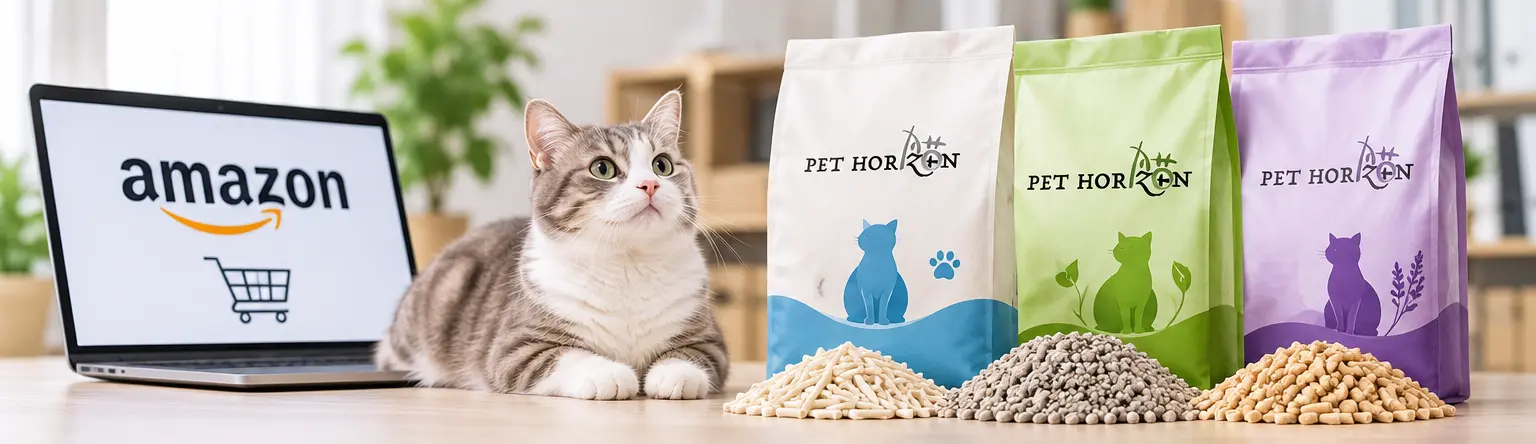
Launching a private label cat litter product on Amazon requires more than choosing a popular litter type and designing a branded bag. Ecommerce brands need a manufacturer that can match their target product specifications, packaging requirements, order volume, and destination market. For imported cat litter, product weight, bag dimensions, moisture protection, and shipping configuration also affect the final cost per sellable unit. Evaluating these factors before placing an OEM order helps sellers avoid specification mismatches and unexpected fulfillment expenses.
To source private label cat litter for Amazon, first select the material, product specifications, and retail bag size for your target market. Then ask an OEM manufacturer for samples, a written specification sheet, packaging options, MOQ, production lead time, and relevant product documentation. Before confirming an order, compare the landed cost per bag, including manufacturing, export packaging, freight, import duties, and fulfillment expenses. The right supplier should be able to maintain consistent product quality and meet your packaging and delivery requirements across repeat orders.
How to Source Private Label Cat Litter for Amazon
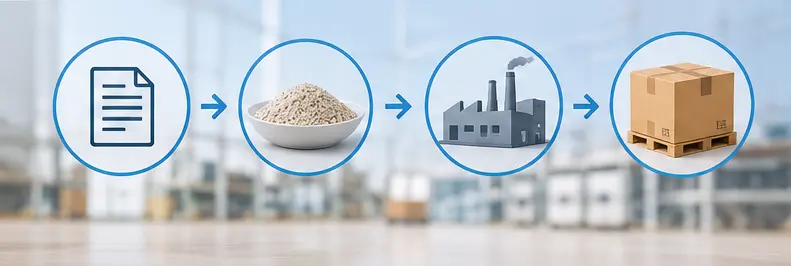
The sourcing process should move from product definition to supplier verification and order approval. Start by identifying the litter type and retail pack configuration, then compare manufacturers based on their product specifications, customization capabilities, and production arrangements. Once samples and packaging details are approved, confirm the commercial terms, quality acceptance criteria, and shipment plan before authorizing production.
Why Amazon Sellers Choose Private Label Cat Litter
Private label sourcing allows ecommerce brands to build their own cat litter product lines without investing in manufacturing facilities. Instead of developing production capabilities in-house, brands can work with an established manufacturer to select suitable litter types, define product specifications, and customize retail packaging. This approach gives sellers more control over brand positioning while allowing them to focus on marketplace operations, customer acquisition, and inventory planning.
In a private label arrangement, a brand purchases cat litter manufactured to agreed specifications and sells it under its own brand. The brand manages product positioning and customer-facing sales, while the manufacturer handles the agreed production and packaging scope. Fulfillment arrangements and regulatory responsibilities depend on the sales channel, commercial agreement, and destination market.
Define Your Product Brief First
Before requesting quotations, prepare a product brief that allows manufacturers to evaluate your requirements and provide comparable proposals. For tofu, bentonite, and pine cat litter, the brief should cover:
- Product type and variant: tofu cat litter, bentonite cat litter, or pine cat litter, including specific variants such as activated-charcoal pine litter where applicable
- Particle specifications: granule size, shape, and acceptable size variation
- Performance requirements: clumping strength, dust level, moisture content, and odor control expectations, where applicable
- Product weight: target net weight per retail bag and allowable weight variation
- Packaging: bag material, dimensions, closure type, printing requirements, and outer carton configuration
- Market requirements: destination country, language, labeling information, and applicable import requirements
- Order planning: initial quantity, expected reorder volume, and preferred delivery schedule
What to Request From a Cat Litter Manufacturer
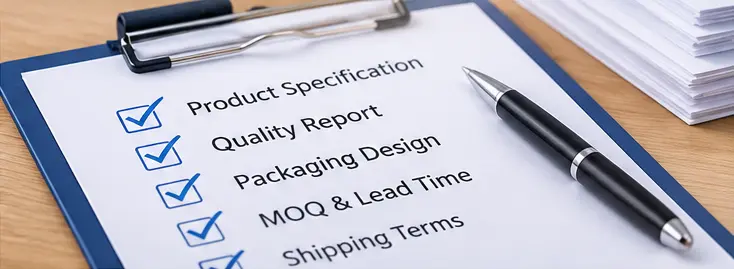
Before comparing quotations, ask each OEM cat litter manufacturer to provide written product specifications and clarify what quality and shipping documentation is available for your order. Document requirements depend on the product, destination market, and transportation method. The following items provide a practical starting point for supplier evaluation:
| Document or Information | What Buyers Should Verify |
|---|---|
| Product specification sheet | Material, particle size, moisture content, dust level, performance characteristics, and net weight |
| Quality inspection records | Inspection methods, acceptance criteria, and available batch quality records |
| Third-party test reports | Test methods, tested product samples, and whether the results support specific product claims |
| SDS, where applicable | Whether safety documentation is required by the carrier, destination regulations, or warehouse handling procedures |
| Packaging specifications and artwork dieline | Bag material, dimensions, sealing method, printing layout, and labeling information |
| Quotation and order terms | MOQ, unit price, Incoterms, production lead time, and payment terms |
Sample approval should establish the reference for subsequent production, not serve as a substitute for written quality requirements. Before placing a bulk order, buyers should document the agreed specifications, acceptable tolerances, inspection methods, and procedures for handling non-conforming products. This gives both the manufacturer and the buyer a consistent basis for evaluating production batches and repeat orders.
Amazon FBA vs Seller-Managed Fulfillment
Amazon FBA changes how private label cat litter needs to be prepared, labeled, and delivered compared with seller-managed fulfillment. However, FBA does not automatically require a different litter formula or a specific bag material. Buyers should coordinate packaging specifications with their manufacturer and verify current Amazon Seller Central requirements before approving final artwork and shipment arrangements.
| Planning Area | Seller-Managed Fulfillment | Amazon FBA Considerations |
|---|---|---|
| Product labeling | Brand identity, product information, and destination-market labeling | Product identification and applicable Amazon barcode requirements |
| Retail bag construction | Selected according to product weight, storage, and customer expectations | Must provide adequate protection during inbound transportation, warehouse handling, and fulfillment |
| Moisture protection | Based on litter type, packaging design, and shipping conditions | Evaluate moisture-barrier performance, especially for products sensitive to moisture |
| Package dimensions and weight | Designed around shipping costs and the seller’s fulfillment setup | Check applicable fulfillment size and weight tiers and their effect on fees |
| Inbound and fulfillment preparation | Managed by the seller or its appointed fulfillment provider | Follow current FBA packaging, labeling, shipment preparation, and delivery instructions |
Model Landed Cost and Fulfillment Margin
For imported private label cat litter, the factory quotation is only one part of the total sourcing cost. Buyers should compare quotations using the same product specifications, retail bag weight, packaging configuration, order quantity, and Incoterms. A complete cost model may include manufacturing, printed packaging, export handling, ocean freight, insurance, import duties, inland transportation, and marketplace fulfillment fees. Case dimensions, pallet configuration, and container loading efficiency also affect the final cost per sellable bag.
Before selecting a supplier, calculate the landed cost per retail bag rather than comparing unit prices alone. The cat litter landed cost calculator can help buyers standardize quotations from different manufacturers and shipping terms, making it easier to identify the real cost differences between sourcing options.
Choose the Right Material for Your Channel
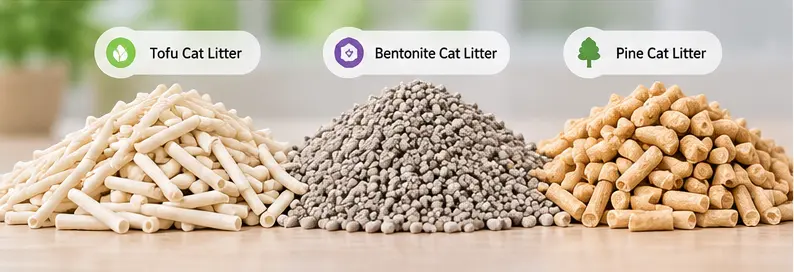
Material selection affects product positioning, shipping weight, packaging requirements, and customer expectations. Options such as tofu, bentonite, and pine cat litter each carry different evaluation points. Tofu cat litter is a plant-based option that buyers can evaluate based on particle shape, clumping performance, moisture content, and dust levels. Bentonite cat litter is commonly selected for its clumping characteristics, with granule size, bulk density, and dust control requiring careful specification. Pine cat litter offers a wood-based alternative, where pellet dimensions, moisture content, and durability during handling are important evaluation points. For ecommerce brands, the right choice depends on target-market demand, product performance requirements, and total delivered cost rather than material price alone.
Common Sourcing Mistakes
- Comparing manufacturer quotations without standardizing product specifications and Incoterms
- Approving samples without documenting particle size, moisture, dust, and performance acceptance criteria
- Finalizing retail bag artwork before confirming packaging dimensions and production feasibility
- Ignoring the relationship between bag weight, case configuration, and container loading efficiency
- Placing repeat orders without checking whether production batches meet the original approved specifications
- Choosing a manufacturer without confirming MOQ, production lead time, and quality inspection arrangements
Working with a Cat Litter OEM Manufacturer
Pet Horizon manufactures tofu, bentonite, and pine cat litter at its Dalian facility and ships through Dalian Port. The company supports OEM and private label projects for importers, distributors, and ecommerce brands, with product selection, customized retail packaging, and export supply arrangements based on buyer requirements. For Amazon sellers, discussing retail bag specifications, packaging dimensions, order quantities, and shipment planning with the manufacturer before production helps align the product with the intended fulfillment channel.
Conclusion
Building a private label cat litter business on Amazon starts with selecting a manufacturer that understands both product specifications and export requirements. Before placing an order, confirm the litter type, measurable quality standards, retail packaging design, MOQ, production lead time, and shipment configuration. Compare suppliers using consistent quotations and landed cost calculations, then establish clear inspection and acceptance criteria for repeat orders. A manufacturer that can support product specification control, customized packaging, and reliable production planning provides a stronger foundation for long-term ecommerce growth than a supplier selected on factory price alone.
Frequently Asked Questions
Private label cat litter can be commercially viable, but profitability depends on product cost, packaging, shipping weight, import expenses, and fulfillment fees. Sellers should calculate the landed cost per retail bag and compare different package configurations before setting a selling price. Consistent product quality and reliable replenishment are also important for maintaining margins over time.
Ask about available litter types, product specifications, MOQ, retail packaging options, printing requirements, production lead time, quality inspection procedures, and export experience. Request samples and written specifications before approving an order. You should also clarify quotation terms, shipping arrangements, and the documentation available for your destination market.
Tofu, bentonite, and pine cat litter are three options that brands can evaluate for Amazon private label products. Tofu litter offers a plant-based positioning, bentonite is widely selected for its clumping characteristics, and pine provides a wood-based alternative. Compare product performance, package weight, shipping costs, and target-market preferences before selecting a material.
Packaging should be selected according to litter weight, product characteristics, transportation conditions, storage requirements, and brand positioning. Buyers should confirm bag material, dimensions, closure design, sealing performance, printing specifications, and outer carton configuration with the manufacturer. Amazon sellers should also check current FBA packaging and labeling requirements before production.
A written OEM agreement is advisable for private label cat litter projects. It should define product specifications, packaging ownership and approval, MOQ, pricing, production lead time, quality acceptance criteria, payment terms, and procedures for handling non-conforming products. Clear terms help both parties manage production expectations and repeat orders.
MOQ varies by litter type, packaging material, printing method, production arrangement, and order configuration. Custom printed bags may have separate packaging minimums, while the production quantity may depend on the manufacturer’s equipment and production planning. Request an itemized quotation that separates product MOQ from any packaging-related minimum order requirements.
Agree on written product specifications and measurable acceptance criteria before production. These may cover particle size, moisture content, dust level, clumping performance where applicable, net weight, and packaging quality. Keep an approved reference sample and request inspection records for subsequent batches. This gives both the buyer and manufacturer a consistent basis for evaluating repeat production.