

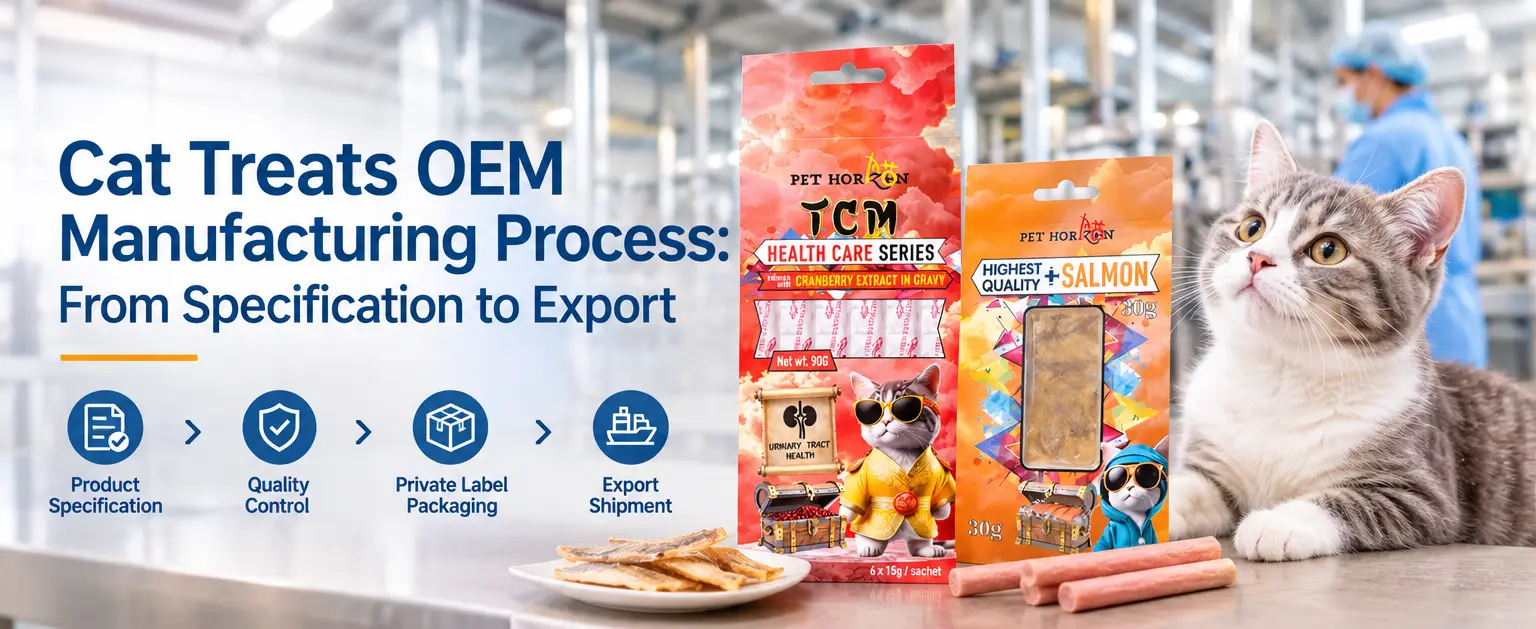
A cat treats OEM manufacturing process involves more than preparing and packing finished snacks. For importers and private label buyers, the key is understanding how product specifications, production controls, packaging, and export documentation are managed from one stage to the next.
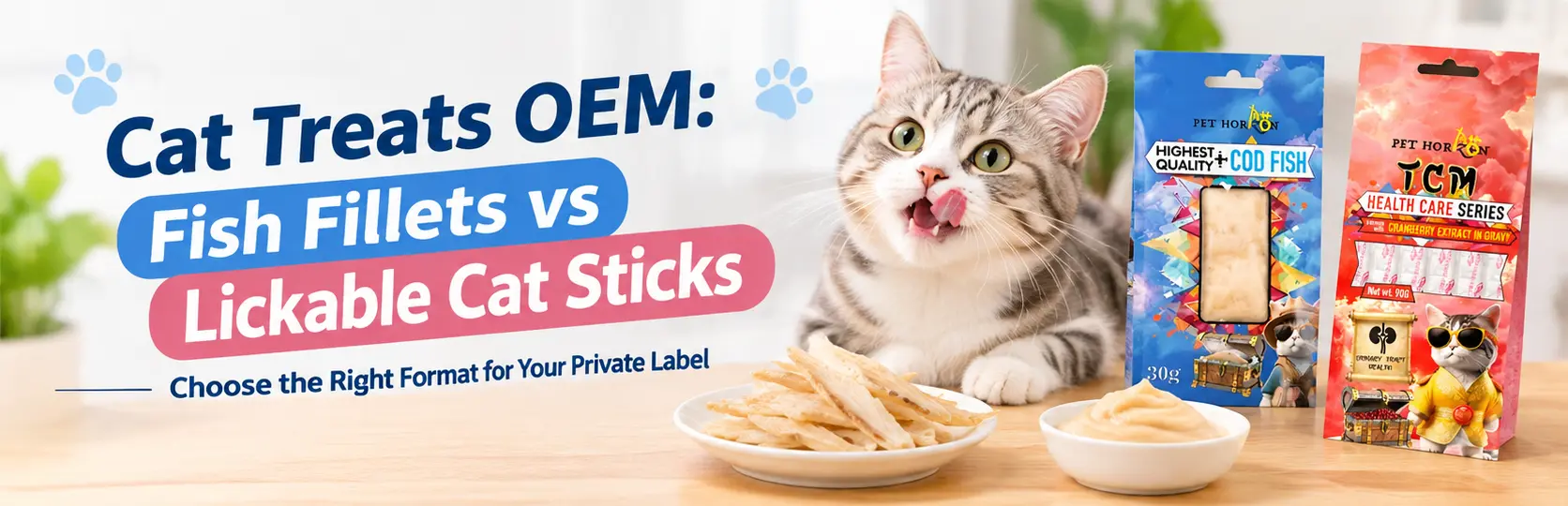
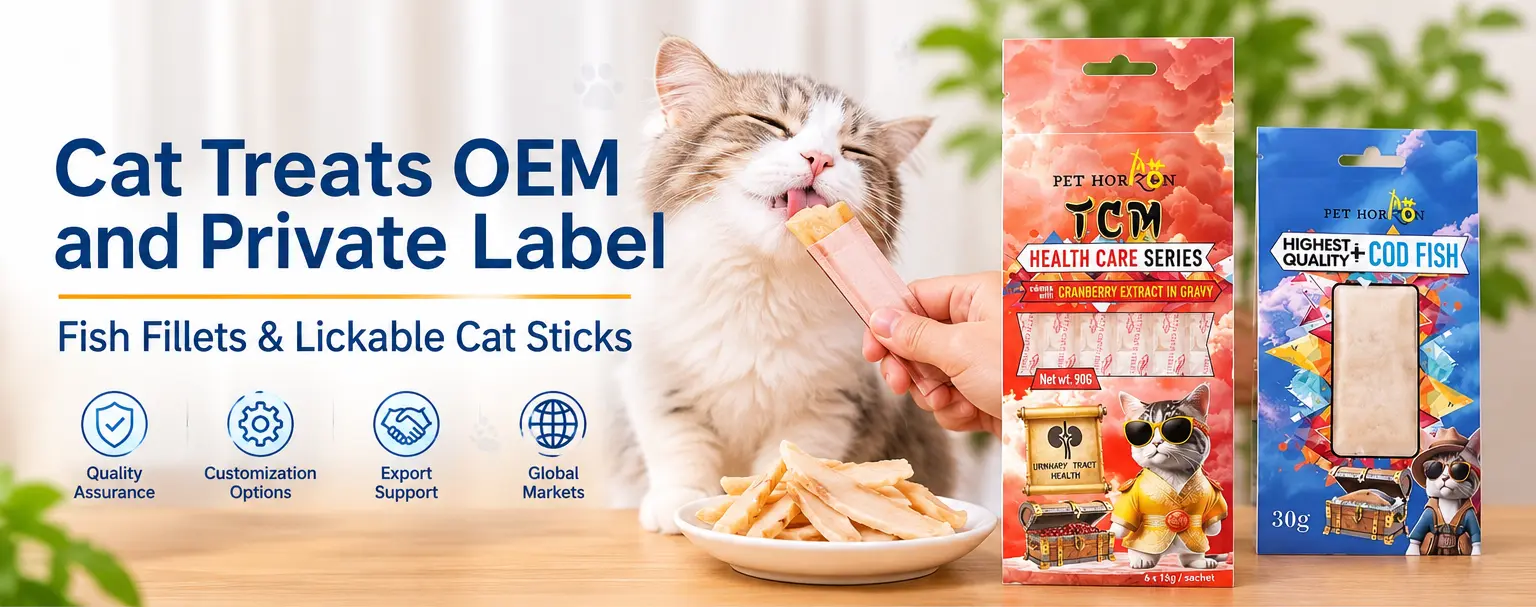
At Pet Horizon, our cat snack program focuses on two formats: fish fillet cat treats and lickable cat sticks. Each has different requirements for preparation, texture, moisture control, and packaging. This guide explains how these products move through an OEM order, from initial specification agreement to export shipment.
Pet Horizon’s cat treats OEM manufacturing process covers six stages: product specification and sample approval, ingredient receiving, format-specific production, quality checks, private label packaging, and export preparation. Fish fillets and lickable cat sticks follow different processing and filling requirements, with their specifications and quality checks managed according to the agreed product requirements. This allows buyers to review the key production and documentation requirements before confirming a bulk order.
Step 1 — Product Specification and Sample Approval
Every cat treats OEM order begins with a product specification that both parties can work from. Buyers first select the product format—fish fillet cat treats or lickable cat sticks—and confirm the intended flavor, texture, product size, and packaging requirements.
Before bulk production, the agreed sample and specification serve as the reference for the order. Key details include ingredient composition, unit weight, texture, packaging format, label artwork, and shelf-life requirements. Any agreed adjustments should be finalized before production starts, helping reduce discrepancies between the approved sample and the finished batch.
Step 2 — Ingredient Receiving and Controls
Ingredients are received and checked under the facility’s ISO 22000-certified and HACCP-based food safety management systems. Depending on the material, incoming checks may include supplier documentation, ingredient identity, physical condition, and relevant certificates of analysis.
For export orders, ingredient records also need to be reviewed against the intended market’s requirements and the product’s specific formulation. Buyers sourcing for the U.S. market should pay particular attention to the regulatory status of food ingredients and their intended use. Our guide to FDA GRAS notification for cat treats explains how GRAS relates to ingredient compliance.
Step 3 — Production
Production requirements differ between the two cat snack formats.
- Fish fillet cat treats: The fish material is prepared and processed according to the agreed product specification, followed by portioning and final packing. Key production parameters include processing conditions, moisture level, portion size, and finished texture.
- Lickable cat sticks: Ingredients are mixed into a consistent paste, then filled into the specified stick packaging and sealed. Fill weight, texture, filling consistency, and package sealing are important checkpoints during production.
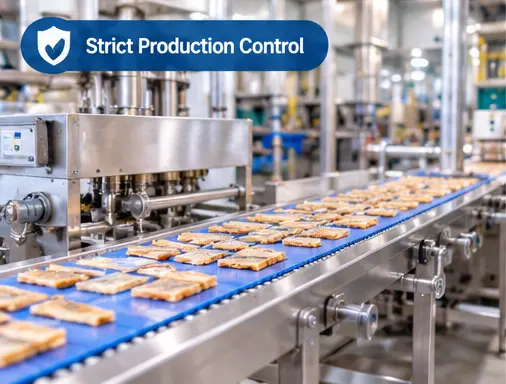
Although both products belong to the cat snack category, their processing requirements are different. Pet Horizon handles fish fillets and lickable cat sticks through separate production setups, with product-specific operating and hygiene controls.
Step 4 — Quality Control and Food Safety
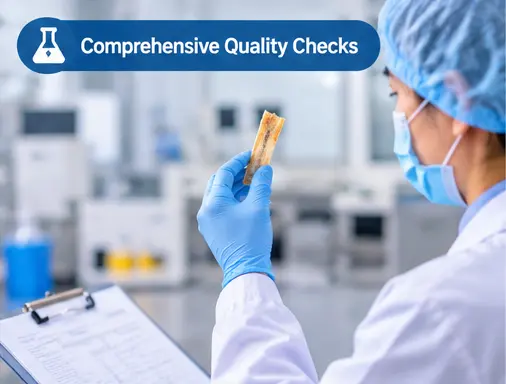
Quality control is carried out at different stages rather than relying only on a final inspection. For fish fillets, checks focus on product condition, moisture, portion consistency, and finished texture. For lickable cat sticks, filling weight, paste consistency, and package sealing are important production checks.
Moisture and water activity are assessed where relevant to the product specification and shelf-life requirements. Microbiological and physical testing is conducted according to the applicable food safety plan and product requirements. Before release, finished batches are checked against the agreed specifications, with relevant inspection and testing records maintained for traceability.
Step 5 — Packaging and Private Label
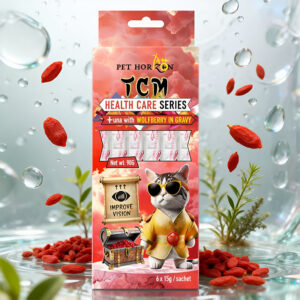
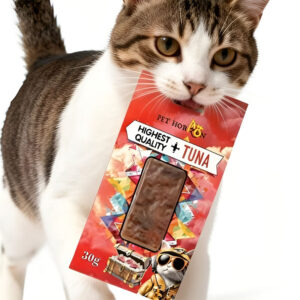
Packaging requirements are confirmed before bulk packing to ensure the finished product matches the buyer’s distribution and branding needs. Depending on the format, fish fillets can be packed in suitable sealed pouches, while lickable cat sticks require packaging designed for individual filling and sealing.
For private label orders, buyers provide or approve the packaging artwork, including brand elements, product descriptions, ingredient information, and destination-market labeling requirements. Pack size, units per retail pack, and carton configuration are also agreed before production. Packaging materials are selected according to the product’s moisture protection and shelf-life requirements.
Step 6 — Export Documentation and Shipment
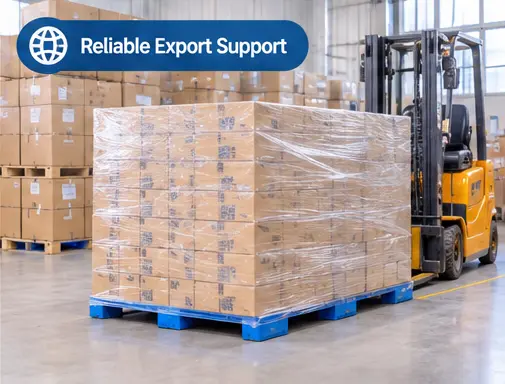
Before shipment, the export documentation package is prepared according to the product, destination, and agreed shipping terms. Depending on the order, supporting documents may include commercial invoices, packing lists, certificates of analysis, ingredient information, and relevant food facility registration details.
For U.S.-bound shipments, FDA Prior Notice and Foreign Supplier Verification Program (FSVP) requirements also need to be considered. Prior Notice must be submitted by the responsible importer or authorized agent, while FSVP obligations generally rest with the U.S. importer. Pet Horizon can provide relevant supplier and product documentation to support the buyer’s import preparation. Shipments are exported through Dalian Port.
Buyers can also refer to our cat treats U.S. import compliance guide for a closer look at the requirements applicable to U.S. imports.
Cat Treats Production Facility and Manufacturing Setup
Pet Horizon’s cat snack production operates from a food-grade facility in Dalian, China. The facility supports the preparation and packing of two product formats: fish fillet cat treats and lickable cat sticks.
Rather than treating all cat snacks as one production category, the manufacturing setup accounts for the different processing, filling, and packaging requirements of each format. Food safety management follows ISO 22000-certified and HACCP-based systems, with relevant production and quality records maintained throughout the process.
For export buyers, this provides a defined production scope, product-specific controls, and documentation support from order confirmation through shipment.
Conclusion
Choosing an OEM partner for cat treats involves more than comparing product samples or quoted prices. Buyers also need to understand how specifications are confirmed, how different snack formats are processed, and how quality and export documentation are managed.
Pet Horizon focuses on fish fillet cat treats and lickable cat sticks, with production requirements defined for each format. Buyers can explore our cat snacks product range and contact our team to discuss the cat treats oem manufacturing process, private label packaging, and bulk order requirements for their order.
Frequently Asked Questions
Cat treats OEM lead time depends on product specifications, sample approval, packaging artwork, order quantity, and production scheduling. The timeline is confirmed after the product and packaging requirements are agreed. Buyers should finalize the specifications and artwork early to avoid delays before bulk production.
Buyers should provide the preferred product format, target flavor, product size or weight, packaging requirements, destination market, and estimated order quantity. For private label projects, brand artwork and labeling requirements are also needed. These details help the manufacturer assess the order and prepare an appropriate specification.
Product consistency is managed against the agreed specifications for each order. Relevant parameters include moisture, portion weight, texture, filling weight, and packaging integrity, depending on the product format. Production and inspection records provide references for batch checks and quality traceability.
Fish fillet checks focus on product condition, moisture, portion size, and finished texture. For lickable cat sticks, the main checks include paste consistency, filling weight, and package sealing. Both formats are assessed against their agreed product specifications.
Depending on the order and destination market, supporting documents may include certificates of analysis, ingredient information, food facility registration details, commercial invoices, and packing lists. Additional import requirements, such as U.S. Prior Notice and FSVP, should be coordinated with the responsible importer or its authorized agent.
Yes. Private label packaging requirements can be discussed during order specification, including brand artwork, packaging format, product information, labeling language, and pack size. Final artwork and packaging details should be approved before bulk production.
No. Pet Horizon’s cat snack program covers fish fillet cat treats and lickable cat sticks only. Freeze-dried cat treats are not part of the manufacturing process.