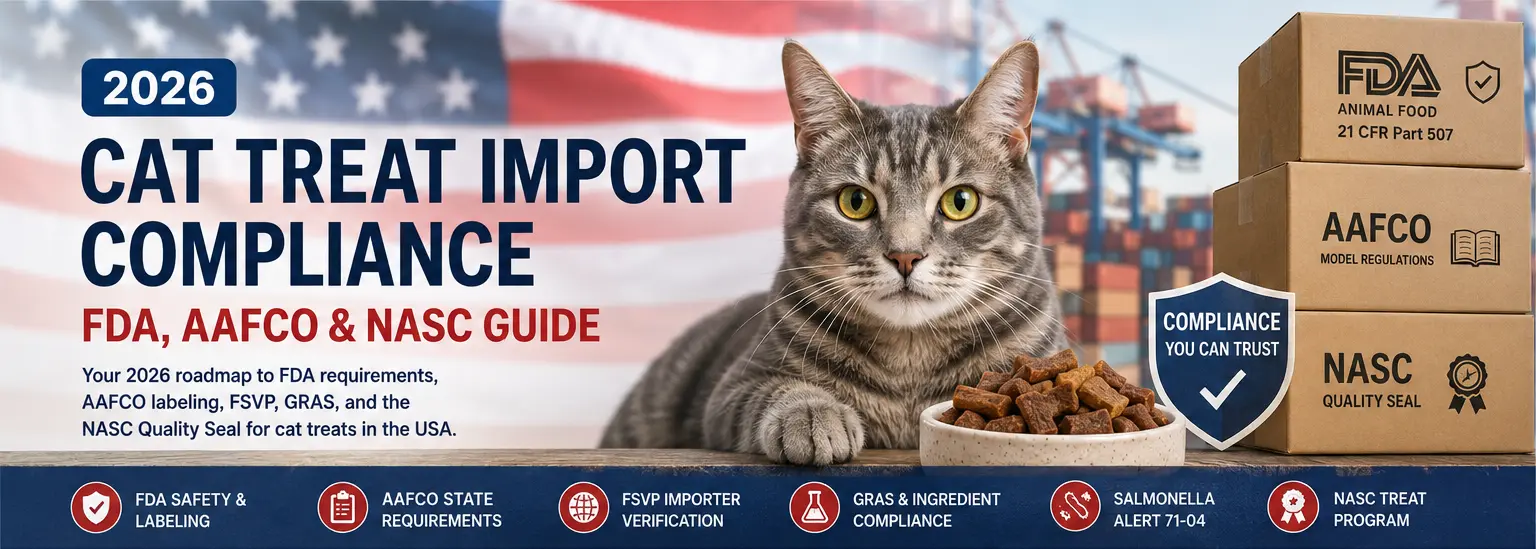





On August 11, 2026, the U.S. FDA published a proposed rule (Docket No. FDA-2025-N-3262) that would, if finalized, replace the voluntary GRAS notification program with a mandatory notification requirement for certain GRAS uses in human and animal food. For cat treats, importers and OEM buyers should review which functional ingredients rely on GRAS status, which exceptions may apply, and what supplier documentation would be needed. Comments are due December 9, 2026.
Quick Answer: The FDA’s 2026 GRAS proposal would require notifications for covered GRAS uses in human and animal food if finalized. For cat treat importers and OEM buyers, the practical steps are to identify each ingredient’s regulatory basis, check proposed exceptions, preserve supporting GRAS records, and track the December 9, 2026 comment deadline.
What “GRAS” Means for Cat Treats
GRAS (Generally Recognized as Safe) describes a food substance that qualified experts consider safe under its intended conditions of use, based on scientific procedures or common use in food. Under the current system, a company may conclude a substance is GRAS and market it without notifying FDA.
The GRAS provision dates to the 1958 amendments to the Federal Food, Drug, and Cosmetic Act, but FDA established the current voluntary GRAS notification procedure through a 2016 final rule. For cat treats, the proposed rule is relevant when a functional ingredient is marketed under the GRAS provision for its intended use. Examples may include probiotic cultures, amino acids, omega-3 sources, or other functional compounds, but the regulatory basis depends on the specific substance, intended use, and applicable FDA or animal-food pathway. These ingredients should therefore be reviewed individually rather than treated as automatically subject to GRAS notification. These are the same functional ingredients discussed in our functional cat treats guide.
From Voluntary to Mandatory
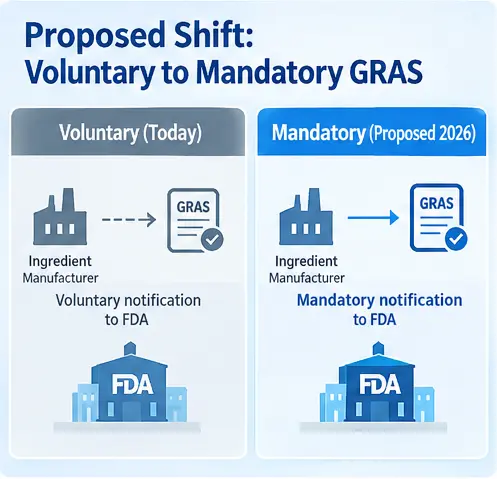
The proposed 21 CFR 570.205(a) would require a person introducing a covered GRAS substance into interstate commerce to submit a notification to FDA. The proposal is not limited to newly introduced ingredients; it would also cover certain GRAS uses already in the food supply, subject to the proposed exceptions. For established cat treat formulas, buyers should therefore review existing GRAS documentation as well as new product formulations.
This is not premarket approval. Under the proposal, a company could continue marketing a substance before submitting a GRAS notice and after submission while FDA determines whether to file and evaluate the notice, provided the use actually qualifies as GRAS. The practical change is transparency: FDA would receive and publicly list information about covered GRAS uses, while noncompliance could become a factor in prioritizing substances for post-market review.
Key Dates Buyers Should Track
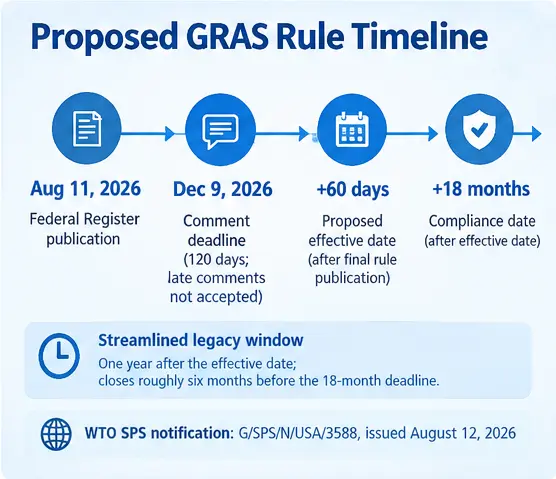
| Milestone | Date / Detail |
|---|---|
| Federal Register publication | August 11, 2026 |
| Comment deadline | December 9, 2026 (120 days; late comments not accepted) |
| Proposed effective date | 60 days after publication of the final rule in the Federal Register |
| If finalized | Compliance date: 18 months after the effective date |
| Streamlined legacy window | Opens for one year after the effective date; closes roughly six months before the 18-month deadline |
| WTO SPS notification | G/SPS/N/USA/3588, issued August 12, 2026 |
Who Would Need to File Under the Proposed Rule?
The proposed duty attaches to the person introducing the covered substance into interstate commerce under the GRAS provision, rather than automatically applying to every party in the supply chain. For cat treat imports, buyers should identify which entity is responsible for the relevant GRAS conclusion and notification, and confirm that the supplier can document the substance’s intended use, target species, use level, and supporting safety basis. Because cats are not food-producing animals, the proposal’s estimated human exposure to residues requirement for food-producing animals would generally not apply to cat treats.
Exceptions That Matter for Cat Treats
The proposal includes seven listed exceptions. Two are especially relevant:
- AAFCO recognition: ingredients listed in, and used in accordance with, the incorporated portion of Chapter 6 of the 2024 AAFCO Official Publication would be exempt if FDA has not publicly expressed a concern about the GRAS status of the intended use. The proposed exception is tied specifically to the 2024 edition, so ingredients reviewed through newer pathways such as AAFCO’s Scientific Review of Ingredient Submissions (SRIS) would not qualify for this AAFCO exception by itself. Another applicable exception or regulatory pathway could still apply.
- Streamlined legacy pathway: substances already in interstate commerce on the basis of an independent GRAS conclusion would have a one-time, one-year window to submit a reduced notification containing specified information such as the substance name, intended use, and evidence of marketing, without submitting the underlying safety data as part of that streamlined notification.
How This Differs From Existing Import Rules
A separate guide on cat treat import compliance covers facility registration, FSVP, and Prior Notice — the entry-layer requirements. The GRAS proposal operates at the ingredient level: it would address the regulatory basis for covered substances used in the product rather than the shipment itself. Depending on the product, ingredient, and applicable exceptions, an importer may need to address both the import requirements and GRAS-related documentation.
What Importers and OEM Buyers Should Do Now
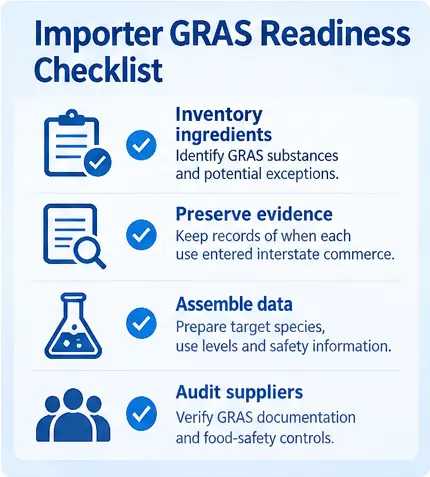
- Inventory every GRAS substance in current and planned cat treat SKUs, and note which proposed exceptions may apply.
- Preserve evidence of when each independent GRAS use entered interstate commerce — this protects access to the streamlined window.
- Assemble target-species and use-level data now; these are mandatory fields for animal-food notifications.
- Build GRAS documentation into supplier audits and purchase contracts, alongside applicable FDA facility registration records and food-safety management documentation such as ISO 22000 or HACCP-based controls.
Pet Horizon manufactures cat treats through its Dalian Aobang facility, which maintains FDA food facility registration, ISO 22000, and HACCP certification, and exhibits at the Canton Fair, CIPS, and Pet Fair Asia. Our cat sticks and fish cubes line is built on documented ingredient and facility controls, which shortens the path to GRAS-ready sourcing as the rule matures.
The Takeaway for 2026 Sourcing
The proposed FDA GRAS notification framework could change how covered GRAS uses of cat treat ingredients are documented in U.S. commerce. The rule is still proposed, and final terms may change during the rulemaking process. Buyers can prepare by identifying the regulatory basis for each ingredient, checking proposed exceptions, and organizing supporting documentation for existing and planned SKUs.
Conclusion
The proposed FDA GRAS notification rule would change how covered GRAS uses of substances in animal food are documented in U.S. commerce if finalized. For cat treat importers and OEM buyers, the practical priority is to identify the regulatory basis for each ingredient, check whether a proposed exception applies, preserve evidence supporting existing uses, and align supplier documentation before the proposed compliance framework takes effect.
Frequently Asked Questions
No. It was published as a proposed rule on August 11, 2026 (Docket FDA-2025-N-3262), and comments are due December 9, 2026. A final rule has not been issued.
Potentially, yes. The proposal would cover certain GRAS uses of substances already in the food supply, not only newly introduced substances. Whether an existing cat treat ingredient would require notification would depend on its regulatory basis, intended use, and any applicable exception.
It depends on which person is introducing the covered GRAS substance into interstate commerce. The proposal does not automatically make every manufacturer, importer, or downstream buyer in the supply chain a notifier. Buyers should identify the responsible party and ensure that the relevant GRAS documentation is available.
The proposed rule would apply to substances marketed under the GRAS provision for their intended use. Whether a specific functional ingredient — such as a probiotic, amino acid, omega-3 source, or joint or urinary-support compound — is affected depends on its regulatory basis, intended use, and any applicable exception or animal-food pathway, so each should be reviewed individually.
Ingredients listed in, and used according to, Chapter 6 of the 2024 AAFCO Official Publication are exempt — but that incorporation is frozen at the 2024 edition and excludes ingredients reviewed through the newer SRIS pathway, unless another applicable exception or regulatory pathway applies.
No. The proposed notification requirement is not a premarket approval requirement. A company could continue marketing a GRAS substance while a notification is submitted and reviewed, provided the substance’s use actually qualifies as GRAS. FDA would use the notification information as part of its post-market oversight and review framework.
The proposal does not state that failure to submit a required GRAS notice would automatically make the substance unlawful. Instead, FDA would treat noncompliance with the proposed notification requirement as a factor when prioritizing substances for post-market review. Separate consequences could arise if FDA determines that the substance is not GRAS and requires another regulatory pathway, such as a food additive approval.
FSVP and Prior Notice govern the facility and the shipment at entry. GRAS notification governs the safety basis of the functional substances inside the product. Both layers can apply to the same cat treat.