




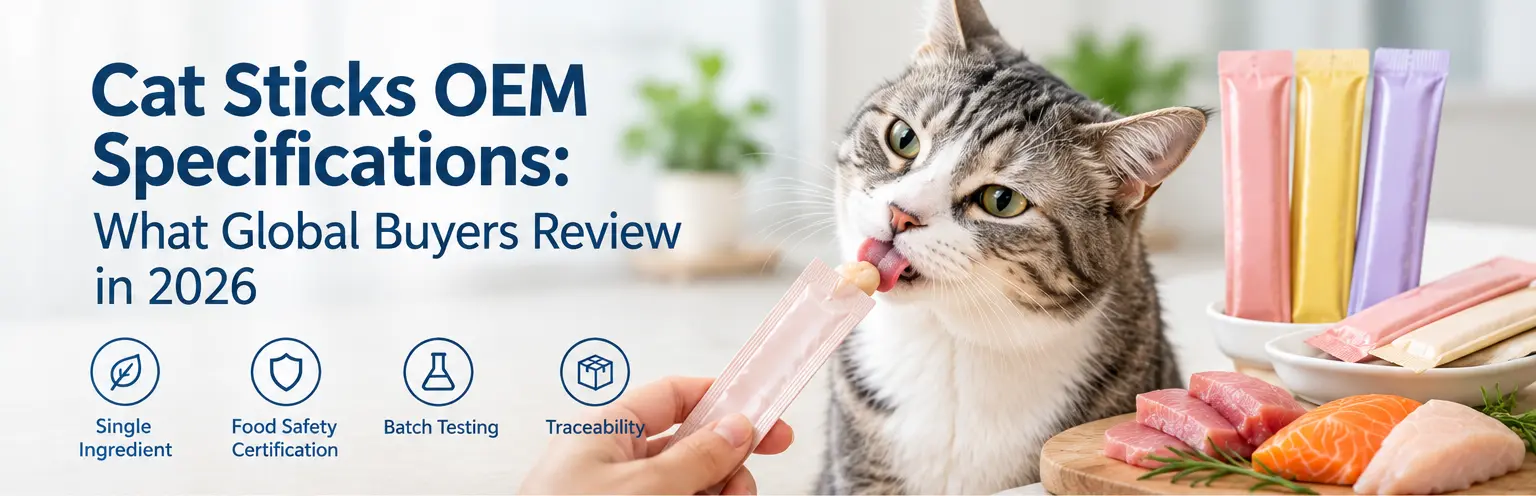
Cat sticks OEM buyers typically review several core specifications when qualifying a supplier in 2026, including recipe transparency, documented raw-material requirements, food-safety certification, batch testing, and traceability. This guide explains the specifications buyers can use to evaluate a cat sticks supplier and define an OEM program.
Quick Answer
Cat sticks OEM buyers commonly review five areas: recipe and ingredient transparency, documented raw-material specifications, food-safety certification such as BRCGS Food Safety, batch testing and traceability, and commercial terms such as MOQ, lead time, and customization limits. Exact requirements vary by destination market, buyer, and product specification.
Why Buyers May Prefer Single-Ingredient Recipes
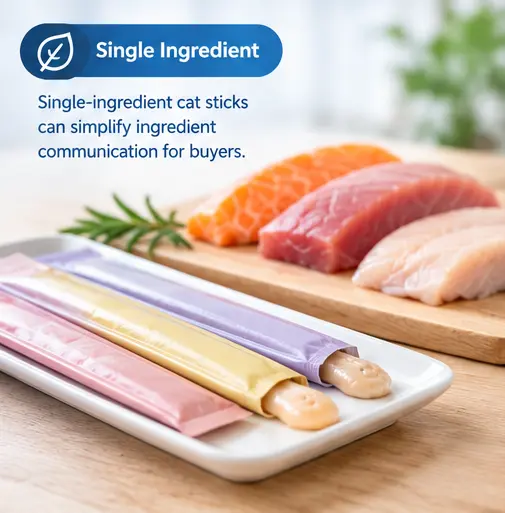
Single-ingredient cat sticks, typically based on one named meat or fish protein, can simplify ingredient communication and make the recipe easier for buyers to evaluate. However, the final ingredient specification should match the product formulation, target market, and applicable labeling requirements.
Manufacturing Specifications Buyers Commonly Review
Human-Grade Raw-Material Specifications
Where a buyer specifies human-food-grade or human-grade raw materials, the OEM specification should define the required protein, raw-material grade, cut or form, origin, and supporting supplier documentation. The term should be used only where the applicable market and documentation support the claim.
BRCGS Food Safety and GFSI Benchmarking
BRCGS Food Safety is a GFSI-benchmarked certification scheme used to assess food-safety management systems. Pet Horizon follows applicable BRCGS-aligned food-safety practices, while buyers should verify the supplier’s actual certification status and certificate scope during qualification.
Batch Testing and Traceability
Buyers may require batch-level microbiological testing, retained samples, and records linking finished products to raw-material lots. These controls support traceability and recall readiness, and recent FDA pet-food and treat recalls illustrate why documented batch controls remain important for suppliers serving regulated markets.
Product Range and OEM Options
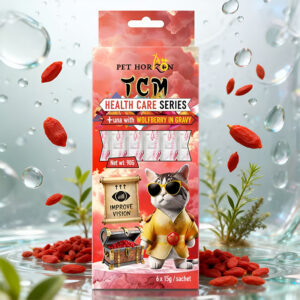
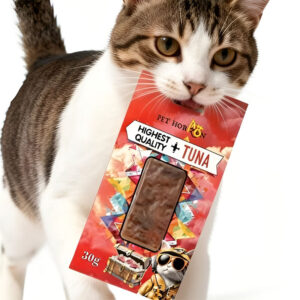
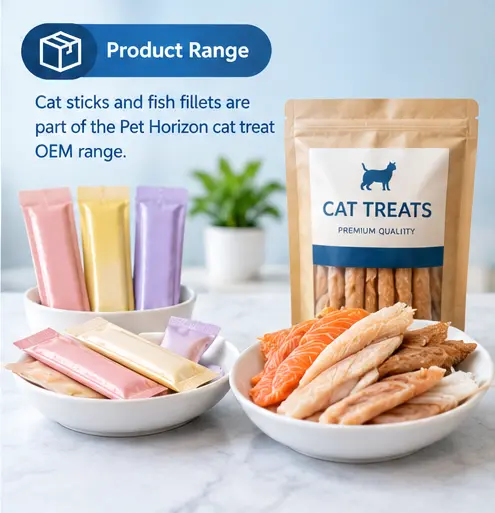
Pet Horizon offers cat sticks and fish fillets as part of its cat treat OEM range. Buyers can review the individual product specifications and the broader cat snack range when defining product format, packaging, and private-label requirements. See the cat sticks product page and the fish fillets product page for formats, and the cat snacks category for the full range.
MOQ, Lead Time, and Customization
OEM buyers should confirm MOQ, production lead time, and the boundaries of customization (flavor, shape, pack size) before contracting. Pet Horizon sets these per program and documents them in the supplier agreement.
Food Safety Frameworks
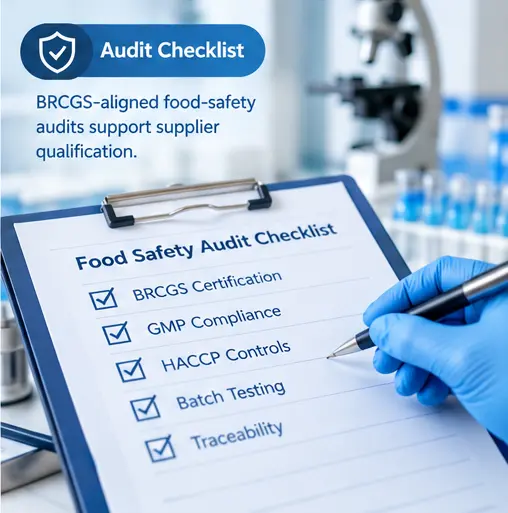
Depending on the destination market, buyers may also review applicable GMP requirements, HACCP-based food-safety controls, and market-specific nutritional or labeling requirements such as AAFCO guidance in the United States or FEDIAF nutritional guidelines in Europe. These requirements should be evaluated separately from third-party certification such as BRCGS Food Safety. The BRCGS site explains the standard.
Conclusion
A cat sticks OEM supplier supports global OEM business in 2026 by demonstrating recipe transparency, documented raw-material specifications, appropriate food-safety controls or certification, and batch traceability. Pet Horizon can define these requirements within its OEM programs so private-label and distributor buyers can evaluate the supply chain with greater confidence. Set the specification sheet before the first production run.
Frequently Asked Questions
Cat sticks OEM buyers commonly review single-ingredient recipes, documented raw-material specifications, food-safety certification such as BRCGS Food Safety, and batch testing with traceability.
Some cat sticks are formulated as single-ingredient products, while others contain multiple animal proteins or functional ingredients. If a buyer requires a single-ingredient specification, the formula and ingredient declaration should clearly identify one named protein source and any permitted processing or functional ingredients.
GFSI benchmarks food-safety certification programmes against its requirements. BRCGS Food Safety is a GFSI-benchmarked certification scheme that buyers may use when evaluating a supplier’s food-safety management system.
For an OEM specification, human-grade should refer to a documented raw-material requirement supported by the applicable market standard and supplier records. Buyers should define the required grade, source, and supporting documentation rather than relying on the term alone.
A traceability system can link finished batches to the relevant raw-material lots and production records. Buyers may also require microbiological testing records and retained samples to support recall readiness and supplier verification.
MOQ is set per program with Pet Horizon and documented in the supplier agreement; confirm before contracting.
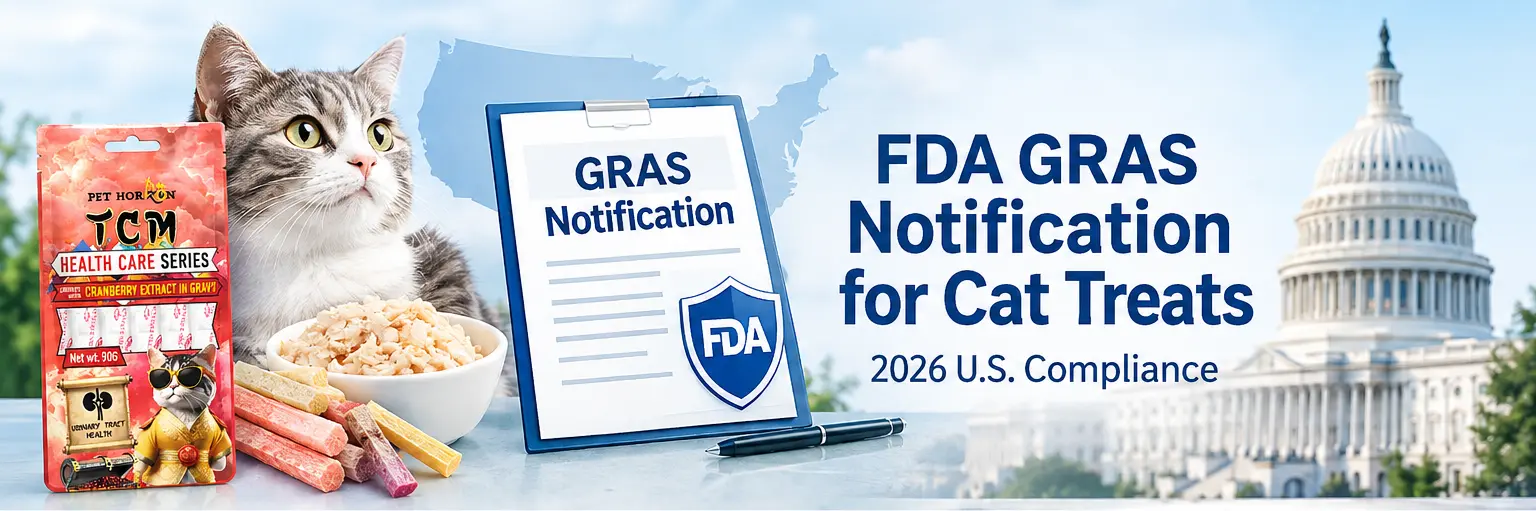
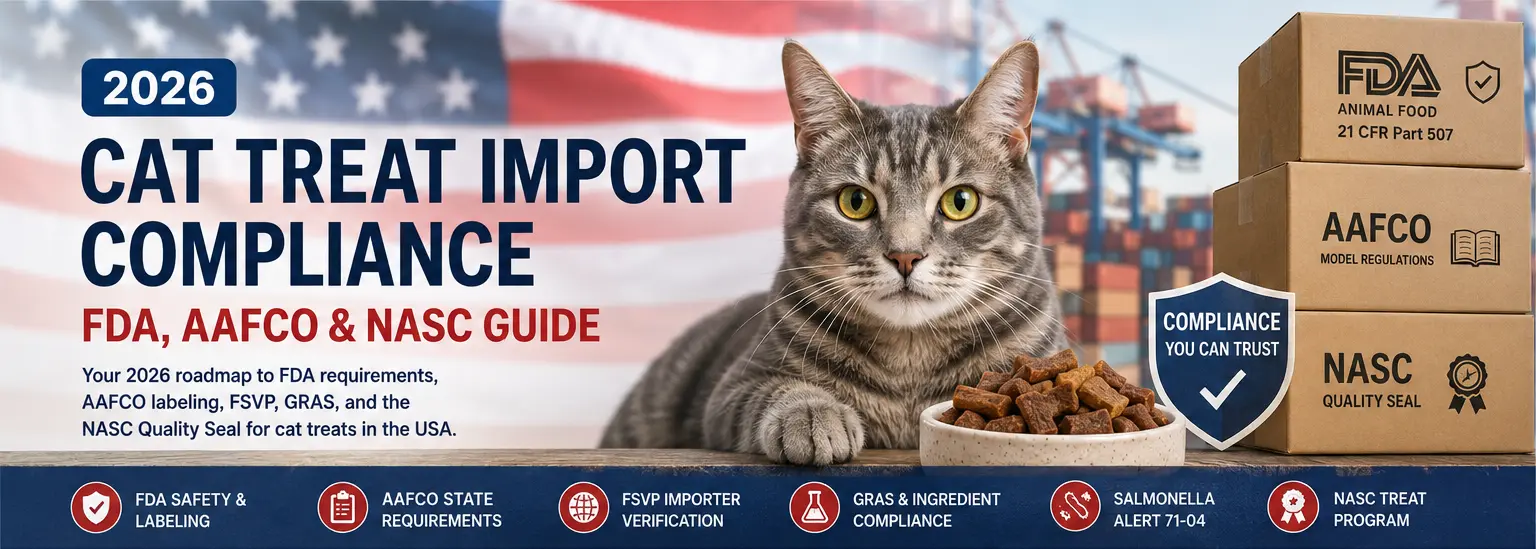
For products entering the United States, the applicable FDA requirements depend on the product, facility, and supply chain. Animal-food facilities may have FDA registration and preventive-control obligations, while imported products must also meet applicable labeling and import requirements. Buyers should verify the requirements for the specific product and facility before shipment.
Yes within defined boundaries; customization scope is agreed and written into the OEM specification.