

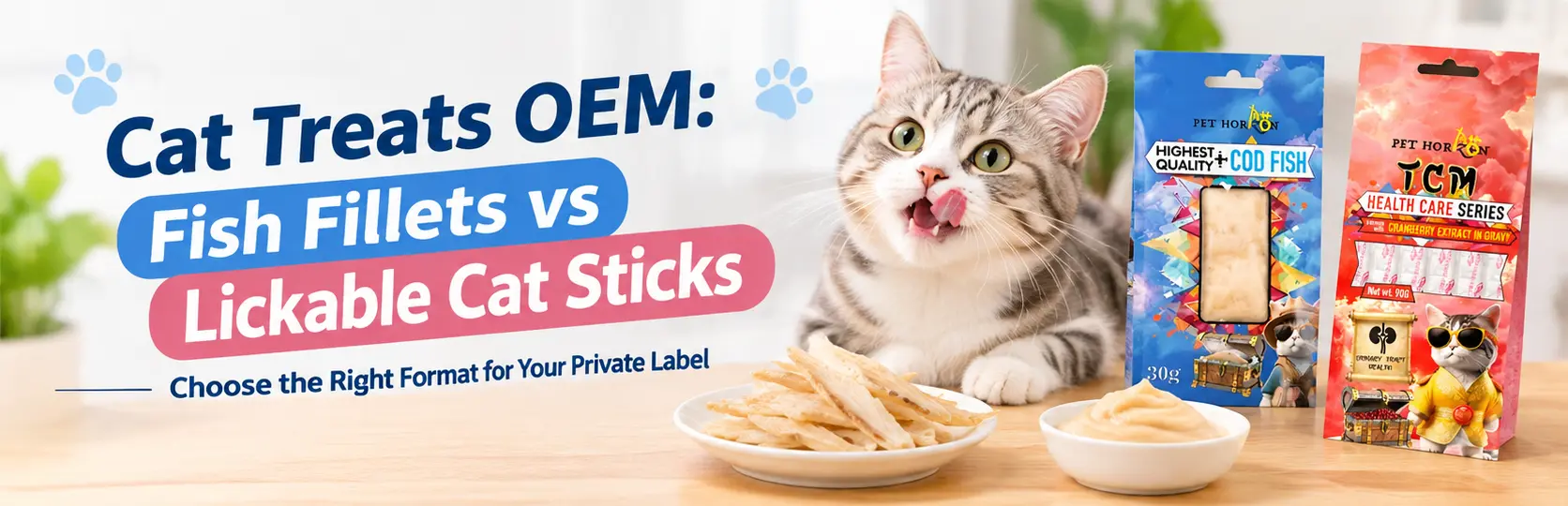
Fish fillets vs cat sticks is a practical comparison for buyers developing a private label cat treat range. The two formats call for different raw materials, processing methods, packaging and product specifications. For importers, pet food brands and distributors, understanding these differences helps define the product brief, evaluate samples and plan the first order. Pet Horizon provides cat treats OEM and private label manufacturing for both formats at its production facility in Dalian, China.
Fish fillet cat treats are steam-cooked, vacuum-packed fish pieces, while cat sticks are moist, paste-style treats in individual portions. Fish fillets suit buyers building a recognizable high-protein fish snack; cat sticks offer a soft, squeezable, single-serve format. The right choice depends on the target market, product positioning, packaging preferences and production requirements.
Pet Horizon’s Two Cat Snack Formats
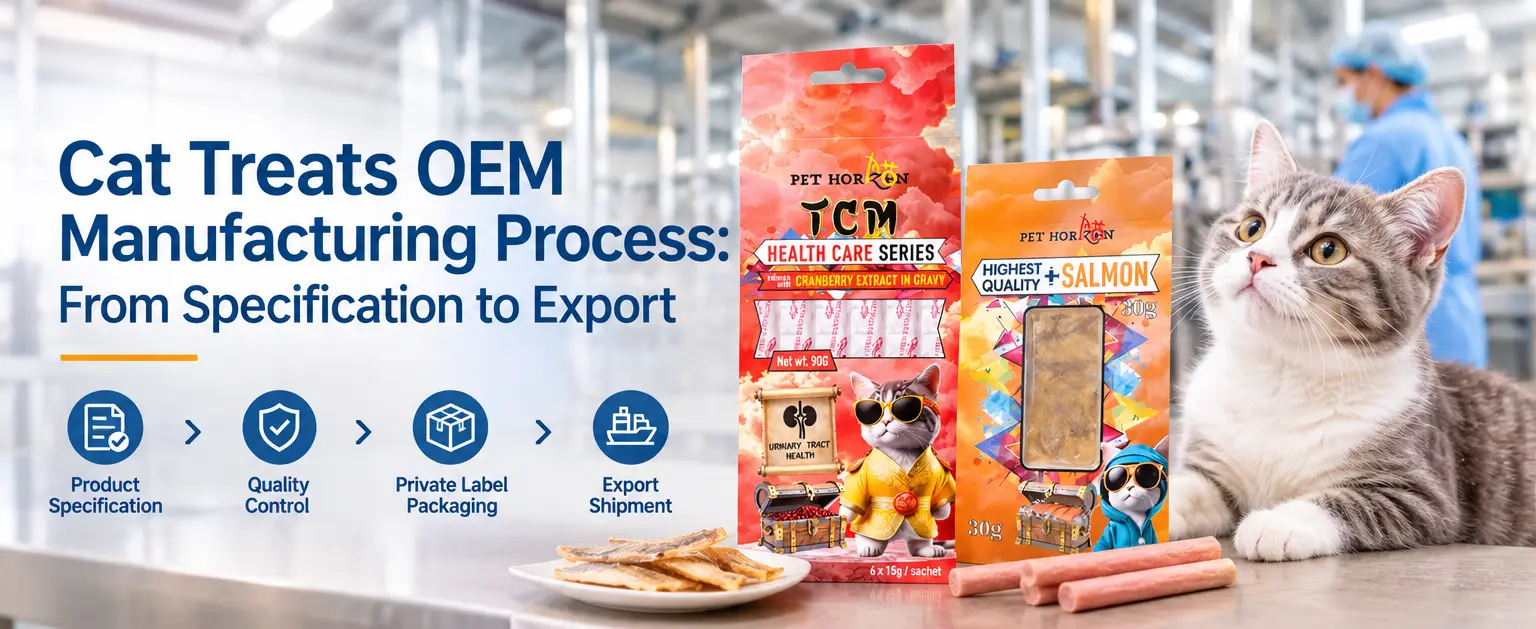
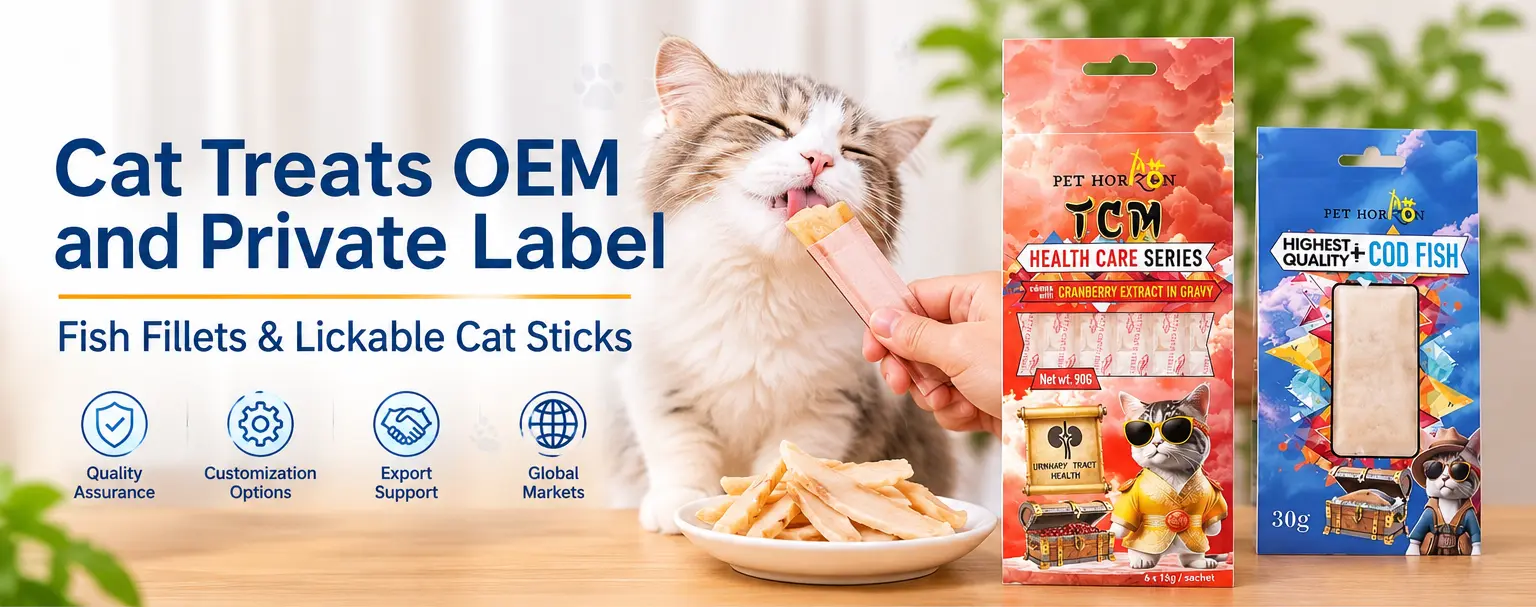
Pet Horizon’s cat treat range covers two product formats for export and private label supply. Although both sit under cat snacks, they address different retail and product development requirements:
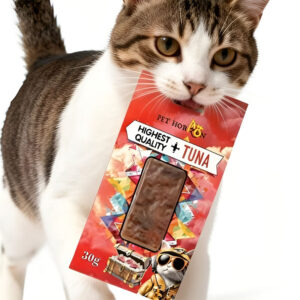
- Fish fillet cat treats: Wild-caught tuna, salmon and cod, steam-cooked and vacuum-packed into fillet pieces. Buyers focus on fish species, piece size, moisture level and pack weight.
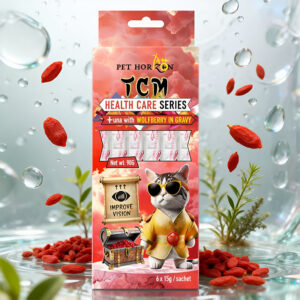
- Cat sticks: Moist, paste-style treats made with wild-caught fish and functional botanicals, packed in individual portions. Key development considerations include the flavour formula, paste consistency, fill weight and sachet packaging.
These formats require different production arrangements and product specifications. Selecting the format before sample development helps buyers focus on the relevant technical requirements rather than judging two fundamentally different products by the same criteria.
Fish Fillet Cat Treat Manufacturing
Fish fillet cat treats start with the selected raw fish. Pet Horizon uses wild-caught deep sea tuna, salmon and cod, which are steam-cooked at controlled temperatures and vacuum-packed soon after cooking to preserve natural flavour and freshness. The result is a grain-free, high-protein snack with crude protein at or above 22 percent and naturally occurring Omega-3 fatty acids.
For OEM projects, buyers should define the fish species, ingredient composition, piece dimensions, target moisture level and net weight per pack before sample approval. Moisture is controlled to 70 percent or below, with a typical retail format of a 30 g pouch and a 10-month shelf life under room-temperature storage.
Raw material consistency and moisture control are central when evaluating these products. During sample development, buyers should check appearance, piece-size consistency, texture and packaging presentation against the agreed specification. These checks become the reference for later production batches.

Cat Stick Manufacturing
Cat sticks are moist, paste-style treats filled into individual sachets and sealed for retail distribution. Pet Horizon’s versions combine wild-caught tuna or salmon with functional botanicals such as goji berry, milk thistle, cranberry extract and ginseng, giving brands a creamy treat with a clear ingredient story.
Product development centres on paste consistency, flavour formula, fill weight and sachet packaging. Unlike dried fish pieces, these creamy cat sticks have a high-moisture format of 84 percent or below, so microbiological safety, sealing quality and packaging integrity need particular attention. Buyers should confirm texture, net weight per stick, ingredient composition and pack configuration during the OEM brief stage; a common retail format is a multi-stick sachet, with a 10-month shelf life.
Sample evaluation should cover paste consistency, ease of dispensing, fill-weight consistency and seal condition. These checks help set practical quality requirements before commercial production.

Fish Fillets vs Cat Sticks – What Buyers Should Compare
| Comparison | Fish Fillet Cat Treats | Cat Sticks (Creamy / Lickable Style) |
|---|---|---|
| Product format | Steam-cooked, vacuum-packed fish fillets or strips | Moist, paste-style sticks in individual sachets |
| Main development focus | Fish species, ingredient composition and piece dimensions | Flavour formula, paste consistency and functional ingredients |
| Texture | Firm to chewy, depending on moisture level | Soft and creamy |
| Typical retail positioning | High-protein fish snack or treat | Individual-portion creamy treat |
| Indicative specification | Crude protein 22% or above; moisture 70% or below; grain-free | Crude protein around 8.5%; moisture 84% or below |
| Key quality checks | Appearance, piece-size consistency, moisture and packaging | Paste consistency, fill weight, sealing and packaging integrity |
| Packaging format | Typically a 30 g vacuum pouch; customisable | Multi-stick sachets, e.g. 6 x 15 g; customisable |
| Shelf life | 10 months at room temperature | 10 months at room temperature |

How to Choose the Right Line for Private Label
The choice between fish fillets and cat sticks should reflect the intended retail position and the product specifications your market requires.
- Choose fish fillets if your range is built around a high-protein, recognizable fish snack. Pay attention to fish species, ingredient composition, piece dimensions, moisture level and pack weight.
- Choose soft cat sticks if you want an individual-portion, squeezable treat with a creamy texture. Flavour selection, paste consistency, fill weight and sachet packaging should be established early in development.
For importers and private label brands, the decision should also account for local labelling requirements, target retail price, packaging preferences and expected order volume. These factors help determine which format is more practical for the first SKU and what specifications belong in the sample request.
What to Include in a Cat Treat OEM Brief
Before requesting samples, buyers should prepare a basic product brief. The information required depends on the selected format, but the following details provide a useful starting point.
| Specification | Fish Fillet Cat Treats | Cat Sticks |
|---|---|---|
| Raw material | Fish species and ingredient composition | Fish base, botanicals and preferred flavour |
| Product dimensions | Fillet or strip shape and piece size | Stick size and net weight per portion |
| Texture | Target moisture level and finished texture | Paste consistency and dispensing characteristics |
| Packaging | Pack weight and pouch specifications | Sachet material, sealing and packaging design |
| Market requirements | Labelling and destination-market requirements | Labelling and destination-market requirements |
Buyers do not need to finalise every specification before making an inquiry. An initial product concept, target market and estimated order volume are enough to start a discussion about sample development and production feasibility.
Private Label and OEM Requirements
Pet Horizon’s fish fillet cat treats and cat sticks are produced at its FDA-registered food production facility in Dalian, China. The facility operates under ISO 22000 and HACCP food safety management systems.
For cat snacks OEM and private label projects, buyers should provide a product brief covering the selected format, ingredient requirements, target specifications, packaging design, labelling information and estimated order volume. Pet Horizon can then evaluate the project requirements and confirm the applicable production arrangement and MOQ. Before bulk production, the approved sample and written specification should serve as the reference for product quality and order consistency.
Discuss Your Cat Treat OEM Project
Planning a private label fish fillet or cat stick range? Share your preferred product format, target specifications, packaging requirements and estimated order quantity with Pet Horizon. Our team can review your requirements and discuss the next steps for sample development.
Frequently Asked Questions
Fish fillet cat treats are steam-cooked, vacuum-packed fish pieces, while cat sticks are moist, paste-style treats in individual sachets. The main differences are texture, processing requirements, packaging and the specifications buyers confirm during OEM development.
Fish fillets suit ranges focused on a high-protein, recognizable fish snack. Creamy cat sticks are a better fit for brands seeking an individual-portion, squeezable treat. The decision should be based on target market preferences, retail positioning, packaging requirements and the product specifications each format requires.
Yes. Buyers can request relevant facility registration details, current food safety certificates and product documentation during supplier qualification. Specific documents should be confirmed according to the product and destination market.
No. Pet Horizon’s cat treat OEM and private label range currently focuses on two formats: fish fillet cat treats and cat sticks. Freeze-dried cat treats are not part of our current production range.
MOQ depends on the product format, ingredient requirements, packaging specifications and production setup. Fish fillet treats and cat sticks may have different order requirements, so buyers should submit their product brief to confirm the MOQ for the specific project.
Yes. Pet Horizon manufactures both fish fillet cat treats and cat sticks at its facility in Dalian, China. The two formats have separate production requirements and quality specifications, which are established according to the approved product brief.