




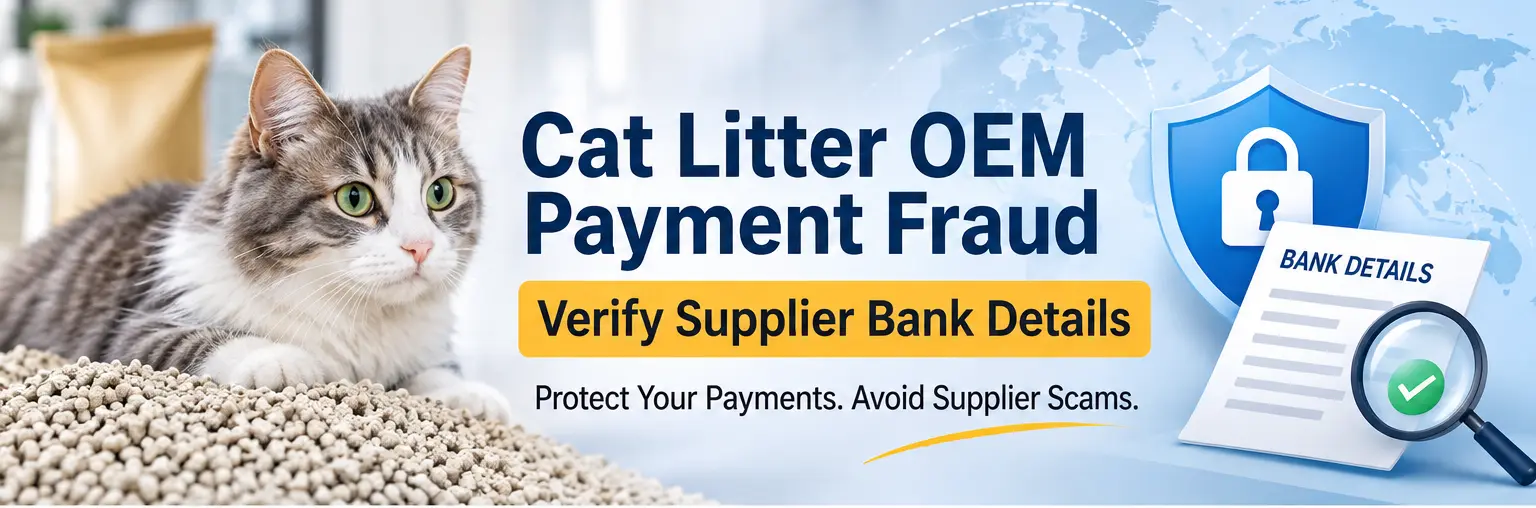
When placing a cat litter OEM order with a new manufacturer, buyers need to verify more than the quoted price and production terms. Incorrect beneficiary details, impersonated supplier emails and last-minute bank account changes can divert a deposit or balance payment to an unauthorized recipient. These risks are particularly important in international orders, where recovering a cross-border wire transfer can be difficult. This guide explains how importers can check supplier payment details, recognize business email compromise (BEC), and build practical verification steps into each stage of an OEM transaction.
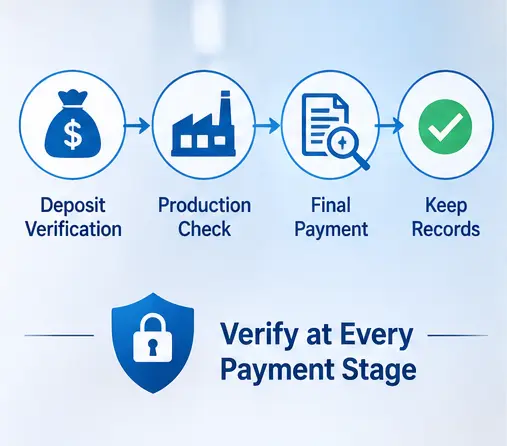
Before sending a deposit or balance payment for a cat litter OEM order, confirm that the beneficiary is the legal entity named in your sales contract and pro forma invoice. Never rely on an email alone to approve new or revised bank details. Verify any account change through a previously established phone number or another independent communication channel, and keep the confirmation on record. A T/T transfer, letter of credit or platform payment arrangement does not replace supplier verification or an agreed inspection process.
Where Payment Fraud Can Occur in an OEM Order
Payment fraud can affect an order regardless of the agreed payment method. The key is to identify which information must be verified before money is released.
| Payment stage | Potential risk | Buyer control |
|---|---|---|
| Before the deposit | Fake supplier identity or beneficiary details that do not match the contracting company. | Check the company’s legal identity, contract details and receiving account before transferring funds. |
| During production | A fraudulent email requests payment to a newly introduced account. | Confirm the change through an independently verified contact and obtain written authorization. |
| Before the balance | Impersonated invoices or altered payment instructions arrive shortly before shipment. | Compare the invoice against the original order records and verify the beneficiary again. |
| After a suspicious transfer | Funds have been sent to an unauthorized account. | Contact the sending bank immediately and request a wire recall or other available recovery action. |
The payment method determines how funds are transferred and released. Independent verification determines whether they reach the intended supplier. Both controls matter.
Verifying T/T Payments for Cat Litter OEM Orders
T/T payments are commonly used in international OEM transactions. Buyers may pay an initial deposit before production and settle the balance against an agreed inspection result or shipping documents. The payment schedule should be documented in the sales contract and pro forma invoice, with each payment linked to a clearly defined order milestone.
For payment security, buyers should establish an approved beneficiary record before the first transfer and use it as the reference for subsequent payments. Any difference in the receiving account, even on a familiar invoice, should trigger a separate verification process. A compromised supplier email account can be used to send convincing payment instructions within an otherwise legitimate order conversation.
Before transferring funds, compare the beneficiary name, bank name, account number, SWIFT/BIC code, payment currency and amount against the approved pro forma invoice and sales contract. If the beneficiary name differs from the contracting company’s legal name, obtain an explanation and verify the arrangement independently with the supplier and your bank before proceeding. Legitimate arrangements such as bank-recognized abbreviations or branch-level naming can exist, but they should never be accepted without verification. Keep the approved invoice and transfer confirmation with the order records. For a broader explanation of payment structures and delivery-term responsibilities, see our cat litter payment terms and Incoterms guide.
Does a Letter of Credit Prevent Payment Fraud?
A letter of credit (L/C) can reduce certain payment risks by making payment conditional on the presentation of documents that comply with the credit. However, it does not automatically verify the identity of every party involved or guarantee the physical condition of the cat litter shipment.
Before a letter of credit is issued, buyers should review the applicant and beneficiary details, issuing bank, payment conditions and documentary requirements with their bank. If an independent inspection certificate is required, its issuer and the conditions for accepting it should be clearly specified in the credit. This helps reduce documentary and payment risks without treating the L/C as a guarantee of product quality.
Business Email Compromise: The Bank Account Change Scam
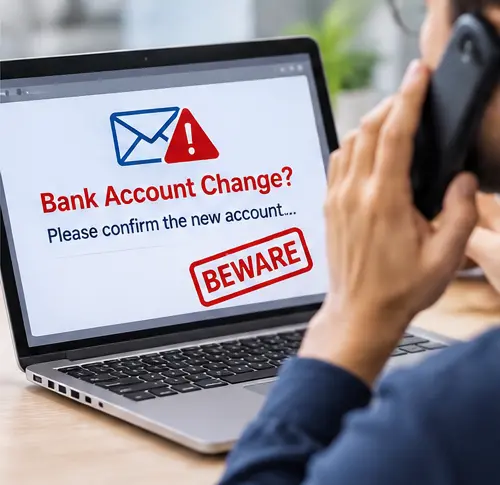
One of the most serious payment risks in international sourcing is business email compromise (BEC). A fraudster may gain access to a legitimate supplier’s email account or imitate its address, then send an invoice or payment notice containing altered bank details. Because the message may appear in an existing order conversation, buyers can mistake it for a routine update and transfer funds without questioning the change.
The FBI’s Internet Crime Complaint Center (IC3) recorded approximately US$3.05 billion in reported losses from business email compromise (BEC) in 2025. This figure covers reported BEC incidents across different industries and victim types, not supplier payment fraud alone. However, it illustrates why importers should independently verify changes to supplier payment instructions rather than relying on email correspondence alone. Common warning signs include an unexpected beneficiary change, a request to pay an individual or unrelated company, an unfamiliar payment channel, or pressure to transfer funds before shipment.
Example: An importer receives an updated pro forma invoice two days before the scheduled balance payment. The supplier’s company name and order details look familiar, but the beneficiary account is different. Instead of updating the bank records immediately, the buyer contacts the original supplier representative using a previously verified phone number. The supplier confirms that no account change was authorized, preventing the transfer from being sent to the wrong recipient.
A Bank Account Verification Checklist Before Every Transfer
Payment verification should follow the same process for every deposit and balance payment. A familiar supplier contact or an established email conversation should never be treated as the only proof that payment instructions are genuine.
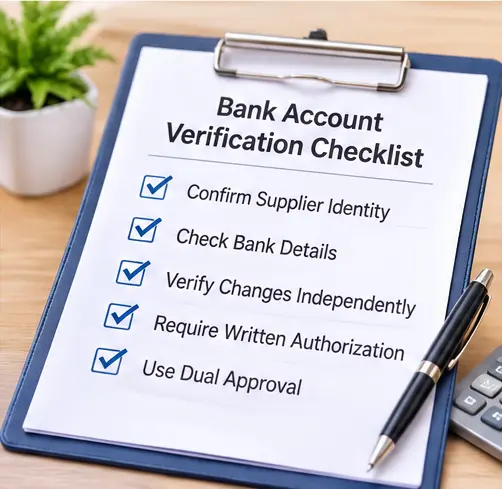
- Confirm the contracting entity. Check the company’s legal name against the sales contract, business registration and approved pro forma invoice. The receiving beneficiary should belong to the contracting entity or have a documented and independently verified payment arrangement.
- Check the bank details. Compare the beneficiary name, bank name, account number, SWIFT/BIC code and payment currency against the previously approved records. Ask your bank to clarify any beneficiary-name discrepancy before sending funds.
- Verify changes independently. If new bank details arrive by email, call a previously verified company contact using a number already on file. Do not use a phone number or link included in the account-change message.
- Require written authorization. Request formal confirmation of any approved bank-detail change, including the reason and effective date. Keep the revised invoice and verification record with the order documents.
- Use dual payment approval. For larger transfers, require a second authorized employee to review the beneficiary and payment instructions before the bank transfer is released.
- Secure business email accounts. Enable multi-factor authentication, review suspicious login activity and establish internal procedures for verifying changes to supplier payment information.
- Keep an audit trail. Retain the original and revised invoices, written confirmations, call records and bank transfer receipts for each order.
- Act immediately if fraud is suspected. Contact your bank as soon as possible to request a transfer recall or fund-freezing assistance. Preserve the emails and transaction records, and report the incident to the appropriate authorities.
Bank account verification is only meaningful when the supplier’s identity has also been checked. Before placing an OEM order, confirm that the company issuing the quotation and sales contract is properly identified and that the production facility can be verified. Our cat litter factory audit checklist covers the records and production-site checks buyers can use during supplier evaluation. For the contractual side — payment milestones, inspection rights and liability — see the cat litter OEM contract terms guide.
What to Do When Payment Instructions Change
If a supplier requests a bank account change, treat it as an unverified instruction until the request has been confirmed independently. Do not release a pending payment simply because the revised invoice carries the correct company name or order number.
- Pause the payment. Keep the existing beneficiary details unchanged while the request is being checked.
- Verify the request independently. Contact the original supplier representative using a previously verified phone number. Confirm the new beneficiary, bank details and reason for the change.
- Escalate unresolved discrepancies. If the supplier cannot confirm the change, or the receiving account belongs to an unexplained third party, do not proceed. Contact your bank if a transfer has already been initiated.
If funds have already reached a suspected fraudulent account, contact your bank immediately and request a wire recall or other available recovery action. Preserve the original emails, revised invoices and transaction records, and report the incident to the appropriate authorities.
Making Payment Verification Part of Every OEM Order
For cat litter importers, payment security should be included in the purchasing process from the first quotation to the final balance payment. Verify the contracting company and beneficiary before the initial deposit, retain approved bank details, and independently confirm any change before transferring funds.
These checks do not replace supplier audits, product inspections or a properly written OEM agreement. They address a different risk: ensuring that payments intended for the manufacturer reach the authorized recipient. A consistent verification procedure is more reliable than making payment decisions based on familiar emails or urgent requests. Confirm documents and terms with your bank before you commit; this guide is general information, not legal advice.
Frequently Asked Questions
Compare the beneficiary name and bank details with the legal entity stated in the sales contract and pro forma invoice. Ask your bank whether it offers a beneficiary-name verification service or can check the payment details before release. If the account holder cannot be independently confirmed or the details do not match, contact the supplier through a previously verified channel and resolve the discrepancy before transferring funds.
Pause the payment and contact the supplier through a previously verified phone number or another independent channel. Request formal written confirmation and an updated invoice. Do not approve the change based solely on an email or messaging-app notification.
A letter of credit provides a bank-controlled payment process based on specified documents, but it does not eliminate all fraud risks. Buyers should verify the beneficiary, issuing bank and credit instructions with their bank before the credit is issued.
Do not pay a third-party account unless the payment arrangement has been independently verified and formally documented. Confirm why the beneficiary differs from the contracting company, check the arrangement with your bank, and obtain written authorization before proceeding. An unexplained third-party account is a reason to pause the transfer.
Recovery may be possible, but it is not guaranteed. Contact your sending bank immediately, request a wire recall and ask whether the receiving funds can be frozen. Preserve all invoices, emails and transaction records and report the incident to the relevant authorities.