





A cat litter video factory audit (also called a virtual factory audit) is a live, camera-led review of a supplier’s plant and records, done before you travel or place a first order. It’s a good way to shortlist suppliers and catch obvious problems early. It can’t replace a site visit. This guide covers what a remote audit can verify, a step-by-step walkthrough checklist, and when you should still fly out.
A live video audit can show that the plant is running, that equipment and staff are at work, and that batch records, certificates and test reports line up with what the supplier told you. It can’t prove who owns the machines, rule out subcontracting, check working conditions, or judge things you need to touch or smell. Use it to decide which suppliers deserve a visit, not to approve a first order.
What Counts as a Cat Litter Video Factory Audit
The term is used loosely, so fix the scope before you book anything. In this article, a video factory audit means a live, two-way video session in which your representative directs the camera and questions site personnel in real time. A pre-recorded walkthrough is a factory tour, not an audit: it shows only what the supplier chose to film. A screen-share review of certificates and spreadsheets is a document review. A genuine remote audit combines all three, with the live element leading.
Some suppliers call a short sales presentation an “audit”, so agree a written agenda before you book: who attends and in what role, and which production and storage areas will be shown. It also gives you a record of anything that wasn’t shown.
What Remote Verification Can Confirm
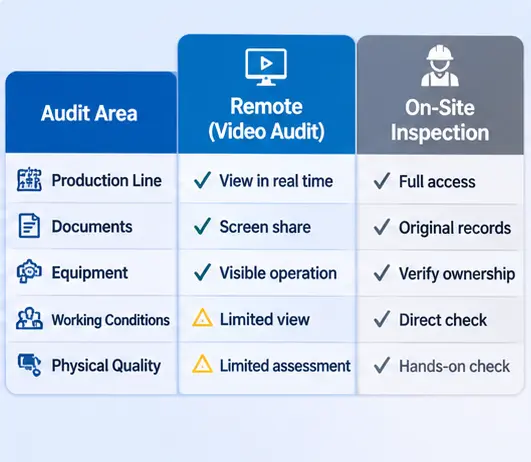
A live camera shows what is happening on site right now and lets you check it against selected records. It’s weaker on history, and on anything that needs hands-on inspection or unrestricted access. The table lists what is worth checking remotely.
| Area | What a live video audit can confirm | Evidence to request in the same session |
|---|---|---|
| Factory existence and scale | Production floor, warehouse and loading areas exist and are accessible during the session. | Gate sign, site layout, and one unbroken walk from gate to dock (note any camera cuts). |
| Line in operation | Equipment is running and material is moving right now. | Live views of material going in, key process stages, and finished product coming out. |
| Documentation consistency | Records exist and broadly match the supplier’s claims. | Business licence, current certificates, recent batch records |
| Personnel and roles | People performing QC, production and supervisory tasks are visible, and their stated roles can be discussed. | Brief on-camera confirmation of each person’s role |
| Packaging and labelling | Current bag stock and artwork correspond to the approved design | Live look at finished bags and the artwork file on screen |
| Retention samples | Samples from earlier batches are stored and retrievable | Read a batch number off a retained bag, then find its record |
A useful technique is to pick one batch number at random and follow it through the whole system on camera: raw-material lot, in-process record, finished-goods label, retention sample. Compare dates, lot numbers and quantities at each step, and log anything the supplier can’t find or explain. If the chain holds up live, it tells you more than a folder of polished documents.
What a Video Walkthrough Cannot Confirm
These are the blind spots, and they’re where first orders tend to go wrong.
- Machine ownership. Equipment rented for the visit looks identical to owned equipment on camera.
- Undisclosed subcontracting. A video cannot show where the order is actually made after the call ends.
- Working conditions. Wages, hours, and forced or underage labour can’t be judged through a screen. QIMA’s guidance on Sedex virtual assessments notes that remote delivery needs a setting for confidential worker interviews; without one, social-compliance conclusions are weak.
- Smell, dust and texture. Odour, workshop dust and fine material characteristics don’t come through a camera. You need physical samples and testing for those.
- Document authenticity. A certificate or spreadsheet on screen could be edited, outdated or issued for a different site. Check it with the issuer.
A Harvard Business School working paper by Ashley Palmarozzo, Michael W. Toffel and Melissa Ouellet, “Managing Remote Work Quality: Evidence from Auditing Management Systems Standards,” looked at more than 46,000 audits from 2019 to 2021 and found that remote audits flagged fewer violations than in-person ones, especially where the issue has to be seen on site. These were management-system audits, not cat litter plants, but the pattern is a fair reason to treat video as a screen, not a final check.
Running the Live Walkthrough
Before the call
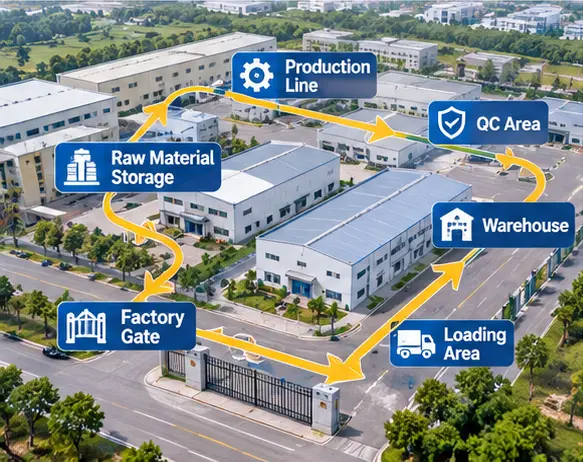
Send the agenda a day ahead and ask for an unedited live feed, not a recorded clip. Agree the language and whether you need an interpreter. Book the session during a normal production shift (Dalian is UTC+8, so check the overlap with your time zone), and make sure it covers the full route: gate, raw-material store, production line, QC area, warehouse, retention samples and loading point, not one tidy corner of the plant.
During the walkthrough: camera checklist
- Enter through the main gate and show the factory identification. Follow the route to the production area, noting any camera interruptions or restricted areas.
- Show the raw-material store, including lot labels and storage conditions for the material types used in your order.
- Follow the production process from material input to finished product. Where a continuous view is impractical, request separate views of each stage and check that quantities and timings add up.
- Open the QC area: instruments, calibration labels and the in-process records for the batch you selected.
- Walk the finished-goods warehouse; read batch numbers off stock and locate the matching retention samples.
- Show the loading point and how containers are sealed before dispatch.
- Ask at least one operator a question directly rather than through the accompanying manager.
Interview without an audience
If labour conditions matter to you, ask for a private worker interview: no managers in the room, no names recorded. Be realistic, though. On a supplier-hosted video call you can’t confirm nobody is listening off camera. For anything your retailer or importer will check, use a formal assessment such as a Sedex Virtual Assessment, and confirm the provider’s requirements for connectivity, confidential interviews and site access before you book.
After the call
Circulate written minutes the same day: what was shown, what was refused, and every discrepancy with an owner and a due date. A remote audit without a corrective-action trail is just a video call.
Remote or On-Site: Which Do You Need?
Neither format is universally better. Choose by the decision you need to make, not by travel budget.
| Situation | Remote adequate | On-site required |
|---|---|---|
| Shortlisting several unfamiliar factories | Yes — fastest way to filter | Not yet |
| First order with a new supplier | Initial screening only | Recommended before approving the first order |
| Annual review of an established supplier | Often, if performance records are sound | Periodically, to reset the baseline |
| Social-compliance or worker-condition verification | Only through an accepted, structured assessment programme | Preferred, where the programme allows |
| High-value orders or suppliers with unresolved quality or compliance concerns | Not sufficient alone | Yes |
| Document refresh between visits | Yes | No |
A supplier that passes the remote screen has earned a visit, not a purchase order. Next, use our on-site factory audit checklist to verify the physical and documentary side.
Five Warning Signs During a Remote Factory Walkthrough
Watch for these during the call:
- The camera never leaves the escort’s hand, or stays fixed on one rehearsed area.
- The line starts only once filming begins, with no work-in-progress at the start of the process.
- Batch labels repeat or date stamps conflict with the records on screen.
- The raw-material store or worker areas are “off limits today” without a clear safety reason.
- Stated capacity cannot be reconciled with the lines and floor space actually visible.
If a view is missing, ask for it right then. How the supplier responds often tells you more than the view would have.

Documents to Have on Screen Before the Call
Send this list ahead and confirm each item can be shown live.
- Business licence and export registration, with the entity name matching your contract.
- Line and equipment list with model numbers, plus a site layout.
- Current certificates with scope and validity — check the certificate number and covered site with the issuing body rather than trusting the PDF.
- The last three batch records for the product, tracing raw-material lot through in-process checks to finished goods.
- Retention-sample log and the physical samples themselves.
- Test reports showing the method and the laboratory that issued them.
- A written declaration of any subcontracting or outside processing.
Turning the Remote Screen into a Supply Decision
To verify a cat litter manufacturer properly, put the video audit early in the sequence: shortlist suppliers, run the remote session, test samples under a cat litter sample testing protocol, then audit on site and place a controlled first order. Going straight from a video call to a container skips the checks that catch quality problems before money moves.
Pet Horizon runs live factory sessions from our Dalian plant. Tell us which product you’re evaluating and we’ll build the route around it: raw-material store, production line, QC room, batch records, retention samples and loading area. You’re also welcome to visit in person before signing a supply agreement. Read the tofu cat litter or bentonite cat litter specs first so you know which materials and process details to check.
Frequently Asked Questions
Not automatically. A buyer-led video walkthrough isn’t the same as an independent on-site audit. Sedex Virtual Assessments are a separate, structured option for when physical access isn’t possible. Whether a remote assessment is accepted depends on your retailer, importer or certification body, so confirm with them first.
Not by itself. On a call you can check who issued the certificate, which site and scope it covers, and whether it’s in date. To confirm it’s genuine, check the certificate number and status with the issuing body or its online verification database.
Plan on about 90 minutes to 2 hours for a full route, including the document check. Coverage matters more than length: you should be able to follow one batch from raw material to finished goods, inspect the QC area and speak to staff without an escort. A short call that covers the full chain beats a long one in a meeting room.
Ask why first. Poor connectivity or a real confidentiality limit can be legitimate; in that case, take a recorded tour as a stopgap and schedule an on-site visit. An unexplained refusal, or technical failures that always hit the same part of the route, is a red flag.
Yes, if the supplier is new, the order is large, or the quality or compliance risk is high. If your first order is a full 20GP container, visit before you approve it. The exact call depends on order value, supplier history and what your customers require.
Often, if the supplier has a clean track record and you’ve already been on site. Remote works well for document refreshes between visits. Still visit in person every year or two to reset your baseline.