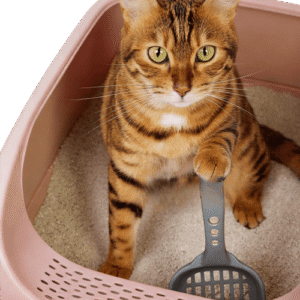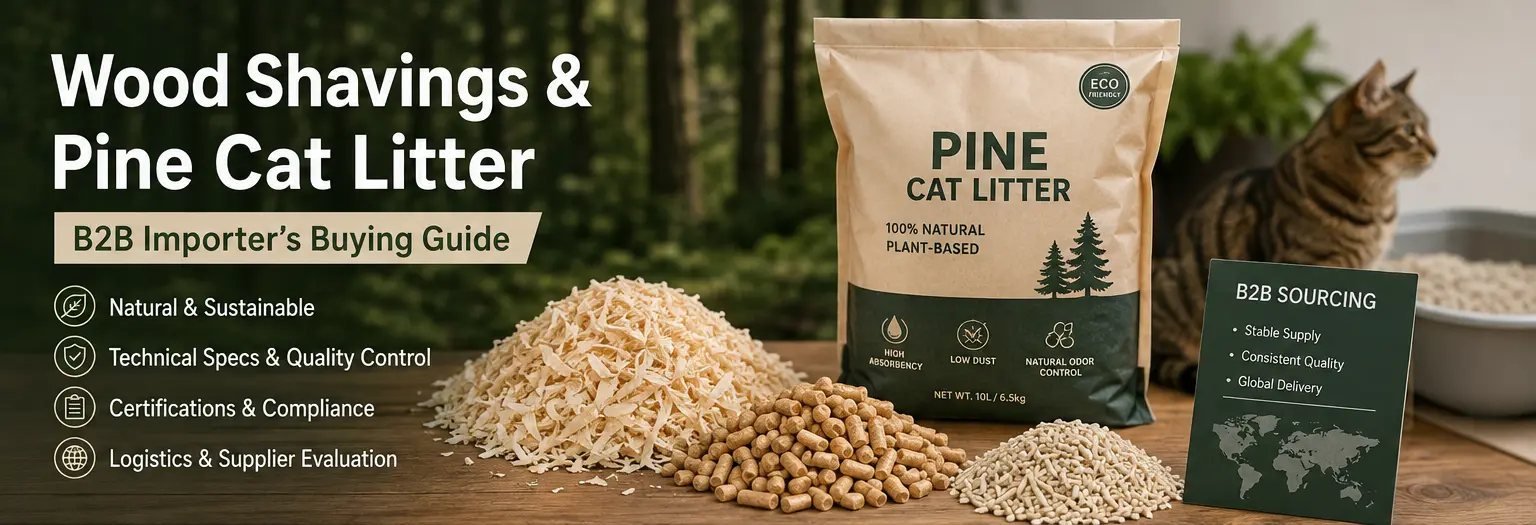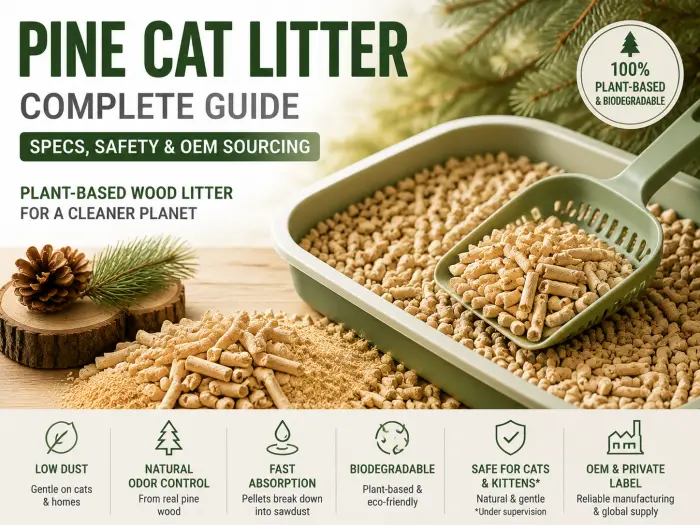


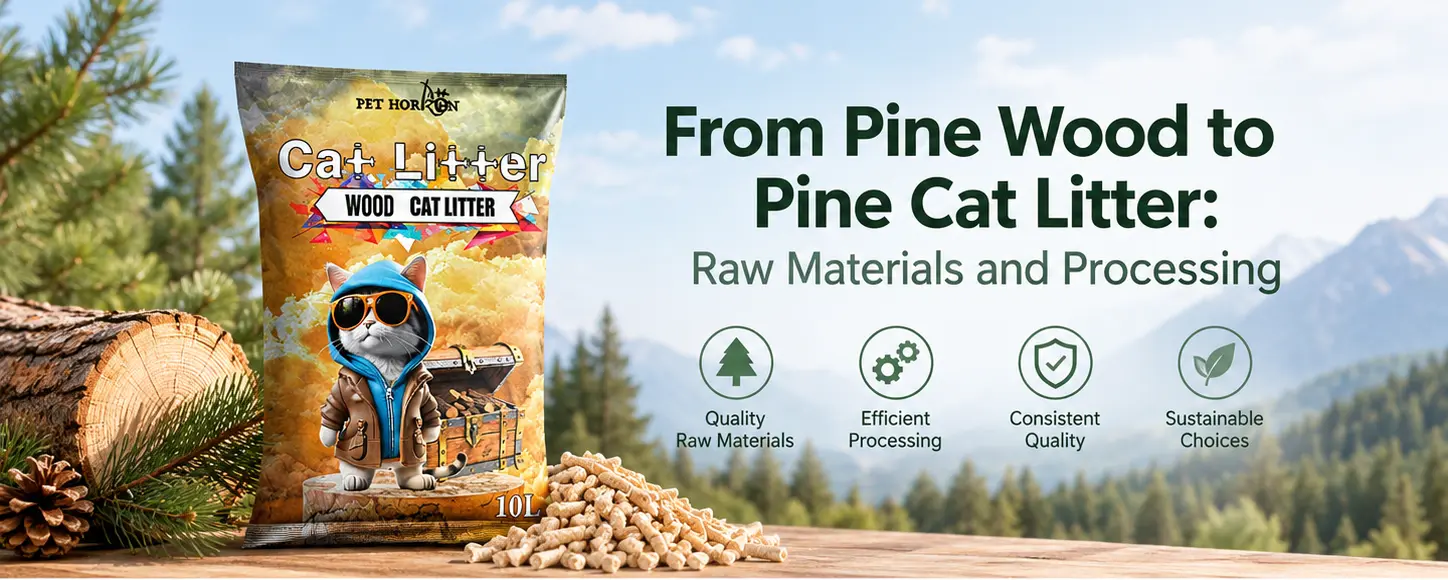
Pine cat litter is made from pine-based wood material processed into a form suited to liquid absorption and litter-box handling. The specific raw material and any additional ingredients should be confirmed against the product specification. For buyers, the source and preparation of the material matter because they can influence pellet density, durability, moisture behavior, and the amount of loose fines in the finished product.
Why Pine Wood Is Used in Cat Litter Production
Pine-based cat litter uses wood material in a form suited to liquid absorption and litter-box handling. Depending on the product design, the raw material may come from processed pine sawdust, wood fibers, or other suitable wood-processing residues. The source and preparation method matter because they influence pellet density, durability, moisture behavior, and the amount of loose fines in the finished product.
For B2B buyers, the important question is not simply whether a product is made from pine. It is whether the supplier can maintain consistent raw materials and finished-product specifications across production batches. These factors affect packaging performance, transport damage, user experience, and the consistency of a private-label product.
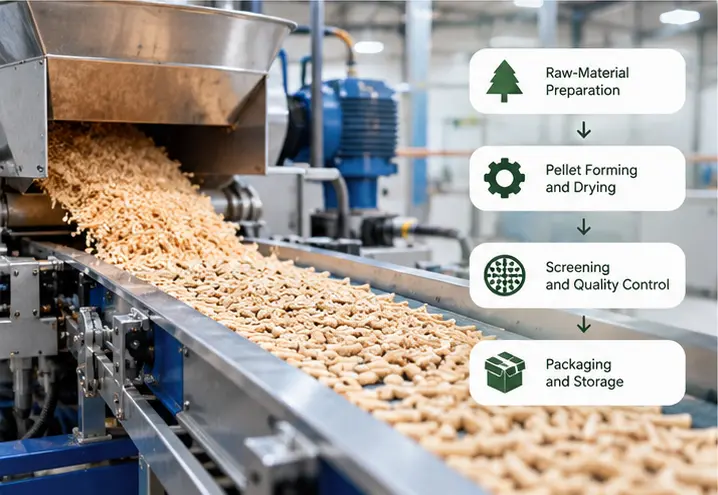
From Wood Material to Finished Pellets
Pine wood is a useful feedstock for pelletized cat litter because suitable wood particles can be compressed into a form that is convenient to package, transport, and use. The finished product’s performance, however, depends on the raw material and the manufacturing process rather than on the word “pine” alone.
Raw-Material Preparation
Particle composition and incoming moisture influence processing consistency. Buyers should ask how the supplier selects and controls incoming wood material.
Pellet Forming and Drying
Compression and particle structure affect pellet integrity and resistance to breakage. Drying or conditioning controls moisture so the product stays stable during storage and transport. High-temperature carbonization is not a universal requirement for pine cat litter; the exact sequence varies by equipment and product specification.
Screening and Quality Control
Screening and dedusting remove loose fines and help control the amount of dust in the finished product. Suitable packaging and dry storage conditions protect the product before shipment.
Pine cat litter is commonly sold as absorbent pellets that soften or break down when wet, although the behavior depends on the formulation and product design. Natural wood odor may contribute to the product’s sensory profile, but it should not be treated as proof of a specific odor-control performance. For wholesale and private-label programs, buyers should evaluate absorption, pellet durability, fines content, moisture, and packaging integrity using samples and agreed specifications. Low-dust or odor-control claims should be supported by appropriate product testing rather than inferred from the raw material alone.
Where Pine Cat Litter Fits in the Market
Pine cat litter can serve retail and commercial pet-care channels that want a wood-based litter option. Its suitability depends on the product’s absorption behavior, pellet format, disposal instructions, and the preferences of the intended customer group.
For distributors and private-label brands, three market considerations are particularly relevant:
- Wood-based product ranges: Pine litter can complement tofu and mineral-based cat litter in a multi-product portfolio, giving retailers another material option to offer. See our tofu vs pine cat litter comparison for how the two materials differ in specification and sourcing.
- Customers familiar with pellet litter: Pellet format and wet-breakdown behavior should be explained clearly so customers understand how to use and maintain the litter.
- Commercial and multi-location buyers: Boarding facilities and other multi-cat environments may consider pine litter, but purchasing decisions should be based on actual consumption, cleaning routines, odor performance, and total operating cost.
No litter type is automatically suitable for every cat or facility. Before launching a pine litter product, brands should validate performance with representative samples and provide clear instructions for use, cleaning, and disposal.
Sustainability Considerations for Pine Cat Litter
Wood is a renewable resource when it comes from responsibly managed sources, but the environmental profile of a finished cat litter product depends on more than its raw material. Buyers should consider where the wood comes from, whether sourcing records are available, how the material is processed, what packaging is used, and how the product is intended to be disposed of.
For importers and private-label brands, useful checks include:
- Whether the supplier can identify and document the raw-material source.
- Whether any sustainability or sourcing claim is supported by appropriate records or certification, reviewed against frameworks such as the EUDR cat litter wood supply chain requirements where relevant.
- Whether packaging and storage requirements help prevent product damage and avoidable waste.
- Whether disposal instructions reflect the finished product and local waste-management rules.
Pine-based materials may be a useful option for brands developing wood-based cat litter ranges. However, claims such as “eco-friendly,” “sustainably sourced,” or “biodegradable” should be specific, substantiated, and appropriate to the destination market rather than assumed from the presence of wood alone.
What Importers Should Verify with a Pine Cat Litter Supplier
Before placing a wholesale or private-label order, buyers should confirm how the supplier controls raw materials and finished-product quality. A useful evaluation should cover more than a product description or a single sample.
- Raw-material consistency: Ask how the supplier identifies and controls incoming wood material.
- Pellet specifications: Confirm particle dimensions, bulk density where relevant, moisture limits, and acceptable levels of fines.
- Performance testing: Request test results or agreed sample-evaluation procedures for absorption and pellet durability.
- Batch consistency: Confirm how production batches are inspected and how non-conforming products are handled.
- Packaging and shipment: Review packaging specifications, storage requirements, and measures to reduce pellet breakage during transport.
- Private-label requirements: Agree on product specifications, packaging artwork, labeling, and acceptance criteria before production.
The exact specifications should match the product design and target market. A supplier that can explain its quality-control procedures and document the agreed requirements gives buyers a stronger basis for repeat orders than unsupported performance claims alone.
Conclusion
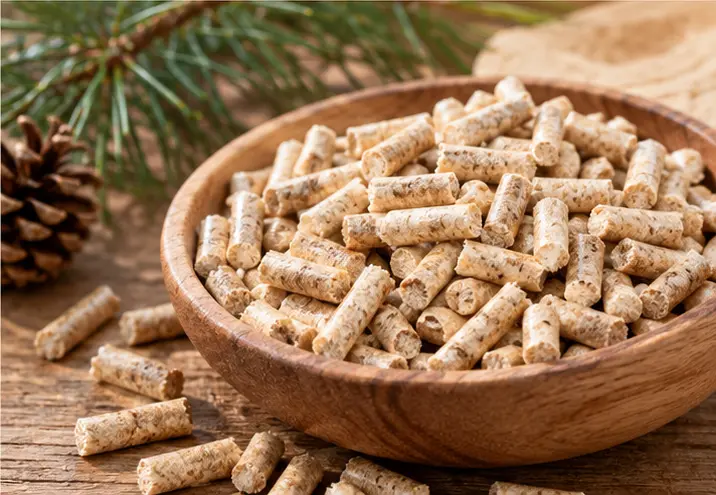
Pine wood becomes a useful cat litter feedstock only when the raw material, processing method, and finished-product specifications work together. For importers and private-label brands, understanding these factors helps turn a broad material choice into a more practical sourcing decision. Evaluate the finished pellets, request supporting quality information, and confirm consistent specifications before committing to a bulk order. For product details and sourcing options, see Pet Horizon’s pine cat litter range.
FAQ
What raw materials are used to make pine cat litter?
Pine cat litter is typically made from processed pine-based wood material formed into pellets. The exact raw material, processing method, and any additional ingredients depend on the product specification. Buyers should request confirmation from the supplier when evaluating a product for wholesale or private-label production.
How is pine cat litter typically manufactured?
Depending on the production line, the process may involve raw-material preparation, moisture adjustment, pellet forming, drying or conditioning, screening, dedusting, and packaging. Buyers should confirm the actual process used by their supplier rather than assume every pine litter product follows the same method.
What should importers check when sourcing pine cat litter?
Importers should evaluate absorption behavior, pellet durability, fines content, moisture, packaging integrity, batch consistency, and supporting product documentation. For private-label orders, the agreed specifications and acceptance criteria should be confirmed before mass production.
Is pine cat litter biodegradable or environmentally friendly?
Pine is a plant-based, renewable feedstock, but biodegradability and environmental claims depend on the finished product, packaging, and destination-market disposal rules rather than the word “pine” alone. Buyers should request substantiation for any eco-friendly, compostable, or biodegradable claim before using it in marketing.
Does pine cat litter control odor without added chemicals?
Natural wood has a characteristic scent, but that scent is not, by itself, proof of measured odor-control performance. Odor results depend on the formulation, pellet structure, and how the litter is used and maintained. Buyers should ask for test evidence behind any odor-control claim rather than assume the raw material delivers it.
How does pine cat litter compare with tofu cat litter for B2B sourcing?
Pine is typically a wood-pellet, absorbent format, while tofu litter is usually a plant-based clumping format. They differ in clumping behavior, bulk density, dust, disposal route, and landed cost. For a side-by-side specification comparison, see our tofu vs pine cat litter guide.
Can pine cat litter be used in automatic litter boxes?
Compatibility depends on the litter-box design and the pine litter format. Traditional pine pellets are often better suited to sifting systems or litter boxes designed for non-clumping litter, while some rake-style or rotating systems require specific clumping or particle characteristics. Buyers should check the device manufacturer’s compatibility guidance and test the intended litter before recommending it for automatic litter boxes.