




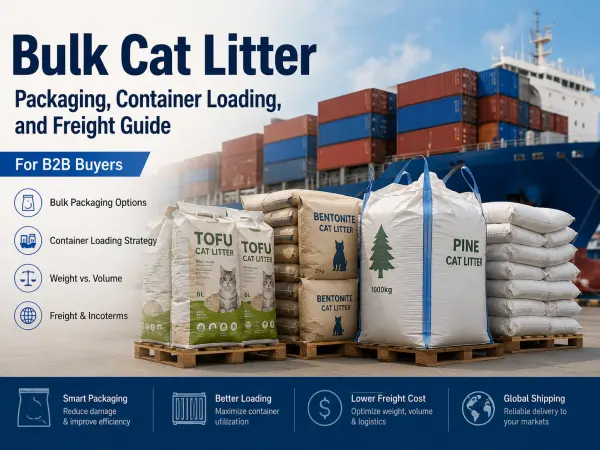
For distributors and importers moving serious volume, “bulk” is where margins are won or lost. The litter itself may cost the same per kilogram, but how it is packaged, palletized, and loaded into a container determines your real landed cost. This guide explains bulk cat litter formats, container-loading logic, and the trade-offs that decide freight efficiency.
Whether you purchase tofu cat litter, bentonite cat litter, or pine cat litter in bulk, selecting the right packaging format and loading strategy can significantly improve shipping efficiency and reduce overall logistics costs.
Quick answer: Bulk cat litter refers to buying and shipping litter in large-volume formats — big sacks, jumbo bags, or pallets of neutral packaging — rather than individual retail bags. The goal is to maximize net product weight per container while staying within weight and volume limits, because freight is often the largest single component of landed cost, especially for heavy clay litter.For international buyers, optimizing packaging and container utilization is often just as important as negotiating the product price, especially for heavy cat litter products where freight represents a significant portion of landed cost.
Bulk Packaging Formats
Bulk buyers choose among several packaging formats, each balancing cost, handling, and shelf-readiness:
- Bulk sacks / jumbo bags — the lowest packaging cost per kilogram; ideal for re-packers who bag into retail units locally.
- Neutral retail bags on pallets — shelf-ready without printing; a middle ground on cost.
- Printed / private-label retail bags — highest packaging cost and lead time, but ready for direct sale.
| Packaging Format | Typical Weight | Suitable For |
|---|---|---|
| Retail Bag | 2.5–10kg | Retail Sales |
| Neutral Bag | 20–25kg | Importers & Re-packers |
| Jumbo Bag | 500–1000kg | Industrial Users |
Your choice depends on whether you re-pack downstream or sell as received. Buyers structuring trade pricing across these formats should review our cat litter wholesale guide on tiered pricing and MOQ.
Weight vs. Volume: What Caps Your Container
Every ocean container has two limits — a weight limit and a volume (cube) limit — and cat litter type decides which one you hit first:
| Litter type | Density | Limiting factor |
|---|---|---|
| Bentonite (clay) | High | Weight — you max out payload before filling the cube |
| Tofu (plant-based) | Medium | Balanced — good use of both weight and space |
| Pine / paper | Low | Volume — the container fills before you reach the weight limit |
This is why heavy clay and light pine behave so differently in freight planning. Optimizing the load — pallet configuration, bag dimensions, and stacking — can meaningfully lower cost per kilogram delivered. For the broader picture of supplier selection and negotiation behind these decisions, see our cat litter sourcing and buying guide.
Floor Loading vs. Pallet Loading
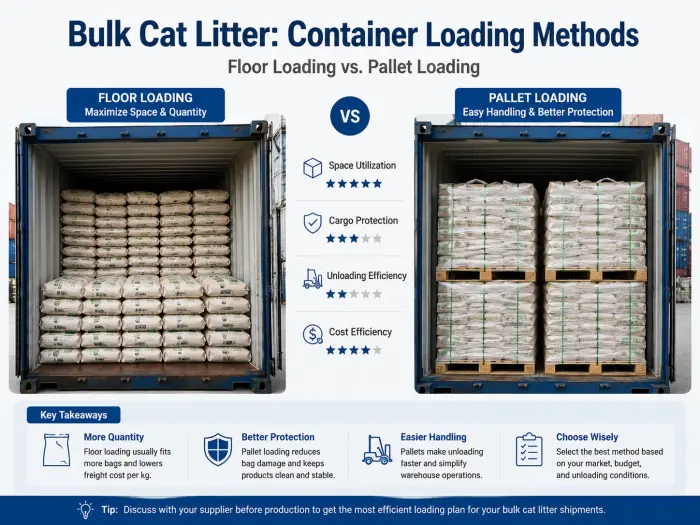
Bulk cat litter can be loaded either directly onto the container floor or on pallets. Floor loading usually maximizes product quantity, while pallet loading improves unloading efficiency and warehouse handling. The most suitable option depends on your destination market, warehouse equipment, and customer requirements.
Incoterms Decide Who Pays for Freight
For bulk shipments, the incoterm is not a formality — it defines who arranges and pays for freight, insurance, and import clearance, and where risk transfers. Common choices include FOB (buyer takes over at origin port), CIF (seller covers freight and insurance to destination port), and DAP (seller delivers to a named place). The internationally recognized definitions are published by the ICC Incoterms rules. Agree the incoterm before you compare quotes, or you will be comparing prices that include different scopes of cost.When requesting quotations from multiple suppliers, always compare prices using the same Incoterm to ensure an accurate cost comparison.
Reducing Bulk Landed Cost
- Match litter to lane — for long-haul, a lighter litter’s better weight-to-value ratio can beat a cheaper but heavier one.
- Optimize the pallet — bag dimensions and stacking pattern affect how much fits per container.
- Consolidate SKUs — a well-planned mixed container can reduce per-unit freight versus part-loads.
- Choose packaging deliberately — neutral bulk sacks cut packaging cost if you re-pack locally.
- Consider floor loading when appropriate — removing pallets may increase total product quantity, subject to unloading capability and destination requirements.
- Protect products against moisture — suitable packaging materials help maintain product quality during long-distance ocean transportation.
Bulk Supply from Pet Horizon
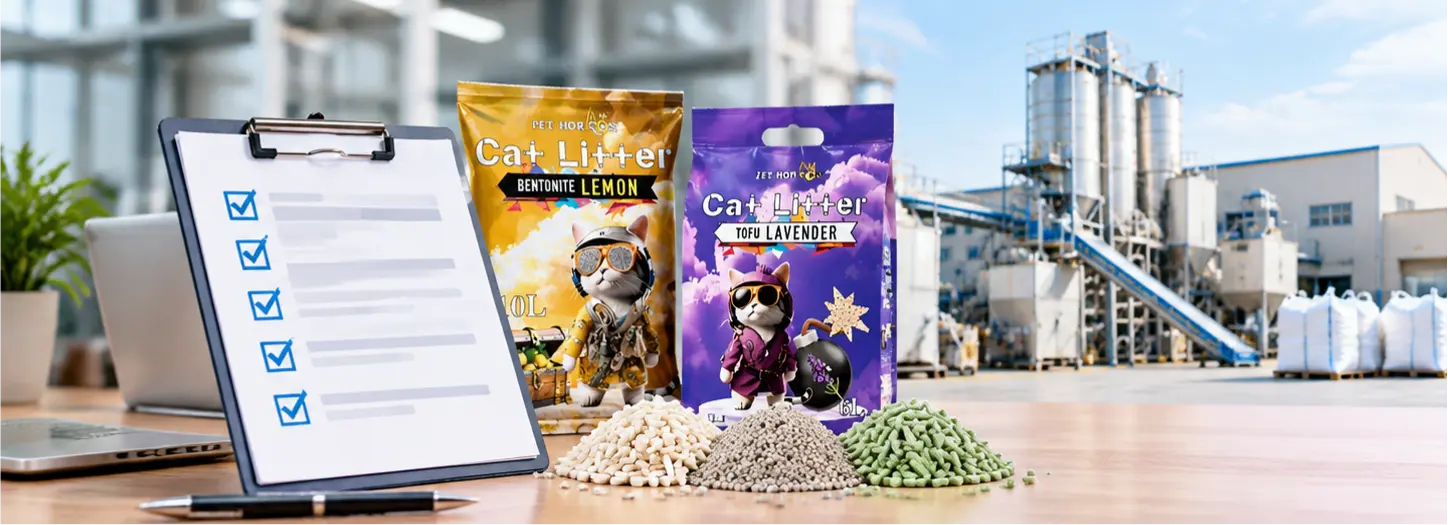
Pet Horizon supplies bulk tofu cat litter, bentonite cat litter, pine cat litter, and mixed cat litter in jumbo sacks, neutral bags, and printed retail packaging. We also help customers optimize packaging specifications and container loading plans to improve freight efficiency for international shipments.
We quote on a landed-cost basis and support full-container and mixed-SKU orders. To confirm a supplier before committing to volume, see our cat litter supplier vetting guide.
Conclusion
Bulk cat litter economics come down to packaging format, container-loading efficiency, and the incoterm you agree. Match the litter type to your freight lane, optimize how it loads, and fix the incoterm before comparing quotes — that is how high-volume buyers protect margin on every container.For international buyers, careful planning before production begins often delivers greater savings than negotiating freight after the goods are ready to ship.
Frequently Asked Questions
It refers to buying and shipping litter in large-volume formats — jumbo sacks, bulk bags, or pallets — rather than individual retail units. The aim is to maximize net product per container and lower cost per kilogram delivered.
Per kilogram, neutral bulk sacks are the cheapest packaging option, which suits buyers who re-pack into retail units locally. Printed retail bags cost more and add lead time but arrive shelf-ready.
Reducing shipping costs involves more than negotiating freight rates. Buyers can improve freight efficiency by selecting the right packaging format, optimizing pallet configuration, minimizing unused container space, and choosing the most suitable loading method for their shipment. Planning packaging and container loading before production begins often delivers greater savings than trying to reduce costs after the goods are ready to ship.
Both loading methods have advantages depending on your shipment requirements. Floor loading usually maximizes the amount of cat litter that fits inside a container because no pallet space is required, making it a popular choice for full-container shipments where minimizing freight cost per kilogram is the priority. Pallet loading, on the other hand, simplifies unloading, warehouse handling, and inventory management while reducing the risk of package damage. The best option depends on your destination market, warehouse equipment, customer requirements, and local unloading capabilities.
Cat litter, especially clay, is heavy relative to its value, so ocean and inland freight can be the largest single component of landed cost. Optimizing packaging and container loading directly affects your margin.
It depends on density. Heavy clay litter usually reaches the container’s weight limit before filling the space, while light pine or paper fills the volume first. Your loading plan should be built around whichever limit you hit first.
There is no single best choice — FOB, CIF, and DAP simply assign freight, insurance, and clearance differently. Pick the one that matches your logistics capability, and always agree it before comparing quotes.
Often yes. A planned mixed-SKU container can improve freight efficiency versus part-loads, but confirm MOQ per SKU and how the supplier blends the order.