
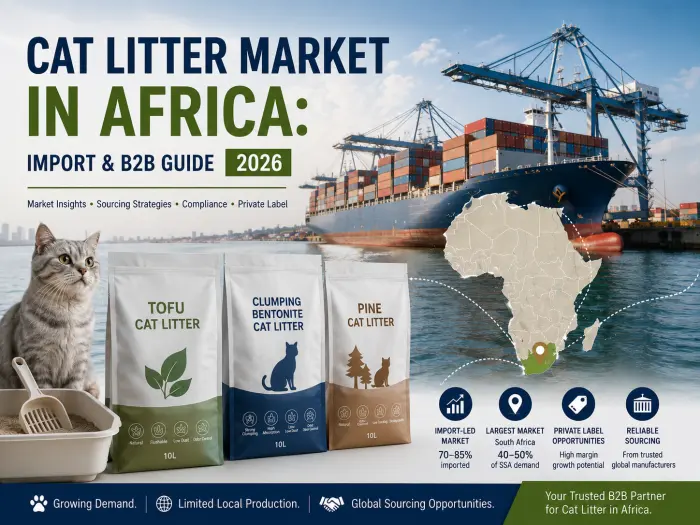
Africa is emerging as one of the few cat litter regions where finished-product imports still dominate, creating a clear opening for global manufacturers, distributors, and private-label programs.
Quick Answer
The cat litter market in Africa is structurally import-led: finished products account for an estimated 70–85% of regional supply, with South Africa alone representing roughly 40–50% of sub-Saharan demand. For B2B buyers, the fastest routes to market are sourcing from established Asian and European manufacturers, building private-label programs, and clearing South African SABS and NRCS standards before launch.
The African cat litter market refers to the production, import, wholesale distribution, and retail sale of cat litter products across African countries. Because local manufacturing capacity remains limited, most commercial cat litter sold in Africa is imported from Asia, Europe, and North America.
Understanding the African Cat Litter Market
Africa’s pet care category has shifted from a niche interest to a measurable growth segment over the last decade. Rising urban incomes, smaller households, and higher pet humanization rates in cities such as Johannesburg, Lagos, Nairobi, and Cairo have pushed demand for packaged cat litter well beyond what local production can economically supply.
Unlike North America or Europe, where national brands and local plants set the baseline, most African markets are still defined by what arrives through ports. That dynamic makes the continent strategically different for an importer or OEM partner: demand is real and growing, but the supply side is overwhelmingly external.
Why Africa Remains an Import-Led Market
Most African countries lack the bentonite processing, tofu extrusion, or wood-pellet infrastructure needed for cost-competitive large-scale litter production. Importing finished goods — or semi-bulk for local repackaging — remains cheaper than building greenfield plants. This structural gap is why import dependency stays in the 70–85% band even as local retail channels mature.
South Africa: The Regional Anchor
South Africa is the largest and most developed cat litter market on the continent. Independent market research from MarkWide Research and Morgan Reed Insights places the South African market at roughly USD 72.5 million in 2026, growing toward USD 126.7 million by 2035 at a 6.4% CAGR. Premium and private-label tiers are expanding at 1.5–2x the rate of the value segment, signaling where margin sits.
The Wider Sub-Saharan Opportunity
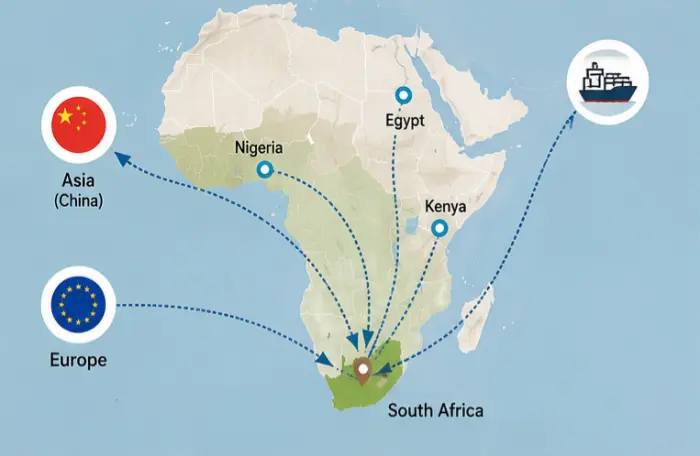
Beyond South Africa, Nigeria, Kenya, and Egypt show the fastest absolute growth as middle-class cat ownership rises. The broader Middle East and Africa cat litter category is estimated near USD 487 million in 2026, reaching over USD 1.02 billion by 2035 at about 8.6% CAGR. Plant-based formats still represent under 5% of volume today but are entering quickly through e-commerce channels.
Market Size and Growth at a Glance
| Segment | 2026 Estimate | 2035 Estimate | CAGR |
|---|---|---|---|
| South Africa (total) | USD 72.5M | USD 126.7M | 6.4% |
| Middle East & Africa (total) | USD 487M | USD 1.02B | 8.6% |
| Plant-based share of volume | <5% | Rising | — |
Key takeaway: the region is not a mature market with entrenched local brands; it is a growth market where imported and private-label products still set the price and quality benchmarks.
Which Cat Litter Types Sell Best in Africa?
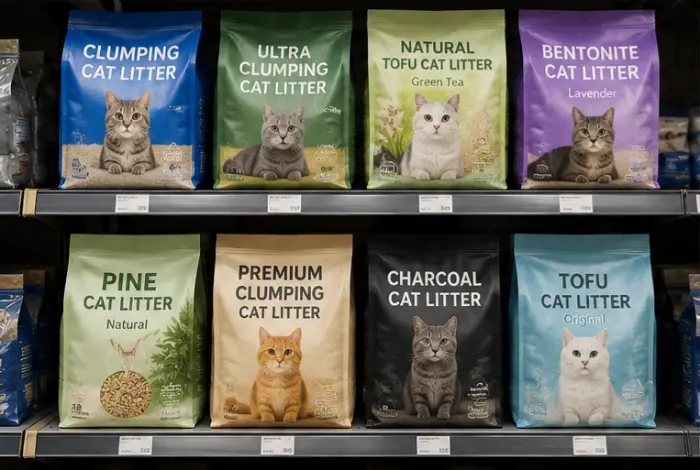
Although clumping bentonite cat litter remains the dominant product across most African markets, demand is gradually shifting toward plant-based alternatives as premium pet ownership increases.
| Cat Litter Type | Market Position | Main Advantage |
|---|---|---|
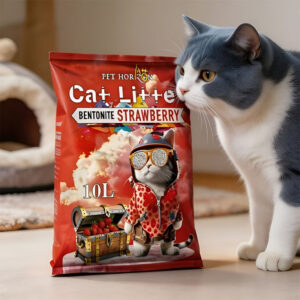
| Bentonite Cat Litter | Largest market share | Strong clumping and competitive pricing |
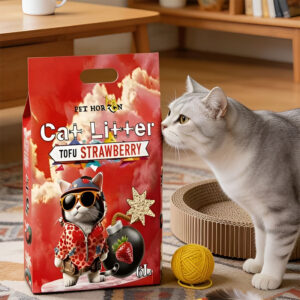
| Tofu Cat Litter | Fast-growing | Flushable, biodegradable, low dust |
| Pine Cat Litter | Niche | Natural odor control |
| Mixed Cat Litter | Growing | Balances cost and performance |
Sourcing and Private Label Opportunities
Why Established Asian Manufacturers Hold the Edge
Manufacturers with integrated raw-material access — bentonite mines, soybean by-product supply for tofu litter, or wood-pellet lines — can land competitive FOB prices that local African startups cannot match. For importers, partnering with a supplier that already exports to 80+ countries reduces the learning curve on documentation, palletization, and shelf-life testing.
Building a Private Label or Wholesale Program
Two models work best for African entry:
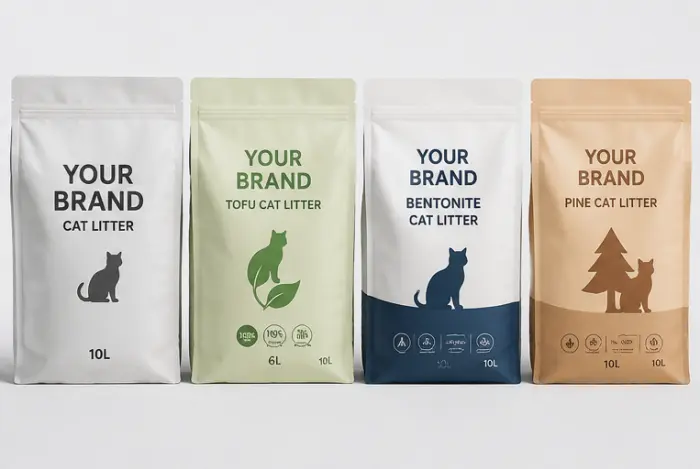
- Private label: import branded-format litter (clumping bentonite, tofu, or pine) under the importer’s own brand, with flexible MOQs to test shelf response.
- Wholesale distribution: buy container-loads and serve local pet shops, vet clinics, and e-commerce marketplaces.
Both models favor suppliers that offer flexible formulations, multi-language packaging, and consolidated shipping.
Import and Compliance Considerations
South African SABS and NRCS Standards
Cat litter entering South Africa must meet SABS (South African Bureau of Standards) and NRCS (National Regulator for Compulsory Specifications) requirements, particularly for treated mineral products and any claims around biodegradability. Importers should request supplier test reports — heavy metals, moisture, dust fraction — up front rather than at the border.
EPR, Agricultural Imports, and Port Logistics
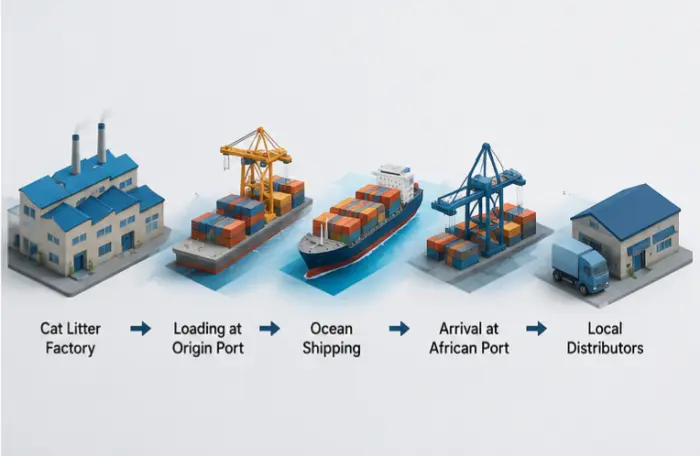
South Africa is moving toward extended producer responsibility (EPR) rules that will affect packaged goods, including litter. Some plant-based raw materials face agricultural import registration that can delay clearance by 12–18 months — a reason to plan formulations early. Port congestion at Durban, Lagos, and Mombasa can add 15–30% to landed cost, so many importers use bonded warehousing or regional consolidation.
How to Choose a Cat Litter Supplier for Africa
Selecting the right supplier is just as important as choosing the right product. Importers should evaluate manufacturers based on long-term reliability rather than price alone.
- Choose factories with proven export experience in international markets.
- Confirm that quality testing reports and export documentation are available.
- Look for flexible OEM and private-label capabilities.
- Ensure the supplier can support stable production capacity and long-term supply.
Common Mistakes Importers Make in the African Market
- Underestimating SABS and NRCS lead time and testing costs.
- Assuming one formulation fits the whole continent; humidity and cat preferences vary by climate.
- Ignoring port congestion and treating FOB price as landed price.
- Launching only a value SKU when premium and private-label tiers grow faster.
- Treating plant-based as a permanent niche when e-commerce is importing it fastest.
How Pet Horizon Supports African Importers
Pet Horizon has operated in the cat litter industry for more than 20 years, with over 10 years of OEM and ODM experience and product shipments to more than 80 countries. The manufacturing range covers bentonite, tofu, pine, and mixed formats — giving importers a single source for both mineral and plant-based SKUs. Typical MOQ starts at one 20-foot container and is negotiable, with export documentation and private-label packaging support included. Our team also assists African importers with packaging localization, container loading optimization, and export documentation to help reduce logistics costs and accelerate market entry. For a broader view of cross-border requirements, see our cat litter export compliance guide.
- Africa remains highly dependent on imported cat litter.
- South Africa is the region’s largest and most mature market.
- Plant-based cat litter is expanding faster than traditional products.
- Private-label sourcing offers better long-term margins for distributors.
- Reliable export partners can simplify compliance and logistics.
Conclusion
The cat litter market in Africa rewards importers who move early on compliance and private-label positioning. With import dependency still near 80% and South Africa anchoring regional demand, the window for differentiated, well-documented brands is open — but it narrows as local players scale. Importers weighing a mineral-versus-plant-based mix can compare options in our cat litter types overview, or start a program with our tofu cat litter line as a low-dust, plant-based entry SKU.
Frequently Asked Questions
South Africa is the largest single importer, representing an estimated 40–50% of sub-Saharan demand and serving as a re-export hub for neighboring markets.
Local production is minimal. The region depends on imports for roughly 70–85% of finished supply, with some local repackaging of bulk shipments rather than full manufacturing.
Expect SABS and NRCS alignment plus supplier test reports for heavy metals, moisture, and dust fraction. Biodegradability claims should be backed by recognized standards.
With Pet Horizon, private-label MOQ starts at one 20-foot container and is negotiable depending on formulation and repeat order volume.
Clumping bentonite leads on volume and price, while plant-based formats (tofu, pine) are the fastest-growing segment through online retail.
Timing varies by port and product. Some plant-based raw-material registrations can add 12–18 months, so formulation planning should start early.
Yes, but agricultural import rules differ by country. Confirm registration requirements before committing to a formulation that uses crop-derived inputs.
Most imported cat litter in Africa comes from China, followed by suppliers in Europe and the United States. Chinese manufacturers remain the leading source due to competitive pricing, flexible OEM services, and large-scale production capacity.
Yes. Many African distributors and retailers are expanding their private-label product lines because they offer higher profit margins and stronger brand differentiation than generic imported products.
Total import costs depend on product type, shipping route, import duties, and local logistics. Importers should evaluate the total landed cost rather than FOB pricing alone when selecting suppliers.