

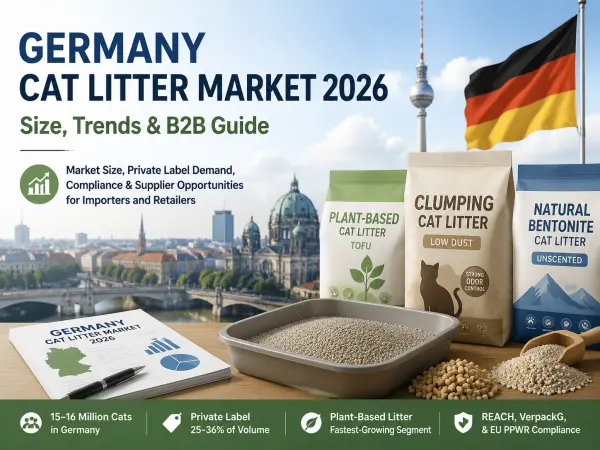
Germany is Europe’s largest cat-owning nation, with an estimated 15–16 million cats living in roughly a quarter of all households. For importers, brand owners, and private-label buyers, the German market combines scale, strict compliance, and a retail structure where own-brands set the pace. This guide breaks down market size, buyer preferences, the regulatory framework, and the practical sourcing path for B2B buyers.
Quick answer: The German cat litter market is valued at roughly US$0.7 billion in 2026 and grows about 4% a year, driven by 15–16 million cats and a steady shift toward plant-based, low-dust substrates. Private label controls a quarter to a third of volume through dm, Fressnapf, and Rossmann, while REACH, VerpackG, and the EU PPWR set the compliance bar for importers.
Market Size and Demand at a Glance
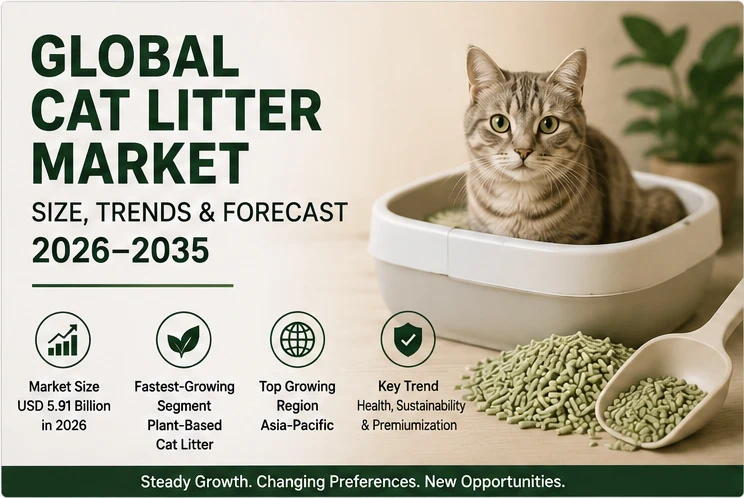
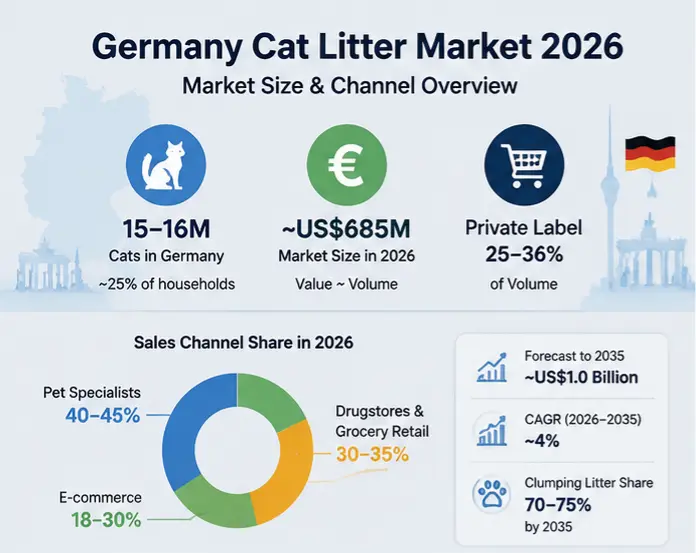
Germany is a mature but resilient category. Litter is a recurring household essential, so demand stays stable even when consumers trade down on discretionary spend. The table below summarizes the figures most relevant to B2B planning, based on publicly available market research from IndexBox and MarkWide Research, combined with official European and German regulatory information where applicable.
| Metric | Germany 2026 | Direction |
|---|---|---|
| Cat population | 15–16 million | Stable, slight growth |
| Retail value | ~US$685 million | Value > volume |
| Forecast to 2035 | ~US$1.0 billion | CAGR ~4% |
| Clumping share | 70–75% of natural-litter volume by 2035 | Rising |
| Private label | 25–36% of volume by segment | Stable |
| E-commerce | 18–30% of sales, subscription-led | Fastest-growing |
What German Buyers Want
From Bentonite to Plant-Based Substrates
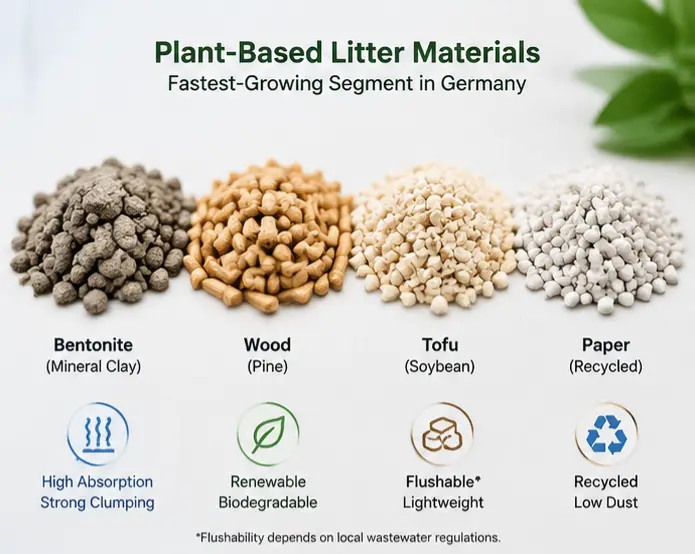
Sodium bentonite clay still leads by volume, but plant-based wood, corn, paper, and tofu substitutes have captured an estimated 22–28% of the total market and are the fastest-growing segment. Three forces drive the shift: municipal biowaste rules that favour compostable disposal, the EU Green Deal’s pressure on landfill and packaging waste, and a consumer base that rewards credible eco-claims. Suppliers that can document home-compostable certification (DIN EN 13432 or OK Compost) win shelf space and survive regulatory scrutiny.
Clumping Remains the Default
Convenience decides format. Clumping litter—especially low-dust, scent-controlled variants—accounts for the majority of natural-litter volume and grows faster than non-clumping. Multi-cat households (an estimated 37–43% of cat-owning homes) buy larger 15–20 kg packs and pay more for odour control. Single-cat owners are more price-sensitive and favour smaller non-clumping packs, particularly where organic-waste disposal is available.
Private Label Cat Litter Demand in Germany
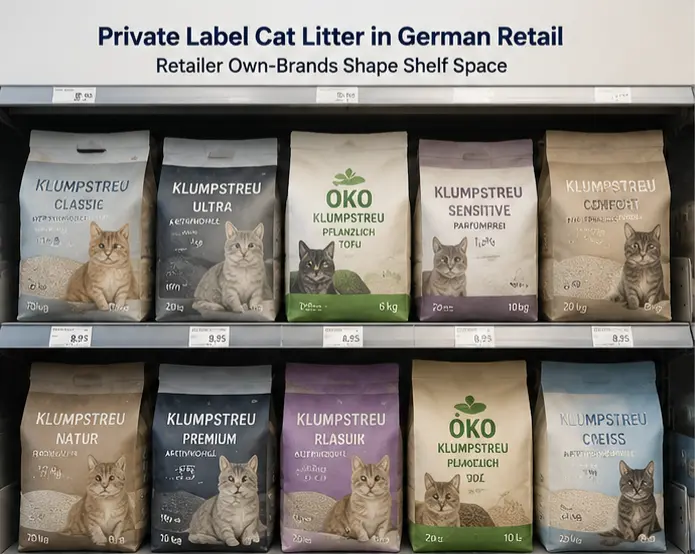
German grocery, drugstore, and pet-specialist chains run mature own-brand programs. dm, Rossmann, REWE, and Edeka in mass retail, plus Fressnapf in pet specialty, all field cat litter under private label. Depending on segment, private label represents roughly 25–36% of volume. For an overseas manufacturer, the fastest route into German retail is usually a private label cat litter partnership rather than building a consumer brand from scratch.
What It Means for OEM and Private Label Suppliers
Retailers specify formula, pack size, certification, and price; suppliers deliver consistent quality at landed cost. The three non-negotiables are low dust, credible eco-claims, and reliable supply. A manufacturer that can show batch-to-batch consistency, heavy-metal test data, and compostability certification is far more attractive than one competing on price alone.
Compliance Framework Importers Must Clear
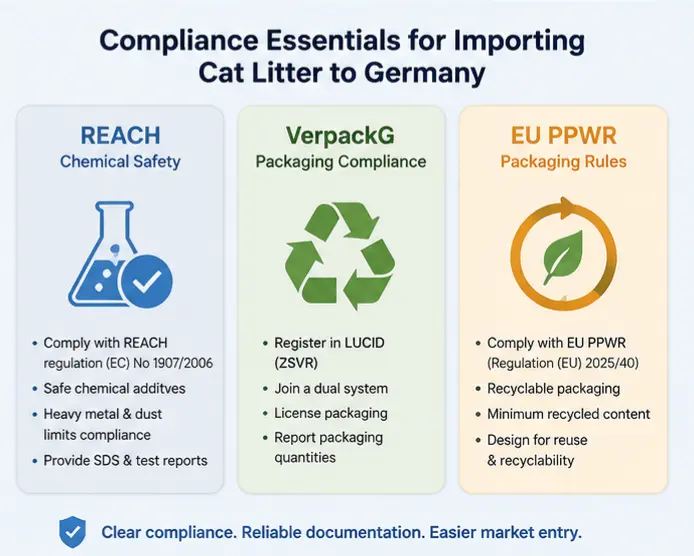
Germany enforces the strictest consumer and environmental standards in the EU, and cat litter is no exception. Before quoting, map the full cat litter export compliance requirements and budget for registration and testing.
REACH and Chemical Safety
Cat litter falls under general consumer-goods safety. Any chemical additive must comply with REACH; dust and fragrance limits are scrutinised under workplace and consumer safety rules. Importers should request a REACH-compliant material declaration and heavy-metal test data from the supplier before shipment.
VerpackG and LUCID Registration
Germany’s Packaging Act (VerpackG) requires every producer and importer to register with the LUCID central register and join a dual-system recycling scheme. Composite packaging (paper with plastic liner) carries extra fees. Non-compliance can trigger fines and sales bans, so packaging material and registration must be settled before the first order.
EU PPWR and Green Claims
From 12 August 2026, the EU PPWR packaging rules apply in Germany, mandating recyclable design and minimum recycled content. Alongside the EU Green Claims Directive (expected 2027–2028), environmental claims such as “compostable” now need substantiation. See the EU Packaging and Packaging Waste Regulation for the official scope.
Distribution and Channel Strategy
Pet-Specialist, Drugstore, and E-commerce
Pet-specialist retailers (Fressnapf and independents) hold roughly 40–45% of volume; drugstores and grocery about 30–35%; online pure-players (Amazon, Zooplus, DTC brands) about 25–30% and growing fastest. Each channel demands different pack sizes and margin structures, so suppliers should align SKUs to the target retailer.
Subscription and Bulk Logistics
Because litter is heavy and bulky, subscription replenishment is the fastest-growing online model. Landed cost is sensitive to freight and packaging weight—transport can be 18–25% of delivered cost for imported clay. Lightweight plant-based formulas and right-sized packaging protect margin and suit recurring delivery.
Sourcing and Manufacturing Considerations for B2B Buyers
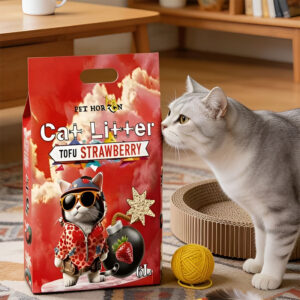
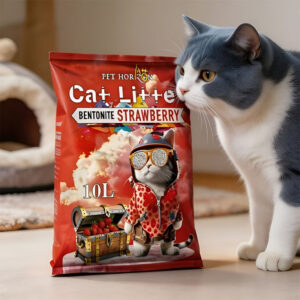
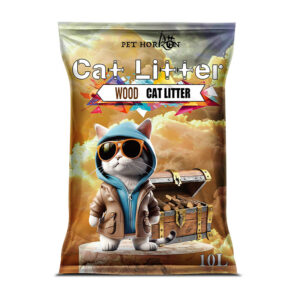
Manufacturers such as Pet Horizon run low-dust tofu, wood, and mixed litter under private-label and OEM programs, with quality control on dust, clump strength, and heavy metals. For German buyers, the practical pre-shipment checklist is: confirm REACH and VerpackG readiness, request DIN EN 13432 or OK Compost evidence for eco claims, agree pack sizes for multi-cat demand, and lock MOQ and lead time before peak season. A 1×20 ft container is a common MOQ baseline and is negotiable by program.
Conclusion
Germany rewards suppliers who pair scale with compliance and certification. For overseas manufacturers, the opportunity lies in supporting German distributors and retailers with compliant OEM and private label solutions.The market is mature but growing, private-label-led, and shifting toward plant-based, low-dust formats. Importers and brand owners that clear REACH, VerpackG, and PPWR—and that partner with an OEM-ready manufacturer—can capture stable, recurring demand from 15–16 million cats.
Frequently Asked Questions
The German cat litter market is valued at roughly US$685 million in 2026 and is forecast to reach about US$1.0 billion by 2035, growing at a CAGR of around 4% per year.
Clumping litter leads on convenience, especially low-dust and scent-controlled variants. Plant-based wood, corn, paper, and tofu substrates are the fastest-growing segment as consumers and regulation push toward compostable options.
Yes. Private label represents roughly 25–36% of volume depending on segment, run by dm, Rossmann, REWE, Edeka, and Fressnapf. For overseas suppliers, a private-label or OEM partnership is usually the fastest entry route.
Importers must meet REACH for chemical safety, register under VerpackG via the LUCID central register, comply with the EU PPWR on packaging design, and substantiate any environmental claims under the Green Claims framework.
Yes. Claims need supporting test data, typically DIN EN 13432 or OK Compost certification. Unsubstantiated “compostable” labelling has drawn action from German authorities, so documentation is essential.
Pet-specialist retailers lead with about 40–45% of volume, followed by drugstores and grocery at 30–35%, and e-commerce at 25–30% and growing fastest through subscription models.
Multi-cat households buy larger 15–20 kg clumping packs, while single-cat and non-clumping buyers prefer smaller packs. Subscription and bulk formats reward right-sized, lightweight packaging.
The practical path is a private-label or OEM partnership with a compliant, certified plant-based line, supported by REACH and VerpackG documentation, DIN EN 13432 or OK Compost evidence, and locked MOQ and lead time before peak season.
Sources & References
- IndexBox — Germany Cat Litter Market Research
- MarkWide Research — Germany Cat Litter Market Overview
- European Commission — Packaging and Packaging Waste Regulation (PPWR)
- European Chemicals Agency (ECHA) — REACH Regulation