




The Latin America cat litter market is expanding as urban cat ownership, apartment living, and demand for convenient indoor pet-care products increase across the region. For importers, brand owners, and private-label buyers, Argentina and Colombia are particularly relevant markets to evaluate for imported, premium, and plant-based cat litter formats.
Quick Answer: Latin America Cat Litter Market Outlook 2026
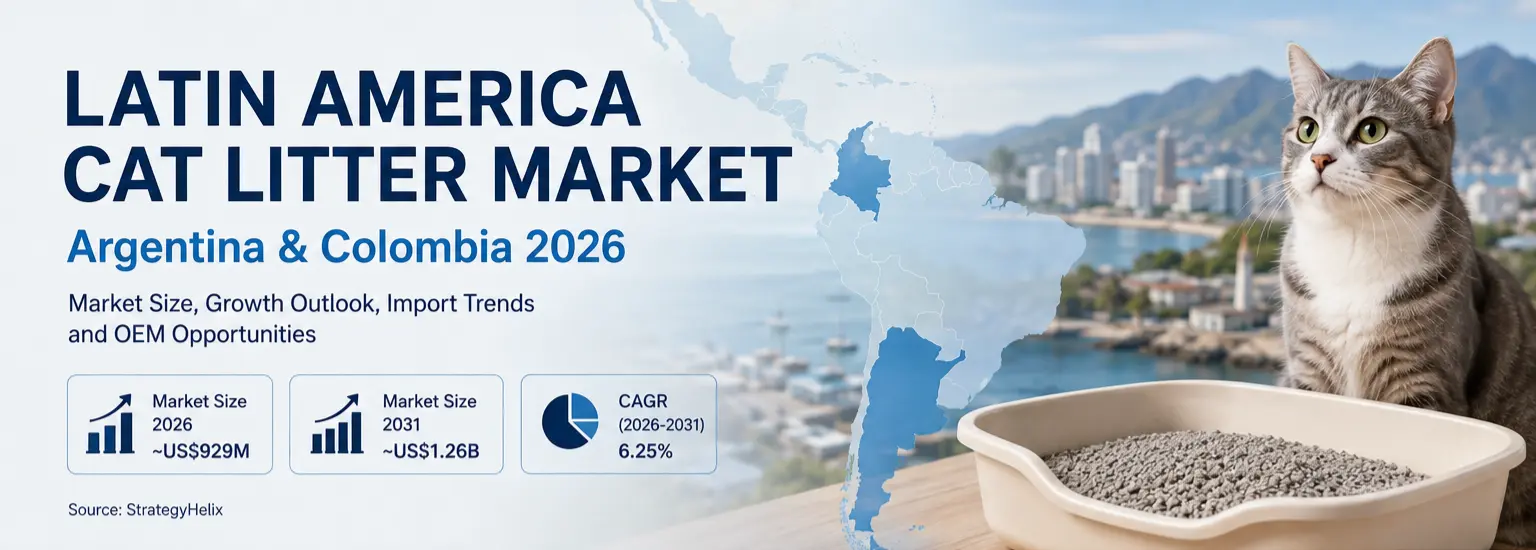
The Latin America cat litter market is estimated at about US$929 million in 2026, reaching roughly US$1.26 billion by 2031 at a 6.25% CAGR, according to StrategyHelix. Within that, Argentina and Colombia stand out as under-served growth poles that remain import-reliant for premium and plant-based formats.
- 2026 regional market estimate: about US$929 million
- 2031 regional market estimate: roughly US$1.26 billion
- Estimated CAGR: 6.25% from 2026 to 2031
- Priority markets covered: Argentina and Colombia
- Main B2B opportunity: imported, premium, plant-based, and private-label cat litter
Latin America Cat Litter Market Size and Growth
The region’s growth is tied to urbanization, apartment living, and pet humanization across its major economies:
- Regional total. About US$929 million in 2026, rising to roughly US$1.26 billion by 2031 at a 6.25% CAGR.
- Demand drivers. Apartment density, urban lifestyles, and rising spend per cat lift per-household consumption.
- Coverage note. Brazil and Mexico are addressed in separate market guides; this article focuses on the broader region and the Argentina–Colombia growth poles.
Because the regional estimate comes from a single market-research source, buyers should treat the figures as planning estimates rather than precise market totals. The 6.25% CAGR provides a useful directional benchmark for evaluating regional demand.
Argentina Cat Litter Market: Import and Product Opportunities
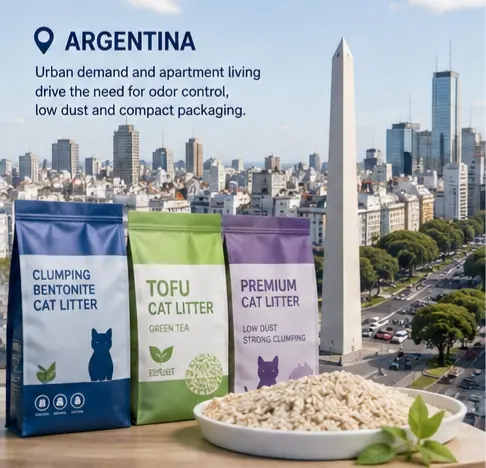
Argentina is a relevant market for cat litter importers, particularly in urban areas where apartment living can increase demand for odor control, convenient handling, and compact packaging. The country also has domestic bentonite resources, while imported products can provide additional options in premium, silica, and plant-based cat litter segments.
- Raw material. Argentina has domestic bentonite resources, including production in San Juan province, while imported products can broaden the available premium, silica, and plant-based cat litter range.
- Urban demand. Apartment living can increase the value of odor control, low-dust performance, convenient handling, and compact packaging.
- Import compliance. Importers should confirm the applicable tariff classification, customs documentation, labeling rules, and any product-specific requirements with Argentine customs authorities and a qualified local broker before shipment.
Colombia Cat Litter Market: Import and Private-Label Opportunities
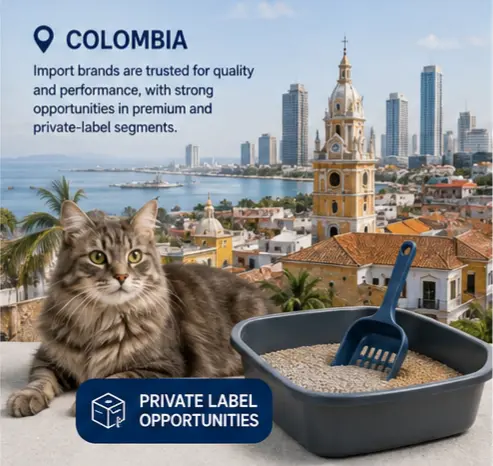
Colombia is an attractive market to evaluate for imported cat litter, particularly for distributors and private-label buyers targeting mid-to-premium segments. Imported products can compete through differentiated clumping performance, odor control, low-dust characteristics, packaging, and plant-based formulations rather than price alone.
- Import positioning. Imported cat litter can compete through product performance, packaging, private-label support, and differentiated plant-based or premium formats.
- Private label. Distributors and retailers can evaluate private-label programs when product specifications, packaging, MOQ, and landed cost are commercially workable.
- Customs compliance. Commercial imports should be checked against the applicable tariff classification, import documentation, customs procedures, and any product-specific requirements with a qualified Colombian broker.
Product Mix Across the Region
The regional product mix remains centered on bentonite, while premium and plant-based formats create additional opportunities for importers and private-label buyers.
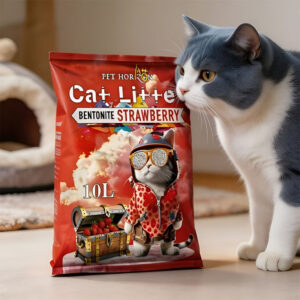
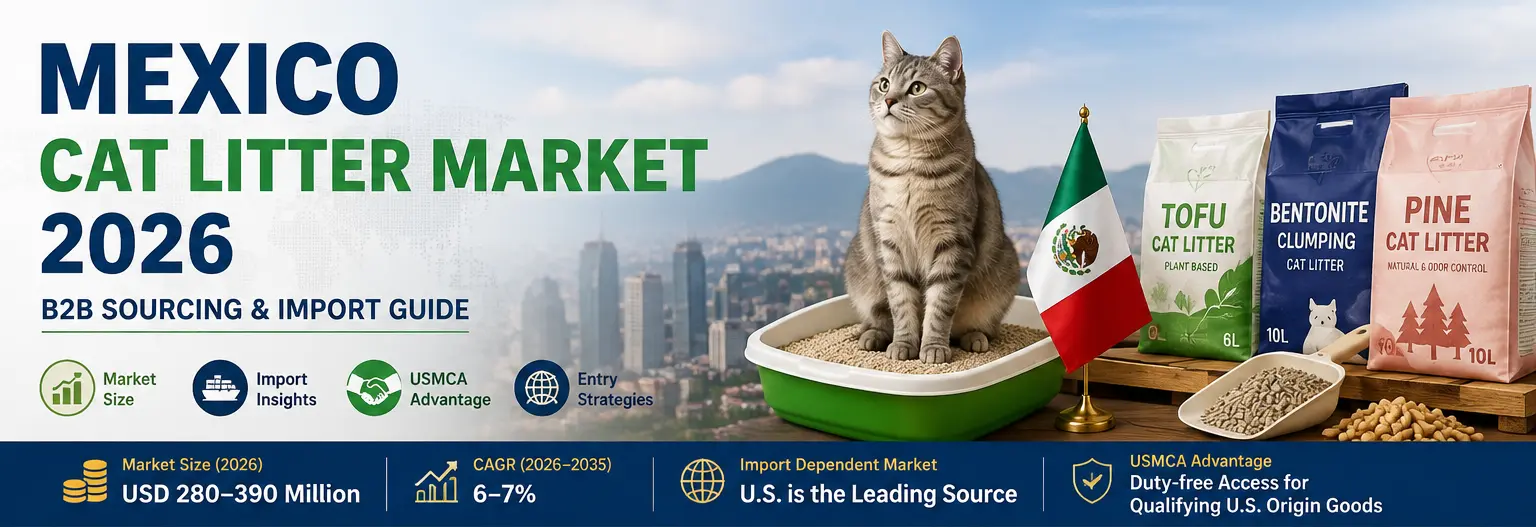
- Bentonite clumping litter leads volume across the region, favored for strong clumping and acceptable price.
- Silica and crystal litters hold a stable premium share on low-dust, long-lasting performance.
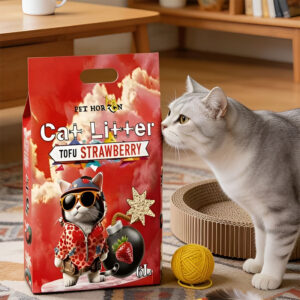
- Plant-based clumping litters (tofu, pine, and blended formats) are the fastest-growing niche among eco-conscious urban buyers.
Channel Dynamics and Private Label
Modern retail, specialty pet channels, and e-commerce are expanding the routes through which cat litter reaches urban buyers. For importers and private-label operators, the most relevant differentiators are odor control, low dust, clumping performance, packaging size, and landed cost. In Colombia and other Andean markets, these factors can support differentiated positioning rather than relying only on price. For documentation and labeling basics, see our cat litter export compliance guide.
Import Dynamics and Sourcing From Asia
For Asian suppliers, Latin America is a longer-distance export market where freight planning, container utilization, packaging, and port selection can materially affect landed cost:
- Route. A mill in Dalian (northern China) ships through Dalian Port to gateways such as Buenos Aires, Cartagena, and Santos.
- MOQ. Typical OEM orders move in 1×20ft container loads, negotiable, which suits a first private-label or distributor program.
- Cost levers. Bulk containers and bag formats compress per-kilogram logistics across the region’s fragmented distribution geography.
Where Pet Horizon Fits as an OEM/ODM Partner
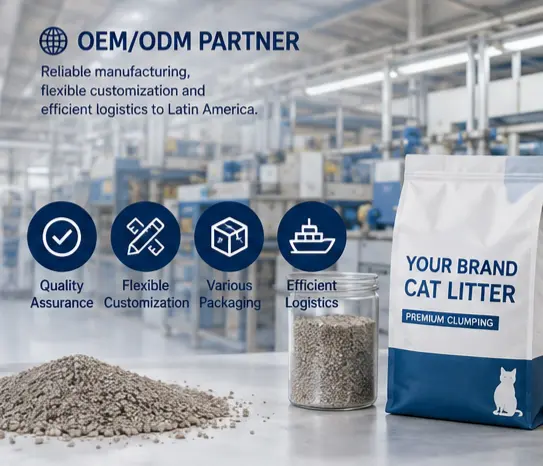
Pet Horizon is a cat litter manufacturer and OEM/ODM supplier based in Dalian, China, within reach of Dalian Port. Our credentials:
- 20+ years in the cat litter industry, with 10+ years operating our own OEM/ODM factory.
- Export experience across 80+ country markets.
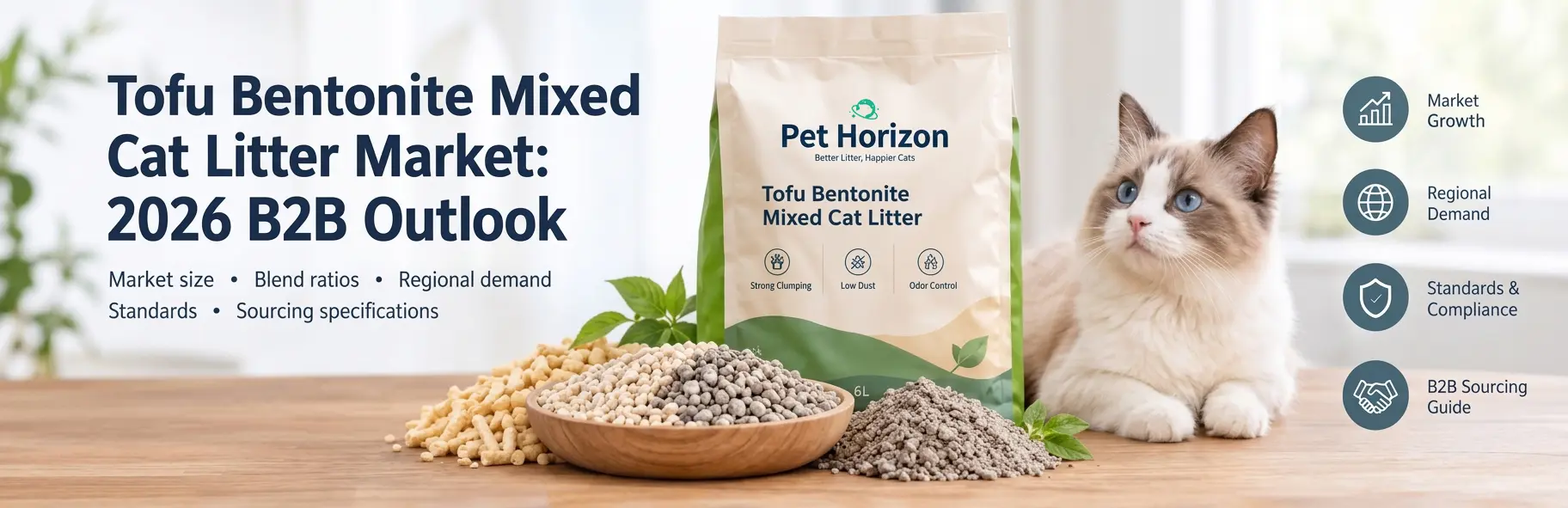
- Real production across tofu (plant-based), bentonite, pine, and mixed litter formats — covering the segments growing across Latin America.
- OEM programs built around private label, custom clumping profiles, low-dust formulas, and flexible MOQs.
For an Argentine or Colombian brand, distributor, or retailer, the combination of a plant-based and bentonite production base with access to Dalian Port provides an additional sourcing option for comparing product quality, freight, packaging, and total landed cost.
Frequently Asked Questions
The Latin America cat litter market is estimated at about US$929 million in 2026, reaching roughly US$1.26 billion by 2031 at a 6.25% CAGR, according to StrategyHelix.
Publicly verifiable sources used in this article do not provide a sufficiently detailed Argentina-specific growth rate. Argentina is nevertheless a relevant market to evaluate for imported and premium cat litter, particularly in urban areas where odor control, convenience, and product differentiation can matter.
Colombia is worth evaluating for importers and private-label buyers because differentiated cat litter can compete through clumping performance, odor control, low dust, packaging, and plant-based formulations. Market-entry decisions should be based on local pricing, competition, import costs, and distributor requirements.
Bentonite clumping litter is positioned in the article as the main volume format, while silica and plant-based clumping litters serve more premium or differentiated segments. Product demand varies by country, price point, distribution channel, and consumer preference.
Yes, commercial imports from China are possible, but the exact requirements depend on the product classification, packaging, destination country, and importer. Buyers should confirm tariff classification, customs documentation, labeling, and any product-specific requirements with a qualified local customs broker before shipment. A Dalian-based supplier can also evaluate ocean routes to destinations such as Buenos Aires or Cartagena.
Pet Horizon’s typical OEM starting point is 1×20ft container load, with the MOQ negotiable depending on the product, packaging, and program requirements. Buyers should confirm the final MOQ before requesting a quotation.
Import requirements depend on the product classification and destination country. In Argentina, buyers should verify tariff classification, customs documentation, labeling, and any applicable product-specific rules with the relevant authorities and a qualified broker. In Colombia, importers should likewise confirm the applicable tariff classification, customs procedures, documentation, and product-specific requirements with DIAN and a local broker.
Verify production formats (bentonite, plant-based, mixed), dust and clumping performance, private-label and packaging capability, MOQ flexibility, and shipping position relative to regional ports.
Conclusion
The Latin America cat litter market is estimated at about US$929 million in 2026 and roughly US$1.26 billion by 2031, based on the StrategyHelix estimate cited in this article. For importers and brand owners evaluating Argentina and Colombia, the main opportunities are differentiated product formats, reliable OEM supply, private-label packaging, and competitive landed costs. Buyers should validate local demand, import requirements, freight, and pricing before committing to a market-entry program.
For importers and brand owners, compare OEM supply options based on product quality, packaging capability, freight route, MOQ, and total landed cost. Explore our bentonite cat litter page for the volume backbone, or our tofu cat litter page for the plant-based formats gaining share.
Market figures cited from StrategyHelix (Latin America Cat Litter Market 2026–2031). Estimates vary by methodology; treat ranges as planning assumptions, not guarantees.