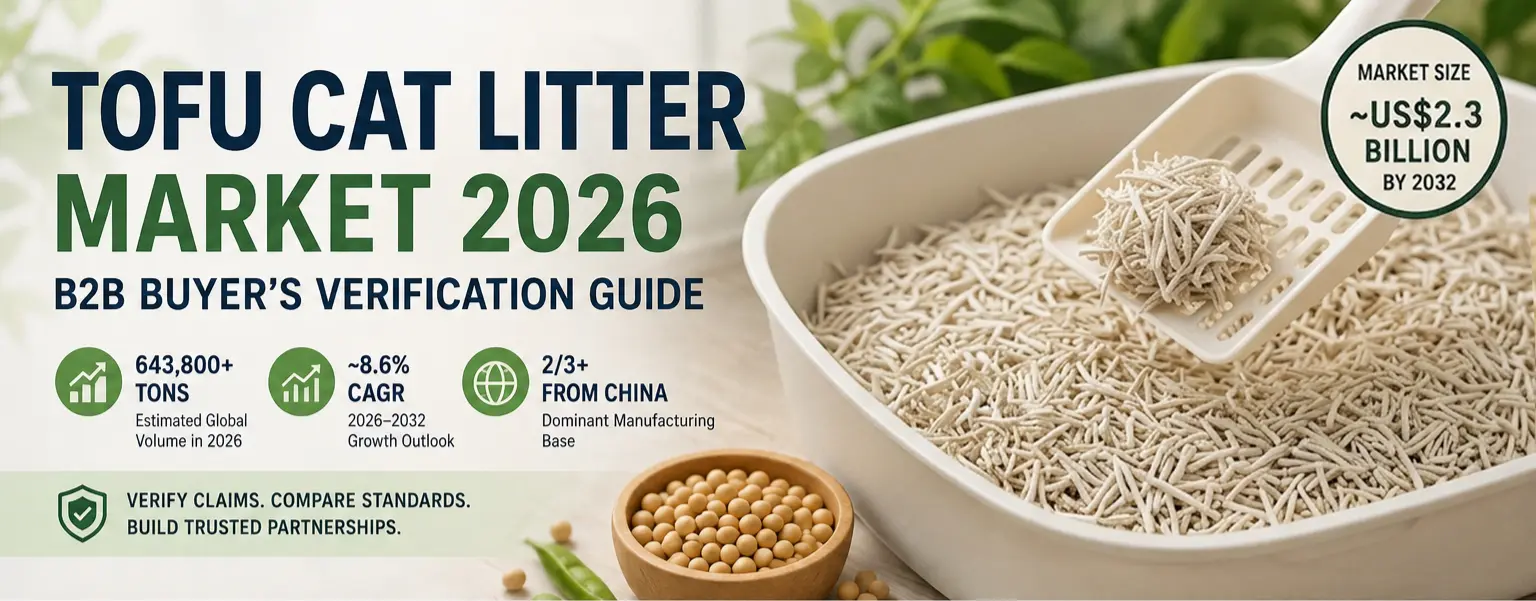



The Southeast Asia cat litter category is shifting from niche premium imports to a broad, volume-driven mainstream. For importers, distributors and private-label buyers, the most actionable signals in 2026 come from two markets: Thailand and Malaysia. This article breaks down demand drivers, channel constraints and sourcing implications for B2B buyers evaluating the region.
Quick Answer
The Southeast Asia cat litter market is expanding on volume rather than price. Thailand is forecast to grow at a 6.78% CAGR through 2031, while Malaysia grows at 5.47%. Malaysia is the first regional market where tofu litter leads social discussion at 55% of mentions, making it the clearest near-term opportunity for importers sourcing mid-tier, flushable, dust-free products.
Regional Market Overview
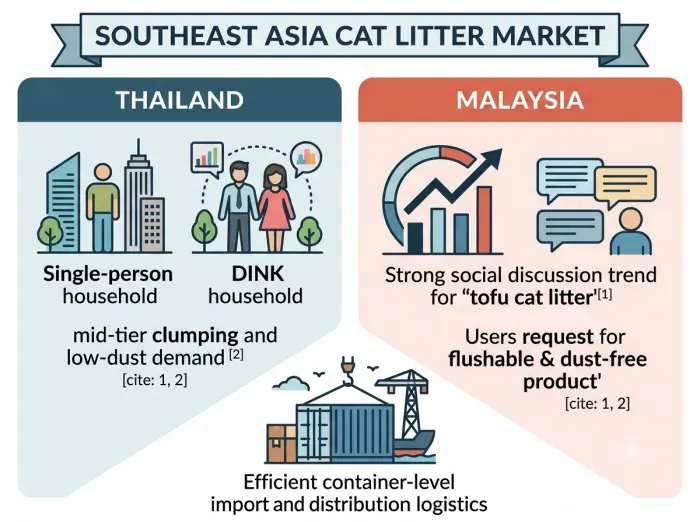
Southeast Asia is not a single cat litter market. Urbanization, rising single-person and DINK (dual-income, no-kids) households, and the cat’s status as the dominant companion animal in several countries are reshaping demand. Across the region, growth is being carried by unit volume rather than by trading consumers up to ultra-premium price points. For B2B buyers, this means the commercial opportunity sits in dependable mid-tier supply, not in chasing narrow luxury segments.
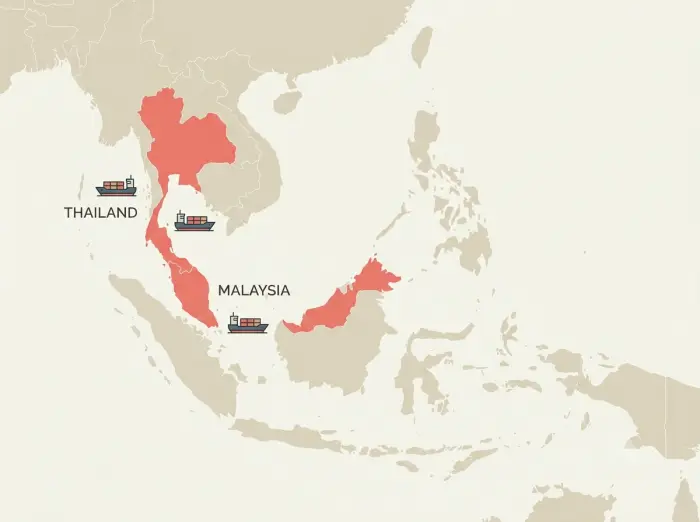
Manufacturers serving the region from a China base benefit from mature OEM/ODM infrastructure and short sea freight lanes to major ASEAN ports. Pet Horizon operates near Dalian port with 20+ years in the industry and 10+ years of OEM/ODM experience, exporting to 80+ countries.
Thailand Cat Litter Market
Thailand is one of the largest and most competitive cat litter markets in ASEAN. Demand is anchored by urban singles and DINK households, but persistent economic pressure is capping the ultra-premium tier.
Growth and Demand Drivers
According to a single 2026-base-year market report, Thailand’s cat litter market is projected to add approximately US$11.9 million between 2026 and 2031, growing at a 6.78% CAGR. These figures are approximate and sourced from one analyst; treat them as directional rather than definitive. For category-level context, see the StrategyH Thailand cat litter market report.
The Mid-Tier Sweet Spot
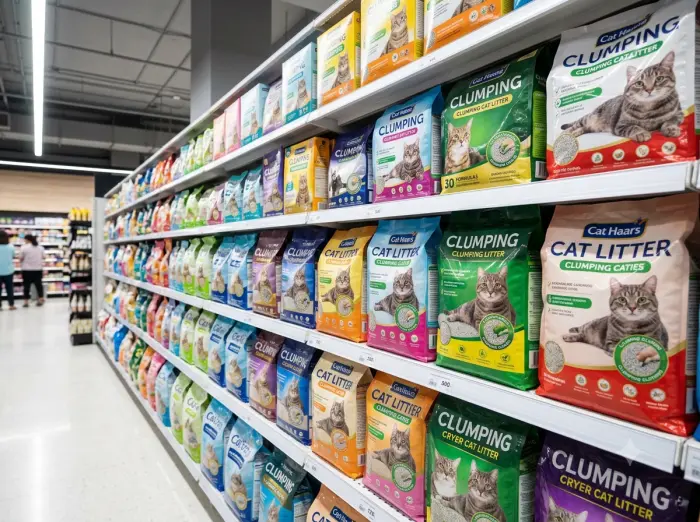
The clearest growth band in Thailand is “near-premium efficacy at a friendlier price”: strong clumping, low dust and reliable odor control without ultra-premium pricing. A 2026 platform category snapshot showed the category growing on volume rather than price, with store-level performance fragmented (more sellers declining than growing in the snapshot). This fragmentation creates openings for disciplined B2B importers who can supply consistent mid-tier product at scale.
Malaysia Cat Litter Market
Malaysia is where the regional tofu-litter story is most pronounced. The cat is the most common companion animal, and discovery happens largely through social commerce.
Tofu Leads Social Discussion
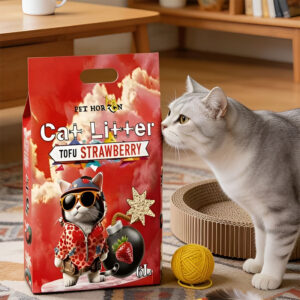
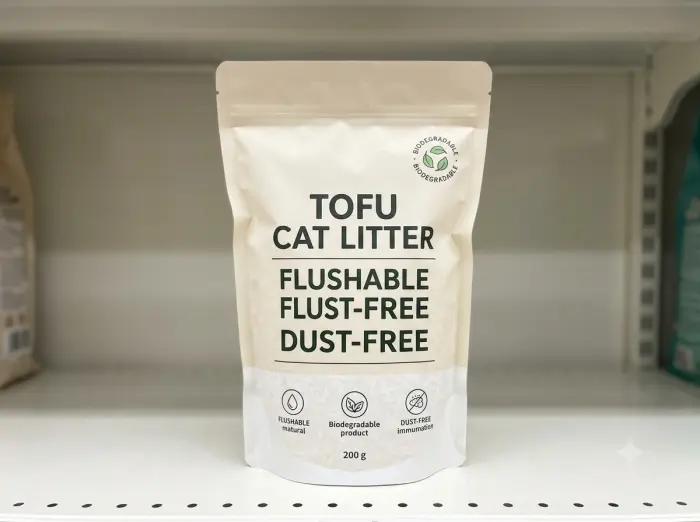
In a Malaysia social-listening sample of 3,800+ discussions, tofu/soy litter accounted for 55% of mentions, bentonite 35%, and wood/crystal 10%. These figures reflect the share of social discussions about cat litter types, not retail market share, and should not be read as sales volume. Within tofu positive reviews, the Malay terms “Boleh Flush” (flushable) and “Tak Berdebu” (dust-free) appeared in roughly 60% of comments. For category context, see the MediaPod Malaysia cat litter trends analysis. For buyers, this points to a clear product spec: flushable, low-dust tofu cat litter is what Malaysian consumers ask for by name.
Discovery Channels and Constraints
TikTok Shop, Shopee and Lazada are the main discovery and purchase channels. However, litter is heavy and bulky, so delivery cost is structurally high, which caps how far pure e-commerce can expand the category. This is a recurring constraint across Southeast Asia and shapes both pricing and pack sizing for importers.
Why Tofu Cat Litter Fits Southeast Asia
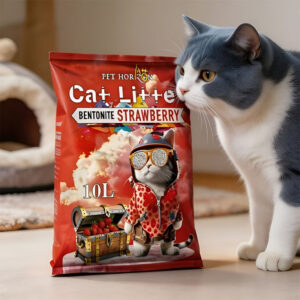
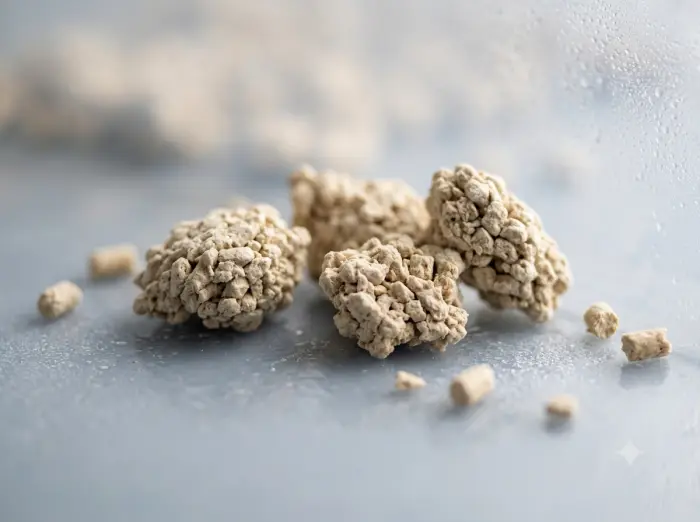
Beyond Malaysia’s social signal, tofu litter matches two structural Southeast Asia conditions. First, tropical humidity rewards clumping and odor control, and tofu formulas perform well on both. Second, flushability and low dust are explicit purchase triggers in the region’s hottest market. For private-label programs, tofu is the most defensible entry SKU. Buyers evaluating the full range of substrates should compare the types of cat litter across clumping, dust, flushability and freight density before committing.
Product Spec Checklist for SEA
- Flushable (“Boleh Flush”) as a headline claim, verified for local plumbing norms.
- Low dust (“Tak Berdebu”) confirmed by supplier test data, not just marketing copy.
- Strong clumping performance under tropical humidity.
- Mid-tier price positioning rather than ultra-premium.
E-Commerce and Logistics Constraints
The heavy-and-bulky nature of cat litter is the single biggest structural limit on Southeast Asian e-commerce penetration. High last-mile delivery cost compresses margins on direct-to-consumer sales and pushes volume toward traditional retail, pet specialty chains and importer-wholesaler distribution. For B2B buyers, this argues for container-level import planning and locally held stock rather than purely drop-shipping models.
Export and Compliance for Importers
Sourcing cat litter for Southeast Asia requires attention to export documentation, labeling and material-specific regulations (for example, bentonite mineral classifications versus plant-based tofu substrates). Buyers should confirm supplier export readiness early. Our cat litter export compliance guide covers documentation and market-entry requirements in detail. With a manufacturing base near Dalian port and established OEM/ODM programs, Pet Horizon supports container-level orders with a negotiable MOQ for qualified partners.
Conclusion
The Southeast Asia cat litter market rewards volume-oriented, mid-tier supply more than ultra-premium positioning. Thailand offers a 6.78% CAGR growth path built on the mid-tier sweet spot, while Malaysia offers the region’s clearest tofu-litter signal at 55% of social discussion. Importers who spec flushable, dust-free, humidity-resistant product and plan around heavy-bulk logistics will be best placed to capture regional growth.
FAQ
Southeast Asia is reported market-by-market rather than as one bloc. As a directional reference, Thailand’s cat litter market is projected to add approximately US$11.9 million between 2026 and 2031 at a 6.78% CAGR (single 2026-base-year source, approximate), while Malaysia grows at an estimated 5.47% CAGR. Treat these as planning direction, not audited regional totals, because methodologies differ across analysts.
In a Malaysia social-listening sample of 3,800+ discussions, tofu/soy litter accounted for 55% of mentions versus 35% bentonite and 10% wood/crystal. Critically, this is the share of social discussion about litter types, NOT retail market share. Within tofu positive reviews, “Boleh Flush” (flushable) and “Tak Berdebu” (dust-free) appeared in roughly 60% of comments, signaling a clear, named product spec for Malaysian buyers.
Approximately 6.78% CAGR from 2026 to 2031, adding an estimated US$11.9 million over the period (single 2026-base-year source, approximate). Growth is volume-led rather than price-led, and the strongest band is mid-tier “near-premium efficacy at a friendlier price” — strong clumping, low dust, reliable odor control without ultra-premium cost.
Confirm export documentation, labeling and material-specific regulations early (bentonite mineral classifications differ from plant-based tofu substrates), then ship at container level given litter’s heavy-bulk freight profile. Work with a supplier that has proven export readiness; Pet Horizon’s cat litter export compliance guide covers documentation and market-entry requirements in detail.
Cat litter is heavy and bulky, so last-mile delivery cost is structurally high. This compresses direct-to-consumer margins and caps pure e-commerce penetration even where TikTok Shop, Shopee and Lazada drive discovery. The practical result is that volume flows through traditional retail, pet specialty chains and importer-wholesaler distribution, favoring container-level import planning and local stock.
Tofu (soy) litter fits best. It answers two structural conditions: tropical humidity rewards clumping and odor control (tofu performs well on both), and Malaysian buyers explicitly demand flushable (“Boleh Flush”) and dust-free (“Tak Berdebu”) product. For private-label entry, a flushable, low-dust, mid-tier tofu SKU is the most defensible starting point.
Duties vary by ASEAN country and by material (mineral bentonite vs plant-based tofu are classified differently), so there is no single regional rate. Buyers should confirm the correct HS code and local import duty with a licensed customs broker for each target market before quoting landed cost; this article does not publish country-specific duty figures because they change and must be verified per shipment.
Pet Horizon’s standard MOQ is 1×20ft container, and it is negotiable for qualified partners. A full container is also the natural order size for Southeast Asia because it absorbs the heavy-bulk freight that makes smaller, drop-shipped quantities uneconomic.