




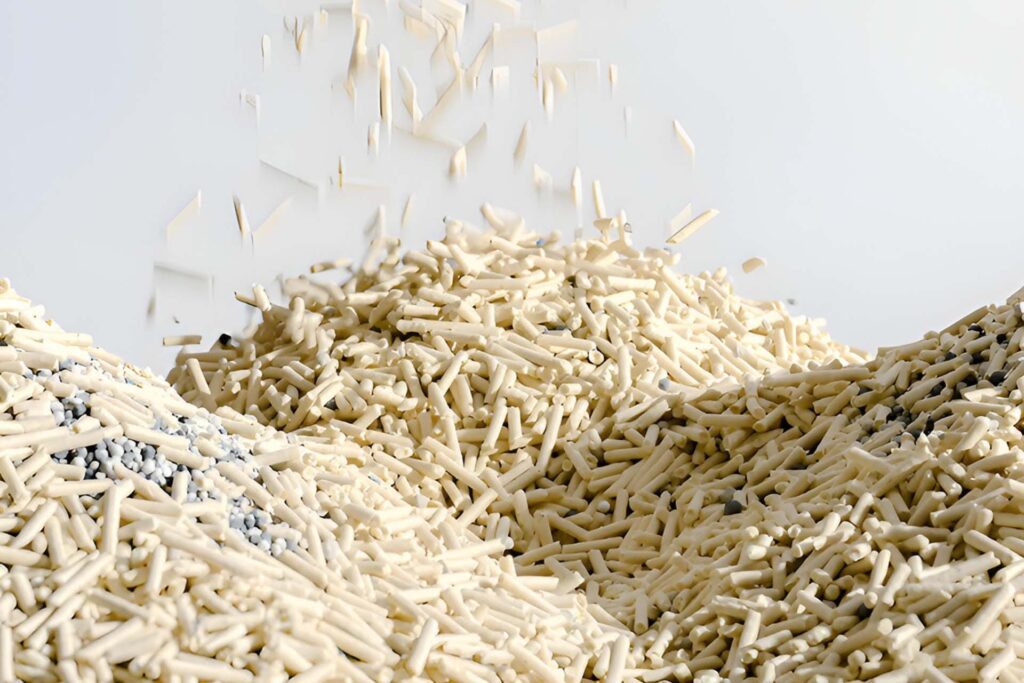
For many long-term cat owners, choosing the right litter is not a one-time decision but an ongoing process filled with compromises. Bentonite cat litter offers excellent clumping and a texture that aligns with a cat’s natural digging instincts, yet it produces noticeable dust and provides only moderate odor control. Tofu cat litter, on the other hand, is valued for its low dust and eco-friendly properties, but its clumping ability is often weak, and it can stick to the bottom of the litter box. To solve these issues, many are turning to Mixed Cat Litter, a solution designed to balance these trade-offs.
Mineral cat litter excels in odor control and durability, especially in multi-cat households, but its harder texture may reduce comfort and discourage some cats from using the litter box consistently. Faced with these trade-offs, many cat owners find themselves constantly switching products without ever achieving a truly satisfying result, which is exactly why Mixed Cat Litter has become an increasingly popular and practical solution.
What Is Mixed Cat Litter?
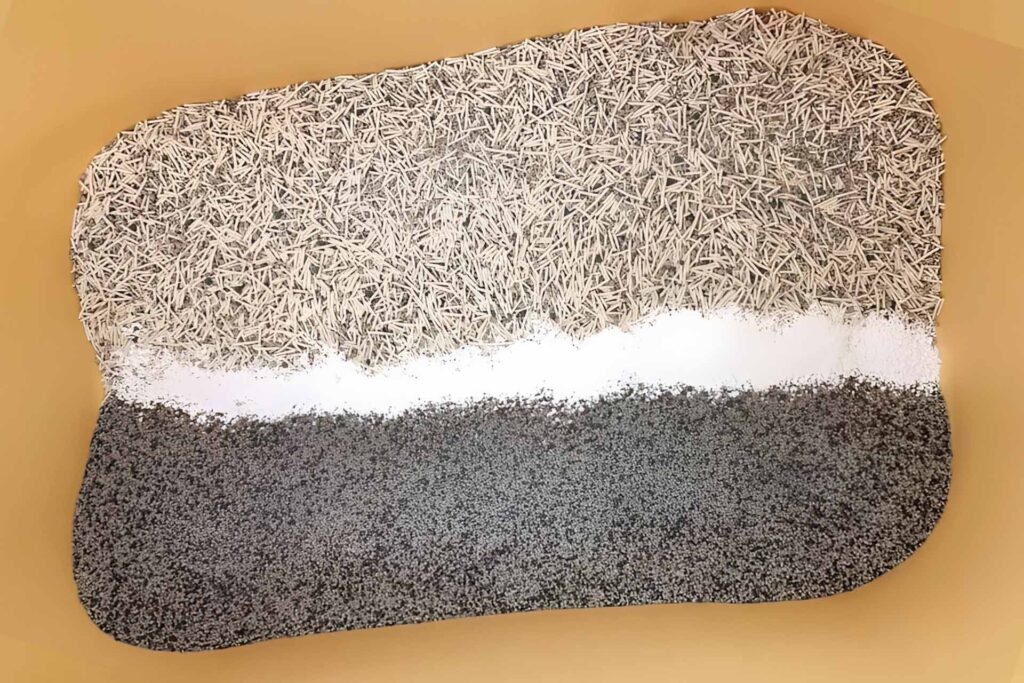
Mixed Cat Litter is not simply about blending different types of litter at random; rather, it is a deliberate and strategic process built on the principle of functional complementation. The goal is to use one material to compensate for the shortcomings of another, creating a balanced system that delivers strong clumping, low dust, effective odor control, and a comfortable texture for your cat. This approach transforms litter selection from passive consumption into active optimization, allowing cat owners to design their own customized solutions instead of relying on fixed commercial formulas that may not suit individual needs.
The Core Principle: Functional Complementation
Why Random Mixing Doesn’t Work
Many cat owners assume that mixing litter is simply a matter of combining two products, but without a clear purpose, this often leads to inconsistent performance. Random mixing can reduce clumping efficiency, increase dust, or create an uncomfortable texture that discourages cats from using the litter box.
How Complementation Improves Performance
The effectiveness of Mixed Cat Litter lies in pairing materials with complementary strengths. For example, bentonite provides structural clumping, tofu litter reduces dust and improves softness, and mineral litter enhances odor control. By aligning each component with a specific function, the final mixture becomes greater than the sum of its parts, delivering a balanced and optimized litter experience.
Why Mixed Cat Litter Is More Effective Than Single-Type Litter
One of the key advantages of Mixed Cat Litter is its ability to overcome the limitations of individual materials. Cats are highly sensitive to texture, smell, and cleanliness, and even small changes can affect their willingness to use the litter box. By mixing litter yourself, you gain precise control over these variables, enabling you to fine-tune the balance between comfort, performance, and cleanliness. This level of customization not only improves litter box acceptance but also reduces maintenance effort and enhances the overall living environment.
Three Proven Golden Ratios of Mixed Cat Litter
1. Balanced Performance Formula (60% Bentonite + 40% Tofu)
This is the most widely recommended ratio for beginners and general households. It achieves a strong balance between clumping performance and dust reduction, making it ideal for cats already accustomed to bentonite litter. The bentonite ensures firm, quick-forming clumps, while the tofu litter softens the texture and minimizes airborne dust, resulting in a cleaner and more comfortable litter box environment.
2. Odor-Control Formula (50% Bentonite + 30% Tofu + 20% Mineral)
Designed for multi-cat households or environments with strong odor concerns, this formula introduces mineral litter as a powerful odor-absorbing component. Bentonite maintains clumping strength, tofu litter reduces dust, and mineral litter locks in odors effectively. Proper mixing is essential to prevent the heavier mineral particles from settling, ensuring consistent performance throughout the litter box.
3. Low-Dust Comfort Formula (70% Tofu + 30% Bentonite)
This ratio is ideal for cats with sensitive paws, kittens, senior cats, or households with respiratory concerns. The high proportion of tofu litter creates a soft, low-dust environment, while the addition of bentonite reinforces clumping ability. This combination prioritizes comfort without sacrificing practicality, making it particularly suitable for sensitive situations.
How to Properly Mix Cat Litter
Preparation and Inspection
Before mixing, it is important to inspect each type of litter for clumps, impurities, or moisture. Clean, dry materials ensure better performance and prevent inconsistencies in the final mixture.
Mixing Technique
When combining materials, measure accurately and mix gently to avoid generating excess dust. Gradual layering and light stirring help achieve even distribution without damaging the particles. It is also recommended to mix only small batches, typically enough for one week, to maintain freshness and prevent moisture absorption.
Post-Mixing Observation
After introducing a new Mixed Cat Litter formula, observe your cat’s behavior closely. Adjust the ratio if necessary, based on factors such as clumping strength, dust levels, and litter box usage patterns.
How to Choose the Right Materials
Selecting high-quality materials is essential for achieving optimal results with Mixed Cat Litter. Bentonite litter should be low-dust with rounded particles to minimize irritation, while tofu litter should be unscented and free of additives to avoid overwhelming your cat’s sensitive sense of smell. Mineral litter should offer strong odor absorption without being excessively coarse, as overly hard particles can reduce comfort and create uneven distribution within the mixture.
Common Mistakes to Avoid
Incorrect Ratios
Using too much tofu litter can weaken clumping, while too much bentonite can increase dust. Maintaining a balanced ratio is key to achieving optimal performance.
Mixing Incompatible Types
Certain combinations, such as bentonite and crystal litter, can reduce both clumping and absorption efficiency, leading to poor results and potential litter box rejection.
Overmixing and Large Batches
Excessive stirring can generate dust and damage particle structure, while mixing large quantities at once can lead to moisture absorption and reduced effectiveness over time.
Adjusting Mixed Cat Litter Based on Cat Behavior
Every cat has unique preferences, and Mixed Cat Litter should be adjusted accordingly. If your cat avoids the litter box, the texture may be too harsh or unfamiliar. If clumps are fragile, increasing the proportion of bentonite can help. If dust remains an issue, adding more tofu litter is a practical solution. Persistent odor may indicate the need for mineral litter. Continuous observation and small adjustments are the key to finding the ideal balance.
Mixed Cat Litter vs. Commercial Pre-Mixed Products
While many brands market pre-mixed litter with claims of “perfect ratios,” these products often lack flexibility and come at a higher cost. Mixed Cat Litter created at home offers full control over composition, allowing you to adapt to your cat’s needs and environmental conditions. Over time, this approach not only delivers better performance but also significantly reduces expenses, making it a more sustainable and economical choice.
Final Thoughts on Mixed Cat Litter
Mixed Cat Litter represents a shift from passive purchasing to active optimization in cat care. Rather than relying on one-size-fits-all solutions, cat owners can create customized blends that align with their cat’s preferences and household requirements. By understanding the properties of each material, applying the principle of complementation, and refining ratios through observation, it is possible to develop a litter system that outperforms any single-type or pre-mixed product.
Ultimately, the process of refining Mixed Cat Litter reflects the broader philosophy of responsible pet ownership: continuous learning, thoughtful adjustment, and a commitment to improving your cat’s comfort and well-being. With patience and experimentation, you can transform the litter box from a source of frustration into a highly efficient, low-maintenance system that benefits both you and your cat.
FAQ
What is “Mixed Cat Litter,” and why is it considered more effective than single-material litters?
Mixed cat litter is a scientifically formulated blend that combines the strengths of different materials—most commonly tofu fibers and bentonite clay—to create a superior product:
The “Best of Both Worlds”: By mixing materials, you get the eco-friendly, low-tracking, and flushable benefits of tofu litter combined with the rapid clumping and deep odor-trapping power of bentonite.
Enhanced Performance: The varying particle sizes work together to fill gaps more effectively than a single material could. Small bentonite grains fill the spaces between larger tofu pellets, creating tighter, more solid clumps that are less likely to break apart during scooping.
Cost-Efficiency: Formulated blends often last longer because the increased absorption efficiency means you use less total volume of litter to manage the same amount of waste.
How does the scientific formulation of mixed litter improve odor control and hygiene?
The effectiveness of mixed litter lies in how it addresses waste at a molecular and physical level:
Dual-Action Odor Trapping: While tofu fibers naturally absorb liquids and neutralize smells through plant-based enzymes, bentonite clay acts as a secondary shield to lock in ammonia odors instantly.
Superior “Seal” Formation: Because the mixture creates a denser “clump,” it seals off waste more completely from the air. This significantly reduces the spread of bacteria and lingering smells in the home compared to traditional single-source litters.
Anti-Tracking Properties: The presence of larger tofu pellets helps weight down the smaller bentonite particles, preventing them from sticking to the cat’s paws and being tracked across furniture and rugs.