




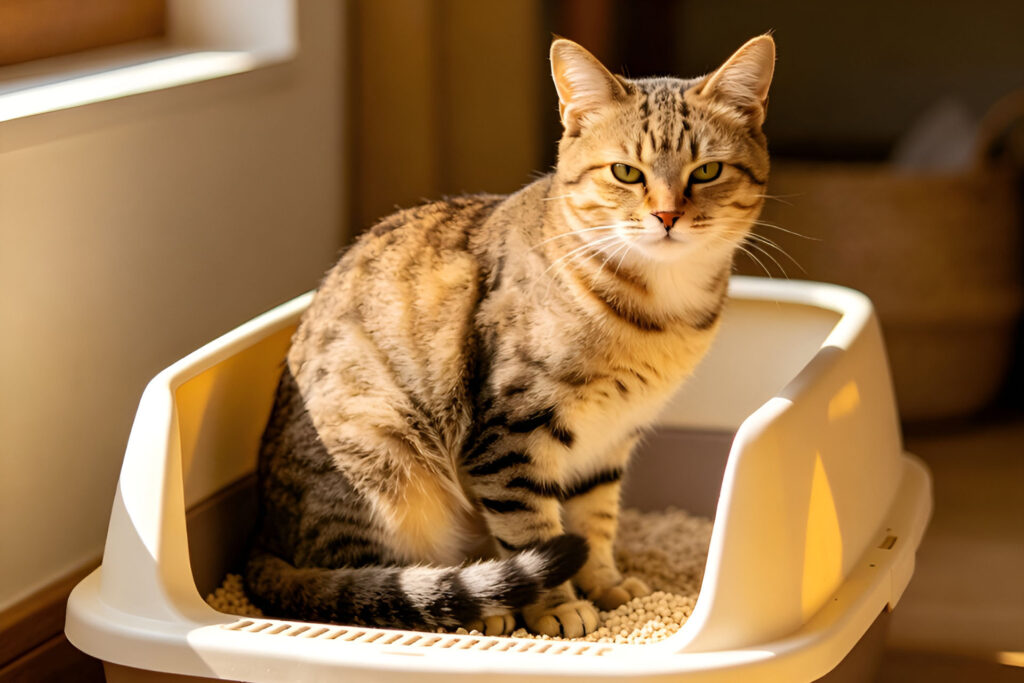
Many cat owners have faced this problem: Their cats suddenly stop using the litter box. They either go in and out frequently but can’t relieve themselves, or they fidget and lick their bottoms after using the toilet. Sometimes, they even leave “surprises” on the sofa, bed, or carpet. Most people think the cat is “misbehaving” or “being naughty,” but few realize that this could be a distress signal. The problem might be the cat’s toilet environment, and the culprit is often a lack of Cat Litter Health in the products you use every day.
As someone with nearly a decade of experience in the pet product industry, we’ve seen many cases where cats’ health was affected by the wrong cat litter. Some cats developed chronic rhinitis from inhaling dust, others got infections from scratched paws, and some even developed urinary tract diseases from avoiding the litter box due to the bad smell. Today, we’ll use the clinical data from our partner cat litter company and feedback from veterinarians to explain why the wrong cat litter can be a “hidden killer” for cats and how to avoid these invisible harms to provide a safe and comfortable toilet environment for your cat.
I. Don’t ignore these 5 warning signs of a cat’s toilet discomfort
Cats can’t talk. When they’re uncomfortable, they can only show it through their behavior. Many cat owners miss the best time to make adjustments because they don’t understand these signs, turning small problems into big ones. According to a survey by the cat litter company and a pet hospital, over 80% of cats’ urinary tract diseases are related to using the wrong cat litter for a long time. If your cat shows any of the following signs, check its cat litter right away.
- Frequent trips to the litter box with little output: This is the most dangerous sign. It could mean the cat has a urethral spasm due to the cat litter’s irritation or is holding in urine because it’s scared of the litter’s texture or smell. Holding in urine for a long time can lead to urinary blockages and cystitis, which can be life – threatening.
- Excessive licking of genitals or paws after using the toilet: If the cat litter has too much dust, contains irritating chemicals, or has sharp particles, it can irritate the cat’s skin and mucous membranes, causing itching and redness. The cat will lick to relieve the discomfort, but excessive licking can break the skin and cause bacterial infections.
- Refusing to use the litter box and pooping everywhere: This is the cat’s strongest protest. When the smell or texture of the cat litter is unbearable, the cat will choose to go to a place it thinks is safer and more comfortable. Many cat owners scold or hit the cat at this time, not knowing that it will only make the cat more anxious and the problem worse.
- Scratching the floor and pretending to bury outside the litter box: This is an instinctive behavior, indicating that the cat doesn’t think the current cat litter can cover its feces well and make it feel safe. This usually happens when the cat litter has poor water absorption, loose clumps, or isn’t spread thick enough.
- Running out of the litter box right after using it, looking agitated: This shows that the cat felt discomfort or pain while using the toilet and wanted to get away quickly. It could be that the cat litter’s particles are too hard and scratched its paws, or the smell is too strong.
II. Shocking! 4 hidden harms of choosing the wrong cat litter
Many cat owners think cat litter is just for holding feces and any kind will do. But they don’t know that cat litter is one of the things cats come into contact with most every day. An adult cat uses the litter box 3 – 5 times a day, spending 5 – 10 minutes each time, which adds up to thousands of hours a year. The harm from poor – quality cat litter builds up over time. By the time you notice, it may have already caused irreversible damage to the cat’s health.
1. Excessive dust: A “chronic poison” for the respiratory system
This is the most common and easily overlooked harm. The cat litter company’s experimental data shows that the dust content of poor – quality bentonite cat litter can be more than 10 times that of high – quality cat litter. These tiny dust particles can enter the cat’s nasal cavity, trachea, bronchi, and even the lungs when it breathes.In the short term, it can cause the cat to sneeze, have a runny nose, cough, and have red, watery eyes. In the long term, it can lead to chronic rhinitis, bronchitis, and asthma. For kittens, old cats, and cats with sensitive respiratory systems, it can be a fatal threat.
We’ve seen many cats develop irreversible asthma from using high – dust cat litter and need lifelong medication.Even worse, the dust can spread throughout the house, especially on the sofa, bed, and carpet. It not only dirties furniture and clothes but can also be inhaled by the cat owner and family, affecting human respiratory health. Many cat owners say they cough a lot when pouring cat litter, which is a clear sign of excessive dust.Picture: A cat sneezing frequently and having red eyes due to inhaling too much cat litter dust.
2. Poor – quality raw materials: A “hidden killer” for the skin and stomach
Cat litter produced by regular cat litter companies uses food – grade or pet – safe raw materials. It goes through high – temperature disinfection and multiple screenings to ensure there are no harmful additives, mold, or parasite eggs. However, cheap and low – quality cat litter often uses recycled waste, moldy raw materials, and even adds harmful chemicals like industrial glue, bleach, and fluorescent agents to cut costs.These harmful substances can enter the cat’s body through skin contact, causing skin allergies, dermatitis, and eczema. Especially the cat’s paws, which are in the cat litter all the time.
The chemicals in the poor – quality cat litter can corrode the paw pads, causing them to crack, peel, and become red and swollen. In severe cases, it can lead to paronychia.What’s more dangerous is that cats have the habit of licking their paws. These harmful substances can enter the stomach through licking, causing vomiting, diarrhea, and loss of appetite. Long – term ingestion can also damage the liver and kidney functions. We once had a case where a two – year – old British Shorthair developed chronic renal failure from using cat litter with industrial bleach and didn’t survive.
3. Inappropriate texture: A “destroyer” of paws and toilet habits
Cats’ paws are very delicate and have high requirements for the texture and particle size of cat litter. After thousands of tests, the cat litter company found that the most suitable cat litter particle diameter for cats is 2 – 4 millimeters. The texture should be fine but have a certain hardness, easy to scratch but not easily broken.If the cat litter particles are too large and hard, the cat will have a hard time scratching and may even scratch its paw pads, making it afraid to use the toilet and hold in urine.
If the particles are too small and fine, they can get stuck in the cat’s paw crevices, be carried around the house, and may be accidentally eaten by the cat, causing intestinal blockages.Some cat litters, like crystal cat litter, are hard and have sharp edges. They can easily scratch the cat’s skin and mucous membranes, especially for kittens that like to roll in the litter box. Many cats develop a psychological fear of the litter box after being scratched by crystal cat litter and never want to use it again.
4. Artificial fragrance: A “lethal stimulus” for the olfactory system
Many cat owners choose cat litter with a strong fragrance, like lavender, lemon, or rose, to cover the smell of cat excrement. But they don’t know that this is actually the biggest harm to cats.Cats’ sense of smell is 40 times more sensitive than humans. What we think is a faint fragrance is an unbearable smell to cats. Being exposed to such a strong smell for a long time can reduce the cat’s sense of smell, affecting its appetite and ability to judge danger.
Even more seriously, the volatile organic compounds in artificial fragrances can irritate the cat’s respiratory and nervous systems, causing symptoms like dizziness, nausea, and restlessness.The cat litter company’s veterinary consultant told us that many cats stopped eating and became listless. After checking all the reasons, they found it was because they changed to a strongly scented cat litter. The symptoms disappeared quickly after changing back to unscented cat litter.
III. Cat litter company’s test: How to choose cat litter to avoid all hidden harms
After learning about the dangers of choosing the wrong cat litter, many cat owners will ask: How can I choose cat litter that is safe for my cat and easy for me to use? As someone who has worked with several regular cat litter companies for many years, we’ve summarized a scientific way to choose cat litter based on their production standards and test data. Even new cat owners can understand it.
1. Check the dust:
Use the simplest method to judgeDust is the most important standard when choosing cat litter. No matter how good other aspects of a cat litter are, if the dust exceeds the standard, don’t buy it. Here’s a simple test method commonly used by the cat litter company:
Take a transparent mineral water bottle, fill it half – way with cat litter, put on the cap, shake it vigorously for 10 seconds, then let it stand for 30 seconds. Observe the dust residue on the bottle wall. If there’s only a thin layer of dust, the dust content is up to standard. If the bottle wall is covered with thick dust and you can see obvious dust flying when shaking, reject it.You can also grab a handful of cat litter and put it in your palm.
Rub it gently for 30 seconds, then pat off the cat litter. Observe the dust residue on your palm. If there’s only a small amount of fine powder, the quality is good. If your palm turns gray and you can even rub out mud, the dust content exceeds the standard.
High – quality cat litter produced by regular cat litter companies goes through at least 3 dust – removal processes. Some even use electrostatic dust – removal technology to keep the dust content below 0.1g/100g. There’s almost no dust when pouring or when the cat scratches the litter.
2. Check the raw materials:
Choose natural and additive – free ones firstThe safety of the raw materials directly determines the safety of the cat litter. It’s best to choose cat litter made from natural plants, like pine, tofu, or corn cat litter. These raw materials are naturally degradable and friendly to cats and the environment.When buying, check the ingredient list carefully. Choose cat litter with a clean ingredient list and only main raw materials.
Avoid products with additives like “fragrance,” “preservative,” “bleach,” and “adhesive.” Don’t buy cat litter with vague ingredient descriptions like “compound raw materials” or “others.”Especially, don’t buy very cheap cat litter. The raw material and production costs of regular cat litter companies are fixed. Very cheap cat litter must cut corners on raw materials and processes, and its safety can’t be guaranteed.
3. Check the texture:
Choose cat litter with moderate particles and a fine textureAs mentioned before, the most suitable cat litter particle diameter for cats is 2 – 4 millimeters. When buying, feel the texture of the cat litter with your hand. Choose cat litter with uniform particles, the same size, and no sharp edges.Gently squeeze a cat litter particle.
If it’s hard and not easy to break, the quality is good. If it breaks easily, the texture is loose. It will produce a lot of secondary dust during use and be consumed quickly, which isn’t cost – effective.You can also observe the cat’s reaction. If the cat scratches the litter smoothly and doesn’t shake its paws frequently after using the toilet, it means it’s satisfied with the texture of the cat litter.
4. Check the deodorization:
Choose physical deodorization, not fragrance – maskingGood cat litter should use physical adsorption and neutralization to deodorize, not artificial fragrance to cover the smell. Regular cat litter companies add natural adsorption materials like activated carbon, bamboo charcoal, and zeolite to the cat litter. These materials can adsorb odor molecules and eliminate the odor at the source, rather than covering it with fragrance.When buying, smell the cat litter. Choose unscented cat litter with only the faint smell of the raw materials.
If you can smell a strong fragrance when opening the package, it means a lot of artificial fragrance has been added. It’s not recommended.Tests show that high – quality physically deodorizing cat litter can effectively adsorb the odor of cat excrement and keep the air fresh. Even if the litter box is in the living room, there won’t be an obvious smell.Picture: A comparison of different types of cat litter, marked with key indicators like dust, raw materials, and texture.
IV. Pitfall – avoidance guide: 90% of cat owners have fallen into these cat litter traps
In addition to knowing how to choose cat litter correctly, you also need to avoid some common mistakes. Otherwise, even if you choose the right cat litter, you may not get the ideal result, and it may even harm the cat.
Mistake 1: Mixing different types of cat litter
Many cat owners mix bentonite, tofu, and pine cat litter to combine their advantages, thinking it can clump quickly and deodorize. But this is wrong.Different types of cat litter have different water – absorption and clumping mechanisms. Bentonite cat litter clumps when it gets wet, while tofu and pine cat litter dissolve or break down. Mixing them will affect their performance, resulting in loose clumps, reduced water absorption, and increased dust. It’s not only more difficult to clean but also allows the odor to spread more easily.
Mistake 2: The thicker the cat litter, the better
Many cat owners think that a thicker layer of cat litter will absorb water better and reduce the odor. But that’s not true. The best thickness for cat litter is 5 – 8 centimeters. This thickness allows the cat to cover its feces easily and lets the urine penetrate to the bottom quickly, preventing it from sticking to the bottom.If the cat litter is too thick, the cat will have a hard time scratching, and the urine won’t penetrate to the bottom easily. It will stay on the surface, causing an odor and making the cat’s paws dirty. If it’s too thin, the urine will seep to the bottom of the litter box, forming hard – to – clean clumps.
Mistake 3: Changing the whole box of cat litter only once in a long time
Some cat owners are busy or think the cat litter is still usable, so they change the whole box of cat litter only once in a long time, just cleaning the feces and clumps every day. But even with daily cleaning, there will still be some urine and bacteria in the cat litter. Over time, a lot of microorganisms will grow, producing a bad smell and increasing the risk of the cat getting skin and urinary tract diseases.
It’s recommended to replace the used cat litter at the bottom of the litter box once a week and change the whole box of cat litter every 2 – 3 weeks. Clean the litter box with a pet – specific disinfectant and let it dry before adding new cat litter. This way, you can keep the litter box clean and provide a comfortable toilet environment for the cat.
Mistake 4: Frequent brand – changing of cat litter
Cats are very sensitive animals and have a hard time adapting to environmental changes. Frequent changes in the brand and type of cat litter will make the cat feel strange and insecure, and it may even refuse to use the litter box.If you really need to change the cat litter, do it gradually.
First, mix 1/3 of the new cat litter with the old one and let the cat get used to it for 2 – 3 days. Then increase the new cat litter to 1/2 and let the cat adapt for another 2 – 3 days. Finally, replace all the cat litter with the new one. The whole transition process takes about 7 – 10 days, so the cat can slowly get used to the new cat litter.
V. Conclusion: Although small, cat litter matters a lot to a cat’s life
Many people think that raising a cat is just about feeding it well, but they ignore the most basic need – a proper toilet. For cats, a safe, comfortable, and clean toilet environment is as important as food and water. Although cat litter is just a small item, it directly affects the cat’s health and quality of life.As cat litter sellers, we’ve seen many cases where cats got sick because of the wrong cat litter, and also many cases where cats became lively and healthy again after changing to the right cat litter.
We always believe that good cat litter should make the cat feel safe and the owner feel at ease. The original intention of regular cat litter companies is to provide a better toilet experience for cats and make cat – raising easier for owners.We hope this popular science can make every cat owner pay more attention to choosing the right cat litter and avoid the hidden harms.
When you see your cat using the clean litter box comfortably, playing happily in the living area, and rubbing its head against your hand affectionately, you’ll understand that choosing the right cat litter is the best love for your cat.May every cat have a comfortable and safe toilet environment, and may every cat owner enjoy the happiness and healing that come with the company of their cat.
FAQ
Why is strongly scented cat litter often considered harmful to cats?
While humans may use scented litter to mask odors, a cat’s sense of smell is roughly 40 times more sensitive than ours. What seems like a mild fragrance to a human can be an overwhelming and irritating stimulus for a cat. Artificial fragrances often contain volatile organic compounds that can irritate a cat’s respiratory and nervous systems, potentially leading to symptoms like dizziness, loss of appetite, or a refusal to use the litter box entirely. Experts recommend choosing unscented litters that use physical adsorption (like activated carbon or zeolite) to neutralize odors instead of masking them.
How can I perform a “bottle test” to check the dust levels of my cat litter?
Excessive dust is a “chronic poison” for a cat’s respiratory system, but you can easily test for it at home using the transparent bottle method:
Fill a clear mineral water bottle halfway with cat litter and cap it.
Shake the bottle vigorously for 10 seconds, then let it sit for 30 seconds.
Observe the bottle walls; if they are covered in a thick layer of dust or if you see significant particles still floating, the dust content is too high. High-quality litters typically go through multiple dust-removal processes to keep these particles from entering your cat’s lungs.