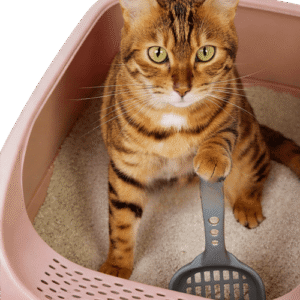





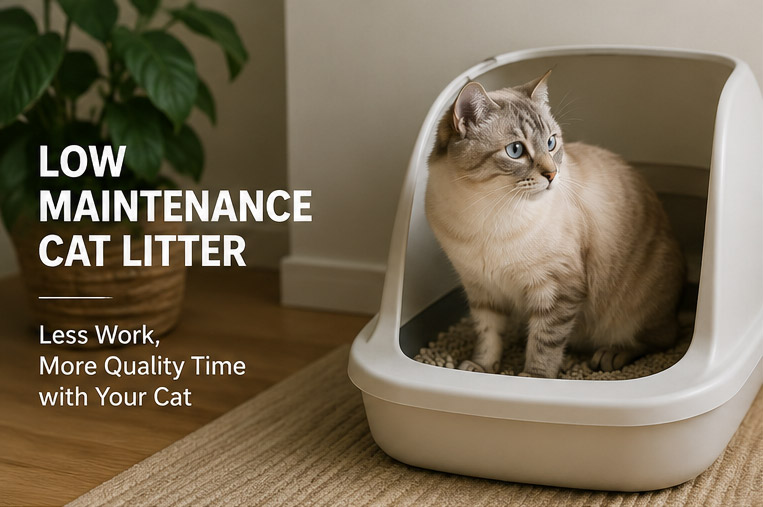
Finding a genuinely low maintenance cat litter is one of the most practical decisions a busy cat owner can make. Most people underestimate how much time a poor litter choice adds to their daily routine — crumbling clumps, sticky box bottoms, rapid odor buildup, and constant floor sweeping all compound into real housework. The right litter, by contrast, handles the heavy lifting between cleanings so you don’t have to.
This guide cuts through the marketing noise and explains what actually matters when choosing low maintenance cat litter: which types hold up in real daily use, which features are genuinely useful, and which popular selling points are worth ignoring entirely. The recommendations here draw on long-term, high-volume usage experience from environments where litter box efficiency is a practical necessity — not just a preference.
What Low Maintenance Cat Litter Actually Needs to Do
Many cat owners assume the cheapest litter is also the most convenient. In practice, budget litter often creates more work: it clumps loosely, leaves residue stuck to the box floor, and loses odor control quickly. The result is daily scraping, more frequent full litter changes, and a constant need to clean surrounding floors.
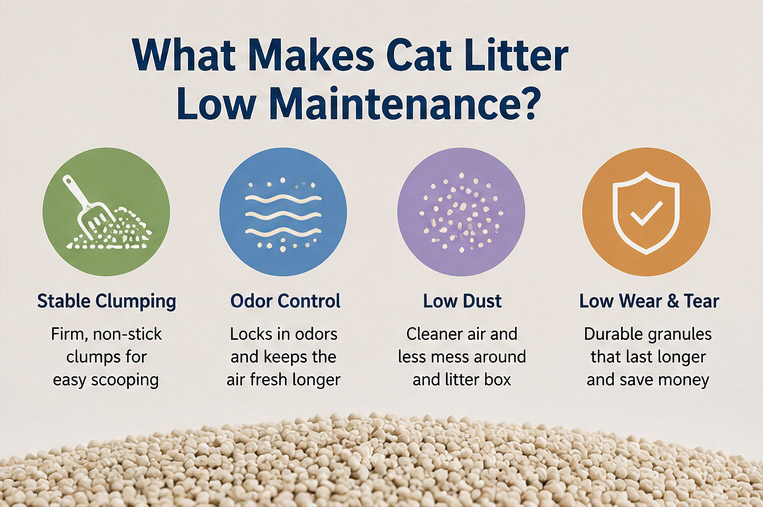
Genuinely low maintenance cat litter must meet four non-negotiable criteria:
Stable, non-stick clumping: Cats urinate multiple times a day. Soft or fragile clumps break apart during scooping, leaving residue that requires repeated scrubbing. Quality litter forms firm, intact clumps on contact with moisture — ones that lift out cleanly in a single pass without crumbling or sticking to the box base.
Long-lasting cat litter odor control: In enclosed home environments, odor accumulates fast. Since most busy owners won’t scoop immediately after every use, the litter itself needs to lock in ammonia and waste smells for hours — not minutes. Effective cat litter odor control is what extends the comfortable interval between cleanings.
Low dust output: High-dust litter harms cats’ respiratory systems and scatters fine particles across floors and furniture, creating extra cleaning work far beyond the litter box. Genuinely low dust cat litter produces minimal airborne particles during pouring and scooping, keeping the surrounding space tidy with little effort.
Low wear-and-tear rate: Dense, wear-resistant granules hold their shape under scratching and digging. This means each box of litter lasts longer before needing a full replacement — fewer shopping trips, fewer refills, lower total cost over time.
These aren’t premium upgrades. They’re the baseline for any litter that earns the low maintenance label. High-density cat environments like shelters and multi-cat facilities operate on similar low-frequency maintenance schedules and consistently rely on litter that meets all four criteria. Home cat owners can apply the same logic without chasing every new product trend.
The Three Best Low Maintenance Cat Litter Types
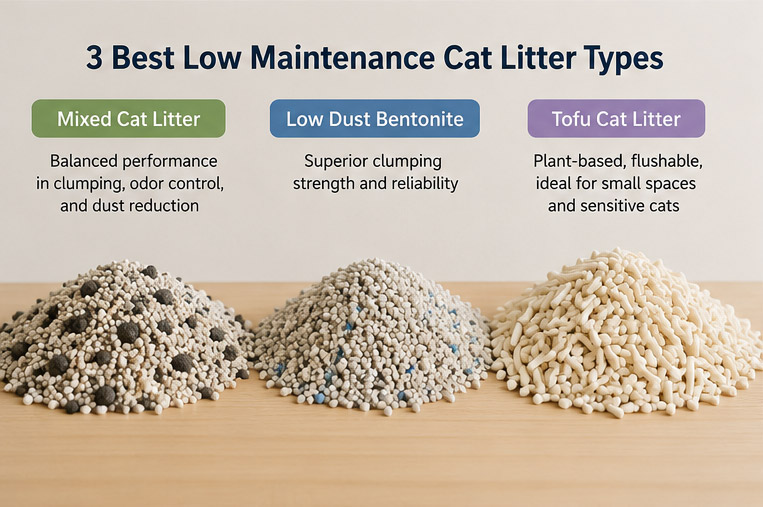
Filtered by ease of use, durability, and real maintenance demand, three litter types consistently outperform the rest for busy owners.
Mixed Cat Litter — The Best All-Around Choice
Mixed cat litter — combining tofu fiber, bentonite clay, and activated carbon — is currently the most practical low maintenance option available. It’s designed to balance water absorption, clumping strength, odor suppression, and dust control simultaneously, rather than excelling at one while sacrificing the others.
Urine absorbs quickly, preventing penetration to the box floor. Clumps form dry and firm with minimal bottom adhesion. Internal adsorption agents lock in ammonia effectively — even after a full day without scooping, indoor air quality stays acceptable. Manufacturers focused on this category typically optimize granule density specifically to reduce wear during normal cat use, extending the lifespan of each box significantly. Mixed litter handles both single-cat and multi-cat households with equal reliability and is the standard choice in professional cat-keeping environments for exactly this reason.
Low Dust Bentonite — Maximum Clumping Reliability
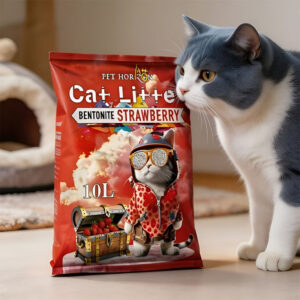
High-quality bentonite is dense and fast-absorbing. It wraps waste into firm clumps almost instantly — making it one of the best clumping cat litters for owners who prioritize clean, efficient scooping above everything else. The mineral composition resists bacterial growth and handles humidity well, so it stays consistent through seasonal changes without souring or clumping prematurely in the bag.
Cats accept fine-grain bentonite readily, since its texture closely resembles what they’d naturally scratch in. Litter box refusal rates are extremely low compared to most alternative litters.
The essential caveat: cheap, unprocessed bentonite carries significant dust. For indoor use, only choose bentonite that has gone through multiple dust-removal processing stages from a reputable manufacturer. Low-grade versions are not appropriate for enclosed living spaces and will quickly undermine the hassle-free goal.
Tofu Cat Litter — Best for Small Spaces and Poor Ventilation
Made entirely from plant-based materials, tofu cat litter carries no chemical odors and develops no harsh compounding smells during extended periods between scoops. Granules that track onto floors sweep up easily without wedging into floor gaps. The defining practical advantage for busy owners: tofu litter is flushable in small amounts, eliminating the garbage bag step from routine cleanup entirely.
The trade-off is durability. Pure tofu litter softens under heavy saturation and wears down faster than bentonite or mixed alternatives — particularly in multi-cat households. It’s most suited to single-cat homes with lighter litter box traffic, especially those on high floors or with limited ventilation where dust and odor management matter most.
Two types to skip: Pine litter turns to powder when wet and sticks to fur and box surfaces — the opposite of easy, effortless upkeep. Crystal litter can’t clump at all, relying entirely on adsorption until full saturation, then requiring a complete box replacement. Neither suits a low-frequency cleaning routine.
Marketing Claims That Don’t Help Busy Cat Owners
Several widely promoted features add cost and complexity without reducing actual maintenance time. Knowing which ones to skip protects your budget and keeps your routine simple.
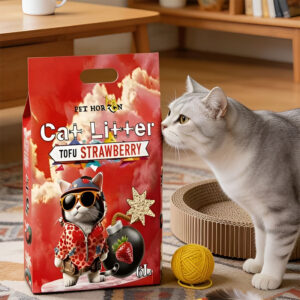
Heavy artificial fragrances: Floral, fruit, or sweet-scented litters mask odors with fragrance rather than neutralizing them. Once the fragrance dissipates — which happens quickly with heat and moisture — underlying waste odors return, often stronger than before. Fragrance residue also adheres to litter box walls, building up a sticky film that requires more frequent scrubbing. Unscented or lightly scented litter delivers better real-world cat litter odor control for busy households.
Lightweight, fragile granules: Some manufacturers reduce material density to cut costs, producing granules that crumble the moment a cat scratches. The result is rapid dust generation, fast litter consumption, and frequent refills. The lower unit price doesn’t hold up once you account for how quickly it disappears. A genuinely easy-to-manage litter uses dense, firm particles that withstand normal cat activity without breaking down.
Exaggerated flushability claims: Many litters marketed as completely dissolvable become sticky and expansive in pipes when flushed in bulk. Blockages and toilet wall adhesion are common outcomes. If you flush, only do so in small quantities — and confirm your plumbing can handle it before making it a regular habit.
Simple Habits That Make Low Maintenance Litter Work Even Better
The right litter does most of the work. A few consistent habits eliminate the rest of the friction.
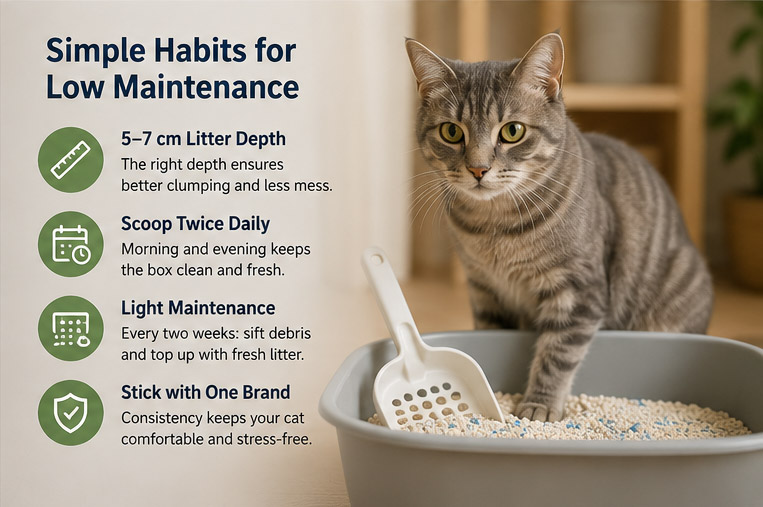
Set the right depth — 5 to 7 centimeters: Too shallow, and urine reaches the box floor. Too deep, and you’re wasting litter while increasing scatter. The right depth ensures clean clumping and reduces how much litter tracks onto surrounding floors.
Scoop twice daily on a fixed schedule: Morning and evening is enough for most households. There’s no need to monitor the box throughout the day. This rhythm fits naturally into a standard work schedule without adding mental load or interrupting your routine.
Do light maintenance every two weeks instead of full replacements: Sift out fine debris and dust from the bottom, discard it, and top up with fresh litter. This keeps usable particles in service longer. In normal indoor conditions, a quality litter box managed this way lasts well over a month.
Stick with one trusted brand: Once a cat establishes comfortable litter box habits, switching brands disrupts those habits and can trigger avoidance or inappropriate elimination. Consistency saves time and prevents problems from developing.
Adjust to your specific household. Single-cat owners in poorly ventilated apartments benefit most from plain-scented mixed litter — clean, odor-free, and easy to manage. Multi-cat households with heavier litter box traffic should prioritize mixed litter with a higher bentonite ratio for stronger durability and odor capacity. Households with kittens or cats with sensitivities should use tofu-based litter for its gentle, non-irritating properties.
Conclusion: The Best Low Maintenance Cat Litter Keeps Things Simple
For busy cat owners, cat care does not need complicated routines or unnecessary product features. A reliable low maintenance cat litter should provide low dust levels, stable clumping, reduced sticking, effective odor control, and reasonable durability — nothing more complicated than that.
There is no need to chase new trends or be swayed by fragrance claims and marketing gimmicks. By choosing a dependable product and pairing it with simple maintenance habits, cat owners can keep their home clean while spending far less time on upkeep.
Take your cues from high-density professional cat environments: they prioritize durability, cleanliness, and long-lasting cat litter odor control above everything else. Pair a quality, low dust cat litter — ideally in a mixed or bentonite formulation — with a twice-daily scooping routine and light biweekly maintenance, and the litter box stops being a chore and starts being an afterthought. That is exactly what the right litter choice is supposed to deliver.
FAQ
What is the best low maintenance cat litter for busy owners?
Mixed cat litter — combining tofu fiber, bentonite clay, and activated carbon — is the top choice. It clumps firmly, controls odor for extended periods, produces minimal dust, and holds up well between cleanings without requiring constant attention.
How long does low maintenance cat litter last before a full replacement?
With twice-daily scooping and biweekly light maintenance (removing fine debris and topping up rather than full replacement), a quality box of low maintenance cat litter can last over a month in a single-cat household. Dense, wear-resistant granules are key to maximizing that lifespan.
What cat litter types should busy owners avoid?
Pine litter and crystal litter are the two types least suited to low-maintenance routines. Pine litter turns to powder when wet, sticking to fur and box surfaces. Crystal litter cannot clump and requires complete box replacement once saturated — both outcomes demand more frequent intervention than clumping alternatives.