



Quick Answer: How Is Tofu Cat Litter Made?
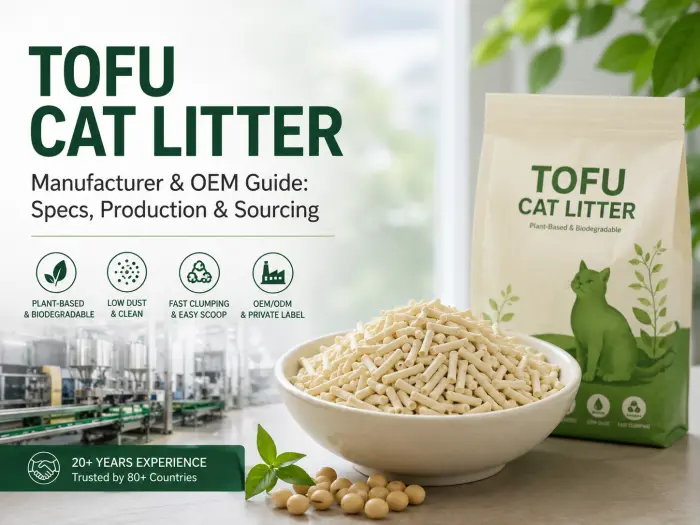
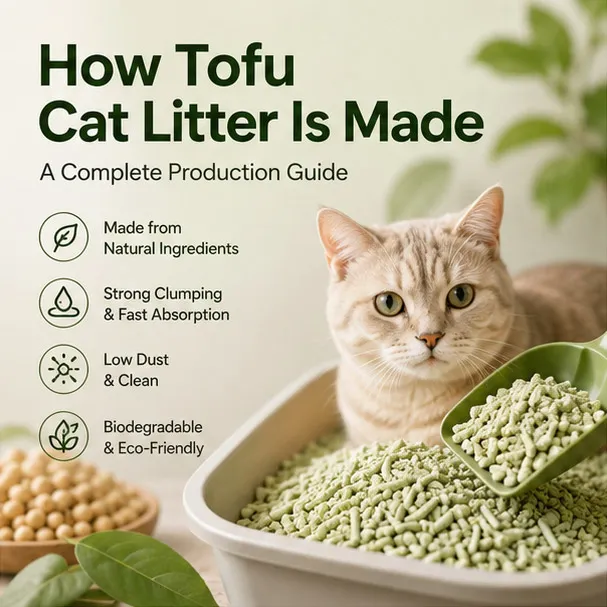
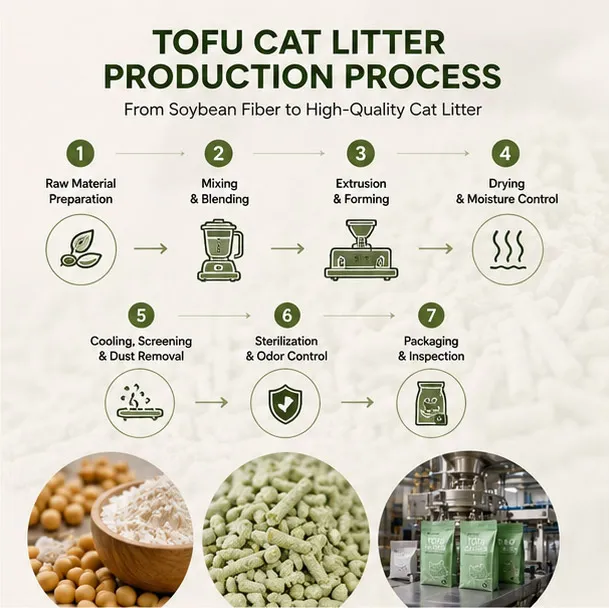
Tofu cat litter is made from soybean fiber, natural starch binders, plant-based additives, and deodorizing materials. The production process typically includes raw material preparation, ingredient blending, extrusion, drying, screening, sterilization, and packaging. Each stage directly affects important performance factors such as dust levels, clumping strength, odor control, durability, and overall product quality.
As demand for eco-friendly cat litter continues to grow worldwide, tofu cat litter has become one of the most popular alternatives to traditional clay-based litter. Understanding how tofu cat litter is made helps consumers identify high-quality products and allows distributors, wholesalers, and private-label brands to evaluate manufacturing standards more effectively.
What Is Tofu Cat Litter Made Of?
Before exploring how tofu cat litter is produced, it is important to understand its core ingredients.
Unlike bentonite cat litter, which is made from mined clay, tofu cat litter is manufactured primarily from soybean by-products. The main ingredient is soybean fiber, commonly known as soybean residue or soybean dregs, which remain after soybeans are processed into products such as tofu and soy milk.
By repurposing this agricultural by-product, manufacturers create a sustainable and biodegradable cat litter while reducing food-processing waste.
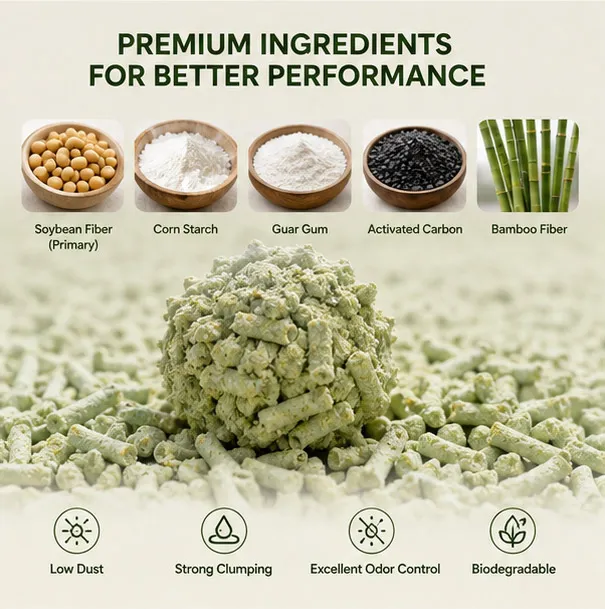
High-quality tofu cat litter ingredients typically include:
- Refined soybean fiber
- Corn starch or cassava starch
- Guar gum
- Bamboo fiber
- Activated carbon (optional)
- Natural deodorizing agents
- Food-grade fragrances (optional)
Together, these ingredients create a litter that is low dust, highly absorbent, flushable in small quantities, and capable of forming strong clumps for easy cleaning.
Why Tofu Cat Litter Has Become So Popular
Over the past decade, tofu cat litter has gained significant popularity among cat owners, retailers, and pet brands worldwide.
Several factors have contributed to its rapid growth.
Eco-Friendly and Sustainable
One of the biggest advantages of tofu cat litter is its environmental profile. Because the primary raw material comes from recycled soybean by-products, it supports resource efficiency and aligns with modern sustainability goals.
Unlike many conventional cat litter products, tofu cat litter is biodegradable and can naturally break down after disposal. This makes it an attractive option for environmentally conscious consumers.
Low Dust Performance
Dust generation is one of the most common complaints associated with traditional clay litter. Excessive dust can affect indoor air quality and may irritate both cats and owners.
Through advanced manufacturing techniques and multiple dust-removal processes, premium tofu cat litter can maintain extremely low dust levels while providing a cleaner home environment.
Strong Clumping Ability
The natural fiber structure of soybean material allows tofu cat litter to absorb moisture quickly and form solid clumps. This makes daily litter box maintenance easier and helps reduce litter waste.
Effective Odor Control
Modern tofu cat litter formulations often incorporate deodorizing ingredients such as activated carbon, baking soda, or natural plant extracts. These materials help neutralize unpleasant odors and maintain a fresher litter box environment.
Safety for Cats
Because tofu cat litter is made primarily from plant-based ingredients, it is generally considered safe for kittens, adult cats, and senior cats when produced under proper quality-control standards.
The Complete Tofu Cat Litter Production Process
The tofu cat litter production process involves a series of carefully controlled manufacturing stages. Professional manufacturers use automated production systems and quality-control procedures to ensure consistency across every batch.
Each step contributes to the final performance of the product.
Step 1: Raw Material Preparation
Raw material preparation serves as the foundation of the entire manufacturing process.
The quality of the soybean fiber directly influences clumping strength, dust levels, odor control performance, and overall durability.
Professional tofu cat litter manufacturers carefully inspect incoming soybean materials before production begins. Any contaminated, moldy, or deteriorated raw materials are removed to prevent quality issues later in the process.
Fresh soybean residue naturally contains very high moisture levels, often exceeding 90%. This moisture content is far too high for direct production.
To prepare the material, manufacturers use multi-stage dewatering systems to gradually reduce moisture levels to approximately 40%–50%, which is considered optimal for processing.
After moisture reduction, the material undergoes crushing and grinding to create a more uniform fiber structure.
The processed soybean fiber then passes through multiple screening stages to remove impurities, oversized particles, and unwanted debris.
This preparation stage ensures consistency throughout the rest of the production process and significantly reduces the risk of dust problems in the finished product.
Step 2: Ingredient Blending and Mixing
Once the soybean fiber has been properly prepared, it is combined with functional additives and natural binders.
This stage plays a critical role in determining the final performance characteristics of the litter.
Automatic weighing systems are typically used to ensure precise formulation ratios for every production batch.
The most common supplementary ingredients include:
- Corn starch
- Cassava starch
- Guar gum
- Bamboo fiber
- Activated carbon
- Natural deodorizing compounds
The raw materials are transferred into industrial mixing equipment where they are blended under controlled temperature and humidity conditions.
During the mixing process, purified water may be added to achieve the desired consistency and activate natural binding agents.
Uniform mixing is essential because uneven distribution of ingredients can result in weak clumping performance, inconsistent odor control, or excessive particle breakage.
For this reason, professional factories closely monitor mixing time, temperature, and moisture content to maintain product consistency.
Step 3: Extrusion and Pellet Forming
After the ingredients have been thoroughly blended, the mixture moves to the extrusion stage.
This is where the familiar pellet shape of tofu cat litter is created.
The blended material is fed into a twin-screw extrusion system that applies pressure and controlled heat to form dense, uniform pellets.
Most manufacturers operate extrusion systems at relatively low temperatures to preserve the natural fiber structure and maintain the absorption characteristics of the material.
As the mixture passes through customized dies, it is shaped into long strips that are later cut into uniform pellet sizes.
Common pellet diameters include:
- 2 mm
- 3 mm
- 6 mm
The choice of pellet size depends on product positioning, regional market preferences, and customer requirements.
At this stage, the pellets have already taken shape, but they still contain excessive moisture and require further processing before becoming finished products.
Step 4: Drying and Moisture Control
Drying is one of the most important stages in the entire tofu cat litter production process.
Improper drying can lead to weak clumps, mold growth, poor shelf life, and product instability.
To achieve consistent quality, manufacturers use multi-layer drying systems that gradually remove moisture from the pellets.
Rather than exposing the product to excessively high temperatures, premium manufacturers often employ controlled drying programs that slowly reduce moisture while protecting pellet integrity.
The goal is typically to reduce final moisture content to approximately 10%–12%.
This moisture range provides an effective balance between:
- Product durability
- Clumping performance
- Storage stability
- Transportation safety
Proper drying also improves pellet hardness, helping reduce breakage and dust generation during handling and shipping.
Step 5: Cooling, Screening, and Dust Removal
After drying, the pellets must be cooled before further processing.
Freshly dried pellets retain heat, and immediate packaging could result in condensation inside the packaging, increasing the risk of moisture-related quality problems.
To prevent this issue, the pellets pass through cooling systems that gradually return them to room temperature.
Once cooled, the material undergoes another round of screening and grading.
During this stage, manufacturers remove:
- Broken pellets
- Excessive fines
- Dust particles
- Oversized pieces
- Irregularly shaped pellets
Advanced screening systems help create a more uniform final product while improving the overall appearance and performance of the litter.
A secondary dust-removal process is often performed at this stage, which contributes significantly to the low-dust characteristics expected from premium tofu cat litter products.
Step 6: Sterilization and Odor Control
After screening and dust removal, the pellets enter the sterilization stage.
Although tofu cat litter is made from natural ingredients, maintaining hygienic production standards is essential for ensuring product safety and shelf stability.
Professional tofu cat litter manufacturers typically use physical sterilization methods such as ultraviolet (UV) treatment or other controlled sterilization technologies to eliminate potential microorganisms without introducing harmful chemical residues.
Following sterilization, the product undergoes odor-control treatment.
Depending on the formulation, manufacturers may incorporate:
- Activated carbon
- Baking soda
- Plant-based deodorizing agents
- Natural odor-neutralizing compounds
These materials help absorb and neutralize unpleasant odors while maintaining a fresh litter box environment.
For scented products, food-grade fragrances such as lavender, lemon, green tea, or baby powder may be added in carefully controlled amounts to avoid overwhelming a cat’s sensitive sense of smell.
The goal is to provide long-lasting odor control while preserving the natural characteristics of the litter.
Step 7: Packaging and Quality Inspection
The final stage of the tofu cat litter production process is packaging and quality inspection.
Before packaging begins, manufacturers conduct a series of tests to verify that the product meets established quality standards.
Common inspection criteria include:
- Dust content
- Moisture content
- Water absorption performance
- Clumping strength
- Odor control effectiveness
- Pellet durability
- Product appearance
Only batches that meet quality requirements proceed to packaging.
Automated packaging systems accurately weigh and seal each bag to ensure consistency and reduce human error.
High-quality packaging materials are selected to protect the litter from moisture, contamination, and damage during storage and transportation.
Proper packaging helps maintain product quality throughout the supply chain and extends shelf life for distributors, retailers, and consumers.
How Professional Tofu Cat Litter Manufacturers Ensure Quality
For consumers, product performance is important.
For distributors, wholesalers, and private-label brands, manufacturing consistency is equally critical.
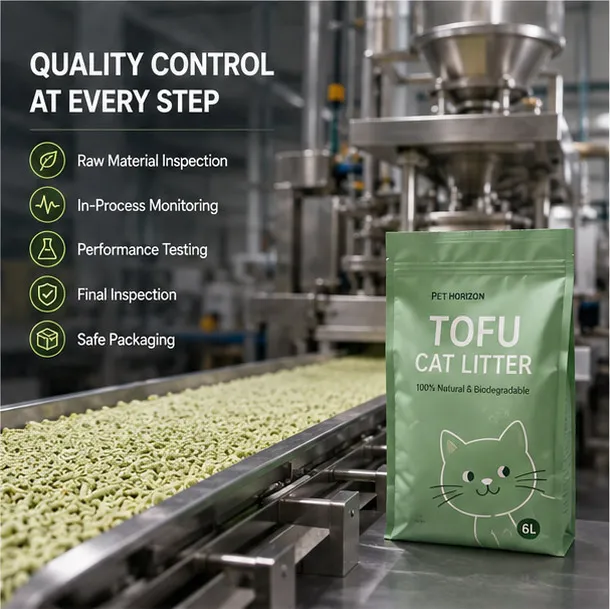
Professional tofu cat litter manufacturers implement quality-control procedures throughout every stage of production.
Raw Material Inspection
Quality begins with sourcing.
Reliable manufacturers carefully evaluate soybean fiber quality and reject materials that show signs of contamination, mold, or excessive moisture.
Production Monitoring
Key manufacturing parameters are continuously monitored, including:
- Moisture levels
- Mixing consistency
- Extrusion pressure
- Drying temperature
- Particle dimensions
Maintaining stable production conditions helps ensure consistent product performance across different batches.
Performance Testing
Before shipment, finished products are typically tested for:
- Clumping performance
- Absorption capacity
- Dust generation
- Odor control effectiveness
- Mechanical strength
These tests help ensure that customers receive products that perform as expected.
OEM and Private Label Support
Many modern manufacturers also provide OEM and private label cat litter services.
These services may include:
- Custom packaging design
- Private branding
- Fragrance customization
- Pellet size customization
- Formula development
For businesses entering the pet products market, selecting an experienced tofu cat litter manufacturer can significantly improve product consistency and market competitiveness.
To learn more about supplier selection, see our guide on How to Choose a Reliable Cat Litter Manufacturer.
Businesses considering custom branding may also find our article on OEM vs Private Label Cat Litter helpful.
Premium vs Low-Quality Tofu Cat Litter
Not all tofu cat litter products are manufactured to the same standard.
Significant differences in raw materials, production methods, and quality-control procedures can result in major variations in performance.
| Quality Factor | Premium Tofu Cat Litter | Low-Quality Tofu Cat Litter |
|---|---|---|
| Raw Materials | Fresh, food-grade soybean fiber | Lower-quality or poorly processed materials |
| Dust Level | Very low dust | High dust generation |
| Clumping Strength | Strong and durable clumps | Weak or fragile clumps |
| Odor Control | Effective and long-lasting | Limited odor control |
| Moisture Stability | Controlled moisture content | Inconsistent moisture levels |
| Pellet Durability | Strong and uniform pellets | Easily broken pellets |
| Product Safety | Strict quality control | Limited quality assurance |
Differences in Raw Materials
Premium tofu cat litter uses carefully selected soybean fiber that has undergone proper dehydration, crushing, and screening.
Lower-quality products may use poorly processed materials that contribute to excessive dust, unpleasant odors, and inconsistent performance.
Differences in Forming and Drying Technology
High-quality manufacturers utilize controlled extrusion and drying systems to ensure stable pellet structure and moisture levels.
Inferior products often rely on simplified production methods that result in brittle pellets, poor clumping performance, and increased dust generation.
Differences in Additives and Sterilization
Premium formulations use balanced proportions of natural binders and deodorizing agents while maintaining product safety.
Low-quality products may rely on cheaper additives that negatively affect odor control, clumping ability, or overall user experience.
Understanding these differences can help consumers and buyers make more informed purchasing decisions.
Conclusion
Understanding how tofu cat litter is made provides valuable insight into the quality, safety, and performance of the final product.
From soybean fiber preparation and ingredient blending to extrusion, drying, sterilization, and packaging, every stage of the tofu cat litter production process plays an important role in determining product performance.
High-quality tofu cat litter combines low dust levels, strong clumping ability, effective odor control, and environmentally friendly characteristics, making it one of the most popular cat litter options available today.
As demand for sustainable pet care products continues to grow, professional tofu cat litter manufacturers are continuously improving production technologies, quality standards, and customization capabilities.
Whether you are a cat owner looking for a cleaner litter solution or a business sourcing OEM or private label cat litter products, understanding the manufacturing process can help you identify reliable suppliers and higher-quality products.
Frequently Asked Questions
What is tofu cat litter made of?
Tofu cat litter is primarily made from soybean fiber, often combined with natural binders such as corn starch, cassava starch, or guar gum. Additional ingredients may include bamboo fiber, activated carbon, and natural deodorizing agents.
How is tofu cat litter produced?
The production process typically includes raw material preparation, ingredient blending, extrusion, drying, cooling, screening, sterilization, and packaging. Each step contributes to the final product’s performance and quality.
Why does premium tofu cat litter produce less dust?
High-quality tofu cat litter undergoes multiple screening and dust-removal processes. Advanced extrusion and drying technologies also help reduce particle breakage, resulting in significantly lower dust levels.
Is tofu cat litter flushable?
Most tofu cat litter products are made from biodegradable plant-based ingredients and can be flushed in small quantities. However, users should always follow local plumbing regulations and manufacturer recommendations.
Is tofu cat litter environmentally friendly?
Yes. Tofu cat litter is typically made from renewable soybean by-products and biodegradable materials, making it one of the most eco-friendly cat litter options available on the market.