



As global pet ownership continues to rise, demand for high-quality cat litter products is growing rapidly across international markets. Consumers are no longer satisfied with products that simply cover waste. Today’s cat owners expect low dust, strong clumping performance, effective odor control, eco-friendly materials, and consistent product quality.
For importers, distributors, wholesalers, private label brands, and e-commerce sellers, selecting a reliable cat litter manufacturer is one of the most important business decisions. The manufacturer you choose directly affects product quality, customer satisfaction, supply chain stability, and ultimately your brand reputation.
Unfortunately, many buyers focus primarily on price when evaluating suppliers. While lower prices may appear attractive in the short term, unreliable suppliers often create much larger costs through inconsistent quality, delayed shipments, product complaints, and damaged customer trust.
A dependable cat litter manufacturer should offer much more than competitive pricing. Buyers should carefully evaluate certifications, raw material sourcing, production capabilities, quality control systems, customization services, and market reputation before entering a long-term partnership.
This guide explains the key factors that help businesses identify a reliable cat litter supplier and avoid common sourcing mistakes.
Quick Answer: What Makes a Reliable Cat Litter Manufacturer?
A reliable cat litter manufacturer typically provides:
- Verified business and production certifications
- Stable raw material sourcing
- Consistent product quality across batches
- Comprehensive quality control procedures
- Strong OEM and private label capabilities
- Modern production equipment
- Sufficient production capacity
- Transparent testing reports
- Positive customer references
- Reliable delivery performance
Evaluating these factors helps buyers reduce supply chain risks while ensuring long-term product consistency and business growth.
Why Choosing the Right Cat Litter Manufacturer Matters
Many buyers focus on the performance of the final product, including dust levels, clumping strength, odor control, and absorbency. However, the quality of these features depends largely on the manufacturing standards behind the product.
A professional cat litter factory follows standardized production procedures, uses quality raw materials, and implements strict inspection systems. These practices help ensure consistent product performance throughout the year.
In contrast, low-cost workshops often lack stable sourcing channels, production standards, and quality management systems. Product quality may vary significantly from one batch to another, creating challenges for distributors and retailers trying to build customer trust.
For businesses developing private label products, supplier consistency is particularly important. Even small fluctuations in dust levels, clumping strength, or fragrance can lead to negative reviews, increased returns, and reduced customer loyalty.
The right OEM cat litter manufacturer becomes a strategic partner that supports business growth rather than creating operational risks.
Risks of Choosing the Wrong Supplier
Supplier-related problems often develop gradually rather than appearing immediately.
Initially, customers may report minor issues such as increased dust, weaker clumping, or reduced odor control. Over time, these complaints can become more frequent and begin affecting sales performance.
More serious issues may include:
- Product contamination
- Mold growth caused by poor raw materials
- Excessive moisture content
- Inconsistent particle size
- Failed quality inspections
- Delayed deliveries
- Export compliance problems
For international buyers, these issues can lead to customs delays, rejected shipments, financial losses, and reputational damage.
Changing suppliers frequently can also disrupt inventory planning, create stock shortages, and increase operational costs.
Benefits of Working with a Reliable Cat Litter Manufacturer
A professional cat litter manufacturer delivers more than products.
Reliable suppliers often provide:
- Stable product quality
- Consistent production schedules
- Product development support
- Packaging customization
- Market trend insights
- Technical consultation
- Quality documentation
- After-sales support
These capabilities allow distributors and brand owners to focus on sales and market expansion rather than managing recurring supply chain problems.
Long-term partnerships with qualified manufacturers often create competitive advantages that are difficult for competitors to replicate.
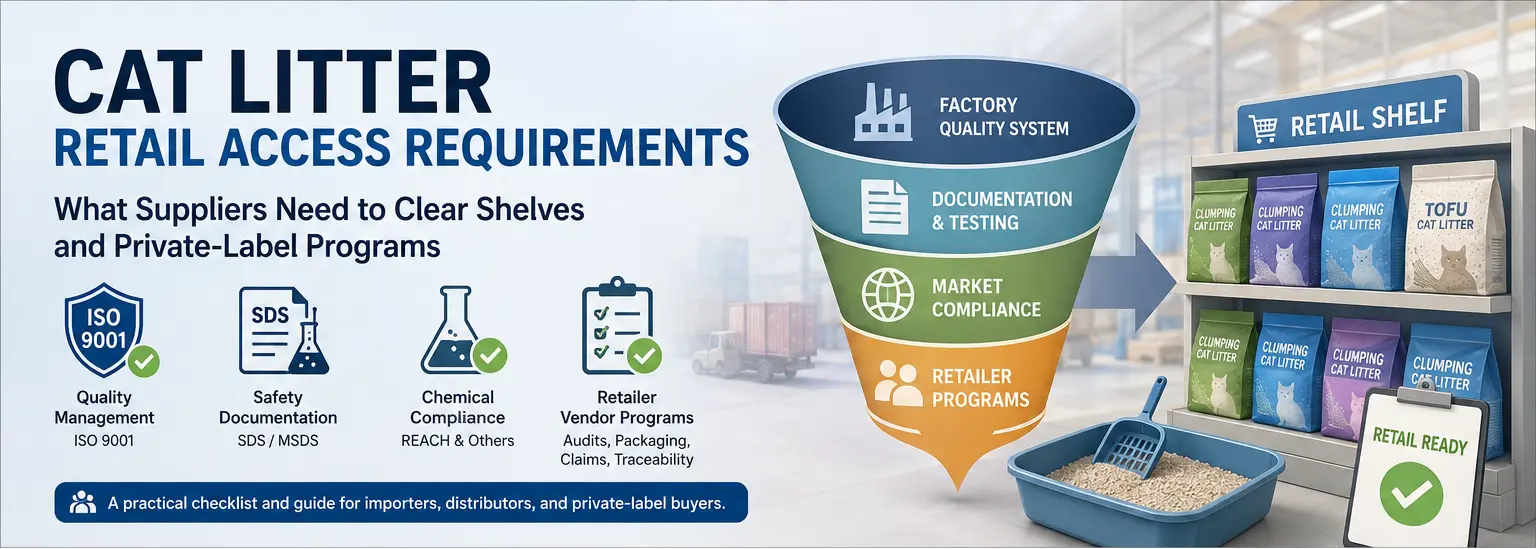
Verify Certifications and Compliance Before Cooperation
Certifications provide one of the easiest ways to distinguish professional manufacturers from unqualified suppliers.
Before placing large orders, buyers should verify all relevant certifications and business qualifications.
A trustworthy cat litter supplier should be transparent about documentation and willing to provide supporting evidence when requested.
Business Registration and Manufacturing Qualifications
The first step is verifying the supplier’s legal status.
Buyers should confirm:
- Valid business license
- Manufacturing registration
- Factory ownership or lease documentation
- Environmental compliance records
- Export qualifications where applicable
This helps eliminate trading companies that may not have direct control over production.
Working directly with a genuine cat litter factory generally provides better quality control, communication efficiency, and cost transparency.
Company history is also important.
Manufacturers with several years of operating experience often have more mature management systems and stronger resistance to market fluctuations.
Quality Management Certifications
Professional manufacturers typically maintain internationally recognized management systems.
The most common certifications include:
ISO 9001
ISO 9001 focuses on quality management processes.
It helps ensure that production procedures are standardized, documented, and continuously improved.
For buyers, ISO 9001 certification often indicates greater consistency between production batches.
ISO 14001
ISO 14001 focuses on environmental management.
This certification demonstrates that the manufacturer follows environmental regulations and operates sustainable production processes.
As environmental standards become increasingly important worldwide, this certification can provide additional confidence for importers and distributors.
Product Safety and Export Certifications
For international markets, compliance documentation is essential.
Depending on the destination market, buyers may require:
- SGS testing reports
- MSDS documentation
- Product safety reports
- Heavy metal testing results
- Microbiological testing reports
These documents help verify that products meet regulatory requirements and can be exported smoothly.
A reliable cat litter manufacturer should be able to provide updated testing reports upon request rather than relying on outdated documentation.
Evaluate Raw Material Quality and Supply Stability
Raw materials play a critical role in determining cat litter performance.
Dust levels, clumping strength, absorbency, odor control, and safety all begin with raw material quality.
Regardless of whether the product is bentonite cat litter, tofu cat litter, or a blended formula, sourcing standards directly affect the final product.
Stable Raw Material Supply Chains
High-quality manufacturers establish long-term relationships with reliable suppliers.
For bentonite products, this may include partnerships with qualified mining operations.
For tofu cat litter production, manufacturers often work closely with agricultural processing suppliers to ensure stable access to food-grade plant-based materials.
A dependable cat litter supplier should be able to demonstrate traceability throughout the sourcing process.
Traceable supply chains reduce quality fluctuations and improve long-term consistency.
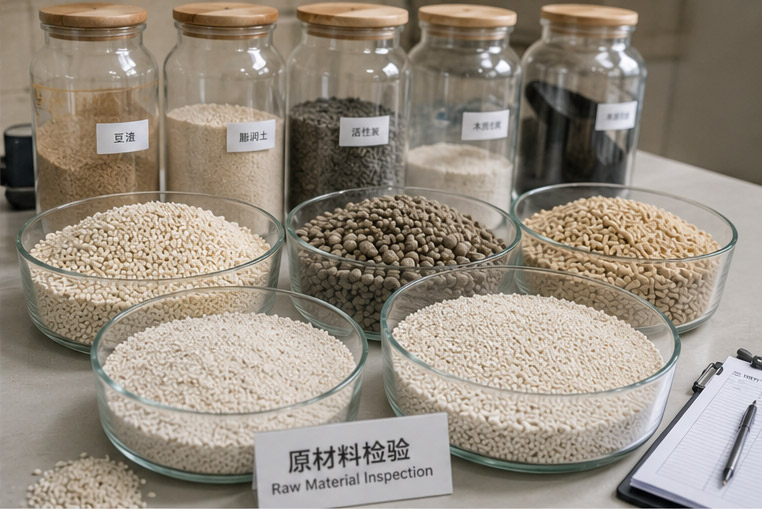
Incoming Raw Material Inspection
Reliable manufacturers inspect raw materials before they enter production.
Common inspection procedures include:
- Moisture testing
- Impurity analysis
- Particle size evaluation
- Microbial screening
- Safety testing
For tofu cat litter, manufacturers should monitor mold risks and contamination.
For bentonite cat litter, moisture levels and mineral consistency are especially important.
Strong raw material controls help prevent many quality problems before production even begins.
Assess Production Capacity and Manufacturing Capabilities
Production capacity directly affects a supplier’s ability to fulfill orders consistently.
This becomes especially important during peak sales seasons when demand increases significantly.
Manufacturers with limited capacity may struggle to maintain delivery schedules, causing inventory shortages for customers.
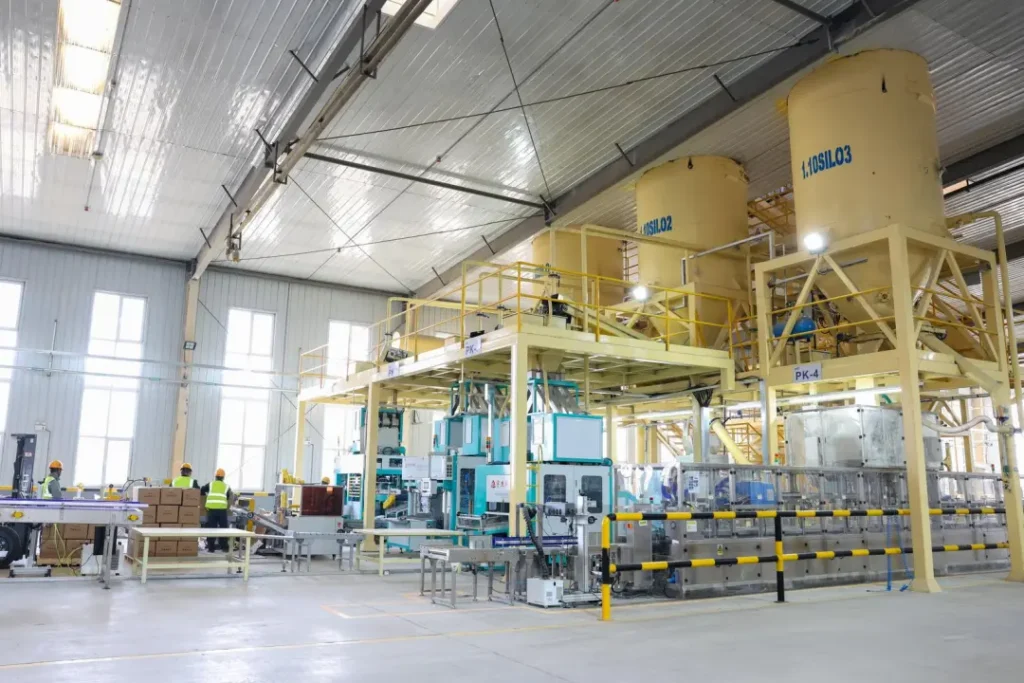
Factory Layout and Infrastructure
A professional cat litter factory should maintain separate areas for:
- Raw material storage
- Production
- Screening
- Packaging
- Finished goods storage
This separation reduces contamination risks and improves operational efficiency.
Well-organized facilities also demonstrate a stronger commitment to quality management.
When possible, buyers should request factory photos, videos, or on-site audits to verify production conditions.
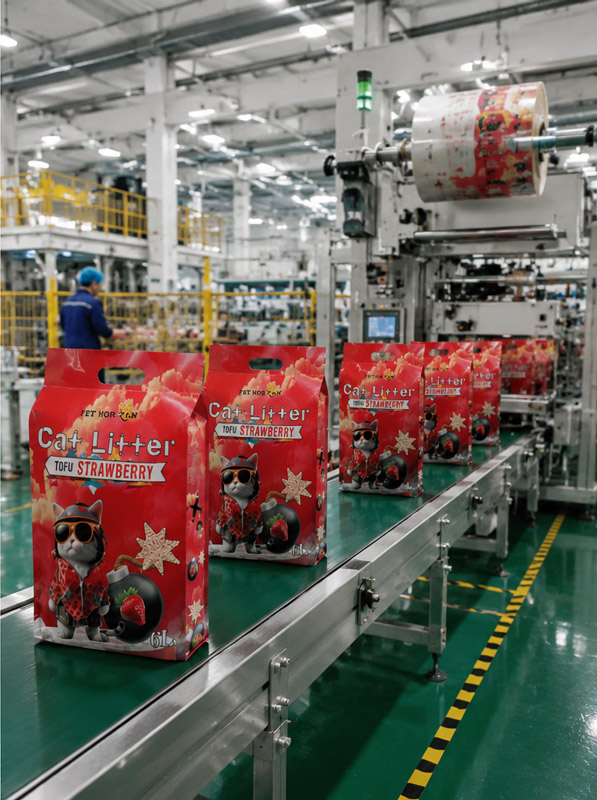
Automated Production Equipment
Modern production lines help improve consistency while reducing human error.
Key equipment may include:
- Automated batching systems
- Multi-layer screening equipment
- Dust collection systems
- Drying equipment
- Automated packaging lines
Automation helps ensure consistent particle size, moisture content, and product performance across large production volumes.
For buyers seeking long-term partnerships, equipment investment is often a strong indicator of manufacturer reliability.
Research and Development Capabilities
Consumer preferences continue to evolve.
Growing demand for:
- Low-dust cat litter
- Flushable cat litter
- Mixed cat litter formulas
- Activated carbon cat litter
- Natural cat litter
has created opportunities for innovation.
An experienced OEM cat litter manufacturer should have the ability to develop customized products based on market demand.
R&D capabilities become especially valuable for private label brands looking to differentiate themselves from competitors.
OEM and Private Label Cat Litter Services
Customization has become a major competitive advantage in the pet products industry.
Many retailers and distributors now seek unique products that help distinguish their brands from generic offerings.
A professional manufacturer should support:
- Formula customization
- Fragrance options
- Particle size adjustment
- Packaging design
- Private label branding
- Custom bag printing
For businesses building long-term brands, choosing a manufacturer with strong OEM and private label capabilities can significantly improve market competitiveness.
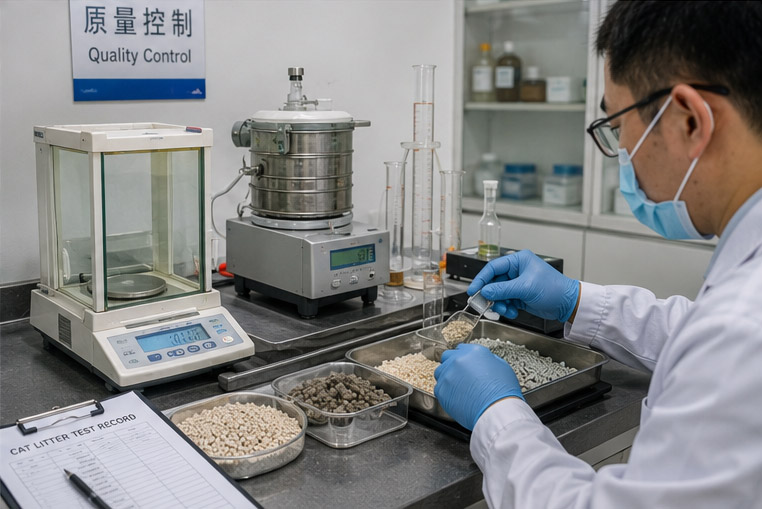
Implement a Comprehensive Cat Litter Quality Control System
Even when a manufacturer uses high-quality raw materials and advanced equipment, product consistency cannot be guaranteed without a robust quality control system.
A reliable cat litter manufacturer should implement quality inspections throughout the entire production process rather than relying solely on final product testing.
The most effective manufacturers typically follow a three-stage quality control framework:
- Incoming raw material inspection
- In-process production monitoring
- Finished product testing before shipment
This systematic approach helps minimize quality variations and ensures stable product performance across different batches.
Real-Time Production Monitoring
During production, quality control personnel should continuously monitor critical parameters.
These may include:
- Moisture content
- Particle size consistency
- Dust levels
- Clumping performance
- Product density
- Drying temperature
Modern production facilities often use automated monitoring systems to identify deviations before they affect large production volumes.
By detecting problems early, manufacturers can make immediate adjustments and reduce waste while maintaining consistent quality standards.
For buyers evaluating a cat litter factory, understanding how production quality is monitored can provide valuable insight into long-term reliability.
Finished Product Testing Before Shipment
Before products leave the factory, samples should undergo comprehensive testing.
A professional cat litter manufacturer typically evaluates both safety and performance indicators.
Safety testing may include:
- Heavy metal analysis
- Microbiological testing
- Harmful substance screening
Performance testing may include:
- Water absorption rate
- Clumping strength
- Odor control effectiveness
- Dust level evaluation
- Anti-stick performance
Only products that meet established specifications should be approved for shipment.
Factories that lack clear testing standards often struggle to maintain product consistency over time.
Always Test Samples Before Large Orders
One of the most effective ways to evaluate a supplier is through sample testing.
Before committing to large-scale production, buyers should request samples and conduct practical evaluations.
Key testing criteria include:
- Dust generation
- Clumping speed
- Clump firmness
- Odor control performance
- Ease of scooping
- Overall user experience
High-quality cat litter typically forms strong clumps quickly while generating minimal dust during pouring and cleaning.
Sample testing provides direct evidence of product quality and often reveals issues that cannot be identified through documentation alone.
Evaluate OEM Services, Delivery Performance, and After-Sales Support
Product quality is only one aspect of a successful partnership.
Reliable service and consistent delivery performance are equally important for long-term cooperation.
Many supplier relationships fail not because of product defects, but because of communication problems, missed deadlines, and inadequate support.
A professional OEM cat litter manufacturer should provide comprehensive support throughout the entire cooperation process.
Full-Service OEM and Private Label Solutions
For brand owners, customization capabilities are increasingly important.
A capable manufacturer should offer:
- Formula development
- Fragrance customization
- Particle size adjustment
- Packaging design support
- Artwork adaptation
- Private label production
The ability to develop customized products helps businesses differentiate themselves in increasingly competitive markets.
Manufacturers that provide complete OEM solutions can significantly reduce product development time and simplify supply chain management.
If your target market values eco-friendly products, customized formulations may also support the growing demand for sustainable cat litter solutions.
Stable Production Scheduling and Delivery
Delivery reliability directly affects inventory planning and customer satisfaction.
When evaluating a wholesale cat litter supplier, buyers should investigate:
- Monthly production capacity
- Peak-season performance
- Average lead times
- Export experience
- Container loading capability
Experienced manufacturers typically establish clear production schedules and allocate resources efficiently to prevent delays.
For international buyers, suppliers with extensive export experience often provide smoother logistics coordination and better documentation support.
Reliable delivery performance becomes especially valuable during seasonal sales peaks when inventory shortages can result in lost revenue.
Responsive After-Sales Service
Even with strict quality control, occasional issues may occur during transportation or storage.
A reliable cat litter supplier should provide clear after-sales procedures for handling:
- Damaged packaging
- Shipping losses
- Quality concerns
- Product replacement requests
- Documentation support
Strong after-sales service demonstrates a manufacturer’s commitment to long-term cooperation rather than short-term transactions.
For growing brands, this level of support can significantly reduce operational stress and improve overall supply chain efficiency.
Investigate Market Reputation and Customer Feedback
Past performance often provides the most accurate indication of future reliability.
Before selecting a manufacturer, buyers should carefully investigate market reputation and customer experiences.
A supplier’s track record can reveal strengths and weaknesses that may not be visible during initial discussions.
Review Existing Customer Cases
Experienced manufacturers typically cooperate with:
- Pet product distributors
- Private label brands
- Retail chains
- E-commerce sellers
- International importers
Ask potential suppliers to provide examples of previous projects or markets they currently serve.
While confidentiality agreements may limit what can be shared, reputable manufacturers are usually willing to discuss relevant experience.
Long-term relationships with established customers often indicate consistent product quality and dependable service.
Gather Independent Market Feedback
In addition to information provided by suppliers, buyers should seek independent opinions whenever possible.
Useful information sources may include:
- Industry trade shows
- Professional sourcing platforms
- Business networks
- Industry associations
- Existing customers
Pay particular attention to feedback regarding:
- Product consistency
- Delivery reliability
- Communication efficiency
- Problem-solving ability
- Long-term cooperation experience
Consistent positive feedback across multiple sources is usually a strong indicator of supplier reliability.
Reliable vs Unreliable Cat Litter Manufacturer
| Evaluation Factor | Reliable Manufacturer | Unreliable Supplier |
|---|---|---|
| Certifications | Verified and up-to-date | Missing or incomplete |
| Raw Materials | Traceable sourcing | Unclear origin |
| Production Equipment | Modern and automated | Outdated or manual |
| Quality Control | Multi-stage inspection | Limited testing |
| Product Consistency | Stable across batches | Frequent fluctuations |
| OEM Services | Comprehensive customization | Limited capabilities |
| Delivery Performance | Consistent and predictable | Frequent delays |
| Customer Support | Responsive and professional | Slow or inconsistent |
This comparison provides a practical framework for supplier evaluation.
Conclusion
As the global pet industry continues to expand, product quality and supply chain reliability have become increasingly important competitive factors.
Choosing a reliable cat litter manufacturer should never be based solely on price. While low-cost suppliers may appear attractive initially, inconsistent quality and operational risks often result in higher long-term costs.
The most successful buyers evaluate suppliers from multiple perspectives, including:
- Certifications and compliance
- Raw material sourcing
- Manufacturing capabilities
- Quality control systems
- Product performance
- OEM customization services
- Delivery reliability
- Market reputation
A dependable cat litter manufacturer does more than produce cat litter. It becomes a strategic partner that supports brand growth, improves customer satisfaction, and helps businesses build sustainable competitive advantages.
Buyers who want to better understand end-user preferences should also consider factors such as odor control performance, dust reduction, and clumping strength when evaluating products. For example, learning what makes the best cat litter for odor control can help businesses select products that meet consumer expectations.
By applying the evaluation framework outlined in this guide, importers, wholesalers, distributors, and private label brands can reduce sourcing risks and establish long-term partnerships with suppliers capable of supporting future growth.
FAQ
How do I verify a cat litter manufacturer’s certifications?
Request copies of relevant certifications such as ISO 9001, ISO 14001, SGS reports, and business licenses. Verify authenticity through certification bodies whenever possible.
What certifications should a cat litter factory have?
Common certifications include ISO 9001, ISO 14001, SGS testing reports, MSDS documentation, and other product safety certifications required by target export markets.
What is the difference between OEM and private label cat litter?
OEM manufacturing involves producing products according to a buyer’s specifications, while private label products are typically based on existing formulas and sold under the buyer’s brand name.
How can I evaluate cat litter samples effectively?
Test dust levels, clumping speed, clump firmness, odor control performance, and overall ease of cleaning. Compare results across multiple suppliers before making a decision.
What is a typical MOQ for OEM cat litter orders?
Minimum order quantities vary by manufacturer, packaging requirements, and product type. Most OEM projects require higher MOQs than standard stock products.
How long does cat litter production usually take?
Production lead times typically range from 15 to 45 days depending on order size, customization requirements, and seasonal demand.
Can manufacturers customize packaging and formulations?
Yes. Many professional OEM cat litter manufacturers offer customized formulas, fragrances, particle sizes, packaging designs, and private label branding services.
Why is quality control important in cat litter manufacturing?
Effective quality control ensures product consistency, reduces customer complaints, improves brand reputation, and minimizes supply chain risks.