

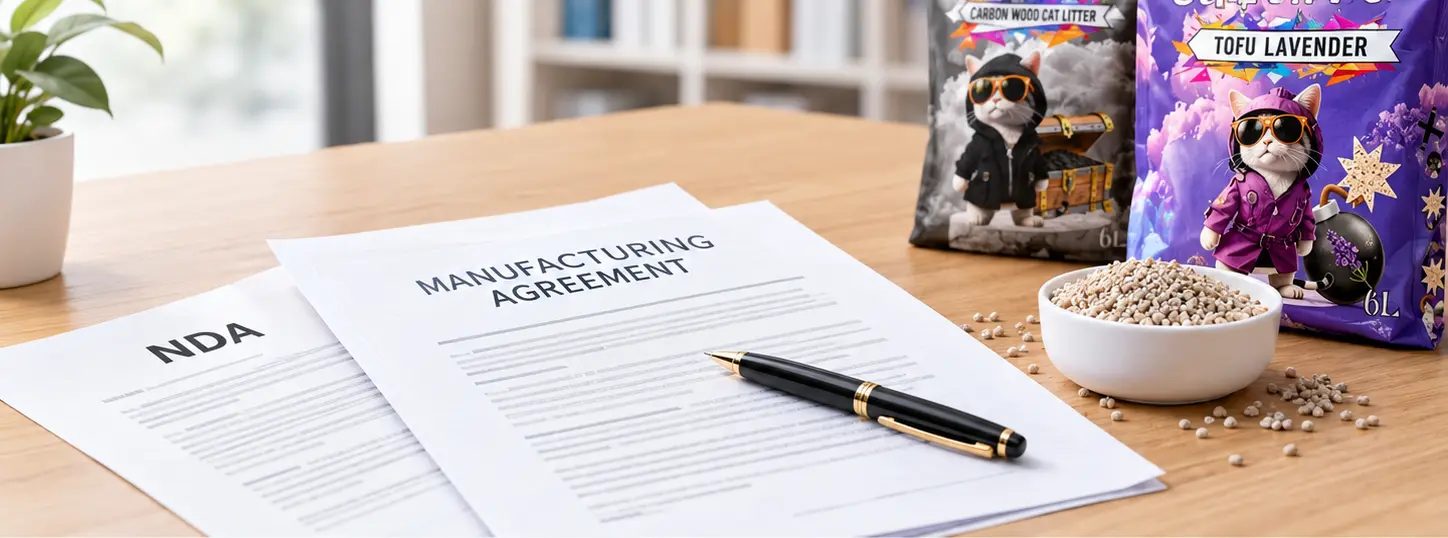
A cat litter OEM contract defines the responsibilities of a manufacturer and a brand owner beyond the price and quantity listed on an order. For importers sourcing tofu cat litter, bentonite cat litter, or custom-formulated products, the agreement should cover product specifications, intellectual property, quality inspection, delivery commitments, packaging artwork, and remedies for non-conforming goods. Before placing the first order, buyers should clarify which terms apply across the ongoing relationship and which must be confirmed for each shipment. Pet Horizon’s OEM cat litter manufacturing service provides a starting point for discussing production scope and private-label requirements.
A cat litter OEM contract should define 10 areas: product specifications and acceptance criteria, IP and development rights, exclusivity, confidentiality, MOQ and lead time, inspection procedures, defect and delay remedies, compliance documentation, payment and delivery terms, and change control with termination arrangements. Minimum reorder commitments should be included only when commercially agreed. The contract should also explain how purchase orders and product-specification schedules relate to the main agreement.
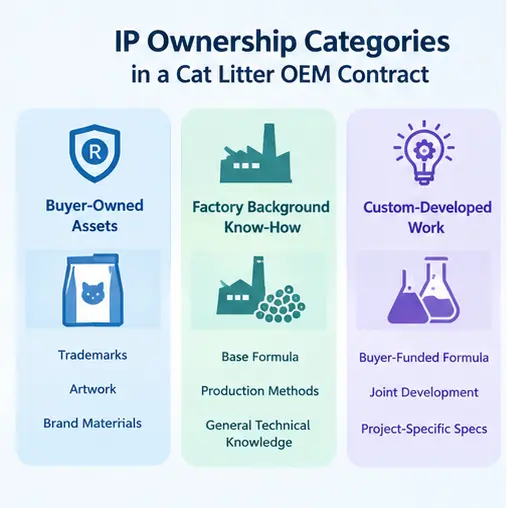
In this guide, an OEM cat litter agreement means a manufacturing arrangement in which the buyer specifies or co-develops the product, packaging, or other requirements. A private-label cat litter agreement may use an existing factory formula sold under the buyer’s brand, although the buyer can also request customization. The distinction depends on the actual scope of development and the rights agreed by both parties, not simply on the label used for the arrangement. In either case, the contract should identify pre-existing factory know-how, buyer-provided materials, jointly developed work, and any exclusive rights separately.
Why a Proforma Invoice Is Not a Complete OEM Agreement
A proforma invoice usually records the commercial terms of a particular order, such as product, quantity, price, and payment arrangements. It may not adequately address recurring production obligations, ownership of packaging artwork, confidentiality, quality disputes, or responsibility for unauthorized specification changes. A written manufacturing agreement can establish the rules for the ongoing relationship, while each purchase order or proforma invoice confirms the details of a specific shipment. The documents should identify which terms prevail if they conflict, so a later order does not unintentionally override an agreed quality or intellectual-property provision.
Before signing, agree on who is responsible for product specifications, testing records, packaging information, and destination-market compliance. The manufacturer should provide the agreed technical data and supporting documents within its control; the importer and brand owner should coordinate destination-market requirements with qualified compliance advisers and ensure that required information is reflected in the product and packaging. These contractual allocations do not automatically remove any legal duties imposed on either party. For cat litter shipments, the agreement should specify who checks the label, who supplies supporting test reports, who approves the final artwork, and who must act if a regulatory issue is identified before shipment.
The Clause Table: What to Put in Writing
The table below maps each clause to what the contract should define and the protection a buyer should aim for. It is the spine of this guide; the notes after it explain each row.
| Clause | What to define | Buyer protection |
|---|---|---|
| Product specifications | Formula, composition, particle size, moisture, clumping, dust, odor and packaging, as applicable | A measurable acceptance baseline |
| IP and development rights | Trademarks, artwork, buyer-funded development, background know-how and permitted use | Clear ownership and usage rights |
| Exclusivity | Territory, SKU, channels, duration and exceptions | A defined scope rather than vague exclusivity |
| Confidentiality | Protected information, permitted disclosures and survival period | Protection of business and technical information |
| MOQ and lead time | SKU-level MOQ, production lead time, order confirmation and delay notification | More predictable ordering |
| Inspection and acceptance | Sampling, test methods, inspection timing and dispute procedure | Evidence-based quality decisions |
| Defects and delays | Corrective action, replacement, credit, refund and agreed remedies | A defined response to non-performance |
| Compliance documentation | Test reports, document ownership, label approval and market-specific responsibilities | Clear documentation and approval duties |
| Payment, delivery and termination | Payment milestones, Incoterms, governing law, dispute resolution and exit arrangements | Defined commercial and dispute procedures |
| Change control | Formula, raw materials, production process, artwork and packaging changes | Consistency across production runs |
Clause-by-Clause Notes
The notes below explain each clause, framed as commercial best practice rather than legal advice.
Product Specifications and Acceptance Criteria
The product specification should be an agreed schedule to the cat litter OEM contract, not just a product name or a general description such as “premium tofu cat litter.” Depending on the litter type, define relevant parameters such as raw-material composition, particle size, moisture content, dust or fines, clumping performance, odor, net weight, and packaging integrity. Record the applicable test methods, acceptance limits, sampling procedure, and approved reference sample where appropriate. For tofu cat litter, bentonite cat litter, and mixed formulations, the criteria should reflect the actual product rather than use one generic checklist for every SKU. Both parties should approve the specification before production, and any revision should follow the contract’s change-control procedure.
IP and Development Rights
The contract should distinguish between the buyer’s brand assets, the factory’s pre-existing know-how, and any new work developed for the project. The buyer should retain ownership of its trademarks and original packaging artwork, subject to the actual rights agreed for commissioned design work. A factory may retain its pre-existing formula, production methods, and general technical knowledge, while a buyer-funded or jointly developed formula may require separate ownership, licensing, or exclusivity terms. Define whether the manufacturer may reuse project-specific specifications or disclose them to other customers, and identify any permitted use after the agreement ends. For product-specific discussions, Pet Horizon’s tofu cat litter range provides a relevant starting point for defining the product and packaging scope.
Exclusivity: Territory, SKU, and Channels
Exclusivity works only when the agreement defines exactly what is exclusive. Specify the territory, product or formula code, sales channels, duration, and whether the restriction applies to direct sales, distributors, online marketplaces, or all agreed channels. Separately state whether the factory may continue selling its existing standard formula under other brands. If the buyer requires exclusivity for a custom formula or project-specific specification, define the protected elements and permitted exceptions rather than relying on a general promise not to supply competitors.
NDA and Confidentiality
A confidentiality clause should identify the information protected, how it may be used, who may receive it, and what happens when the business relationship ends. Depending on the project, protected information may include custom specifications, packaging artwork, forecasts, pricing, customer details, and unpublished product-development work. The agreement should address exclusions for information already public or independently developed, disclosures required by law, and the handling or return of confidential materials after termination. Set an appropriate survival period, with trade secrets protected for as long as they qualify for protection under the applicable law.
MOQ and Lead Time
For each cat litter SKU, define the minimum order quantity, the conditions for confirming an order, and the lead time from an agreed starting point, such as receipt of the deposit, approval of packaging artwork, or completion of another specified prerequisite. Distinguish a forecast from a binding purchase order, and state how the parties will handle changes in order quantity or requested shipment dates. The framework agreement can establish the general rules, while the confirmed purchase order records the quantity, price, production schedule, and shipment details for each run. For Pet Horizon buyers, the relevant MOQ should be confirmed against the selected litter type, packaging format, and customization scope rather than assumed to be the same for every product.
Third-Party Inspection Rights
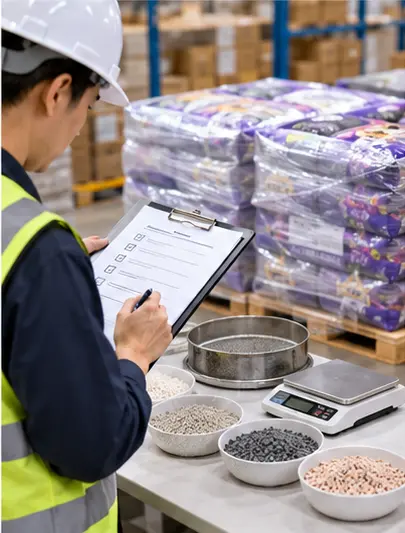
The contract should define when inspection may take place, which party appoints and pays the inspector, what sampling plan applies, and how the parties resolve disputed results. For cat litter, the agreed inspection checklist may cover moisture content, particle-size distribution, fines or dust, clumping performance, odor, packaging weight, seal integrity, and visible damage, depending on the product type. Specify the test method, sample preparation, acceptance limits, and whether an independent laboratory or inspector may be used when results are disputed. AQL can support attribute-based sampling for suitable defects, but it should not replace product-specific performance criteria or a separately agreed testing method. ISPM 15, where applicable, concerns regulated wood packaging material used in international trade, not the cat litter itself.
Defect Liability, Delivery Delays, and Force Majeure
Define the process for late delivery and non-conforming goods, including written notice, supporting evidence, any agreed cure period, and available remedies such as rework, replacement, credit, or refund. State how inspection results will be evaluated and who bears the cost of repeat testing when the parties disagree. Any liquidated damages, service credits, liability caps, or exclusions should be drafted for the governing law and transaction rather than copied from a generic template. A force majeure clause should identify qualifying events, notice requirements, mitigation duties, the effect on affected obligations, and when either party may terminate after prolonged disruption. Ordinary cost increases should be addressed through pricing and change-control provisions instead of being automatically treated as force majeure.
Compliance Documentation and Market Responsibilities
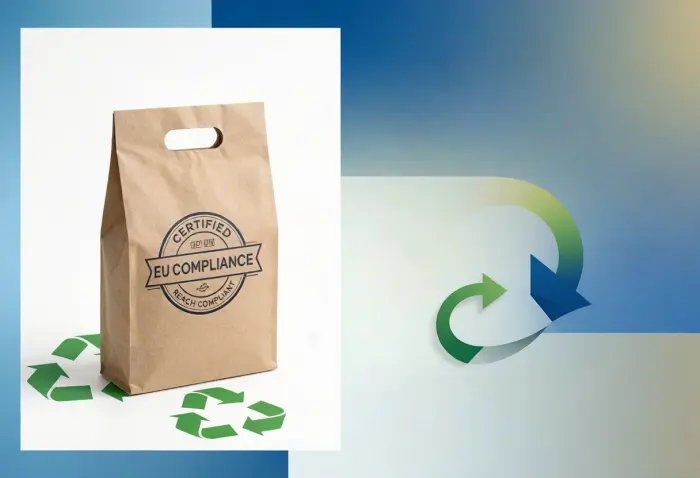
The agreement should list the documents the manufacturer must provide, such as agreed product specifications, relevant test reports, material information, and available facility or social-audit records. BSCI and SMETA are associated with social-compliance assessments, while SGS is a testing, inspection, and certification provider; none should be described generically as a universal cat litter product approval. The importer and brand owner should verify which product, packaging, labeling, and environmental-marketing requirements apply in each destination market, while the manufacturer supplies the information and cooperation assigned to it in the contract. For EU-bound products, assess the Packaging and Packaging Waste Regulation (EU) 2025/40 for applicable packaging obligations. Where product packaging or marketing makes environmental claims, also review the relevant national measures implementing Directive (EU) 2024/825, which apply from 27 September 2026. These instruments address different regulatory areas, and their specific requirements depend on the product, packaging, claims, and applicable provisions. Confirm the obligations relevant to the intended market before approving the final artwork or shipment.
Minimum Reorder Obligation
A minimum reorder obligation is optional, not a standard requirement for every OEM relationship. If the factory needs a recurring volume commitment to support dedicated production arrangements, define the quantity, measurement period, covered SKUs, and consequences of falling short. Include exceptions for prolonged supply disruption, material quality failures, regulatory changes, and mutually agreed discontinuation where appropriate. Do not leave the buyer responsible for indefinite purchases after a product has been withdrawn or the manufacturer can no longer meet the agreed specification.
Change Control and Contract Termination
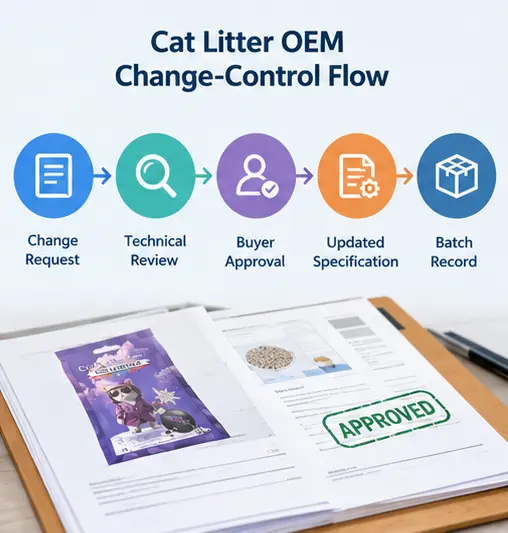
Require written approval before a material change to the agreed formula, raw-material source, fragrance, particle-size specification, production process, packaging material, bag weight, or approved artwork. The agreement should distinguish changes that require buyer approval from minor changes that may be handled through an agreed notification process. For example, a change in bentonite source may affect particle size or clumping, while a change to tofu litter ingredients or fragrance may affect odor, moisture, or product performance. Record the revised specification, approval date, and effective production batch so the parties can trace which version was supplied. Any emergency change proposed for safety or legal reasons should follow a separately agreed notification and approval procedure.
Negotiation Checklist: What to Lock Before Signing
Before signing a cat litter OEM agreement, confirm that the final contract or its referenced schedules cover the following:
- Product specification: Approved formula or product description, measurable acceptance criteria, test methods, and tolerance limits.
- IP and development rights: Ownership of trademarks and artwork, treatment of pre-existing know-how, and rights to custom-developed work.
- Exclusivity: Territory, covered SKUs, channels, duration, and written exceptions.
- Confidentiality: Protected information, permitted disclosures, and post-termination obligations.
- MOQ and lead time: SKU-level minimums, order-confirmation conditions, lead-time starting point, and delay notifications.
- Inspection and acceptance: Sampling plan, inspection timing, independent testing, and disputed-result procedures.
- Defects and delays: Corrective action, replacement or credit options, agreed damages where appropriate, and force majeure procedures.
- Compliance documents: Required test reports, packaging information, label approval, and allocated compliance tasks.
- Payment and delivery: Payment milestones, shipment terms, applicable Incoterms, governing law, and dispute forum.
- Change control and termination: Written approval rules, transition arrangements, and treatment of unfinished orders and remaining packaging materials.
If the parties agree to minimum recurring volumes, record those commitments separately with a defined period, exceptions, and consequences for non-performance.
Payment Terms and Incoterms
Payment terms and Incoterms should be documented alongside the manufacturing obligations, with each term serving a distinct purpose. The contract or purchase order should specify the deposit, balance-payment trigger, required shipping documents, delivery term, and named place or port where applicable. Do not assume that every cat litter export transaction uses the same deposit ratio or balance-payment arrangement. When using Incoterms, identify the agreed rule and version, and ensure that the delivery point, allocation of transport costs, and transfer of risk are understood by both parties. Payment obligations, title to goods, inspection rights, and remedies for non-conforming products should be addressed separately where necessary.
The agreement should also define termination triggers, notice requirements, and the treatment of confirmed orders already in production. Where relevant, address payment for completed goods, unused buyer-owned packaging, tooling, confidential materials, and the transfer or deletion of project files. State which obligations survive termination, including outstanding payments, confidentiality, intellectual-property restrictions, and any agreed dispute-resolution provisions.
Conclusion
A well-drafted cat litter OEM contract should connect the agreed product specification with the commercial terms for every order. For importers sourcing tofu cat litter, bentonite cat litter, or customized private-label products, the practical priorities are clear acceptance criteria, defined IP and usage rights, controlled specification changes, documented inspection procedures, and agreed remedies when supply does not meet the contract. Use the framework agreement to establish ongoing responsibilities and the purchase order to confirm each production run. Before signing, have qualified counsel review the governing law, liability provisions, and dispute-resolution mechanism. To compare the available production models, see Pet Horizon’s OEM vs. private-label cat litter guide and explore its custom cat litter formula OEM service.
Frequently Asked Questions
Yes. The agreement should identify the governing law and dispute-resolution forum, including any agreed arbitration mechanism. The appropriate choice depends on the parties, transaction, enforcement considerations, and applicable law, so obtain legal advice before signing.
Set a defined period appropriate to the information being protected. Trade secrets may require protection for as long as they remain legally protected, while other confidential business information may be subject to a fixed survival period. The agreement should also state any permitted disclosures and exceptions.
The parties can agree that the buyer, manufacturer, or both share the cost. The contract should also specify who pays for repeat inspection or laboratory testing if the shipment fails the agreed criteria or the initial results are disputed.
That depends on the factory’s pre-existing rights and the agreement. A factory may retain rights to its standard formula while granting exclusivity over a defined custom formula, SKU, or territory. Identify the protected elements and any exceptions explicitly.
The contract should state which changes require prior written approval and what happens if an unauthorized change is discovered. Depending on the agreed terms and applicable law, possible responses may include further testing, corrective action, replacement, a credit, or other contractual remedies.
Not automatically. A manufacturer may supply product specifications, relevant test reports, and available facility or social-audit documentation, but these do not by themselves establish compliance with every destination-market requirement. The parties should agree who supplies each document, who reviews packaging and labeling, and who coordinates market-specific compliance checks.