

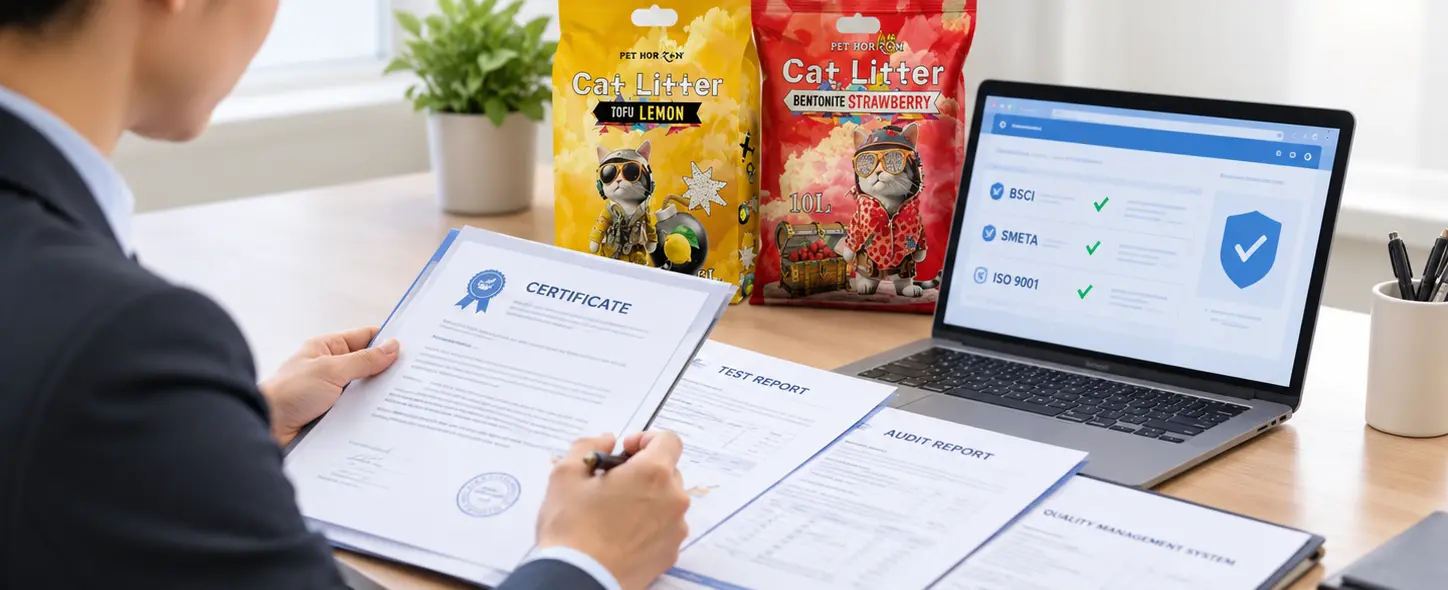
When evaluating a cat litter manufacturer, importers and private-label buyers need more than a folder of certificates. They need to know whether the documents cover the actual production site, whether test results match the proposed litter formulation, and whether the evidence meets their customer’s requirements. This guide explains how to assess social audits, quality-management certificates, product test reports, and market-specific compliance documents before approving a supplier or placing a bulk order.
For cat litter sourcing, buyers should distinguish three types of evidence: social-compliance audits such as amfori BSCI and SMETA; product-specific test reports from a competent third-party laboratory; and management-system certificates such as ISO 9001. FSC or PEFC chain-of-custody certification may be relevant to wood-based litter, while EU REACH and CLP obligations depend on the product, its ingredients, and the applicable regulatory requirements. Verify each document’s scope, issuing organization, site or product identity, and validity where applicable. No single certificate proves that every cat litter product or shipment meets your requirements.
Before we go further, a definition of scope. In this guide, “cat litter certifications” is used as a broad sourcing term. It covers three distinct types of evidence: social-compliance audit records, product-specific laboratory test reports, and management-system certificates. These documents serve different purposes and should not be treated as interchangeable. Regulatory compliance documents and chain-of-custody evidence may also be relevant, depending on the product and destination market.
The Core Principle: A Supplier Claim Is Not a Certificate
The single most expensive mistake in cat litter sourcing is treating a supplier’s written claim as a verified credential. A sentence in a quotation such as “our factory is BSCI certified” proves nothing until you hold the audit report, read the site address, and confirm the validity period. The same applies to product claims: “low dust” or “premium bentonite” are marketing language until a named laboratory reports the parameter against a defined method.
Each certificate category below answers a different question: who audited the site, what was tested, which standard applies, and who owns the obligation. Map each document to the risk it reduces, and reject any certificate you cannot authenticate.
Which Certifications Actually Matter for Cat Litter Sourcing
Not every website logo belongs in your due-diligence file. The categories below cover the credentials a buyer should recognize, request, and verify when sourcing private-label or wholesale cat litter. For a structured approach to building a private-label program, review our private-label cat litter service page, or explore our cat litter OEM manufacturing options for custom production.
amfori BSCI: Social Compliance at the Factory
amfori BSCI is a supply-chain monitoring system used to assess working conditions and social compliance at a production site. It does not certify cat litter composition, dust performance, clumping ability, or product safety.
For a cat litter importer or private-label buyer, the key questions are whether the audited site is the factory involved in your order, what the latest monitoring results show, and whether any corrective actions remain open. Request the relevant audit information and confirm its status through the appropriate amfori or buyer-access channel. Do not assume that every BSCI assessment follows the same validity period; monitoring cycles depend on the applicable rules and results.
SMETA: A Social Audit Report, Not a Product Certificate
SMETA is a social-audit methodology developed by Sedex. Depending on the audit scope, it assesses labour standards, health and safety, environmental performance, and business ethics at a specific site. It does not test cat litter or automatically certify a supplier as compliant with every buyer requirement.
Ask for access to the relevant audit report and corrective action plan. Check the audited legal entity and site, audit date, audit scope, findings, and follow-up status. A summary page or a supplier’s claim of being “SMETA certified” is not a substitute for reviewing the actual audit evidence. Confirm that the report can be accessed and shared through the appropriate Sedex process.

Third-Party Cat Litter Testing: Match the Report to the Product
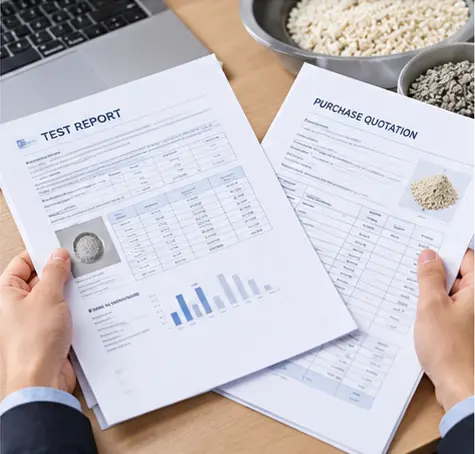
A third-party laboratory report can help buyers assess whether a specific cat litter sample meets agreed product specifications. SGS is one possible testing provider; other competent laboratories may also be suitable. The laboratory name alone does not establish that a report covers every relevant safety or performance requirement.
Define the test scope before ordering samples. Depending on the litter material and intended market, this may include moisture, particle-size distribution, dust or fines, clumping performance, or selected chemical and microbiological parameters where relevant. Check the test method, units, acceptance limits, sample description, test date, and laboratory credentials for the relevant methods. Confirm whether the sample represents the proposed commercial product and whether the report applies to a specific batch or only to a submitted sample. A sample test does not guarantee that future shipments will perform identically.
Testing Priorities Differ by Cat Litter Material
The right test plan depends on the litter material and the product specification, not simply on the supplier’s certificate portfolio.
- Tofu cat litter: Buyers may prioritize moisture, particle integrity, dust and fines, water absorption, clumping behaviour, and any relevant microbial or chemical tests based on the formulation and destination market.
- Bentonite cat litter: Relevant checks may include particle-size distribution, dust and fines, moisture, clumping performance, and selected mineral or chemical parameters where required by the specification.
- Pine cat litter: Buyers may need to assess particle consistency, moisture, dust, and other material-specific requirements. Forest chain-of-custody evidence, where applicable, addresses sourcing claims rather than finished-product performance.
These are potential testing priorities, not a universal mandatory test list. Agree on the methods, acceptance limits, and sampling plan before testing. A manufacturer should be able to explain how the proposed test plan relates to the exact product being supplied.
ISO 9001: A Quality-Management System, Not a Product Certificate
ISO 9001 specifies requirements for a quality management system, which may be independently certified by an eligible certification body. A valid certificate applies to the organization and scope stated in the document; it does not certify every cat litter product or guarantee that a specific batch meets agreed performance or safety specifications.
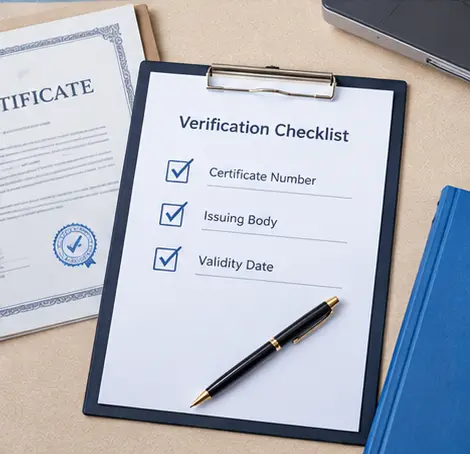
For buyers, verify the certificate holder, covered site or sites, scope, validity, and issuing certification body. Use ISO 9001 as one part of supplier due diligence, alongside product-specific testing and batch quality controls.
FSC / PEFC: Forest-Sourcing Evidence Where Applicable
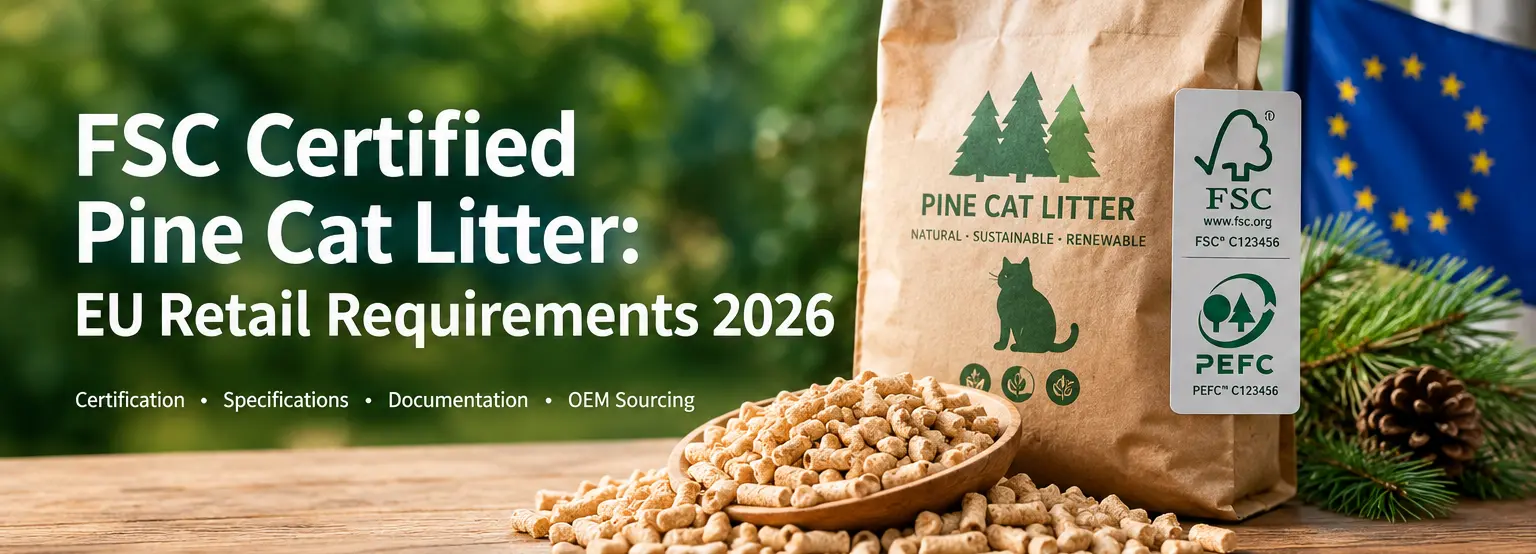
FSC and PEFC chain-of-custody certification may be relevant when a wood-based cat litter product or its supply chain makes claims covered by the applicable scheme. Buyers should verify the certificate holder, certified scope, relevant product coverage, and permitted claim before relying on the document.
These schemes address forest-product sourcing and traceability, not finished cat litter performance. They do not establish dust levels, clumping ability, or chemical safety. Their relevance should be assessed against the actual material and sourcing claim rather than assumed for every pine-based product.
EU REACH and CLP: Check Applicability Before Requesting Documents
REACH and CLP are EU chemical regulations (European Commission), not general-purpose cat litter certificates. Their relevance depends on the product’s composition, classification, intended use, and the specific substances or mixtures involved. Do not assume that every finished cat litter product requires REACH registration or that a factory can provide a blanket “REACH certificate” covering all formulations.
Before importing, identify the relevant legal requirements for the exact product and ingredients. Ask the supplier for appropriate composition information, safety data, test results, or other supporting documents where applicable, and establish who is responsible for each regulatory obligation. The EU importer or an eligible only representative may have specific REACH responsibilities depending on the arrangement; CLP classification and labelling obligations must also be assessed where applicable. Guidance from ECHA can help clarify scope. Obtain market-specific advice when the classification or scope is unclear.
Verification Table: What Each Document Establishes and How to Check It
Use this table as a working reference when a supplier sends documents. Match each piece of evidence to what it actually establishes, then run the verification step before you add it to your file.
| Evidence type | What it establishes | What to verify | Common red flags |
|---|---|---|---|
| amfori BSCI | Social-compliance monitoring at a specified site | Site identity, monitoring date, result, status and follow-up requirements | Wrong site, outdated results or missing audit details |
| SMETA / Sedex | Findings from a social audit within a defined scope | Audit scope, site, date, findings and corrective action plan | “SMETA certificate” with no accessible audit report |
| Third-party laboratory report | Results for the submitted sample and specified tests | Laboratory identity, test method, sample details, units, results and applicable limits | Different product formulation, missing methods or unsupported batch claims |
| ISO 9001 | A quality-management system within the certified scope | Certificate holder, covered sites, scope, validity and issuing certification body | Expired certificate or product-quality claims beyond the certified scope |
| FSC / PEFC | Relevant forest-product chain-of-custody claims | Certificate holder, code, scope and applicability to the material or supply chain | Assuming the certificate proves low dust or finished-product safety |
| REACH / CLP documentation | Evidence relevant to specific applicable EU chemical obligations | Product classification, substances, responsible party and required supporting documents | Generic “REACH approved” claim without identifying the product or obligation |
The verification route depends on the evidence type: use the relevant scheme or certification-body channel where available, the laboratory’s report-verification process for test results, and the appropriate regulatory documentation for market-specific obligations. If a public lookup is unavailable, request confirmation through the issuing organization or an authorized platform rather than treating a PDF alone as proof.
Red-Flag Checklist: Spotting Fake or Stale Certificates
Most certificate problems are visible the moment you apply a consistent checklist. Walk every supplier document through the points below, and escalate any item you cannot clear.
- Certificate appears only as an image with no certificate number visible or supplied on request.
- The audit or certificate is outside its applicable validity or monitoring period, or the supplier cannot provide evidence of the required follow-up, renewal, or current status.
- The test report sample name does not match the product you are being quoted.
- A supplier-issued certificate of analysis (COA) is presented as independent third-party verification, but no external laboratory report is available when independent testing is required by the purchase specification or risk assessment.
- The issuing organization, audit firm, or certification body cannot be independently verified, or the document misrepresents the relationship between the scheme owner and the organization that performed the assessment.
- The document has no site address, no audit or issue date, and no stated scope.
- The same certificate file is reused across multiple, unrelated supplier companies.
How to Verify a Cat Litter Supplier Certification: Step by Step
A certificate check should be part of a broader cat litter supplier verification process. For private-label and wholesale orders, buyers need to connect the factory’s audit evidence, the product specification, the laboratory report, and the goods delivered under the purchase order.
- Identify the actual production site. Match the legal entity and factory address on the audit or management-system documents to the facility responsible for your order. If production is outsourced, clarify which site manufactures the product.
- Define the exact litter specification. Record the material type, formulation or grade, particle-size range, moisture limit, dust or fines method, clumping requirements where relevant, packaging format, and acceptance criteria. Avoid using a generic product name as the only identifier.
- Request relevant test evidence. Match the laboratory report to the proposed formulation and sample. Review the methods, results, units, limits, and test date. Ask whether the results apply to a submitted sample or a defined commercial batch.
- Verify the evidence at its source. Use the applicable scheme, certification body, audit platform, or laboratory verification channel. Check scope and current status rather than relying on a logo or document number alone.
- Agree on batch controls before production. Define how the supplier identifies lots, retains samples, records quality checks, handles non-conforming goods, and notifies the buyer of material or formulation changes.
- Confirm destination-market requirements. Identify any applicable chemical, packaging, labelling, or other import requirements for the destination and product. Allocate document preparation and compliance responsibilities in writing.
- Link approval to the purchase order. Specify the approved product, packaging, acceptance limits, required documents, and process for handling deviations. Where risk justifies it, arrange independent pre-shipment inspection or batch testing.
Keep the resulting records alongside your cat litter factory audit checklist and sourcing agreement.
Conclusion
For cat litter importers and private-label buyers, supplier verification is not about collecting the largest number of certificates. It is about matching each document to the risk it can actually address.
Start by confirming the production site’s audit status, then review product-specific test evidence against an agreed specification. Check that the documents cover the correct site, formulation, sample, or batch, and establish which party is responsible for any destination-market compliance requirements. Before placing a production order, agree on batch traceability, change control, and the documents required for shipment approval.
A credible cat litter supplier should be able to explain what each document proves, what it does not prove, and how the evidence relates to the product being supplied. That is a more useful basis for sourcing decisions than a certificate logo on a sales presentation.
For product-specific requirements, review our cat litter products page and discuss the applicable specifications and testing requirements with your supplier.
Frequently Asked Questions
Start with the requirements of your retail customer, importing market, and sourcing agreement. Social-compliance audit evidence, ISO 9001 where relevant, and product-specific third-party test reports address different risks. FSC or PEFC may be relevant to wood-based products, while chemical compliance documents depend on the formulation and destination market.
No. ISO 9001 relates to a quality-management system within a defined scope. It does not demonstrate that a particular cat litter sample or batch meets agreed dust, moisture, clumping, or safety specifications.
No. SMETA is a social-audit methodology, not a pass-or-fail product or factory certification. Buyers should review the relevant audit report, scope, findings, and corrective action plan.
Confirm the issuing laboratory, report reference, sample identity, test methods, results, and applicable limits. Use the laboratory’s verification channel where available. Make sure the report covers the product or sample being evaluated and does not imply untested batches have identical results.
No. FSC relates to responsible forest sourcing and chain of custody within its applicable scope. It does not establish finished-product dust levels, clumping performance, or chemical safety.
First establish which credentials are actually required by your customer or destination market. Where no specific certification is mandatory, assess the factory, define written product specifications, and use appropriate independent testing and batch controls. A missing voluntary credential is not automatically proof that a supplier is unsuitable, but it may mean additional due diligence is needed.