

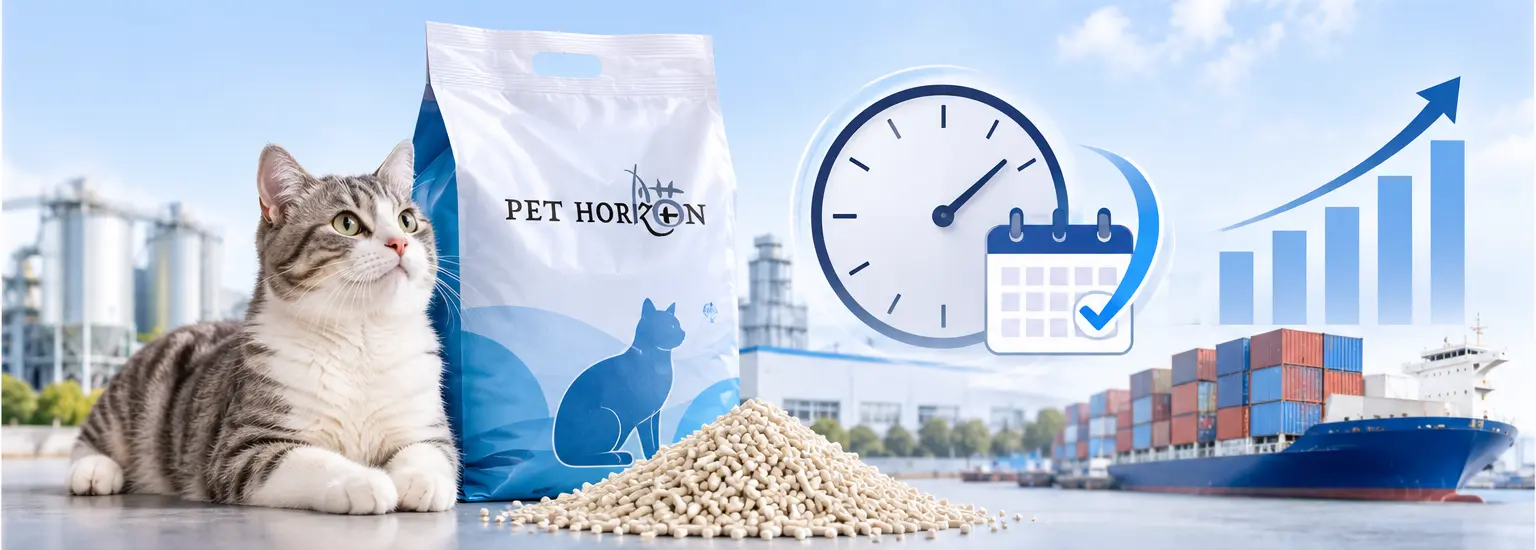
When importers compare cat litter manufacturers, unit price is only one part of the sourcing decision. Production lead time and available factory capacity determine whether an order can arrive in time for a new product launch, a seasonal demand increase, or a scheduled replenishment. For buyers sourcing tofu, bentonite, or pine cat litter through OEM and private label arrangements, understanding how a factory plans materials, production batches, and shipping schedules is essential. This guide explains how to evaluate manufacturing lead time and plan capacity more effectively with a cat litter supplier.
Cat litter manufacturing lead time refers to the time required to prepare and manufacture an order, from confirmed production specifications and scheduling to finished-product inspection. For OEM and private label orders, the overall order-to-shipment timeline may also include sample approval, packaging preparation, export documentation, container loading, and logistics coordination. Importers should distinguish manufacturing time from pre-production preparation and shipping arrangements when planning monthly demand, peak-season orders, and replenishment schedules.
What Lead Time Covers in Cat Litter Production
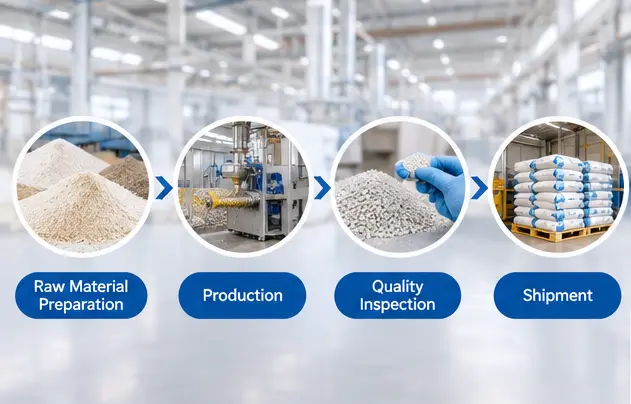
Manufacturing lead time involves much more than the time required to operate production equipment. It includes the coordination of raw materials, production scheduling, processing, quality inspection, and export preparation. For OEM orders, packaging approval and product specification confirmation can also affect the overall project timeline. Buyers should clarify which activities are completed before formal order confirmation and which are included in the committed production schedule.
Typical Cat Litter Manufacturing Lead Time Breakdown
For importers sourcing cat litter from an OEM or private label factory, the overall timeline should be divided into pre-production preparation and order execution. This distinction matters because formula development and packaging approval may take place before the formal production schedule begins.
| Stage | Main Activities | What Can Affect Timing |
|---|---|---|
| Pre-production preparation | Formula selection, sample testing, packaging artwork, and specification approval | Custom formulas, multiple revisions, and new packaging designs |
| Raw material preparation | Sourcing and checking bentonite, tofu-based materials, pine wood, and packaging supplies | Material availability, specifications, and order volume |
| Production scheduling | Allocating production lines, confirming quantities, and arranging batch sequences | Existing orders, production capacity, and SKU combinations |
| Mass production | Processing, drying, screening, granulation or other product-specific operations, followed by packaging | Product type, batch size, and production-line availability |
| Quality inspection | In-process checks, finished-product inspection, and batch verification | Agreed quality standards and inspection requirements |
| Export preparation | Preparing shipping documents, coordinating container loading, and confirming logistics arrangements | Documentation requirements, container availability, and vessel schedules |
Not every stage needs to happen sequentially. Packaging preparation, document coordination, and logistics booking can often overlap with production. Buyers should therefore ask suppliers for a stage-by-stage schedule rather than simply adding together estimated durations for every activity.
Capacity Planning: Match Volume to Output
Capacity planning should focus on sustainable production output and available production slots, not just a factory’s advertised annual capacity. Pet Horizon operates with an annual production capacity of 150,000 tonnes, providing a substantial manufacturing base for B2B cat litter supply.
For importers and distributors, however, total annual capacity is only the starting point. More important considerations include how much output can be allocated to a specific order, whether the factory can coordinate production across different cat litter product lines, and how much capacity remains available during peak purchasing periods. Buyers should also confirm whether individual products require separate production scheduling or additional preparation time.
A practical approach is to compare your monthly demand forecast with the factory’s available production schedule, while allowing sufficient flexibility for raw material preparation, SKU changes, and repeat orders.

A Simple Capacity Planning Calculation
Importers can start with a basic monthly demand forecast and compare it with the production capacity allocated to their orders.
For example, if a distributor expects to purchase 120 tonnes of cat litter per month, the factory needs to confirm whether that volume can be accommodated within the planned production schedule, alongside existing customer orders and other product requirements.
A useful planning checklist includes:
- Monthly forecast quantity by product type
- Required production quantity for each SKU
- Available production slots during the target period
- Raw material and packaging readiness
- Expected reorder date and inventory buffer
This approach helps buyers move from comparing headline annual capacity to evaluating whether a manufacturer can consistently support their actual purchasing requirements.
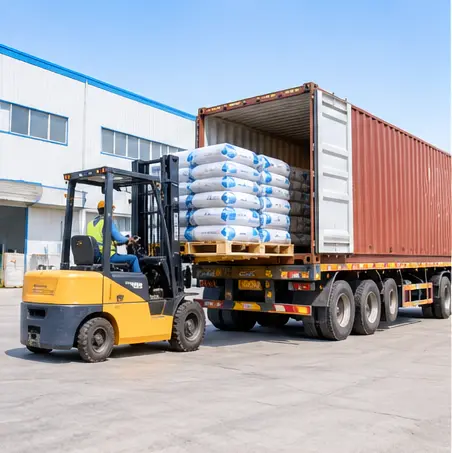
Factory location is another factor in delivery planning. Pet Horizon’s production facility is located in Dalian, with export shipments arranged through Dalian Port. For overseas buyers, the factory-to-port distance, container availability, and vessel schedules should all be considered when estimating the time from production completion to shipment. Learn more about Pet Horizon’s cat litter manufacturing capabilities and export-oriented production operations.
How to Reduce Cat Litter Manufacturing Lead Time
Importers can reduce avoidable delays by coordinating product specifications, production planning, and shipping arrangements before placing large orders.
- Finalize product specifications early: Confirm particle size, fragrance, moisture requirements, clumping performance, and packaging specifications before production scheduling.
- Approve packaging artwork in advance: Private label buyers should complete bag design, printing files, and labeling requirements early to avoid packaging-related delays.
- Coordinate raw material preparation: Confirm the availability of bentonite, tofu-based materials, pine raw materials, and packaging supplies against the planned order volume.
- Consolidate compatible SKUs: Group suitable products into a coordinated purchasing plan to improve scheduling efficiency and reduce unnecessary production changeovers.
- Reserve production and shipping slots: Discuss expected order quantities and delivery windows with the factory before seasonal demand increases.
- Establish inspection requirements beforehand: Agree on product specifications, sampling methods, and acceptance criteria to minimize disputes and repeated inspections.
The objective is not simply to push the factory to produce faster, but to reduce avoidable waiting time across the entire order cycle. Better preparation can improve production scheduling, minimize interruptions, and make shipment dates more predictable.
Seasonality and Peak Capacity Planning
Cat litter importers should consider seasonal demand when planning production capacity, particularly when purchasing for retail promotions, new product launches, or regional peak-selling periods.
Instead of placing large orders only when inventory runs low, buyers can share a rolling demand forecast with their manufacturer. A practical forecast should include:
- Expected monthly purchasing volume
- Estimated peak-season demand
- Initial launch quantities for new products
- Reorder frequency and replenishment targets
- Expected packaging and SKU combinations
This information helps the factory evaluate raw material requirements, production slots, and packaging preparation in advance. Importers should also maintain a reasonable inventory buffer to account for production adjustments, port congestion, and vessel schedule changes.
The earlier a buyer communicates expected demand, the easier it is to coordinate production capacity before the peak period.
Evaluating a Supplier’s Capacity Claims
Annual production capacity alone does not prove that a manufacturer can handle your order on schedule. Importers should examine how the factory manages actual production, order allocation, and quality control.
Before committing to a bulk order, ask the supplier:
- What is the actual monthly production output compared with the stated annual capacity?
- How many production lines are available for the cat litter types you intend to purchase?
- Can the factory handle multiple SKUs within one purchasing schedule?
- How are production slots allocated between existing customers and new orders?
- What backup arrangements are available if raw material supply or production scheduling is disrupted?
- Can the supplier provide production records, inspection reports, or other evidence supporting its stated capacity?
For example, a factory may have substantial overall production capacity but limited available slots for a specific product during peak season. Buyers should therefore evaluate both total manufacturing capability and the capacity available for their own order.
A supplier’s quality management process also matters. Review its inspection procedures for moisture, dust, particle size, and clumping performance alongside its production figures. Buyers comparing quotes should also review a cat litter OEM quotation comparison guide so lead time and capacity terms sit beside price in the decision.
A cat litter manufacturing process overview can also help buyers understand which stages drive the schedule for their chosen litter type.
Conclusion
Cat litter manufacturing lead time and factory capacity directly affect an importer’s ability to manage product launches, inventory replenishment, and seasonal demand. A reliable sourcing plan should account for raw material preparation, production scheduling, quality inspection, packaging, and export arrangements rather than relying on a single estimated delivery date.
For buyers sourcing tofu, bentonite, or pine cat litter, evaluating a manufacturer’s actual production capability, available capacity, and quality control procedures is just as important as comparing unit prices. Clear forecasts and early coordination with an OEM supplier can help reduce avoidable delays and build a more predictable long-term supply arrangement.
Frequently Asked Questions
Cat litter manufacturing lead time varies with product type, order volume, raw material availability, packaging requirements, and factory scheduling. For an accurate estimate, importers should distinguish pre-production activities such as sample and artwork approval from the formal order production schedule. Ask the manufacturer for a stage-by-stage timeline covering material preparation, production, inspection, and shipment readiness.
Early sample and packaging artwork confirmation, pre-staged raw materials, reserved production and shipping slots, agreed inspection checkpoints, and SKU consolidation all shorten the calendar. Peak-season competition is the biggest external delay.
Ask for actual monthly output versus stated annual capacity, line count, and customer allocation, then cross-check against production records or references. A credible supplier explains both capacity and quality control procedures.
Yes. Tofu, bentonite, and pine cat litter involve different raw material preparation and processing requirements. Tofu cat litter production may involve mixing, extrusion, and drying, while bentonite processing focuses on clay preparation, granulation, screening, and dust control. Pine cat litter requires suitable wood-based raw materials and product-specific processing. Custom specifications, fragrance options, and packaging requirements can also affect the overall schedule.
Factory location is one factor in delivery planning. Pet Horizon’s production facility is located in Dalian, with export shipments arranged through Dalian Port. For overseas buyers, the factory-to-port distance, container availability, and vessel schedules should all be considered when estimating the time from production completion to shipment, alongside actual transit time to the destination.
Yes. Lead time, delay notice, and remedies should be part of the supply or OEM agreement so both sides share the risk of a missed date. This pairs with price and quality terms in the overall order.
Production lead time covers the preparation and manufacturing activities required to make an order ready for shipment. Shipping lead time starts with the logistics process and includes port handling, vessel transit, and destination-side arrangements. Importers should evaluate both timelines separately when calculating the expected arrival date of bulk cat litter orders.