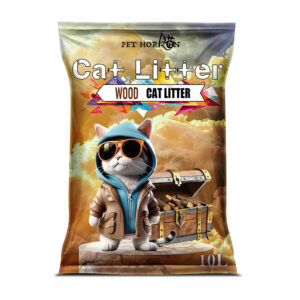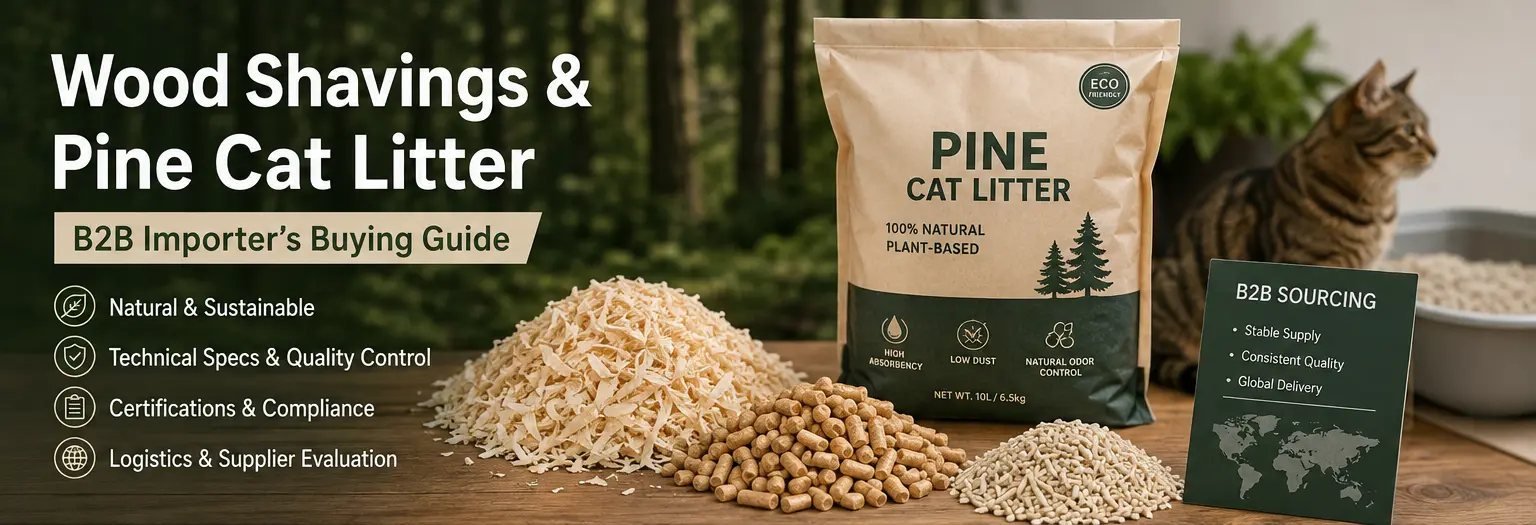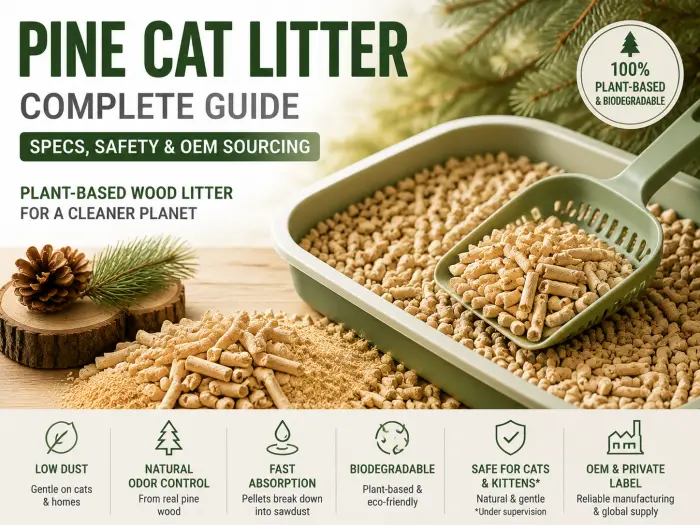


Pine cat litter offers a plant-based option with a natural wood profile and low-dust positioning. For buyers looking to differentiate a pine litter range, adding activated charcoal creates an odor-control variant alongside the standard pine formula. Pet Horizon manufactures both pure pine and activated-charcoal pine cat litter, supporting OEM and private label programs with specifications covering material composition, pellet size, moisture, dust control, and packaging. This guide explains what buyers should evaluate when developing and sourcing the charcoal-enhanced version.
Activated charcoal pine cat litter combines a pine-based litter material with activated charcoal as an additional odor-adsorption component. For OEM sourcing, buyers should confirm the charcoal grade and inclusion rate, pellet specifications, moisture and dust limits, odor-control evaluation method, and packaging requirements before approving a production sample.
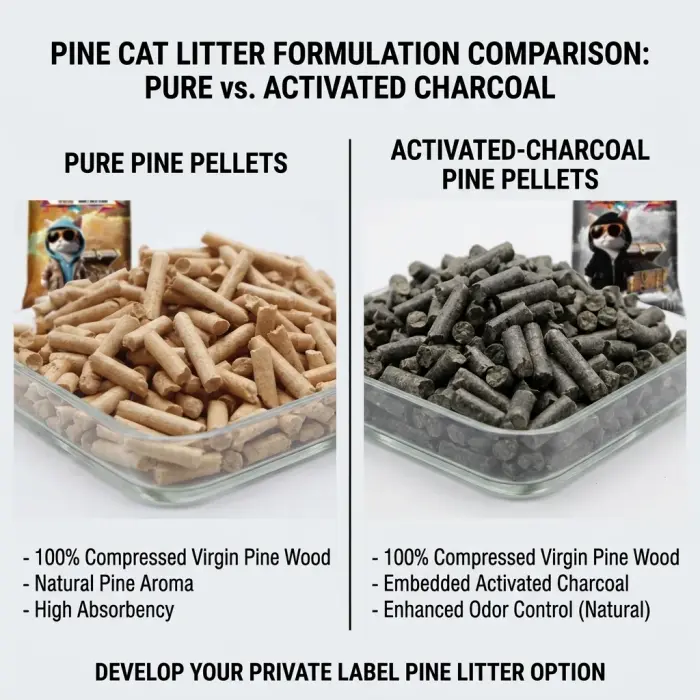
Pure Pine vs. Activated-Charcoal Pine: Product Differences
The main difference between the two Pet Horizon pine litter options is the formulation. Pure pine uses the standard pine base, while activated-charcoal pine incorporates an additional adsorbent component for buyers seeking an enhanced odor-control positioning. This difference affects raw material selection, formulation cost, product appearance, and quality inspection requirements. Buyers should evaluate both versions based on their target retail positioning and required performance rather than treating them as interchangeable products.
Why Add Activated Charcoal
Activated charcoal is a porous adsorbent with a high internal surface area. Its suitability for odor-control applications depends on factors such as raw material, activation characteristics, particle size, and the amount incorporated into the litter. In a pine litter formulation, it provides an additional adsorption component, but the finished product’s odor-control performance should be evaluated through testing rather than inferred from charcoal content alone. Buyers should avoid claims such as complete odor elimination unless supported by appropriate product-level test results.
OEM Specifications for Activated-Charcoal Pine Cat Litter
A private label specification should cover more than the basic pine litter properties. Because activated charcoal is an additional formulation component, buyers need to define both the base material requirements and the consistency of the finished product.
- Pine base material: Confirm the raw material source, pellet form, and required physical characteristics.
- Activated charcoal: Specify the charcoal grade, particle size, and agreed inclusion rate. These factors influence material cost and formulation consistency.
- Pellet size and shape: Define the acceptable size range, length distribution, and proportion of broken pellets or fines.
- Moisture content: Set an acceptable moisture range to support product stability during storage and transportation.
- Dust and fines: Establish dust limits and inspection procedures, including checks after handling or packaging where required.
- Handling durability: Evaluate pellet breakage and fines generation during bag filling, stacking, and transportation to help maintain product consistency through distribution.
- Appearance and distribution: Agree on acceptable visual characteristics and the uniformity of charcoal distribution throughout the batch.
- Packaging: Confirm bag weight, material, sealing requirements, labeling, and moisture protection for the intended shipping and storage conditions.
These parameters should be recorded in an approved specification sheet and used as the reference for sample approval, incoming inspection, and repeat orders.

Choosing the Right Activated Charcoal Formulation
The appropriate activated-charcoal formulation depends on the intended product positioning, target price, and required odor-control performance. A higher charcoal inclusion rate does not automatically guarantee better results, so buyers should evaluate formulation options through sample testing rather than selecting a percentage based on marketing claims alone.
For product development, buyers can compare the standard pine formula with selected charcoal-enhanced samples. The evaluation should consider odor-control results, pellet appearance, dust level, material cost, and consistency after packaging. Once a suitable formulation is approved, the charcoal specification and other critical parameters should be fixed in the production document to support repeat orders.
Odor-Control Performance and How to Specify It
For repeatable odor-control evaluation, buyers should agree on the test conditions before comparing finished litter samples. These may include sample weight, test container, ammonia exposure conditions, testing duration, and evaluation method. If pure pine and different charcoal-enhanced formulations are being compared, all samples should be tested under the same conditions. The agreed method and acceptance threshold should be documented so that future production batches can be assessed against the approved reference sample.
How Activated-Charcoal Pine Fits a Private Label Range
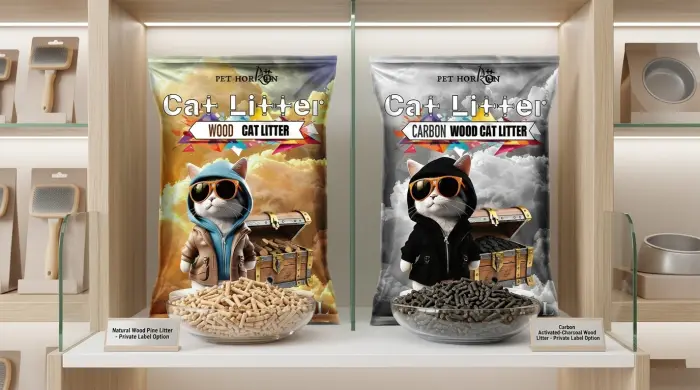
For private label buyers, activated-charcoal pine can serve as a differentiated SKU within an existing pine litter range. Its positioning should be reflected in the product name, packaging claims, and specification sheet. Buyers should also consider whether the charcoal-enhanced version needs a separate bag design, barcode, and retail product description to distinguish it from standard pine litter during distribution and inventory management.
Building an Odor-Control Pine Litter Program
When requesting an activated-charcoal pine litter quotation, buyers should provide their target bag weight, preferred pellet specifications, charcoal requirements, estimated order volume, and destination market. A reference product or target retail positioning can also help align sample development with the intended market. Pet Horizon supports OEM and private label development for pine, tofu, and bentonite cat litter, covering product specifications and customized packaging. Explore our pine cat litter specifications or learn more about our cat litter OEM manufacturing services to discuss your requirements.
Frequently Asked Questions
Pure pine contains no added activated charcoal, while the charcoal-enhanced version includes an additional adsorbent component. The choice depends on the target product positioning, expected odor-control performance, and acceptable purchase cost.
The safety of activated-charcoal pine cat litter depends on the materials used, formulation, and finished-product quality. Buyers should request the relevant material specifications and available safety documentation, and assess the finished product for potential dust exposure and foreseeable incidental ingestion. Applicable product safety and labeling requirements should also be checked for the destination market.
Adding activated charcoal may affect the finished product’s dust level, depending on its particle size, inclusion rate, and handling process. Buyers should define a dust acceptance limit and agree on the sampling and testing method. Where dust performance is important, samples should also be checked after packaging or simulated handling to assess whether the product maintains its intended low-dust positioning.
Yes. Buyers can develop activated-charcoal pine cat litter under their own brand by agreeing on the formulation, pellet specifications, quality requirements, bag design, and order quantity with the manufacturer. Sample approval should take place before confirming the final production specification.
Compare samples using the same test conditions, including sample weight, exposure conditions, test duration, and evaluation method. If different charcoal grades or inclusion rates are being considered, evaluate each formulation separately and compare the results with the pure pine reference sample.
Activated-charcoal pine may cost more than standard pine litter because it requires an additional material and may involve different formulation and quality-control requirements. The price difference depends on the charcoal grade, inclusion rate, product specifications, packaging, and order volume. Buyers should compare quotations based on the same approved specification rather than bag price alone.