




It’s a classic dilemma: every cat owner knows that cat litter is an absolute necessity, used daily and stocked up monthly. However, when it comes to Choosing Cat Litter, the market is incredibly diverse, with prices ranging from a few yuan to dozens of yuan.
The promotional slogans are also often exaggerated, featuring claims like “imported raw materials,” “antibacterial and anti-mite,” “7-day long-lasting deodorization,” and even “cats will actively love using the litter box.” These pitches can leave novice cat owners dazzled and prone to paying for overpriced products without even realizing it.
As someone with years of experience in the pet product industry, we receive daily complaints from cat owners. They buy trendy cat litter at high prices, only to find that the dust is so excessive that their cats sneeze. The cat litter that claims to be “non – sticking” requires great effort to clean. And the so – called “long – lasting deodorizing” cat litter fills the cat – gathering areas with an unpleasant odor in less than a day. Even more distressing is that some cat owners choose the wrong cat litter, which causes their cats to develop respiratory diseases and skin inflammations. They not only feel sorry for their cats but also waste their money.
Today, combining the actual test data, R & D experience of our partner cat litter company, and our years of industry observation, we’ll have a good chat with you about choosing cat litter from a popular – science perspective in the most down – to – earth way. We’ll reject all the overpriced product gimmicks and only talk about what kind of cat litter cats really need. We want every cat owner to spend a reasonable amount of money and choose the kind that makes their cats comfortable and themselves worry – free, keeping the cat – gathering areas clean, fresh, and free from odors and dust.
Let me be completely honest with you. The core function of cat litter is to meet the cats’ toilet needs, protect their health, and reduce the cleaning burden on cat owners. Most of those flashy promotions are just marketing gimmicks from the merchants, which are meaningless to cats and may even cause harm. The R & D personnel of the cat litter company have repeatedly emphasized to us that a high – quality cat litter never relies on promotional packaging but on solid quality. It should fit the cats’ physiological habits and balance practicality and safety. This is what cats really need, and it’s also what we, as sellers, are willing to sincerely recommend.
According to the research data jointly collected by the cat litter company and a pet hospital, over 60% of cat owners have fallen into the trap of paying for overpriced cat litter. The rate is even as high as 80% among novice cat owners. Many people pay for overpriced products either because they are misled by trendy promotions, think that “expensive is always better”, or don’t understand the cats’ needs and blindly follow the trend. In fact, choosing cat litter doesn’t have to be so complicated. As long as you grasp the core and avoid the gimmicks, you can easily make the right choice without wasting a single cent.
Avoid These Pitfalls First: 90% of Cat Owners Have Fallen into These 4 Cat Litter Traps
Before talking about the cat litter that cats really need, let’s break down the most common overpriced cat litter products on the market. Based on the actual tests of the cat litter company, we’ll tell you why these products are not worth buying at all, helping you avoid unnecessary waste.
The First Trap: High – priced “Imported Raw Material” Cat Litter, Actually No Different from High – quality Domestic Ones
Many merchants promote their cat litter as having “imported bentonite” or “imported plant fibers” and drive up the price to dozens of yuan per pound, claiming it’s “safer and more comfortable”. However, the actual test data from the cat litter company shows that most of the so – called “imported raw material” cat litter on the market has almost the same raw material quality and production process as high – quality domestic cat litter. In some cases, the imported ones even have higher dust content and poorer water absorption than the domestic ones.
We once compared an “imported bentonite cat litter” priced at 39 yuan per 2 kg with a domestic bentonite cat litter priced at 19 yuan per 2 kg. After professional testing by the cat litter company, their dust content, clumping strength, and water absorption were almost the same. The only difference was the packaging and promotional slogans. Many cat owners paid double the price for essentially the same product, which was a complete waste of money.
The Second Trap: Over – hyped “Trendy Functions” but Actually Useless
Some cat litter products claim to be “antibacterial and anti – mite”, “prevent urinary system diseases”, or even “improve cats’ digestive systems”. These claims are mostly nonsense. The R & D personnel of the cat litter company clearly state that the core functions of cat litter are to absorb urine, wrap feces, and reduce odors. The so – called “antibacterial and anti – mite” function usually involves adding a small amount of antibacterial agents, which has little effect. Excessive addition may even irritate the cats’ skin and respiratory tracts. And the claim of “preventing diseases” has no scientific basis at all. Cats’ urinary system and digestive system diseases are related to their diet and living habits, not directly related to the cat litter.
There are also cat litter products that promote “7 – day long – lasting deodorization” and “no need for frequent cleaning”, which is far from reality. The actual tests of the cat litter company show that even high – quality cat litter can only keep the odor under control for 24 – 48 hours at most. After this time, the odor will gradually spread, especially in the cat – gathering areas. If not cleaned for a long time, bacteria will grow, which is harmful to the cats’ health. The so – called “7 – day long – lasting deodorization” is just a marketing gimmick and can’t be achieved in actual use.
The Third Trap: “Fragrant – scented” Cat Litter, Appears to Deodorize but Actually Harms Cats
Many cat owners choose cat litter with a strong fragrance, such as lavender, lemon, or rose scents, to mask the odor of their cats’ excrement. However, they don’t know that a cat’s sense of smell is 40 times more sensitive than that of humans. What we consider a faint fragrance is an unbearable pungent smell to cats.The veterinary consultant of the cat litter company told us that long – term use of fragrant – scented cat litter can stimulate the cats’ olfactory systems, leading to a decrease in their olfactory sensitivity, which affects their appetite and ability to judge danger.
More seriously, the volatile organic compounds in artificial fragrances can irritate the cats’ respiratory tracts and nervous systems, causing symptoms such as dizziness, nausea, and restlessness. It may even make the cats refuse to use the litter box and urinate or defecate anywhere in the cat – gathering areas. Moreover, fragrances can only mask the odor and can’t eliminate it at the root. Over time, the mixture of the odor and the fragrance will become even more unpleasant.
The Fourth Trap: “Mixed” Cat Litter, Blind Mixing with Disappointing Results
Many merchants promote “mixed bentonite and tofu cat litter” or “mixed pine and crystal cat litter”, claiming that it combines multiple advantages, which makes many cat owners think that the mixed type is better. However, the actual tests of the cat litter company show that different types of cat litter have different water – absorption and clumping mechanisms.
Blindly mixing them will affect their performance.For example, bentonite cat litter clumps when it comes into contact with water, while tofu cat litter dissolves. When mixed, the clumping effect will be poor, the water absorption will decrease, and more dust will be generated. Pine cat litter disintegrates when wet. When mixed with crystal cat litter, it can’t effectively wrap feces, and the odor will spread more easily to the cat – gathering areas, making cleaning more difficult. Many cat owners spend more money on the mixed type but end up in a pit, with a doubled cleaning burden and their cats feeling uncomfortable.
In addition, there are some low – priced and poor – quality cat litter products that claim to be “high – cost – effective” but actually use recycled waste, moldy raw materials, and even add harmful chemicals such as industrial glue and bleach. These cat litter products not only have high dust content and poor water absorption but also harm the cats’ health, such as causing skin allergies, respiratory infections, and even digestive system diseases if ingested. Although these cat litter products seem cheap, they are actually the biggest waste of money and can harm the cats.
The Key Points: Only Look at These 3 Core Criteria for the Cat Litter Cats Really Need
After avoiding the overpriced product traps, let’s talk about what kind of cat litter cats really need. Combining the R & D logic, actual test data of the cat litter company, and the cats’ physiological habits, we’ve summarized 3 core criteria. As long as a cat litter meets these 3 criteria, it’s a high – quality cat litter suitable for cats, regardless of how flashy its promotion is or how high its price is.
Core Criterion 1: Low Dust – Protecting Cats’ Respiratory Tracts and Keeping Cat – gathering Areas Dust – free
Cats’ respiratory tracts are very fragile, and the dust in cat litter is an “invisible killer” that harms their respiratory tracts. The actual test data of the cat litter company shows that the dust content of high – quality cat litter must be controlled within 0.1g/100g. There is almost no dust flying when pouring or when the cat scratches the litter.
In contrast, the dust content of poor – quality cat litter may be more than 10 times that of high – quality cat litter. These tiny dust particles can enter the cats’ nasal cavities, tracheas, bronchi, and even lungs when they breathe.In the short term, dust can cause cats to sneeze frequently, have a runny nose, rub their eyes, and have red and watery eyes.
In the long term, it can lead to respiratory diseases such as chronic rhinitis, bronchitis, and asthma, which are even more life – threatening to kittens, old cats, and cats with sensitive respiratory tracts. Over the years, we’ve seen many cats develop irreversible asthma due to long – term use of cat litter with excessive dust and need lifelong medication.
What’s even more troublesome is that the dust can spread to every corner of the house, especially in the cat – gathering areas such as beside the sofa, on the bay window, and around the cat tree. These places will be covered with fine dust that is impossible to clean up completely every day. It not only dirties furniture and clothes but can also be inhaled by the cat owner and family, affecting human respiratory health.
Many cat owners report that they cough non – stop when pouring cat litter, which is a clear sign of excessive dust.When producing high – quality cat litter, the cat litter company goes through at least 3 dust – removal processes, and some even use electrostatic dust – removal technology to minimize the dust content, ensuring that there is almost no dust flying when pouring or when the cat scratches the litter.
Here’s a simple test method commonly used by the cat litter company that novice cat owners can use to judge the dust content when buying cat litter: Take a transparent mineral water bottle, fill it halfway with cat litter, put on the cap, shake it vigorously for 10 seconds, then let it stand for 30 seconds. Observe the dust residue on the bottle wall. If there is only a thin layer of dust, the dust content meets the standard.
If the bottle wall is covered with thick dust and you can see obvious dust flying when shaking, reject it.You can also grab a handful of cat litter and put it in your palm. Rub it gently for 30 seconds, then pat off the cat litter. Observe the dust residue on your palm. If there is only a small amount of fine powder, the quality is good. If your palm turns gray and you can even rub out mud, the dust content exceeds the standard, and you should never buy it. For cats, low – dust cat litter is the most basic guarantee and what they really need.
Core Criterion 2: Strong Water Absorption and Easy Clumping – Reducing Odors and Lightening the Cleaning Burden
Cats are naturally clean animals and prefer to use the toilet in a dry and clean environment. If the cat litter has poor water – absorption ability, after the cat urinates, the urine will stay on the surface of the cat litter for a long time. This not only makes the cat’s paws wet with urine and spreads it to the cat – gathering areas, dirtying the furniture, but also causes the odor to spread quickly, making the cat – gathering areas smell bad. More importantly, wet cat litter can breed bacteria, increasing the risk of cats getting skin and urinary system diseases.
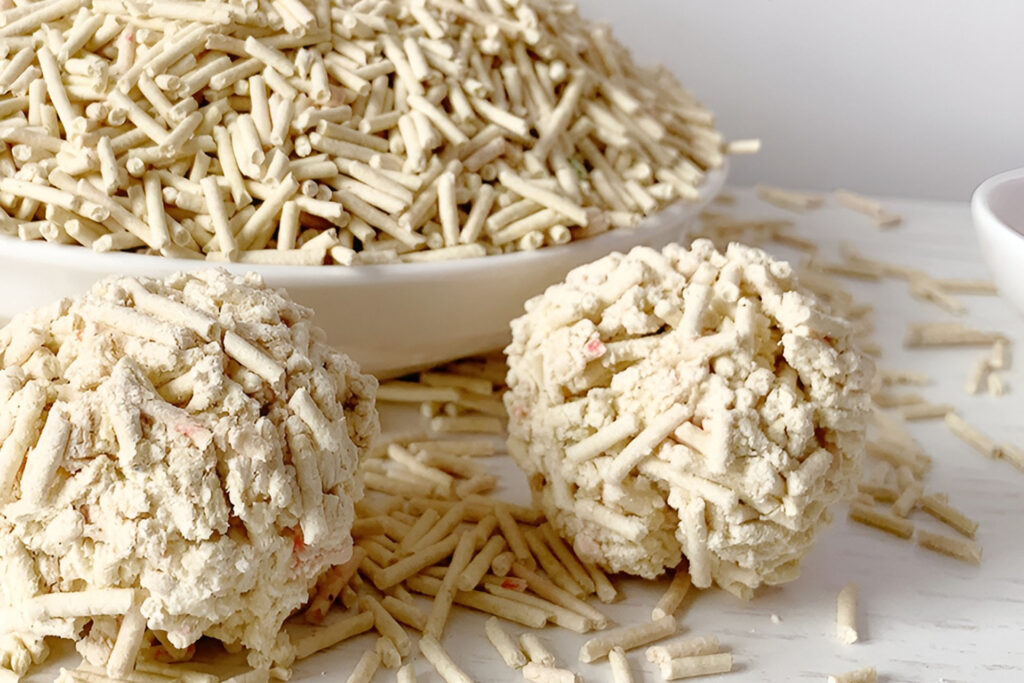
According to the actual test standards of the cat litter company, high – quality cat litter should absorb water within 3 – 5 seconds, and its water – absorption capacity should be 3 – 5 times its own weight. This way, it can quickly lock in the urine, prevent it from seeping to the bottom of the litter box and forming stubborn sticky clumps. At the same time, after absorbing the urine, high – quality cat litter forms tight clumps that are not easy to break. When cleaning, you can just scoop them up, and they won’t scatter or contaminate the clean cat litter, greatly reducing the cleaning workload for cat owners.
We once tested a poor – quality cat litter. Its water – absorption speed was over 10 seconds. After pouring in water, it stayed on the surface for a long time and couldn’t be completely absorbed, causing water to accumulate at the bottom of the container. After absorbing urine, the clumps were loose and broke easily when scooped.
Not only was it difficult to clean, but the odor also spread throughout the room, making the cat – gathering areas stink. In contrast, high – quality cat litter can quickly absorb urine even if the cat has a large amount of urine, firmly locking in the urine and keeping the surface of the cat litter dry. This makes the cat more comfortable when using the toilet and keeps the cat – gathering areas clean and fresh.
The R & D personnel of the cat litter company told us that the quality of water absorption mainly depends on the raw materials and production processes of the cat litter. High – quality cat litter uses highly water – absorbent raw materials such as natural plant fibers and bentonite. Through special forming processes, the cat litter particles form a porous structure, improving the water – absorption speed and capacity. In contrast, poor – quality cat litter uses raw materials with poor water – absorption ability to cut costs, and the production processes are very crude, so it’s impossible to achieve the desired water – absorption effect.
Here’s a method to test the water absorption on – site that novice cat owners can use when buying cat litter: Put a small amount of cat litter in a transparent container and pour an appropriate amount of clean water (to simulate cat urine).
Observe the water – absorption speed. If the water can be completely absorbed within 3 – 5 seconds and there is no water left at the bottom of the container, the water – absorption capacity of this cat litter meets the standard. If the water stays on the surface for a long time or seeps to the bottom of the container, the water – absorption capacity is poor, and it is not recommended to buy.In addition to water absorption, clumping ability is also very important.
After absorbing urine, high – quality cat litter forms tight clumps that are not easy to break and won’t scatter when cleaned. Poor – quality cat litter has loose clumps that break easily when scooped, not only contaminating the clean cat litter but also making it easier for the odor to spread. For cats, dry and easy – to – clean cat litter can improve their toilet experience, making them more willing to use the litter box and reducing the situation of urinating or defecating anywhere. For cat owners, it can also lighten the cleaning burden and make cat – raising easier.
Core Criterion 3: Gentle and Non – irritating, Suitable for Cats’ Physiology and Safe without Hidden Dangers
Cats’ paws are very delicate, and their skin is also sensitive. Moreover, they have the habit of licking their paws. Therefore, the gentleness and safety of cat litter are directly related to the cats’ health. When developing cat litter, the cat litter company focuses most on the safety of the raw materials and the gentleness of the texture, ensuring that the cat litter has no harmful additives, is non – irritating, and won’t harm the cats’ skin and digestive systems.
Safe Raw Materials:
High – quality cat litter uses natural and non – toxic raw materials such as natural plant fibers, bentonite, and corn cobs. After high – temperature disinfection and multiple screenings, it is ensured that there is no mold, no parasite eggs, and no harmful additives (such as industrial glue, bleach, and fluorescent agents). The actual test data of the cat litter company shows that the formaldehyde and heavy – metal content of high – quality cat litter must meet the national safety standards for pet products.
Many cat litter companies even use food – grade raw material standards to ensure that there is no safety hazard even if the cat accidentally ingests a small amount of cat litter.In contrast, poor – quality cat litter uses recycled waste, moldy raw materials, and even adds harmful chemicals such as industrial glue and bleach to cut costs. These substances can enter the cat’s body through skin contact, causing skin allergies, dermatitis, and eczema.
When the cat licks its paws, these harmful substances can enter the digestive system, leading to vomiting, diarrhea, and loss of appetite. Long – term intake can also damage the liver and kidney functions. We once encountered a case where a two – year – old British Shorthair developed chronic renal failure due to long – term use of cat litter containing industrial bleach and ultimately couldn’t be saved.
Gentle Texture:
Cats’ paws are delicate, and the particle size and texture of cat litter directly affect the cats’ experience of scratching the litter. After thousands of tests, the cat litter company found that the most suitable particle diameter for cat litter is 2 – 4 millimeters. The texture should be fine but have a certain degree of hardness, which is easy to scratch and won’t break easily, and won’t scratch the cats’ paw pads.
If the cat litter particles are too large and hard, the cat will have difficulty scratching and may even scratch its paw pads, causing it to be afraid of using the toilet and hold urine. If the particles are too small and fine, they are easy to get stuck in the cats’ paw gaps, be carried to the cat – gathering areas, dirty the home environment, and may even be ingested by.
FAQ
What are the primary differences between clumping and non-clumping cat litter?
The choice between clumping and non-clumping litter usually depends on how often you want to clean the litter box and your cat’s personal preference.
Clumping Litter: Usually made from bentonite clay, this litter is designed to form solid lumps when it comes into contact with moisture. This allows you to scoop out both liquid and solid waste easily without changing the entire box.
Non-Clumping Litter: Often made from materials like pine, corn, or silica gel, these litters absorb liquid but do not form clumps. While they are often better at absorbing odors initially, the urine eventually collects at the bottom of the tray, requiring a full litter change more frequently (usually once a week).
How do I transition my cat to a new type of litter without causing stress?
Cats are “creatures of habit” and can be very sensitive to changes in the texture or scent of their substrate. To avoid “litter box avoidance,” it is best to use a gradual mixing method:
Days 1–3: Mix 75% of the old litter with 25% of the new litter.
Days 4–6: Move to a 50/50 mix of old and new.
Days 7–9: Mix 25% of the old litter with 75% of the new litter.
Day 10: If your cat is using the box consistently, you can switch to 100% of the new litter.