




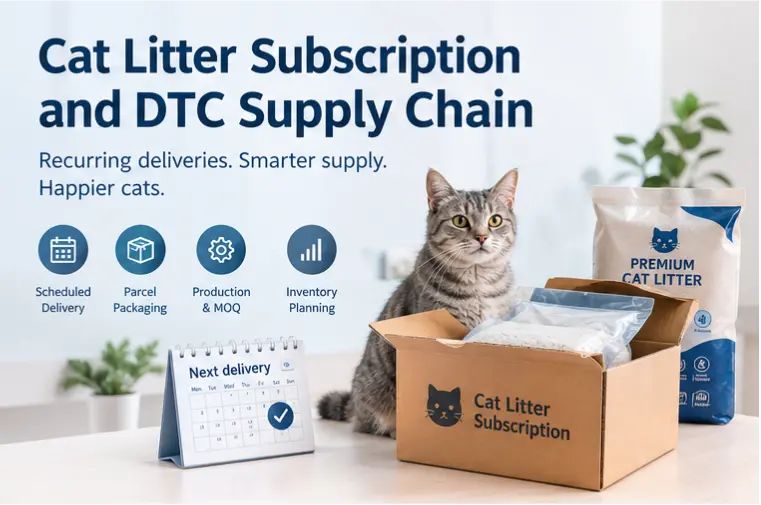
Cat litter subscription and DTC replenishment are recurring sales models in which brands sell cat litter directly to consumers and manage repeat deliveries through scheduled orders. For importers, private-label brands, and OEM suppliers, the model affects demand forecasting, inventory planning, packaging design, production MOQ, and fulfillment requirements. The key is to separate customer delivery frequency from factory production frequency and build a supply plan that supports recurring demand without creating unnecessary inventory or packaging costs.
Quick Answer
Cat litter subscription is a recurring purchasing model in which customers receive litter automatically on a selected schedule, while direct-to-consumer (DTC) is a sales and fulfillment model in which a brand sells directly to consumers. The two can be combined, but they are not the same thing. For importers and OEM suppliers, the main implications are demand forecasting, inventory planning, parcel-ready packaging, production MOQ, and lead-time control. Subscription does not automatically require smaller factory batches; brands can consolidate production and use inventory to support recurring customer shipments.
How Subscription Models Work
A subscription lets a cat owner choose a recurring delivery interval and receive litter automatically. The interval should be based on household consumption, package size, number of cats, and the customer’s preferred delivery frequency rather than a fixed industry standard. For brands, the model can improve demand visibility and repeat purchasing, but the supply chain must consistently meet the scheduled fulfillment cycle. Late, damaged, or inconsistent shipments can increase cancellations and customer-service costs.
DTC vs Retail Supply
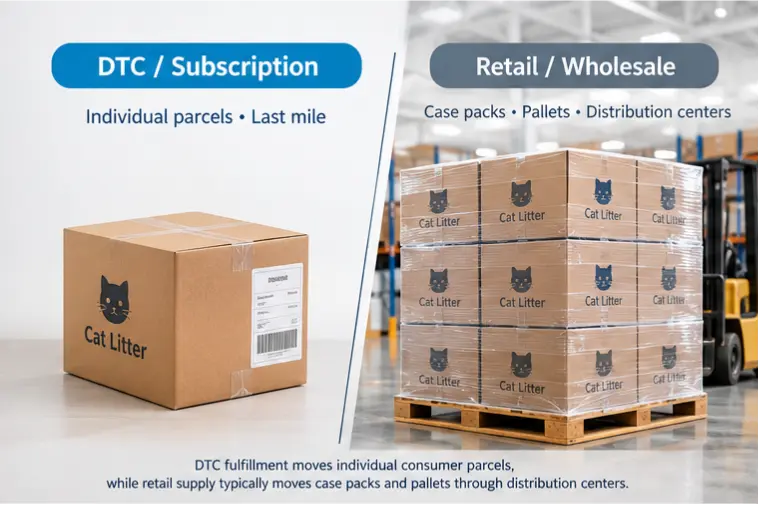
Retail supply typically moves case packs and pallets through distribution centers, while DTC fulfillment moves individual consumer orders through parcel networks and the last mile. The two models may differ in packaging configuration, case-pack requirements, MOQ planning, and quality checks. Suppliers serving both should define the fulfillment configuration for each SKU rather than assuming that one packaging specification fits every channel. The cat litter wholesale motion and the private label cat litter motion each map to different fulfillment expectations, while DTC adds parcel handling requirements.
| Factor | Retail / Wholesale | DTC / Subscription Fulfillment |
|---|---|---|
| Fulfillment unit | Case / pallet | Consumer order / parcel |
| Inventory model | Distribution-center stock | Brand / 3PL inventory |
| Packaging priority | Pallet efficiency | Parcel protection |
| Forecasting | Larger replenishment orders | Recurring consumer demand |
| MOQ planning | Container/case oriented | Production + packaging MOQ alignment |
| Key risk | Overstock / retail compliance | Shipping damage / cancellation |
Packaging for Recurring Delivery
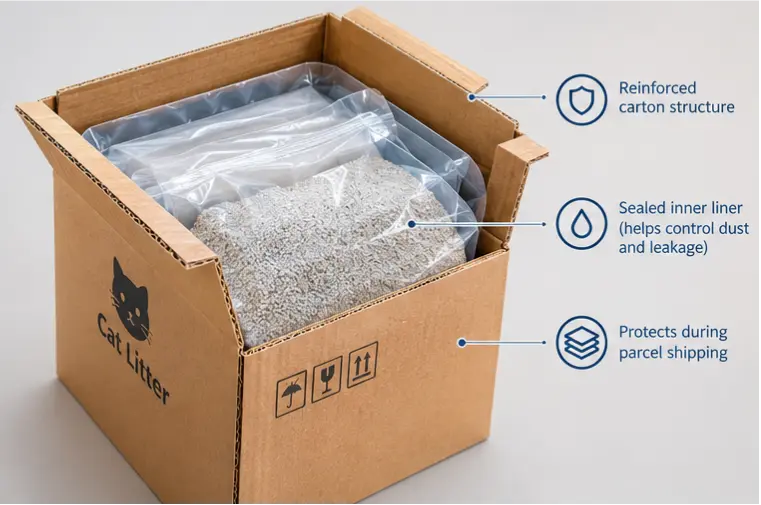
Parcel shipping exposes packaging weaknesses that pallet shipping may not reveal. The package should protect against compression, seam or closure failure, leakage, and excessive dust release during handling. Depending on the parcel configuration, suppliers may use reinforced cartons, inner liners, sealed bags, or smaller unit weights. Before launch, the brand and supplier should define a SKU-specific packaging test plan covering the intended shipping configuration, such as drop or compression testing, and document measurable acceptance criteria for package damage, seal integrity, and product loss.
Production and MOQ Implications
Subscription changes the demand pattern seen by the brand, but it does not necessarily require the supplier to manufacture every customer shipment as a separate batch. Brands can consolidate production into planned runs and use inventory to support recurring fulfillment. The key supplier requirements are forecast visibility, replenishment flexibility, MOQ alignment, changeover efficiency, and lead-time reliability. A container-scale purchasing model may still work well when subscription demand is aggregated into scheduled production orders.
For suppliers with flexible OEM cat litter programs, the important question is not simply whether MOQ is low, but whether production MOQ, packaging MOQ, and replenishment frequency can be aligned with the brand’s forecast and inventory plan.
Margin and Customer Retention
Subscription economics depend on the relationship between product margin, fulfillment cost, retention, and order frequency. Parcel shipping, protective packaging, payment fees, discounts, returns, and customer-service costs can reduce contribution margin compared with pallet-based wholesale. For dense or heavy formats, parcel freight can represent a significant share of delivered cost, so brands should evaluate shipping cost together with package weight, dimensions, destination, carrier rates, and target retail price. Brands can manage the economics through appropriate pack sizes and shipping configurations, delivery controls, bundles, and skip or pause options. For suppliers, consistent product quality and packaging performance matter because recurring customers can quickly notice changes in particle size, clumping, dust, odor control, or package integrity.
Conclusion
Cat litter subscription and DTC are not only sales models; they also change supply-chain requirements. Brands need predictable replenishment, parcel-ready packaging, flexible delivery options, and consistent product quality. For OEM suppliers, the key requirements are stable production capacity, manageable MOQs, reliable lead times, and packaging validated for parcel handling. Treat subscription replenishment as a production-planning and fulfillment requirement rather than simply a marketing program.
Frequently Asked Questions
A cat litter subscription is a recurring purchase program in which customers receive litter automatically at a selected interval. The delivery schedule should match expected household consumption, package size, number of cats, and customer preference rather than relying on one fixed interval.
Retail supply typically moves case packs and pallets through distribution centers, while DTC fulfillment moves individual consumer orders through parcel networks and the last mile. The packaging configuration, case-pack requirements, MOQ planning, and quality checks may differ, and DTC adds parcel handling requirements to the supply chain.
Packaging should protect the litter against compression, seam or closure failure, leakage, and excessive dust release during parcel handling. Depending on the SKU and shipping configuration, suppliers may use reinforced cartons, inner liners, sealed bags, or different unit weights. Before launch, the brand and supplier should define a SKU-specific packaging test plan and measurable acceptance criteria.
Subscription does not automatically reduce supplier MOQs. Buyers should evaluate product MOQ, packaging MOQ, and production-batch requirements separately. A brand may have frequent consumer orders but still place larger consolidated factory orders and hold inventory for recurring fulfillment. The practical target is to align MOQ with forecast demand, inventory capacity, packaging requirements, and lead time.
Quality consistency matters because subscription customers receive the product repeatedly and can quickly notice changes between shipments. Variations in particle size, clumping performance, dust level, odor control, or packaging integrity can increase complaints, returns, skips, or cancellations. Brands should therefore define SKU-level quality specifications and acceptance criteria before recurring production begins.
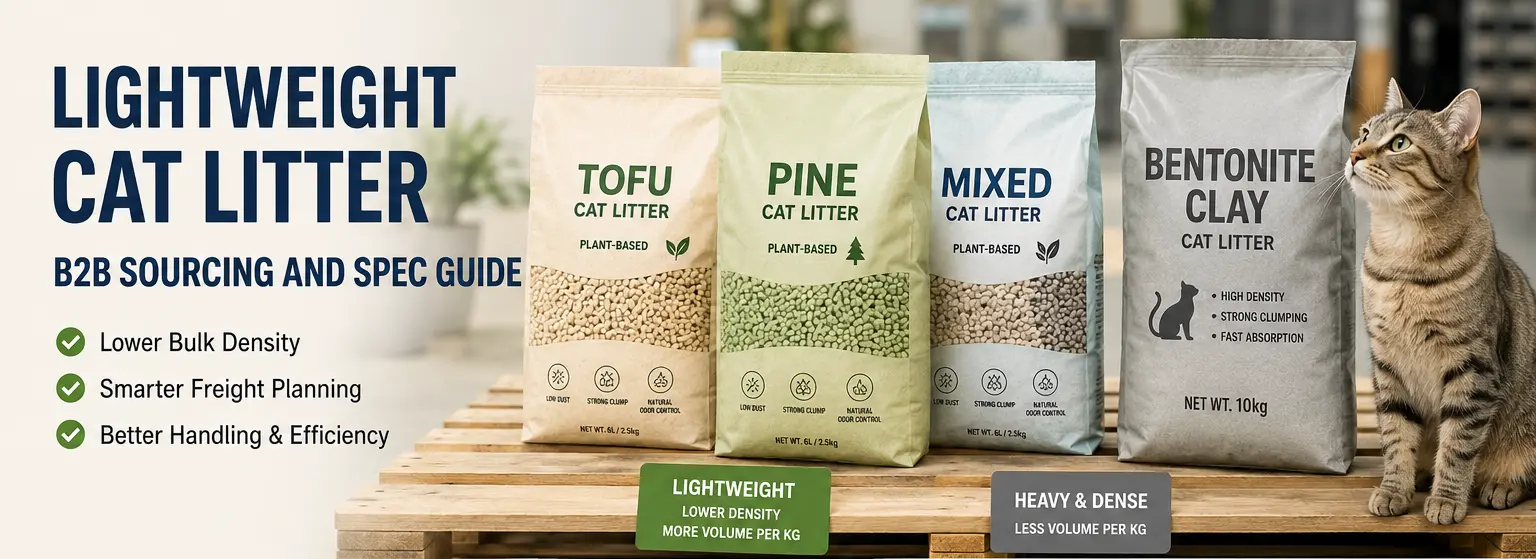
Formats with manageable unit weights, compact packaging, and reliable dust control can be easier to position for DTC subscription. The best choice depends on product density, package dimensions, shipping rates, customer preferences, and target margin. Heavy clay-based products can still work in subscription when the brand’s fulfillment and pricing model can absorb the shipping cost.
Brands can manage subscription margin through appropriate pack sizes, shipping configurations, delivery frequency, bundles, and skip or pause options. They should evaluate product cost, packaging cost, parcel freight, fulfillment fees, discounts, returns, and retention together rather than optimizing any single cost in isolation.
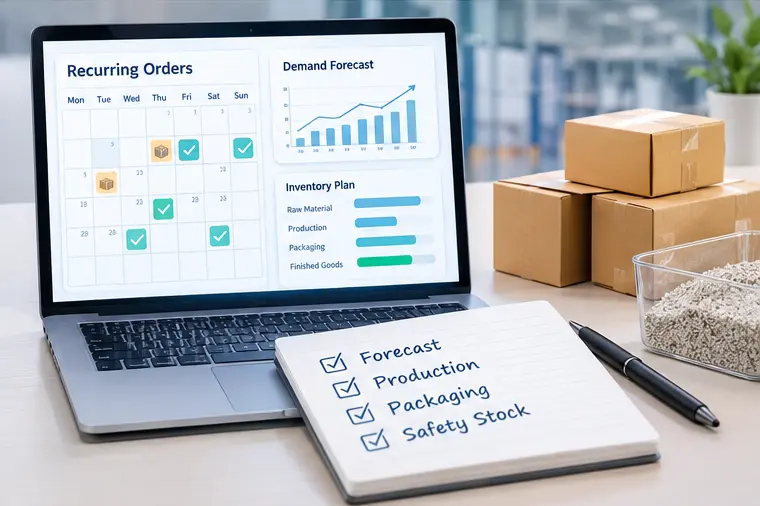
Brands should forecast recurring orders by SKU and delivery cycle, then account for production lead time, packaging lead time, safety stock, and fulfillment inventory. The goal is to consolidate factory production where practical while maintaining enough stock to prevent subscription orders from being delayed.