




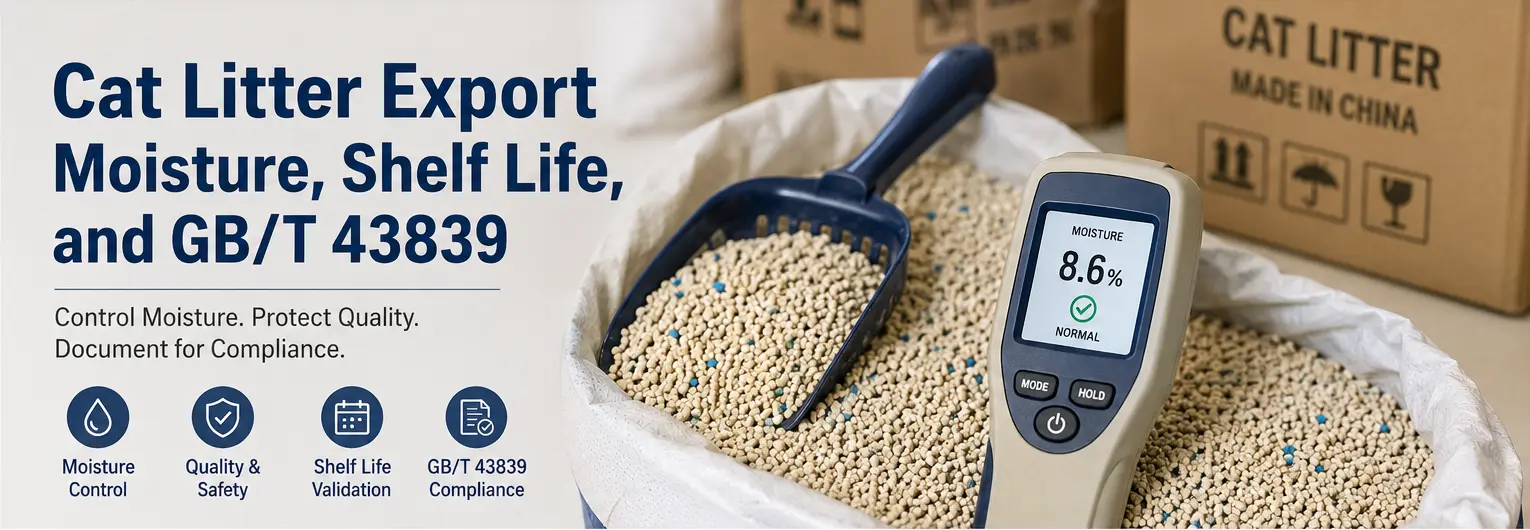
Moisture content is a key variable that can determine whether cat litter arrives at a distant port in saleable condition. Excess moisture can contribute to caking, microbial risk, and changes in clumping performance, while overly dry conditions can increase dust in some formulations. For Chinese-origin cat litter, moisture control is also relevant to GB/T 43839-2024, a Chinese national recommended standard for companion-animal products, which includes moisture and other safety-related requirements for cat litter. This guide explains how moisture, packaging, and storage conditions affect export quality and what suppliers should document.
Quick Answer
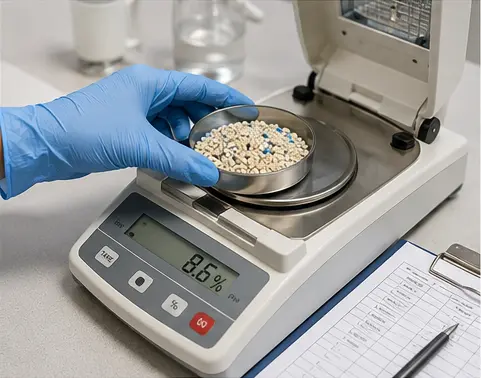
For cat litter exports, buyers should control three things: product moisture, moisture exposure during transit and storage, and the evidence supporting the stated shelf life. GB/T 43839-2024 is a Chinese national recommended standard for companion-animal products; for cat litter, Table 7 sets a moisture requirement of ≤12.0%, with moisture measured according to normative Appendix B. Importers should keep the GB/T 43839-2024 requirement separate from tighter commercial specifications and destination-country requirements. The official standard record is available on the SAMR national standards portal.
Why Moisture Controls Quality
Moisture can influence several practical aspects of cat litter quality, including clumping behavior, caking during storage, dust characteristics, and microbial stability in moisture-sensitive formulations. The effect depends on the litter material and formulation, so exporters should define a product-specific moisture specification rather than treating one moisture level as suitable for every litter type. For Chinese-origin products, the moisture test should also be documented against the applicable requirements of GB/T 43839-2024.
What GB/T 43839-2024 Covers
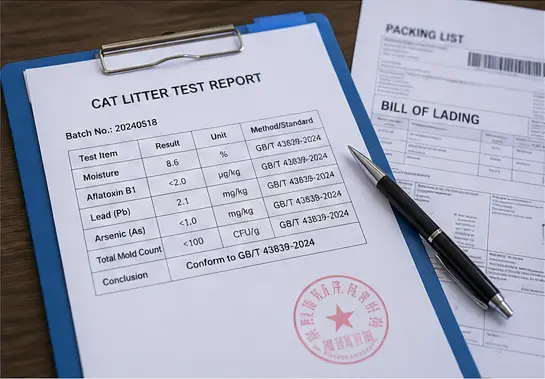
GB/T 43839-2024, Safety technical requirements for products used for companion animals (pets), is a current Chinese national recommended standard published on March 15, 2024, and effective from October 1, 2024. It covers multiple categories of companion-animal products rather than cat litter alone. For cat litter, the standard includes physical, chemical, and hygiene indicators covering moisture, aflatoxin B₁, lead, arsenic, and total mold count. The standard specifies that moisture is measured according to normative Appendix B. Suppliers should therefore provide product-specific test records and clearly distinguish GB/T 43839 conformity from additional commercial specifications such as clumping strength, dust level, or absorption performance. The China cat litter export clusters overview explains how regional manufacturing maps to export supply.
GB/T 43839-2024: A Chinese national recommended standard covering safety technical requirements for companion-animal products. For cat litter, it includes moisture and other safety and hygiene indicators; the moisture requirement in Table 7 is ≤12.0%, with measurement specified in normative Appendix B.
Shelf Life Under Transit and Climate
Shelf life should be validated against the actual product, packaging configuration, storage conditions, and expected distribution route. A useful export validation plan should consider transit duration, temperature and relative humidity exposure, package seal integrity, and the physical condition of the litter after storage. For moisture-sensitive plant-based or mixed formulations, suppliers may also include appropriate microbiological checks. The objective is not to assign one universal shelf-life period, but to support the stated shelf-life claim with product- and packaging-specific evidence. The cat litter manufacturing process and the export compliance hub provide additional context for product control and export requirements.
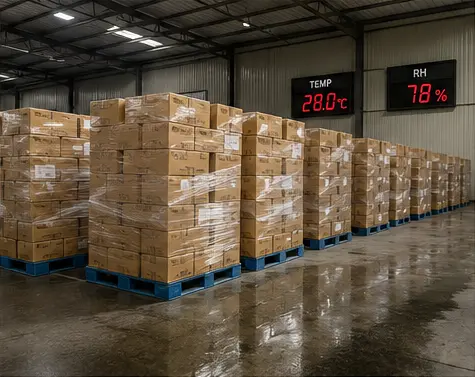
Export shelf life: The period for which a defined cat litter product is expected to remain within its specified quality and safety limits under stated packaging, storage, and distribution conditions.
What Buyers Should Specify
| Control point | What to specify | Evidence to request |
|---|---|---|
| Moisture | Product-specific moisture limit and test method | Batch or lot test record |
| Packaging | Moisture-barrier structure and seal requirements | Packaging specification and seal checks |
| Shelf life | Stated period plus storage conditions | Validation or stability evidence |
| GB/T 43839-2024 | Applicable cat-litter safety and hygiene requirements | Relevant test report or supporting records |
| Commercial performance | Clumping, dust, absorption, or other agreed specifications | Defined test method and acceptance criteria |
Packaging for Humid Destinations
Packaging is a primary moisture-control barrier during export. Depending on the litter formulation and destination climate, buyers may specify an inner liner, heat-sealed film structure, or other packaging with appropriate moisture-barrier performance. Package seal integrity, puncture resistance, compression resistance, and container loading conditions also matter during ocean transit. Desiccants may be considered for specific shipping and storage conditions, but they should not replace a properly designed moisture-barrier package. The final packaging configuration should be validated with the intended product and route rather than assumed to extend shelf life automatically.
Documentation Buyers Should Request
Importers should request batch or lot-level moisture test results, relevant safety and hygiene test data, the applicable product specification, and supporting evidence for any stated conformity with GB/T 43839-2024. Where clumping, dust, absorption, or other performance attributes are part of the commercial specification, those should be documented separately with defined test methods and acceptance criteria. Keeping these records by batch helps buyers verify consistency, investigate moisture-related claims, and qualify suppliers for recurring private-label programs.
Conclusion
Moisture and shelf life are export-quality fundamentals, not fine print. Controlled moisture supports clumping, dust, and mold resistance within a defined specification; GB/T 43839-2024 gives Chinese-origin supply a documented reference point for applicable safety and hygiene indicators; and humidity-appropriate packaging defends shelf life on the long route to market. Exporters who treat moisture as a specification and document it will protect both product performance and buyer trust.
Frequently Asked Questions
Moisture can influence clumping behavior, caking, dust characteristics, and microbial stability, depending on the litter material and formulation. During export, humidity exposure can also change the condition of the packaged product. Buyers should therefore define a product-specific moisture specification and verify it through batch or lot testing.
GB/T 43839-2024 is China’s national recommended standard for safety technical requirements for companion-animal products. Its cat-litter requirements include moisture, aflatoxin B₁, lead, arsenic, and total mold count, with moisture measured according to normative Appendix B.
GB/T 43839-2024 includes moisture as a cat-litter indicator and specifies the measurement method in normative Appendix B. Table 7 sets the moisture requirement for cat litter at ≤12.0%. Buyers may define a tighter commercial moisture specification for a particular formulation, packaging format, or destination, but that commercial specification should be documented separately from the GB/T 43839-2024 requirement.
Validate shelf life using the actual product and packaging configuration under storage and distribution conditions representative of the intended market. The assessment should consider transit duration, temperature, relative humidity, package seal integrity, and the physical condition of the litter after storage. The resulting shelf-life claim should state the relevant storage conditions rather than relying only on factory-condition observations.
Packaging with an appropriate moisture barrier can help limit humidity exposure during export and storage. Depending on the formulation and route, buyers may specify an inner liner, heat-sealed film structure, or other moisture-resistant packaging. Seal integrity and resistance to puncture and compression should also be considered, and the final packaging configuration should be validated with the intended product and distribution conditions.
Request batch or lot-level moisture results, relevant safety and hygiene test data, the product specification, and supporting evidence for any claimed conformity with GB/T 43839-2024. Commercial performance claims such as clumping strength or dust level should have separate test methods and acceptance criteria.
It can, but the relationship depends on the litter material, particle structure, formulation, and handling process. Excess moisture may contribute to caking, while changes in moisture content can also alter dust behavior in some formulations. Buyers should therefore specify dust performance separately rather than using moisture content alone as a proxy for dust control.
The official standard is published on the SAMR national standards portal, which hosts China’s GB standards and their status.
GB/T 43839-2024 is a Chinese national recommended standard, not a universal export requirement for every destination market. Chinese suppliers should assess its applicability to the product and applicable domestic requirements, while importers must also check the mandatory regulations, labeling rules, and product-safety requirements of the destination country.