

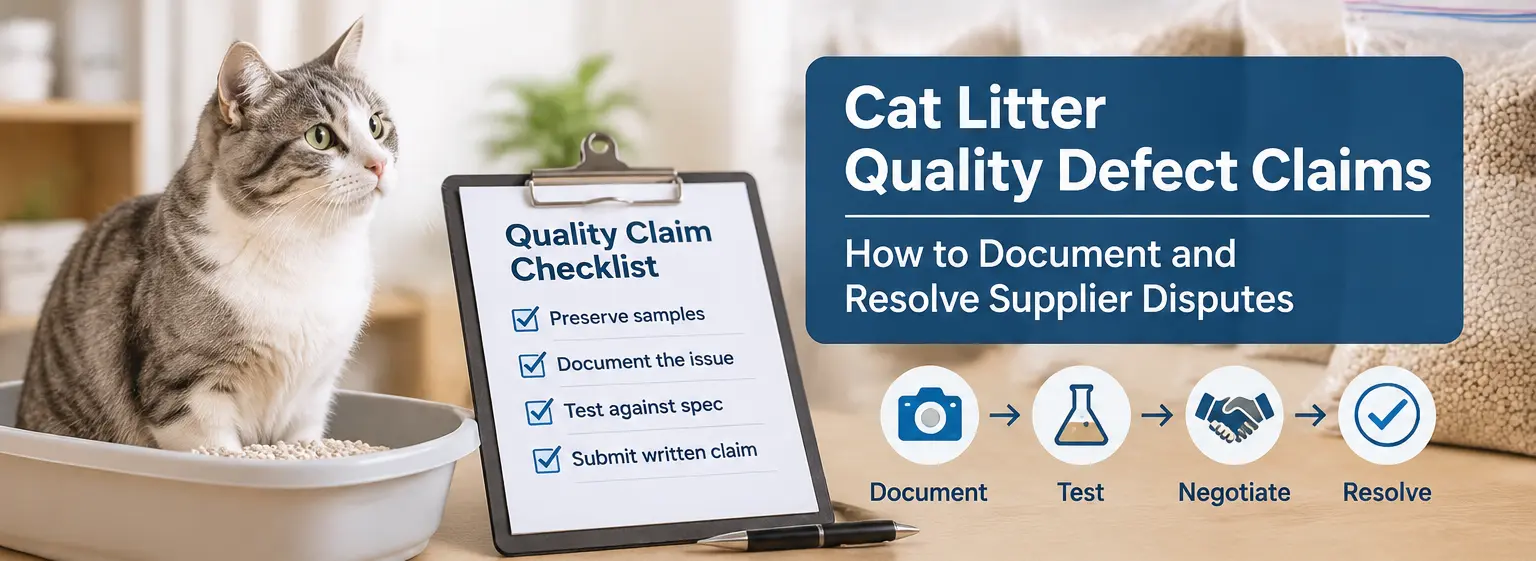
A cat litter quality defect claim is a written request for corrective action or compensation when delivered goods fail to meet the agreed product specification, approved sample, or purchase order requirements. For importers and distributors, the difficult part is often proving whether the problem originated in production, resulted from transit or handling, or reflects a gap in the original specification.
To resolve a cat litter quality complaint, notify the supplier within the applicable contract deadline, isolate the affected lot, retain representative sealed samples, document the problem, and test the product against the agreed acceptance method. Submit a written claim with the purchase order, batch details, measured results, and supporting photos. Replacement, credit, refund, or corrective action may be appropriate depending on the contract, the evidence, the nature of the defect, and the applicable law. Incoterms help allocate delivery-related costs and risks, but they do not independently determine remedies for defective goods.
What Counts as a Cat Litter Quality Defect
A defect is any characteristic that falls outside the specification you and the manufacturer agreed in writing. Without that written baseline, “defect” becomes opinion, and opinion does not survive a commercial dispute. The categories below are common, but the threshold for each must come from your own spec.
Common arrival-stage issues
- Clumping failure: the litter does not form or hold a clump under your agreed test.
- Fines or dust above spec: more material passes the agreed sieve than the contract allows.
- Excess moisture or caking: moisture readings or product condition fall outside the agreed specification, where applicable.
- Suspected mold or contamination: visible growth, unusual odor, or foreign material requiring further investigation to establish the nature and possible cause of the problem.
- Broken or short bags: damaged packaging or a count below the ordered quantity.
- Odor or off-spec appearance: smell, color, or fragrance outside the approved sample.
- Contamination: foreign material that should not be present in the product.
Defect versus specification gap
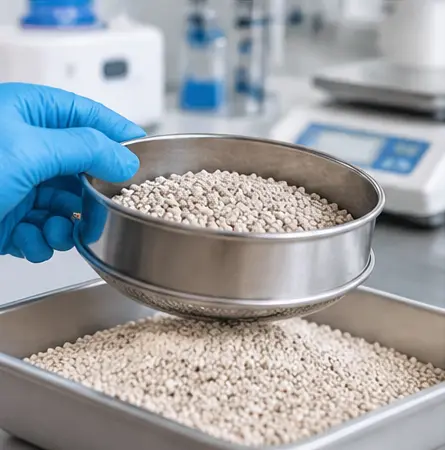
A complaint becomes easier to resolve when the acceptance criteria were defined before production. Terms such as “low dust,” “strong clumping,” or “fast absorption” are not complete test specifications on their own. For a dust or fines dispute, record the agreed sieve size, sample preparation, test procedure, and acceptance limit. For clumping performance, specify the test conditions and the result required. Apply methods appropriate to the product type, whether tofu, bentonite, or pine cat litter, and compare the delivered lot with the approved sample and written specification. If the original documents do not define a measurable threshold or test method, treat that gap as part of the dispute rather than assuming a contractual failure has already been established.
Before You Claim: Evidence to Preserve
Evidence loses value the moment goods are opened, mixed, or resold. Capture the baseline before you touch the batch beyond what receiving requires.
| Issue reported | Evidence to preserve | Practical check |
|---|---|---|
| Clumping failure | Sealed representative samples, lot identification, approved sample, and test records | Repeat the agreed clumping test under the specified conditions and record the result. |
| Excessive dust or fines | Retained samples, sieve specification, test results, and photos of the test setup | Use the agreed sieve method and record the sample mass, test conditions, and fines result. |
| Excess moisture, caking, or suspected mold | Sealed samples, dated photos, batch details, packaging condition, and storage records | Use an agreed moisture test where applicable. Record any condensation, water exposure, unusual odor, or visible growth without treating appearance alone as proof of the cause. |
| Broken or damaged bags | Photos before unloading where possible, container and pallet condition, delivery records, and affected bag count | Document the location and extent of damage and distinguish packaging defects from possible transit or handling damage. |
| Off-spec odor, color, or appearance | Sealed samples, approved reference sample, lot details, and dated comparison photos | Compare under consistent conditions and record the observed difference without relying on photos alone for odor-related claims. |
| Foreign material or suspected contamination | Isolated affected units, sealed samples, photos, lot details, and handling records | Prevent further mixing or distribution and arrange appropriate testing if the material or its origin is uncertain. |
| Short quantity or net-weight discrepancy | Purchase order, packing list, delivery tally, bag labels, and weighing records | Reconcile the ordered quantity, received count, and net-weight results using an agreed measurement procedure. |
For container shipments, keep the container number, seal details, unloading date, and relevant delivery records where available. Take representative samples from the affected lot and document how they were collected. If the shipment contains multiple production lots, identify each affected lot separately rather than treating the entire container as one uniform batch.
Step-by-Step Claim Workflow
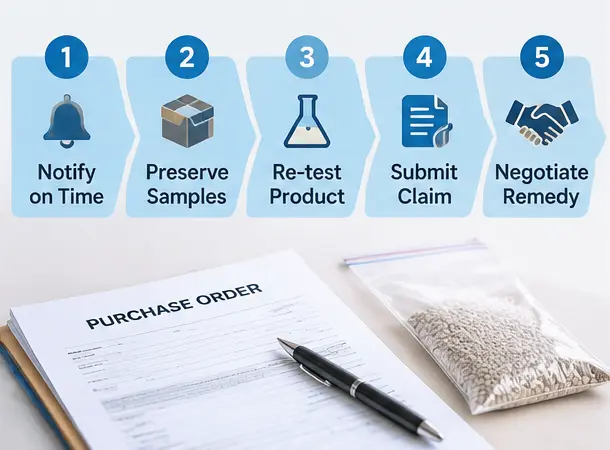
Step 1: Notify within the contract window
Check the purchase contract for separate deadlines covering visible damage, quantity discrepancies, and defects that may only become apparent after opening or testing the goods. Notify the supplier in writing as soon as a potential non-conformity is identified, even if the full investigation is still underway. State the purchase order number, affected lot, issue observed, discovery date, and the time needed to complete testing. Keep proof of delivery of the notice and follow any contractual requirements for the notice method, inspection, and claim submission. If the applicable deadline is unclear, seek advice based on the governing contract and law rather than assuming that a general industry practice applies.
Step 2: Preserve samples and batch records
Identify each affected production lot and retain representative samples collected using a documented sampling procedure. The number and size of samples should reflect the lot size, product characteristics, and tests required. Keep samples sealed, labeled with the lot number and collection date, and stored under suitable conditions. Retain the purchase order, approved specification, production or batch code, packing list, and relevant inspection records so the manufacturer can trace the complaint to the original production run.
Step 3: Re-test against the agreed method
Test the retained sample using the method and acceptance criteria specified in the purchase agreement. Record the sample identification, preparation, equipment or sieve specification where relevant, test conditions, results, and date. Avoid switching to a different method after the dispute begins unless both parties agree in writing. If the result is borderline, inconsistent, or challenged by the supplier, agree on a mutually acceptable independent laboratory, the sample-selection procedure, the test method, and how testing costs will be allocated before proceeding. A third-party result can strengthen the evidence, but it does not automatically settle contractual responsibility.
Step 4: Send a written claim
A claim should be short and verifiable: what was ordered, what arrived, the measured result versus the spec, the photo and batch evidence, and the remedy you propose. A vague email asking “why is this bad” is not a claim and is easy to set aside.
Use a one-page claim summary
Lead with the purchase order number, product name, lot number, arrival date, affected quantity, and notice deadline. Then state the agreed requirement, the result obtained under that method, links or filenames for photos and samples, the containment action taken, and the remedy requested. This format lets the supplier or manufacturer route the case quickly to quality, production, and logistics without asking the buyer to reconstruct the event.
Step 5: Negotiate the remedy
Choose the remedy based on the confirmed non-conformity, the affected quantity, whether the goods can still be sold, and the remedies available under the sales contract and applicable law. Depending on the circumstances, the parties may agree on replacement goods, a price adjustment, a credit, a refund, or a corrective-action plan for future production. Handle freight, insurance, return arrangements, and any transit-damage claim separately where necessary. Incoterms may help establish the relevant delivery point, cost allocation, and transfer of risk, but they do not by themselves determine whether a quality claim is valid or which remedy applies. Document any settlement, including the affected lot, amount or quantity covered, implementation deadline, and responsibility for additional costs.
Remedies and What Is Realistic
| Possible remedy | When it may be appropriate | What to agree in writing |
|---|---|---|
| Replacement goods | The non-conformity is confirmed and the buyer still requires the affected stock. | Replacement quantity, specification, production schedule, inspection requirements, and allocation of freight costs. |
| Price adjustment or credit | The goods remain commercially usable and both parties agree that a discount is an acceptable settlement. | Credit amount, affected quantity, permitted use or sale of the goods, and the method of applying the credit. |
| Refund or return arrangement | The parties agree that the goods should be rejected, returned, or otherwise settled financially. | Refund amount, return or disposal procedure, deadlines, and allocation of related costs under the contract and applicable law. |
| Corrective-action plan | The buyer needs documented action to reduce recurrence in future production lots. | Root-cause investigation, corrective and preventive actions, responsible personnel, due dates, and verification requirements. |
Key Takeaway: A well-supported cat litter quality claim connects the reported defect to a specific lot, a written acceptance criterion, and a reproducible test result. Preserve representative samples, document the condition of the shipment, and notify the supplier within the applicable deadline. These steps strengthen the claim, although the final remedy depends on the contract, the evidence, and applicable law.

Preventing the Next Dispute
Resolution is slower and more contentious than prevention. A cat litter pre-shipment inspection against the agreed acceptance plan catches many defects before the container leaves the factory, which is cheaper than a claim after arrival. Equally important is locking the numeric spec before production so “defect” has a measurable meaning.
For a cat litter manufacturer, an actionable claim should be traceable to a specific purchase order, product specification, approved sample, and production lot. The quality team can then compare the reported issue with available production and packing records, in-process checks, retained samples, and pre-shipment inspection results. For OEM and private-label orders, the review should also confirm whether the disputed goods match the approved formulation, granule or pellet characteristics, fragrance or color requirements where applicable, bag artwork, and net-weight specification. The manufacturer should document the findings, distinguish confirmed causes from unresolved questions, and assign corrective actions where a production-related issue is established. This process supports a fact-based investigation without presuming that every arrival-stage problem originated in the factory.
Conclusion
A cat litter quality defect claim is strongest when the buyer can connect a measurable non-conformity to a specific production lot and a written acceptance requirement. Preserve evidence before stock is mixed or resold, distinguish possible manufacturing defects from transit or handling damage, and agree on the test method before results are disputed. For future orders, importers and private-label buyers should define measurable quality limits, sampling procedures, notification deadlines, and available remedies before production begins. A documented cat litter pre-shipment inspection can reduce avoidable disputes, while clear OEM cat litter specifications help buyers and manufacturers work from the same quality baseline. For product-specific requirements, such as dust-free clumping cat litter, the acceptance criteria should describe the agreed test method and measurable result rather than relying on a marketing phrase alone.
Frequently Asked Questions
It is a contract-based request for a remedy when delivered cat litter fails the written acceptance criteria you agreed with the manufacturer. It is separate from recalls or preventive inspection, which address issues before goods ship.
Check the notice and inspection deadlines in the sales contract, including any separate requirements for visible damage and defects discovered through later testing. Notify the supplier in writing as soon as the issue is identified, preserve supporting evidence, and follow the contract’s required notice procedure. If the deadline or applicable legal requirements are unclear, obtain advice before assuming that a general industry practice applies.
A retained sealed sample, the batch or production date, the purchase order and specification schedule, dated photographs, and a re-test result using the agreed method. Together these tie the complaint to a specific lot and a measurable standard.
A third-party laboratory can provide more independent evidence when the test method, sampling procedure, or result is disputed. Before testing, agree on the laboratory, test method, sample handling, and cost allocation where possible. The report may help clarify the technical facts, but contractual responsibility and the available remedy must still be assessed separately.
Depending on the sales contract, applicable law, and confirmed non-conformity, possible outcomes may include replacement goods, a price adjustment or credit, a refund, or a documented corrective-action plan. The appropriate remedy depends on the nature and extent of the defect, the evidence, whether the goods remain usable, and the contractual terms. Freight and return arrangements should be assessed separately where necessary.
The answer depends on the sales contract, the nature and cause of the problem, any agreed settlement, and the applicable law. Incoterms help allocate certain delivery-related costs and risks, but they do not independently decide the remedies for non-conforming goods. Confirm the return, replacement, and freight arrangements in writing before moving the affected stock.
It reduces them by catching defects before shipment, but it does not eliminate arrival-stage risk from transit or handling. Use it as the first line of defense, not the only one.
Agree on an independent re-test by a mutually acceptable laboratory using the contract method, and escalate per the dispute clause if needed. A neutral result is easier to settle than conflicting in-house numbers.