


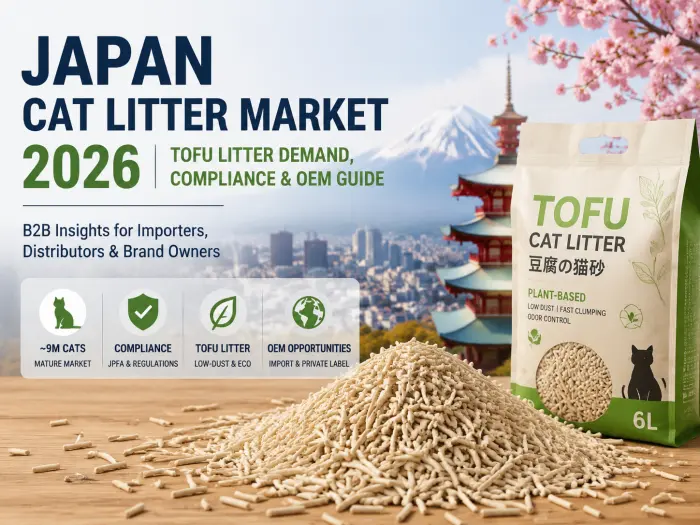
Japan is a mature, premium cat-care market built on an estimated 9 million cats, dense urban apartment living, and an aging pet-owning population. For B2B buyers, Japan rewards low-dust, lightweight, high-performance formulas—especially tofu and other plant-based litters—while enforcing strict labelling, safety, and packaging rules. This guide covers demand, compliance, and the import path for international suppliers.
Quick answer: Japan’s cat litter market serves an estimated 9 million cats in a premium, high-density retail environment. Tofu and plant-based litters are gaining share on low-dust and eco credentials, but flushable claims are limited by municipal sewage rules. Importers must meet JPFA voluntary standards, the Container and Packaging Recycling Act, and green-claim substantiation; RCEP may improve the cost competitiveness of eligible Chinese plant-based litter exports, depending on applicable rules of origin and tariff schedules.
Market Profile: Mature, Premium, High-Density
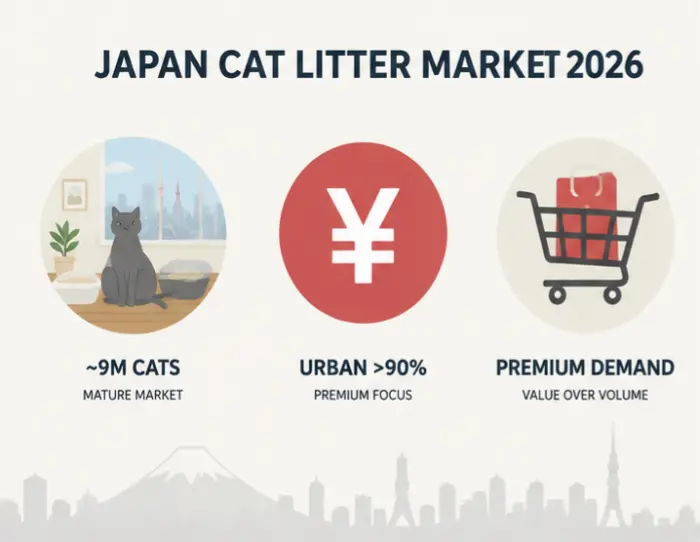
Japan’s cat population sits at an estimated 9 million, with urbanization above 90% and a large share of apartment-dwelling, single-cat households. The category is value-driven rather than volume-driven: buyers pay more for low dust, odour control, and credible eco-positioning. The table below frames the B2B-relevant structure.
| Metric | Japan 2026 | Note |
|---|---|---|
| Cat population | ~9 million | Mature, high penetration |
| Urbanization | >90% | Apartment-dominated |
| E-commerce share | Growing share | Subscription-led home delivery |
| Household structure | Single-cat homes dominate | Compact living shapes pack size |
| Premium tier | Rising share of value | Low-dust, natural |
| Import dependence | High for natural substrates | Low MFN tariffs |
Why Tofu and Plant-Based Litter Lead in Japan
Tofu Cat Litter Demand Drivers
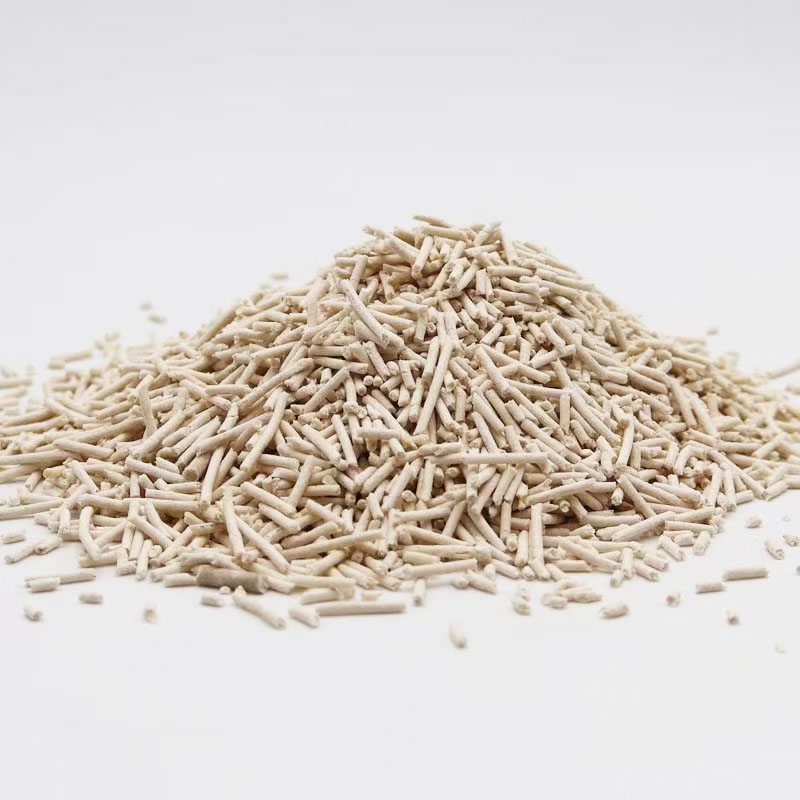
Urban apartment living, elderly owners, and extreme cleanliness standards push demand for lightweight, low-dust, odour-controlling tofu litter. In the pellet segment, wood leads at 55–65% of volume, paper at 20–30%, and tofu or other plant-based pellets at 10–15% and growing. Understanding how tofu cat litter is made helps buyers evaluate the formulation and quality control behind export-grade product.
Flushability and the Sewage Reality
Despite “flushable” marketing elsewhere, most Japanese municipalities prohibit flushing cat litter because of sewage and toxoplasmosis concerns. Claims must be substantiated under the Act against Unjustifiable Premiums and Misleading Representations, with the test standard disclosed. Suppliers should position tofu litter as compostable or landfill-appropriate, not flushable, unless proven compatible with local systems.
Compliance and Quality Standards
JPFA Voluntary Standards
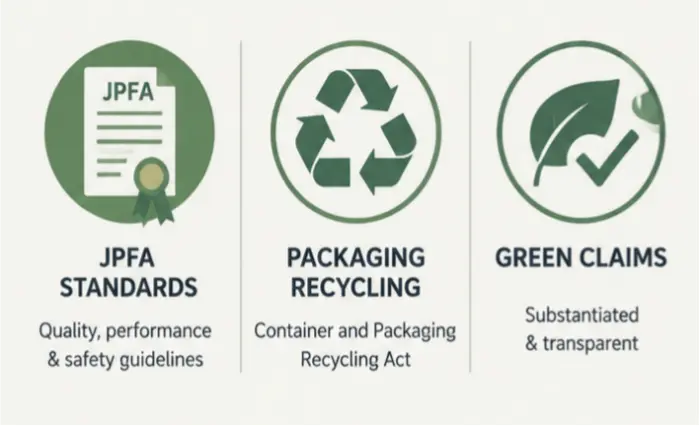
Japanese pet product buyers often refer to industry guidelines and supplier quality standards when evaluating cat litter performance, including dust control, absorbency, clumping ability, and material safety. Importers should ensure that product specifications meet buyer expectations and applicable Japanese regulations. The Japanese Ministry of the Environment administers packaging-recycling obligations referenced below (see Ministry of the Environment, Japan).
Labelling, Packaging, and Green Claims
The Container and Packaging Recycling Act imposes recycling obligations on importers, which favours lightweight mono-material bags. Japanese product safety and consumer protection frameworks require suppliers to ensure product safety, accurate labelling, and substantiated claims, including material safety and environmental statements. Biodegradable or compostable claims need JIS test data. Before quoting, review the full cat litter export compliance checklist and confirm claim substantiation.
For companies planning to export cat litter to Japan, product specifications, packaging compliance, and claim verification should be reviewed before shipment.
Retail and Distribution Landscape
GMS, Drugstores, and E-commerce
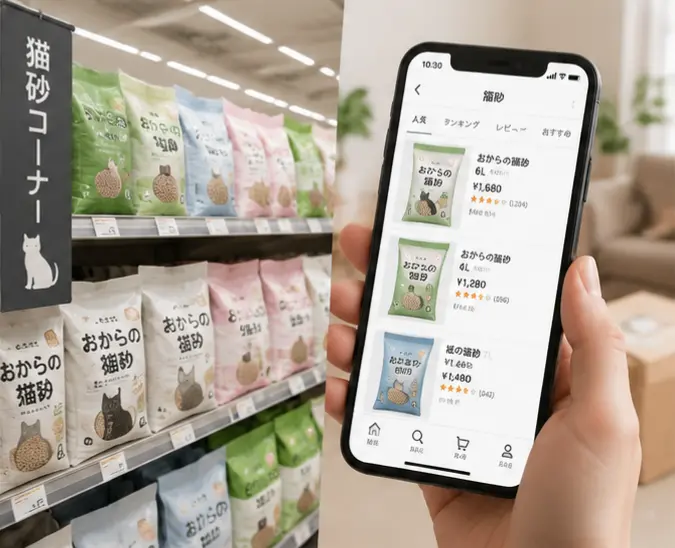
General merchandise stores, pet specialty retailers, and drugstore chains remain important offline channels, especially for mainstream cat litter purchases. E-commerce channels, including Amazon.co.jp and Rakuten, represent a significant and fast-growing share of Japan’s cat litter sales, driven by subscription purchasing and home delivery preferences. Compact living shapes pack sizes: multi-cat households buy 8–12 kg bulk, while single-cat buyers prefer mid-priced clumping formats.
Private Label and Import Dependence
Major retailers run private label cat litter sourced from domestic and overseas contract manufacturers. Japan is import-dependent for natural substrates, with low most-favoured-nation tariffs (commonly 0–2.5%) and RCEP preferential access improving the landed-cost case for Chinese plant-based litter. This makes a China-based OEM partner especially competitive for tofu and mixed formats.
What B2B Buyers Should Spec
For the Japanese market, spec low dust (target ≤0.1 mg/m³ during pouring), a 2 mm tofu or wood-paper composite, subtle natural scent, and recyclable mono-material packaging or packaging materials aligned with buyer sustainability requirements. Manufacturers such as Pet Horizon supply private label cat litter in tofu and mixed formats with JPFA-aligned quality control. Confirm pack sizes (2 kg pouches for e-commerce, 6–10 kg for bulk), MOQ (often 1×20 ft container, negotiable), and lead time before peak seasons.
Market Data Sources
Market data in this guide is compiled from publicly available industry research sources, including IndexBox market reports and official Japanese regulatory publications. Figures are intended for B2B market evaluation and sourcing decisions, not as precise statistical measurements.
Conclusion
Japan is a high-bar, high-value market where product quality—not price—wins. Tofu and plant-based litters fit urban, low-dust, eco-aware demand, but compliance and claim discipline decide shelf access. Buyers who pair a certified plant-based line with JPFA-aligned QC and a reliable OEM partner can build recurring premium volume from an estimated 9 million cats.
Frequently Asked Questions
Japan serves an estimated 9 million cats in a mature, premium, import-dependent category. Value growth outpaces volume as buyers shift toward low-dust natural and specialty formats.
Tofu litter is lightweight, low-dust, and odour-controlling—ideal for urban apartments and elderly owners. Its plant-based, eco-friendly profile also matches Japanese cleanliness and sustainability preferences.
Generally no. Most municipalities prohibit flushing cat litter under sewage and public-health rules. Suppliers should avoid flushable claims unless substantiated for local systems and position tofu litter as compostable or landfill-appropriate instead.
Key frameworks are the JPFA voluntary standards (dust, absorbency, clump strength, heavy metals), Japanese product safety and consumer protection requirements (supplier responsibility for product safety, accurate labelling, and substantiated claims), and the Container and Packaging Recycling Act (recycling obligations on importers).
Most-favoured-nation tariffs are low, commonly 0–2.5%, and RCEP provides preferential access that further improves the landed-cost case for Chinese plant-based litter.
General merchandise stores, pet specialty retailers, and drugstore chains remain core offline channels, while e-commerce platforms such as Amazon.co.jp and Rakuten represent a fast-growing share driven by subscription purchasing and home delivery.
Yes. Chinese manufacturers can supply tofu cat litter to Japan through OEM and private label programs. Successful suppliers typically provide consistent quality control, compliant packaging, accurate labelling, and the documentation required by Japanese buyers.
Spec a certified low-dust tofu or plant-based line with JPFA-aligned QC, confirm pack sizes and MOQ (often 1×20 ft container, negotiable), and partner with a China-based OEM or private label cat litter manufacturer that leverages RCEP tariff access for competitive landed cost.