





Silica gel cat litter is a moisture-absorbing cat litter made from synthetic silica gel and imported into the United States from multiple origins. In U.S. customs practice, buyers often search for a product’s “HS code,” but U.S. entries use the Harmonized Tariff Schedule of the United States (HTSUS), which extends the six-digit international HS system with U.S.-specific subheadings. In NY F88594, U.S. Customs and Border Protection (CBP) classified silica cat litter from China under HTS 2811.22.1000, which covers silicon dioxide in the form of synthetic silica gel. The applicable duty depends on the current HTS and country of origin, including any additional Chapter 99 measures. This guide explains the classification precedent, duty framework, customs documentation, and supplier checks U.S. importers should review before placing an order.
Quick Answer
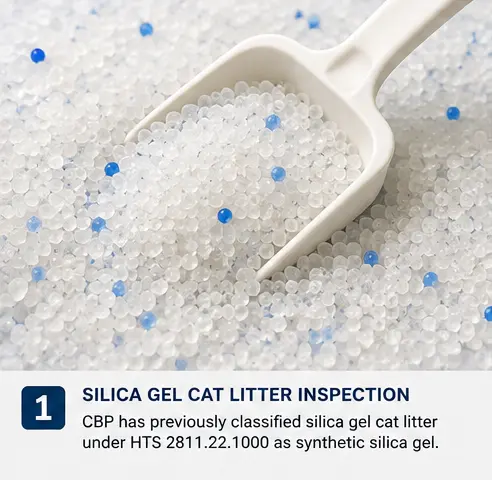
For U.S. imports, silica gel cat litter made of synthetic silica gel has been classified by CBP under HTS 2811.22.1000, covering silicon dioxide: synthetic silica gel. CBP’s NY F88594 specifically addressed silica cat litter from China, while later ruling H332948 addressed silica gel cat litter under the same subheading and discussed applicable Chapter 99 treatment for Chinese-origin goods. Importers should confirm that their product matches the relevant ruling facts and then check the current HTSUS and Chapter 99 provisions before calculating landed cost.
| Item | Classification / Check | Buyer Action |
|---|---|---|
| Silica gel cat litter | CBP precedent: HTS 2811.22.1000 | Confirm the product matches the applicable ruling facts |
| Country of origin | Can affect additional tariff measures | Review applicable Chapter 99 provisions |
| Product composition and form | Relevant to classification analysis | Keep current specification and composition records |
| Current tariff treatment | Can change through HTS or Chapter 99 revisions | Verify immediately before entry |
What HTS 2811.22.1000 Covers
HTS 2811.22.1000 covers silicon dioxide in the form of synthetic silica gel. CBP classified silica cat litter from China under this subheading in NY F88594, and later ruling H332948 again classified the subject silica gel cat litter under 2811.22.1000. These rulings are useful classification precedents, but importers should confirm that their own product has comparable composition, physical characteristics, packaging, and intended use. The current HTSUS should be checked before entry because tariff provisions can be revised.
The official HTSUS is maintained by the U.S. International Trade Commission.
Why Classification Should Be Reviewed Against the Product Facts
Silica gel is a manufactured material, but that fact alone does not determine its tariff classification. CBP’s silica cat litter precedent places synthetic silica gel cat litter under HTS 2811.22.1000. Alternative headings should not be selected solely because the product is marketed as a chemical, desiccant, or pet-care product. Importers should compare the actual composition, physical form, packaging, and intended use with the HTS language and relevant CBP rulings before filing an entry.
U.S. Import Duty for Silica Gel Cat Litter
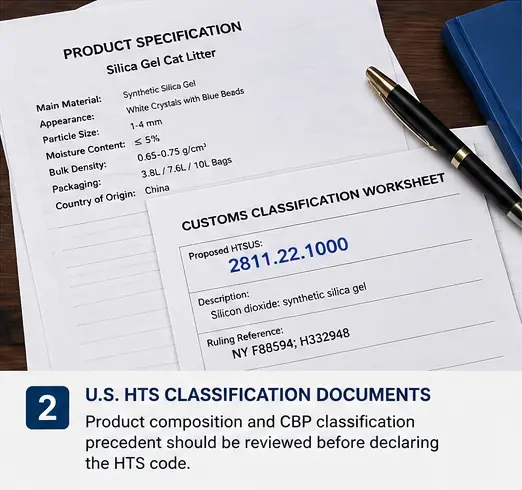
CBP’s historical classification rulings cited a 3.7% Column 1 general duty rate for synthetic silica gel under HTS 2811.22.1000. This historical rate should not be presented as the current 2026 landed-duty rate because the amount payable can also depend on the current HTSUS, country of origin, and additional Chapter 99 tariff provisions. For Chinese-origin silica gel cat litter, CBP has previously addressed Section 301 duties and product-specific exclusions under Chapter 99. Importers should verify the current HTSUS duty treatment and any applicable Chapter 99 provisions immediately before entry.
Documentation for U.S. Customs Entry
Importers should maintain the commercial invoice, packing list, bill of lading or other transport documentation, and any origin documentation required for the transaction or applicable tariff program. For silica gel cat litter, buyers should also keep a product specification sheet, composition information, packaging details, and other technical records that can support the declared classification if CBP requests additional information. The product description should remain consistent across the invoice, packing list, specification sheet, and customs entry. The U.S. Customs and Border Protection trade portal provides current customs and entry guidance.
Supplier and Product Checks
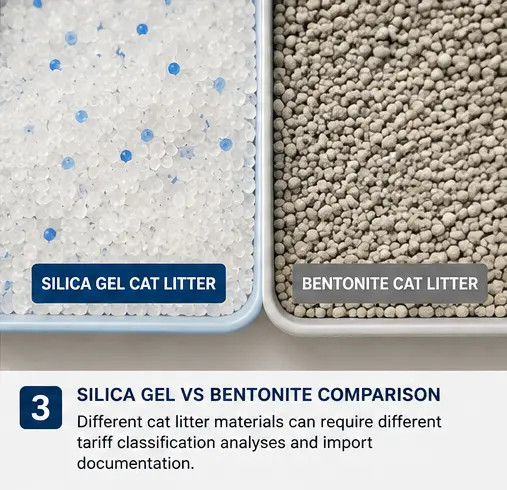
Before ordering silica gel cat litter, U.S. buyers should obtain the manufacturer’s full product description, composition or material specification, particle form, packaging details, country of origin, and any HTS classification previously used for comparable shipments. A supplier’s declared HTS code is useful background information but does not replace the importer’s responsibility to confirm classification. Buyers should also ensure that the commercial invoice, packing list, product specification, and shipping documents describe the same product consistently. Comparing silica gel with other cat litter materials can also help buyers evaluate product positioning and sourcing requirements before finalizing an order. For broader material comparison, buyers can review the cat litter types guide. For sourcing questions, buyers can also contact an experienced cat litter supplier for product specifications, packaging options, and export documentation.
Buyer Checklist Before Shipment
- Confirm that the product is made from synthetic silica gel and matches the relevant CBP ruling facts.
- Compare the product facts with CBP classification precedent.
- Confirm country of origin.
- Check the current HTSUS duty rate.
- Review applicable Chapter 99 tariff provisions.
- Keep product specifications and composition records.
- Make sure invoice and packing-list descriptions are consistent.
Conclusion
For U.S. imports, silica gel cat litter made of synthetic silica gel has been classified by CBP under HTS 2811.22.1000. Importers should confirm that the exact product matches the relevant CBP classification precedent, verify the current base duty and applicable Chapter 99 measures, and maintain consistent product and composition documentation before shipment. Tariff classification should be treated as part of the sourcing and landed-cost process, not as a post-shipment administrative detail. The broader cat litter import guide covers additional documentation and import considerations.
Frequently Asked Questions
CBP has classified silica cat litter made of synthetic silica gel under HTS 2811.22.1000, covering silicon dioxide: synthetic silica gel. Importers should confirm that their product matches the facts and specifications considered in the applicable classification ruling.
The HTSUS classification determines the tariff provision used for the entry and can affect the applicable duty treatment, including additional tariff measures. An incorrect classification can result in duty adjustments, entry delays, or post-entry customs action. Importers should support the declared classification with product information that accurately describes the imported merchandise.
Not necessarily. CBP has classified silica cat litter made of synthetic silica gel under HTS 2811.22.1000. Heading 3824 covers certain chemical products and preparations that are not otherwise classified elsewhere, so the correct classification depends on the actual product characteristics and applicable tariff rules.
The applicable duty should be verified in the current HTS because tariff rates and Chapter 99 measures can change. The general (MFN) rate historically cited for synthetic silica gel under HTS 2811.22.1000 is 3.7% ad valorem, but that figure should not be used as a 2026 landed-duty calculation without checking the current tariff schedule and any additional duties for the product’s country of origin.
At minimum, importers should maintain the commercial invoice, packing list, and transport documentation required for the entry, together with any origin documentation required for the applicable transaction or tariff program. For classification support, keep the product specification, composition information, packaging details, and relevant CBP ruling references available if additional information is requested.
Pet Horizon’s current core cat litter range focuses on plant-based and mineral formats such as tofu and bentonite litter. This guide covers silica gel primarily from the perspective of U.S. import classification, tariff review, and sourcing decisions.
CBP has previously classified silica cat litter from China under HTS 2811.22.1000 for synthetic silica gel. However, classification and the effective duty are separate questions. Chinese-origin goods may be subject to additional Chapter 99 tariffs or other trade measures, so importers should verify the current treatment for HTS 2811.22.1000 and the specific country of origin before placing an order.
Importers can search the current Harmonized Tariff Schedule through the U.S. International Trade Commission and review CBP customs guidance and classification rulings through the CBP trade portal. Always verify the version and tariff provisions applicable on the date of entry.