



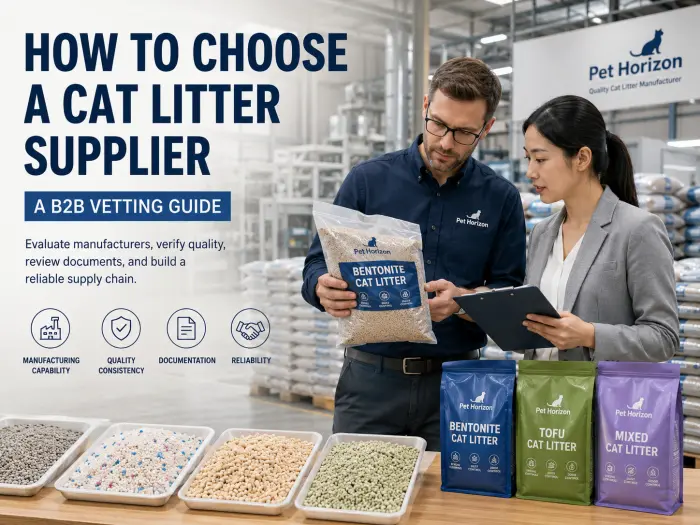
Choosing a cat litter supplier is one of the highest-stakes decisions a distributor, importer, or private-label brand makes. The right partner delivers consistent quality, honest documentation, and reliable lead times; the wrong one costs you rejected shipments, customs delays, and lost customers. This guide explains how to evaluate and verify a cat litter supplier before you commit.
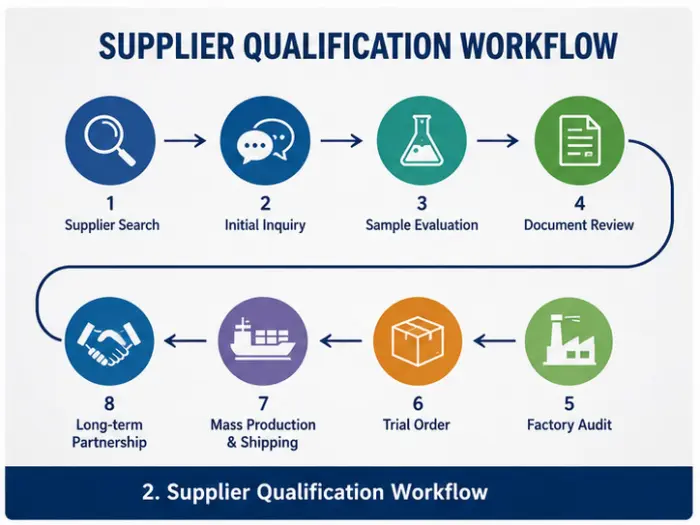
Quick answer: A reliable cat litter supplier can prove its manufacturing capability, provide complete product and compliance documentation, hold consistent quality across batches, and communicate clearly on lead times and terms. Verify all four with samples, documentation review, and — where possible — a factory audit before placing a first order.
Key Takeaways
- Confirm whether the supplier is a direct manufacturer or a trading company before requesting a quotation.
- Review product specifications, Certificates of Analysis (COAs), and compliance documents before paying a deposit.
- Test samples from multiple production batches to evaluate consistency in clumping, dust level, moisture, and odor control.
- Verify production capacity, lead times, MOQ, and OEM capabilities to ensure the supplier can support long-term growth.
- For large-volume purchases, arrange a factory audit or third-party inspection before placing your first container order.
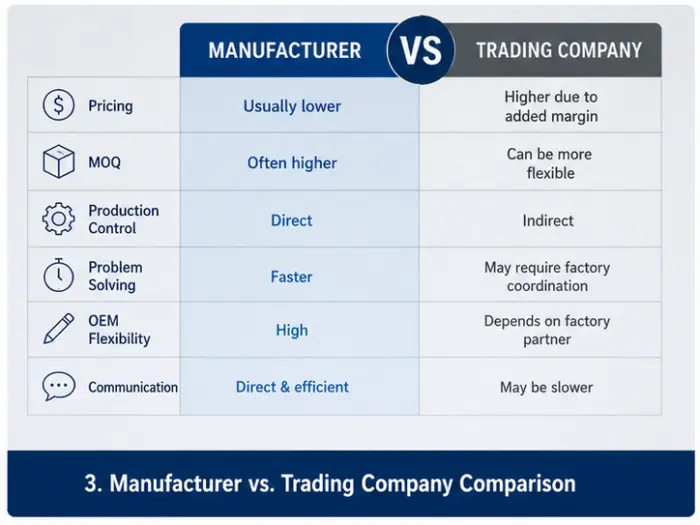
Manufacturer vs. Trading Company
The first thing to establish is who you are actually dealing with. Suppliers fall into two broad categories:
- Direct manufacturers own the production line. They give you the best pricing, direct control over formulation, and faster problem-solving — but may have higher MOQs.
- Trading companies resell from one or more factories. They can be flexible on mixed orders and small volumes, but add margin and a layer between you and production.
Neither is inherently wrong, but you should know which one you are buying from and price accordingly. For the full sourcing workflow — from shortlisting to negotiation — see our cat litter sourcing and buying guide.
| Criteria | Manufacturer | Trading Company |
|---|---|---|
| Pricing | Usually lower | Higher due to added margin |
| OEM flexibility | High | Depends on factory partner |
| MOQ | Often higher | Can be more flexible |
| Production control | Direct | Indirect |
| Problem solving | Faster | May require factory coordination |
The Four Pillars of Supplier Verification
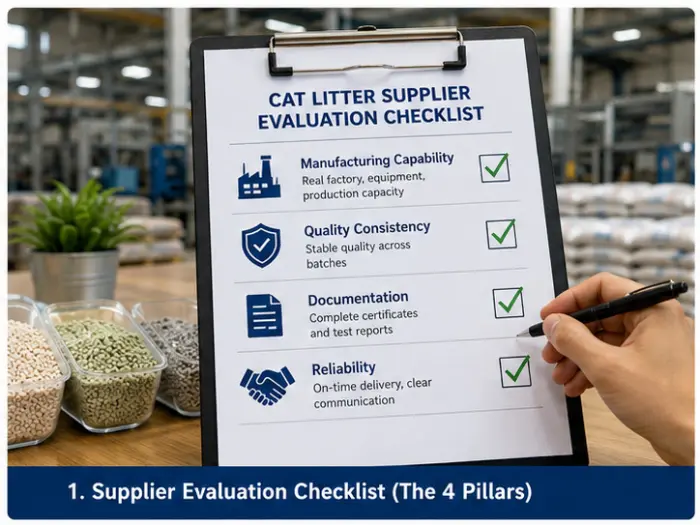
A trustworthy supplier can demonstrate all four of the following. Treat any gap as a risk to price in — or a reason to walk away.
| Pillar | What to check | How to verify |
|---|---|---|
| Manufacturing capability | Real production line, capacity, equipment | Factory photos/video, audit, capacity figures |
| Quality consistency | Batch-to-batch clumping, dust, moisture | Samples from different batches, COA |
| Documentation | Product specs, safety data, certificates | Request full document pack before ordering |
| Reliability | Lead times, communication, references | Trial order, trade references, response speed |
Documentation a Supplier Should Provide
Before any deposit, a serious supplier should be able to supply, on request:
- Product specification sheet — particle size, clumping performance, dust rating, moisture, additives.
- Certificate of Analysis (COA) — batch-level test results.
- Safety data — where applicable for the material and destination market.
- Commercial documents — proforma invoice, packing list, and export paperwork.
Depending on the destination market and purchasing requirements, professional suppliers may also provide:
- ISO 9001 Quality Management certification
- Material Safety Data Sheet (MSDS) or Safety Data Sheet (SDS), where applicable
- Certificate of Origin
- Third-party inspection reports
- Container loading inspection records
- Production batch traceability records
Incomplete or evasive documentation is the clearest early warning sign. The deeper technical due-diligence steps are covered in how to choose a reliable cat litter manufacturer.
Factory Audit Checklist
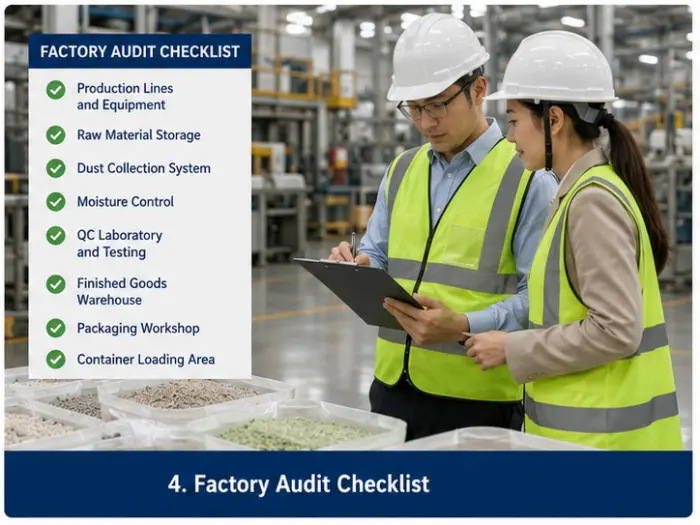
If you plan to purchase multiple containers annually, conducting a factory audit is one of the most effective ways to reduce sourcing risk. During the audit, verify the following:
- Production lines and manufacturing equipment
- Raw material storage conditions
- Dust collection and environmental control systems
- Quality control laboratory and testing procedures
- Packaging workshop and palletizing process
- Finished goods warehouse
- Container loading procedures
- Production capacity compared with quoted figures
Red Flags When Evaluating a Supplier
- Prices far below the market with no clear reason.
- Reluctance to provide samples or batch documentation.
- Vague answers about MOQ, lead time, or production capacity.
- No verifiable business registration or trade references.
- Pressure to pay a large deposit before sampling.
- Refuses to arrange a live video factory tour.
- Provides inconsistent product specifications between quotations.
- Cannot explain the manufacturing process clearly.
- Packaging quality differs from approved samples.
- Sales staff cannot answer basic technical questions.
Common Mistakes Buyers Make When Choosing a Cat Litter Supplier
Many sourcing problems originate from incomplete supplier evaluation rather than product quality alone. Avoid these common mistakes:
- Choosing the lowest quotation without comparing specifications.
- Skipping sample evaluation before placing bulk orders.
- Ignoring production capacity during seasonal demand.
- Not verifying OEM experience.
- Failing to review quality documentation.
- Overlooking shipping lead times and production schedules.
Sourcing from Pet Horizon
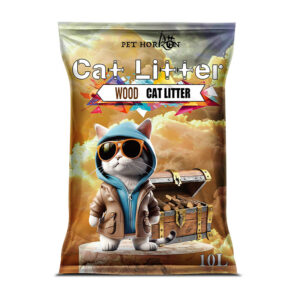
Pet Horizon is a direct manufacturer of bentonite, tofu, mixed, and pine cat litter for B2B buyers. We provide product specifications, batch documentation, and samples on request, and support OEM and private-label programs with transparent lead times. If you are comparing suppliers, we welcome the same scrutiny outlined above — capability, quality, documentation, and reliability. Buyers negotiating trade terms can also review our cat litter wholesale pricing structure.
Our team works with importers, distributors, wholesalers, supermarkets, and private-label brands in multiple international markets. The supplier evaluation criteria outlined in this guide are based on practical export experience and real sourcing requirements rather than theoretical purchasing advice.
Supplier Evaluation Checklist
Before confirming your first order, make sure you can answer “yes” to each of the following questions:
- Is the supplier’s manufacturing capability verified?
- Have you tested product samples?
- Have you reviewed the Certificate of Analysis?
- Are production capacity and lead times confirmed?
- Are OEM requirements documented?
- Have you checked trade references or inspection reports?
- Have all commercial documents been reviewed?
- Is a trial order planned before large-scale purchasing?
Conclusion
The best cat litter supplier is the one that can prove it — through capability, consistent quality, complete documentation, and reliable delivery. Verify all four with samples and paperwork before your first order, watch for the red flags, and you will avoid the costly mistakes that come from choosing on price alone.
Frequently Asked Questions
Confirm business registration, request product and batch documentation, order samples from different batches, check trade references, and — where feasible — arrange a factory audit or third-party inspection before committing.
Direct manufacturers usually offer better pricing and formulation control; trading companies can be more flexible on small or mixed orders but add margin. Either can work — just know which you are dealing with and price accordingly.
At minimum: a product specification sheet, a Certificate of Analysis, applicable safety data, and standard commercial documents (proforma invoice, packing list, export paperwork). Incomplete documentation is a warning sign.
Prices far below market with no explanation, refusal to provide samples or documentation, vague answers on capacity and lead time, no verifiable registration, and pressure to pay large deposits before sampling.
Essential. Samples — ideally from more than one batch — let you confirm clumping, dust, moisture, and odor control are consistent before you scale to a full order.
Established manufacturers typically offer both, subject to packaging and formulation MOQs. Confirm artwork, formulation, and lead-time details in writing before production.
Create a comparison sheet covering pricing, production capacity, product quality, documentation, MOQ, lead times, OEM capability, and communication responsiveness. Comparing suppliers using the same evaluation criteria helps reduce sourcing risk.
Yes, if the purchase volume justifies the cost. A factory visit or third-party audit can verify production capacity, quality systems, warehouse conditions, and manufacturing consistency before committing to long-term cooperation.
MOQ varies by packaging, formulation, and manufacturer. Many OEM suppliers require one or more container loads per customized packaging design, although standard packaging usually allows lower minimum quantities.
Many established manufacturers offer multiple product lines, including tofu, bentonite, mixed, and pine cat litter, allowing buyers to consolidate purchases under one supplier while maintaining consistent quality standards.