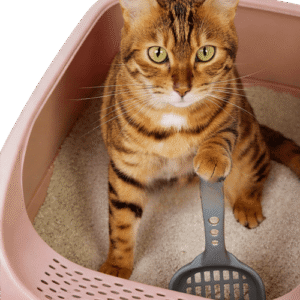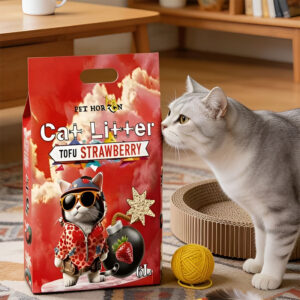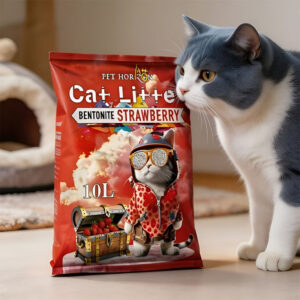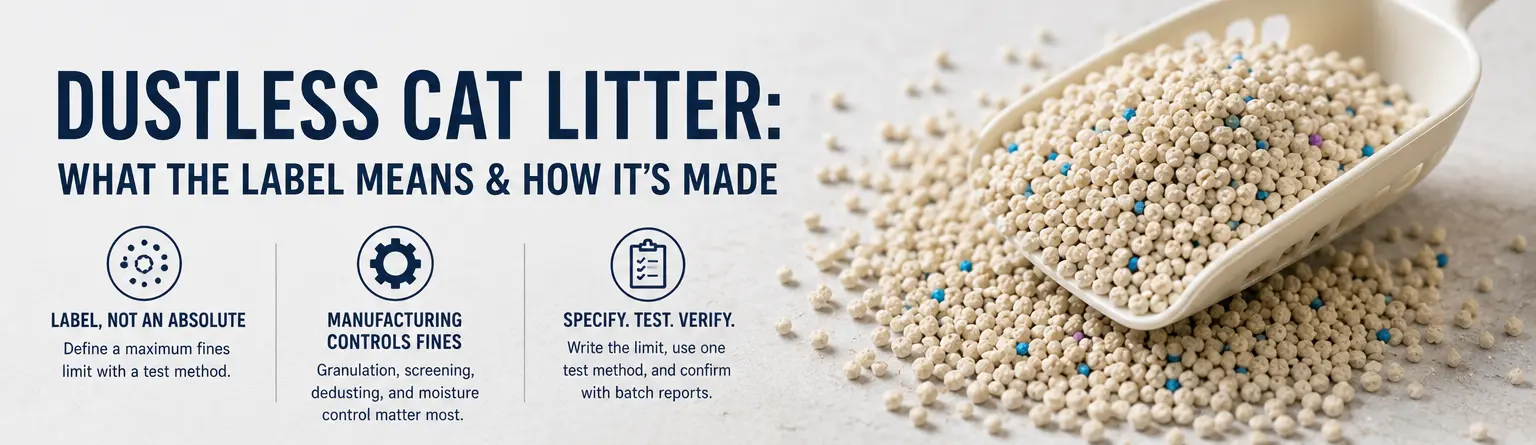





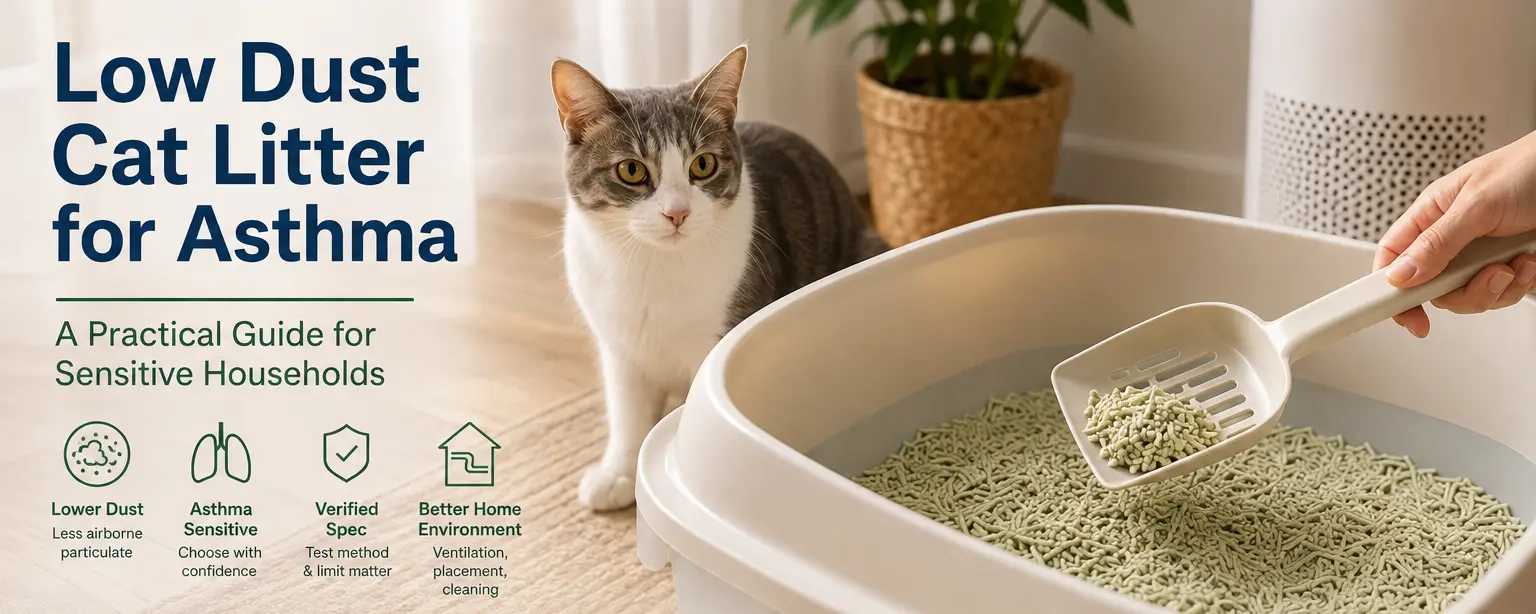
Families managing feline asthma or living with a person who has asthma may ask whether cat litter dust can add to respiratory irritation and what a “low dust” claim should mean before they buy. This guide explains how to evaluate litter dust, compare measurable product specifications, and choose a lower-dust option for a respiratory-sensitive home. It is written for buyers and procurement teams, not as veterinary or medical advice; anyone with breathing symptoms should seek appropriate professional care.
Quick Answer: Low dust cat litter for asthma is best understood as a lower-dust product with a clearly defined and verifiable dust or fines specification. Because “respirable” dust has a specific particle-size meaning, buyers should not treat a simple sieve result as a direct measurement of respirable exposure. For an asthma-sensitive home, compare suppliers using the same test method and acceptance limit, and combine a lower-dust litter with appropriate box placement, cleaning, and ventilation. No litter should be treated as a medical treatment or as completely dust-free.
Does Cat Litter Dust Matter for Asthma in the Home?
Litter dust is a mixture of fine particles released when litter is poured, scooped, or walked through. In any home, fine particulate in the air is a general indoor-air-quality topic. For a household that includes a person or cat with diagnosed asthma, reducing avoidable particulate sources is a reasonable part of an overall management plan that is set with a clinician.
The key point for buyers is separation of concerns: a lower-dust litter reduces one variable in the home, but it does not treat or prevent asthma. Respiratory care stays with a veterinarian or physician. The litter choice is a supporting environmental step, not a substitute for medical guidance. Households comparing options can also review our low dust cat litter for sensitive cats guide for the product-selection view of the same issue.
What “Low Dust” Actually Means on a Spec Sheet
“Low dust” is a relative performance claim, not a fixed material property. One manufacturer’s “low dust” can differ from another’s because there is no single universal consumer label that defines it. The useful question for a buyer is not “is it low dust?” but “what limit does the supplier state, and by what method is it measured?”
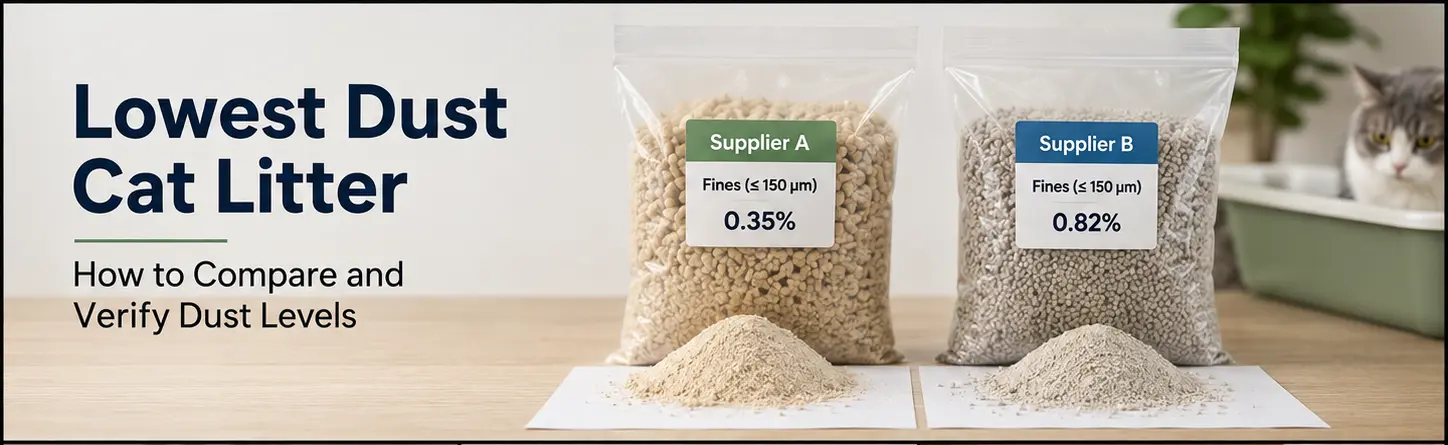
A useful low-dust specification should identify the test method, the test conditions or sample basis, and the acceptance limit used for that product. Sieve-based fines testing can help quantify small-particle content, while other methods may assess airborne dust under defined test conditions; these results should not be treated as interchangeable. For procurement, the key is to use the same method and acceptance criterion across suppliers so that results can be compared consistently. Occupational exposure methods such as those described by the U.S. National Institute for Occupational Safety and Health address workplace airborne-particle measurement and should not be presented as a direct product-quality test for cat litter.
Choosing Low Dust Litter for Cats with Asthma
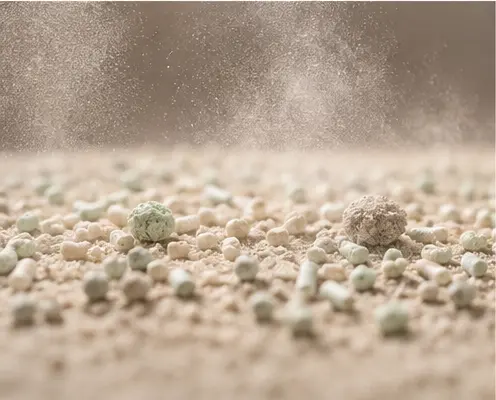
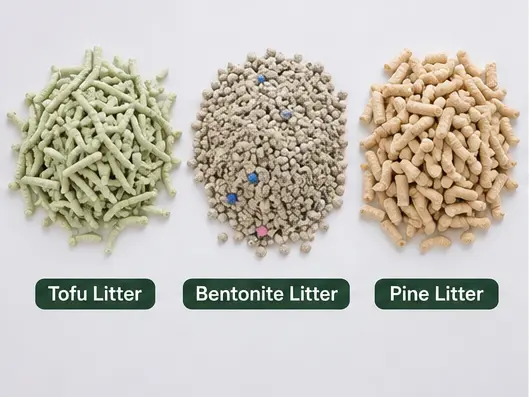
Material type can influence particle shape, density, and dust generation, but the finished dust level depends heavily on formulation, granulation, screening, and de-dusting controls. For common commercial formats:
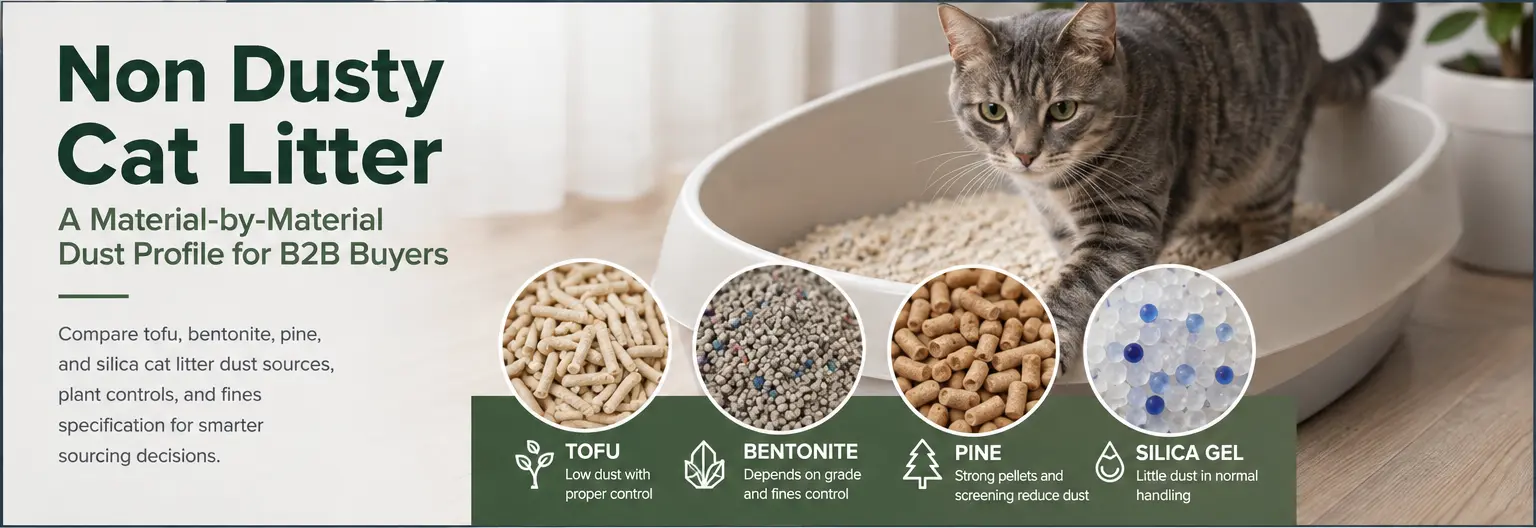
- Tofu litter — commonly produced by extrusion and screening; finished fines depend on formulation, granule formation, and the effectiveness of the screening and de-dusting steps.
- Bentonite clumping litter — produced in different particle grades and processed through screening and dust-removal steps; the finished fines level should be verified on the actual product specification.
- Pine litter — commonly supplied as wood-based pellets or granules; particle size and processing determine how much fine material is present and released during handling.
For an asthma-sensitive home, compare actual dust or fines data from each supplier rather than assuming that one material is automatically lower dust than another. Silica-based litters are a separate material category; we do not produce them, so product-specific questions should be directed to the relevant manufacturer and, where respiratory symptoms are involved, a veterinarian or physician.
Practical Steps to Reduce Dust in an Asthma Household
Beyond the litter itself, day-to-day handling changes how much particulate becomes airborne:
- Pour and scoop gently to minimize unnecessary dust generation during handling.
- Place the litter box in a well-ventilated area and away from the sleeping area of a person or cat with respiratory sensitivity.
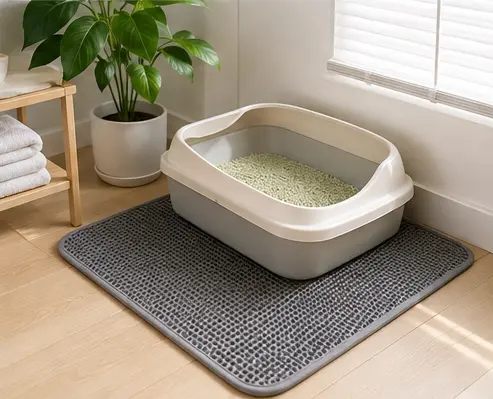
- Use a litter mat and a high-sided box if they help reduce tracking and scatter without restricting airflow around the litter box.
- Keep the person or cat with asthma away from the immediate area during litter changes and deep cleaning when practical.
- Keep the litter formula and handling routine consistent so that changes in respiratory symptoms can be discussed with a clinician without introducing multiple environmental variables at once.
These steps reduce avoidable particulate without implying the litter treats asthma. They are environmental hygiene, complementary to the care plan set by a clinician.
Specifying Low Dust Litter for Wholesale and OEM Orders
For private label cat litter and wholesale volumes, buyers should put the dust specification in the contract rather than relying on brochure language. A workable specification should define the maximum fines or dust result, the applicable test method and conditions, the sampling frequency, and the action required if a lot exceeds the agreed limit. For products marketed as “dust-free” or “low dust,” the commercial label should not replace a measurable product specification.
For dust-free clumping cat litter and other production lines, request batch-level test records or agreed quality-control records where applicable. Standardizing the test method and acceptance criterion across suppliers makes results more comparable and reduces reliance on subjective dust claims.
When to Consult a Veterinarian
If a cat shows coughing, wheezing, open-mouth breathing, or reduced activity, those signs belong to a veterinarian, not a litter guide. This article does not diagnose and is not a replacement for clinical care. A clinician can advise on environmental steps appropriate to the individual cat, including whether litter changes are worth trialing as part of a broader plan.
In the United States, cat litter is not generally regulated by the U.S. FDA Center for Veterinary Medicine as an animal food or veterinary drug. The FDA notes that cat litter and other miscellaneous animal products may fall under the jurisdiction of the U.S. Consumer Product Safety Commission or another agency depending on how the product is made and marketed. Regulatory compliance and respiratory-health claims should therefore be treated as separate questions: product requirements depend on the applicable market and product category, while asthma-related decisions should be discussed with a veterinarian or physician.
Conclusion
Low dust cat litter for asthma should be treated as a measurable product-specification claim rather than a medical category. Buyers should compare the stated dust or fines limit, test method, and test conditions, then combine the litter choice with sensible handling, box placement, and ventilation practices. Lower dust does not mean zero dust or asthma protection, and respiratory symptoms should be addressed by a physician or veterinarian. For bulk and OEM purchasing, put the agreed dust specification and acceptance criteria in writing rather than relying on the product label alone.
Frequently Asked Questions
Litter dust is a source of fine particulate in the home air. For a cat with diagnosed asthma, reducing avoidable particulate is a reasonable environmental step, but any breathing change should be evaluated by a veterinarian rather than addressed through litter alone.
It means a cat litter product marketed for lower dust generation and supported by a defined dust or fines specification. The claim is relative rather than a medical rating, and no litter should be assumed to be completely dust-free without an appropriate test definition.
There is no universal “asthma-safe” rating for cat litter. A lower-dust product may reduce one potential airborne irritant, but the actual suitability for a cat with asthma depends on the individual cat and its environmental triggers. Any respiratory symptoms or litter-related concerns should be discussed with a veterinarian.
The litter property is the same; the difference is the use case. “For cats with asthma” signals the buyer is selecting with a respiratory-sensitive household in mind and should weight the stated fines limit more heavily in the decision.
Accidentally inhaling cat litter dust can expose a person or cat to airborne particles and may be irritating, particularly in a respiratory-sensitive household. A single exposure does not establish that the litter caused an asthma attack or other medical condition. If coughing, wheezing, breathing difficulty, or other persistent symptoms occur, seek advice from a physician or veterinarian as appropriate.
There is no single material that is automatically lowest in dust across all products. Dust generation can vary with particle size, formulation, granulation, screening, and de-dusting controls. Ask each candidate supplier for the stated dust or fines limit and test method, then compare products using the same measurement basis rather than relying on the material name alone.
Put a maximum fines percentage, the test method, sampling frequency, and a fail-lot step in the purchase contract, and request batch test results with shipment. This makes the claim auditable rather than promotional.
Any change for a cat with asthma should be discussed with a veterinarian as part of the cat’s care plan. A lower-dust formula can be one environmental step, but the decision and timing are clinical, not something a product guide should determine.