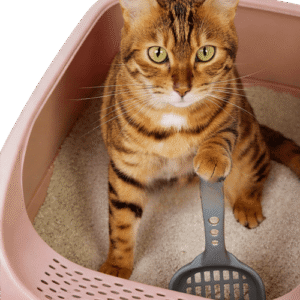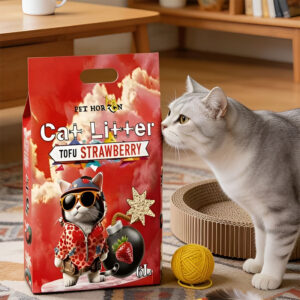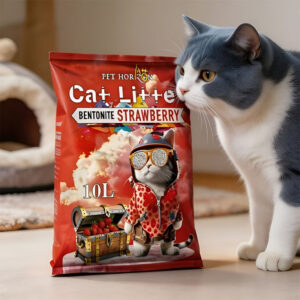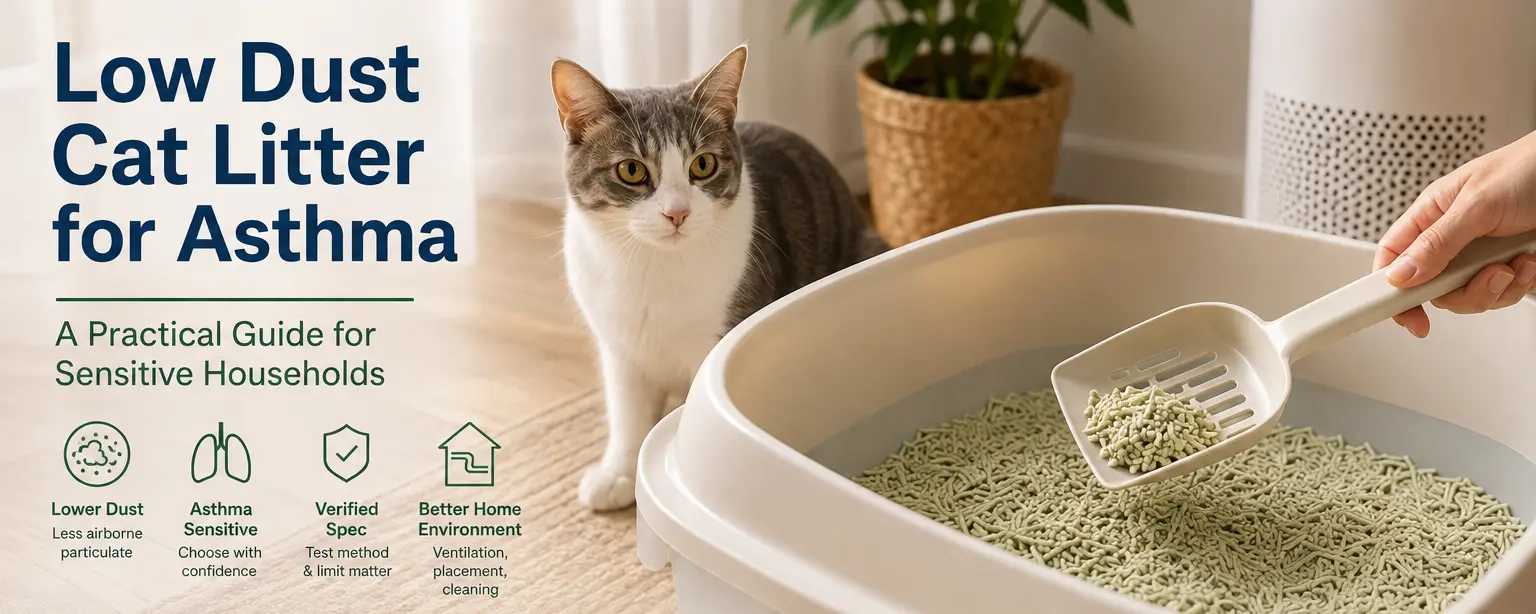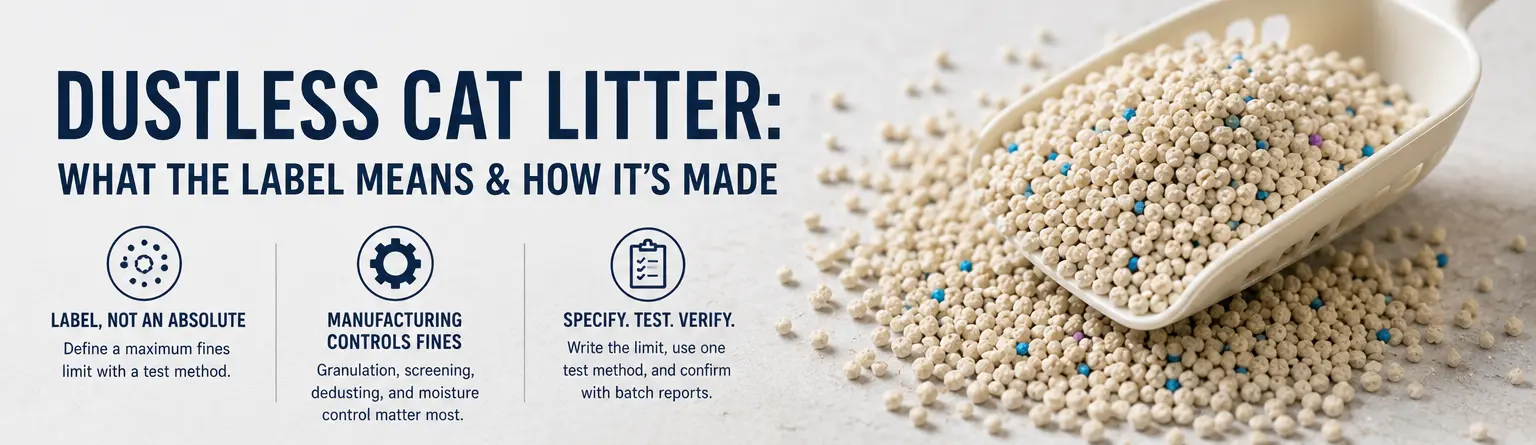





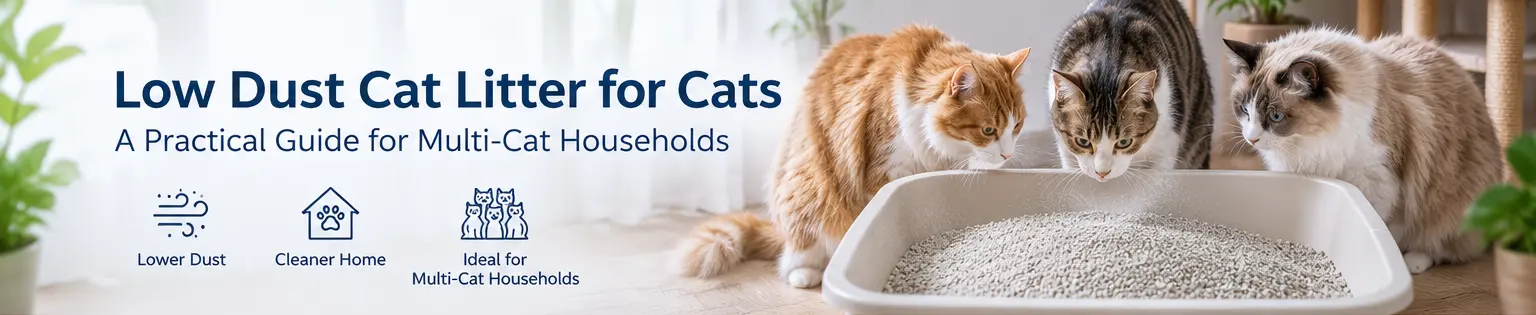
In a multi-cat home, litter is poured, scooped, dug, and tracked more often than in a single-cat household. That higher level of daily disturbance can make loose fine particles more noticeable. Choosing low dust cat litter is therefore less about the wording on the bag and more about how the finished litter behaves during normal use.
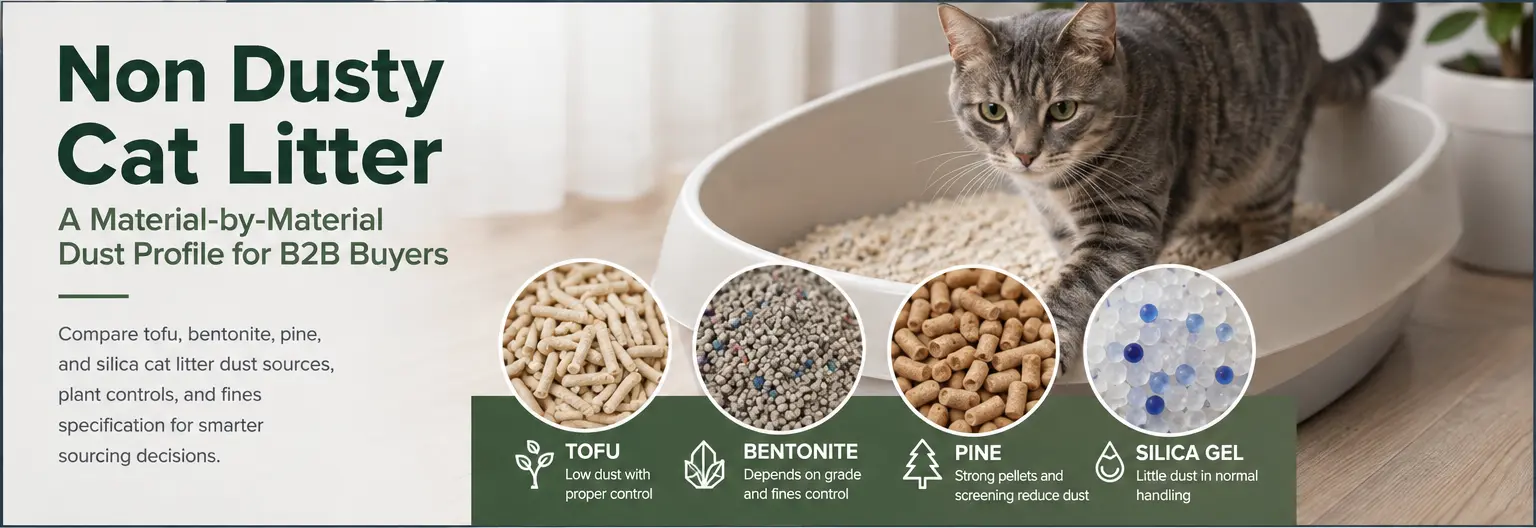
The practical question is whether the litter releases fewer visible fines when it is poured, scooped, or disturbed. A dust-free clumping cat litter may achieve this through particle sizing, screening, and dedusting, but the same principle applies to tofu, bentonite, pine, and other litter formats: dust performance depends on the finished product and its processing, not simply on the raw material.
Quick Answer: Low dust cat litter is designed to release fewer loose fine particles during pouring, scooping, digging, and other normal use. It is especially useful in multi-cat households because more cats usually mean more litter-box traffic and more frequent disturbance. However, “low dust” is not a universal performance number, so the most reliable way to compare products is to use the same test method and acceptance limit rather than relying on the label alone.
Why Multi-Cat Homes See More Dust
Dust from cat litter is released when the product is disturbed — pouring a refill, scooping waste, a cat digging, or litter tracking across a floor. A single cat already creates these events; several cats multiply them. The home therefore experiences more frequent disturbance of the same litter, which is why multi-cat owners often notice dust more than single-cat owners even when the product is identical.
Box Traffic and Disturbance Frequency
Each additional cat can increase the number of scooping, refilling, and digging events in a household. Loose fines already present in the litter may be released each time the product is disturbed, so more frequent handling can increase overall dust exposure in the room. Reducing the loose-fine fraction at the product level is one of the most direct ways to reduce dust released during normal litter-box use.
Ventilation and Room Placement
Where litter boxes are placed also affects how disturbed particles behave. Small or poorly ventilated rooms may allow airborne fines to remain suspended or accumulate on nearby surfaces for longer, while appropriate ventilation can improve overall air exchange. Box placement is therefore an important household dust-management factor, but it does not replace choosing a litter with good dust-control performance.
What Does Low Dust Cat Litter Mean?
In cat litter, “dust” can mean loose fine particles already in the product or particles released when the litter is disturbed. A “low dust” label is a performance claim, not a single regulated number. For a household, the useful interpretation is simple: the litter should shed fewer visible fines during normal daily use. Whether a supplier backs that claim with a defined test method and acceptance limit is what separates a marketing phrase from a measurable specification. For sourcing-level definitions, our no dust cat litter guide explains how “low dust” and “no dust” claims are defined and tested.
| Claim on the bag | What it means for comparison |
|---|---|
| Low dust | A claim that the product releases relatively few fine particles during normal handling |
| Dust-free | A stronger marketing claim that should be evaluated against the supplier’s test method and acceptance criteria |
| No dust / dustless | An absolute-sounding claim that should not be treated as measurable without a defined test method and limit |
These terms are not interchangeable technical specifications, and their meaning can vary by brand and market. For household buying, observe how the litter behaves when it is poured and scooped. For bulk or OEM purchasing, define a measurable fines limit, test method, sampling procedure, and acceptance criteria in the product specification.
How to Choose Low Dust Litter for Your Cats
Choosing low dust cat litter starts with the household routine rather than the material name alone. Consider the number of cats, number of litter boxes, scooping frequency, litter depth, and the format each cat accepts. A litter that cats refuse to use creates its own problems, so dust performance should be evaluated alongside texture, clumping behavior, odor control, and cat acceptance.
Matching Format to Box Routine
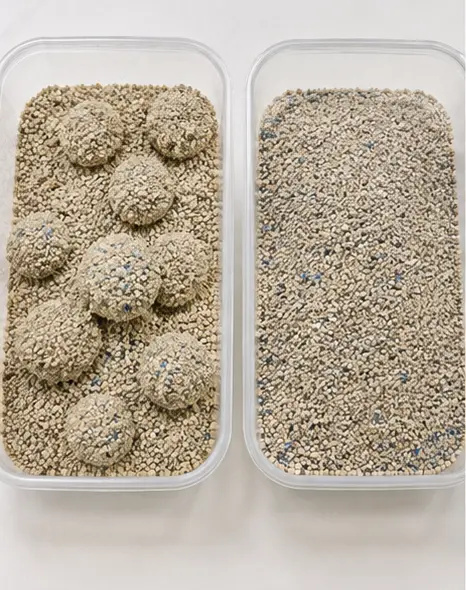
Clumping formats are often convenient for frequent daily scooping, which can suit multi-cat homes with higher litter-box traffic. Non-clumping formats can also work well in specific household setups, but the maintenance routine is different. Regardless of format, evaluate dust by observing pouring, digging, scooping, and tracking rather than assuming that clumping or non-clumping alone determines dust performance.
Reading the Dust Claim
For a household, a usable dust claim is one you can verify in practice: does the litter pour cleanly, does scooping release visible powder, and does the area stay cleaner between changes? For larger or repeated purchases, ask the supplier for the fines limit, the test method, and a batch result rather than accepting the label. The same principle applies whether the order is a single case or a container.
Multi-Cat Hygiene and Household Dust
More cats also mean more waste and more frequent box cleaning, which is a general household-hygiene consideration rather than a medical one. Guidance from CDC Healthy Pets covers everyday practices for living with multiple pets, and FDA Animal & Veterinary provides oversight information on pet products. Households with specific health questions should consult a veterinarian; this article addresses litter dust behavior and buying, not diagnosis.
Private Label and Bulk for Multi-Cat Brands
Retailers, distributors, and e-commerce brands serving multi-cat customers may build a private label litter program rather than resell an existing branded line. A private label cat litter program allows the buyer to define its own dust specification, packaging, particle size, and other product requirements. For repeated or bulk orders, the maximum fines limit, test method, sampling conditions, and batch documentation should be included in the product specification so the same standard can be checked at each reorder.
| Spec item | Why it matters for multi-cat supply |
|---|---|
| Maximum fines limit | Sets the acceptance threshold for loose powder |
| Test method and conditions | Ensures consistent measurement across batches |
| Sampling procedure | Makes results comparable between reorders |
| Batch test report | Documents the actual fines result against the spec |
A Short Selection Checklist for Homes
Before settling on a litter for a multi-cat home, use this short checklist:
- Note how often each box is scooped and refilled.
- Observe how the litter pours, digs, and scoops for visible fines.
- Confirm that the cats accept the litter format and texture.
- For bulk or private label orders, request the fines limit and test method.
- Validate the product with a smaller purchase before committing to a larger volume.
Conclusion
Low dust litter for cats matters most where box traffic is highest, and multi-cat homes are exactly that case. The dust released during a day comes from disturbance, so lowering the loose-fine fraction at the product level is the most direct lever. Buyers get the best result by judging how a litter behaves during normal scooping, and by putting a fines limit and test method in writing for bulk or private label programs. The label is a starting point; the defined measurement is what makes it useful.
Frequently Asked Questions
It can be a practical choice for multi-cat homes because more cats usually mean more digging, scooping, refilling, and litter-box traffic. A product with fewer loose fines can release less visible powder during these activities. However, dust performance should be judged from the finished product rather than from the “low dust” label alone.
No. “Low dust” is a relative performance claim, not an absolute zero. Some fine particles are present in nearly all litters, and the practical question is how much is released during normal use, not whether any exists at all.
No single cat litter material is automatically the lowest dust. Tofu, bentonite, pine, and other litter types can be formulated for low dust performance. Particle size, granulation, screening, dedusting, handling, and packaging can all affect the amount of fine material released. For a meaningful comparison, evaluate finished products using the same test method and acceptance limit.
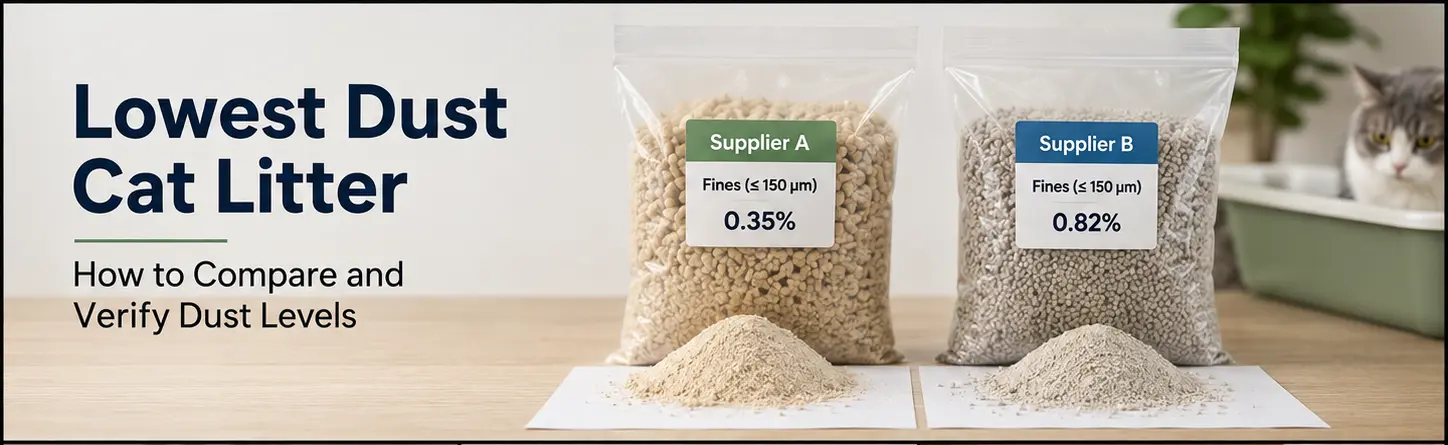
Compare them the way you would use them: pour, scoop, and observe fines released, and for bulk orders ask each supplier for the fines limit, test method, and a batch result. If the two use different methods or no written limit, set one common specification so the comparison is meaningful.
Clumping formats are often easier for frequent daily scooping, which fits multi-cat routines, but acceptance by the cats decides whether a format works. The dust behavior should be judged during normal scooping regardless of clumping type.
Yes. A private label or bulk program can put a maximum fines limit, test method, sampling conditions, and batch documentation into the contract. This turns a marketing phrase into a measurable, repeatable standard for every reorder.
A common household guideline is one litter box per cat plus one extra, although the practical number depends on the cats, home layout, and available space. More boxes can distribute litter-box traffic and may reduce how often any one box is disturbed, but they do not replace choosing a litter with good dust-control performance.
Lower-dust litter can reduce the amount of loose fine material released during normal handling, but it should not be treated as a treatment or medical solution for respiratory conditions. If a cat has persistent coughing, breathing difficulty, or other respiratory symptoms, consult a veterinarian about the appropriate litter and household environment.