




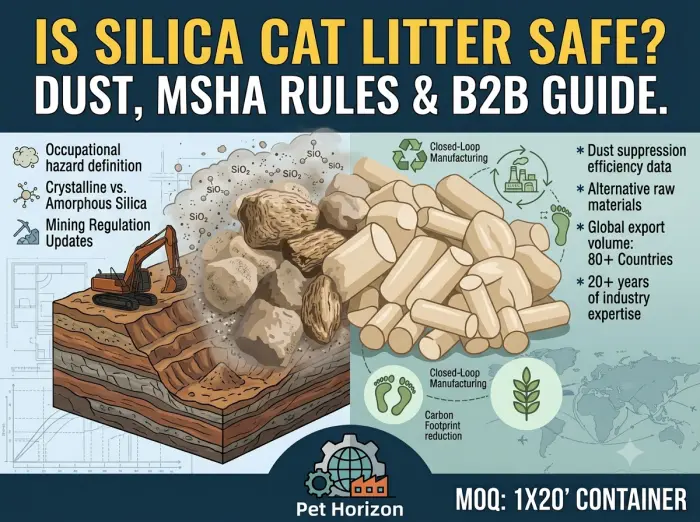
Crystalline silica dust from clay litter has moved from a worker-safety footnote to a regulated supply-chain issue, and B2B buyers should understand what it means for sourcing and supplier selection.
Quick Answer
Silica cat litter is safe for typical household use, but the silica in question is crystalline silica dust generated when mining and processing bentonite clay — not a property of the finished product. New U.S. MSHA mining rules that tighten miner exposure took effect April 8, 2026, raising compliance costs for clay suppliers. Importers and OEM buyers should require dust-control documentation and consider low-dust plant-based alternatives. For B2B sourcing, verifying dust-control compliance (such as SDS and dust-fraction testing) is now a core requirement for regulatory resilience.
What “Silica” Means in Cat Litter
The word “silica” appears in two very different cat litter contexts, and confusing them causes most of the misunderstanding in the market.
Crystalline vs Amorphous Silica
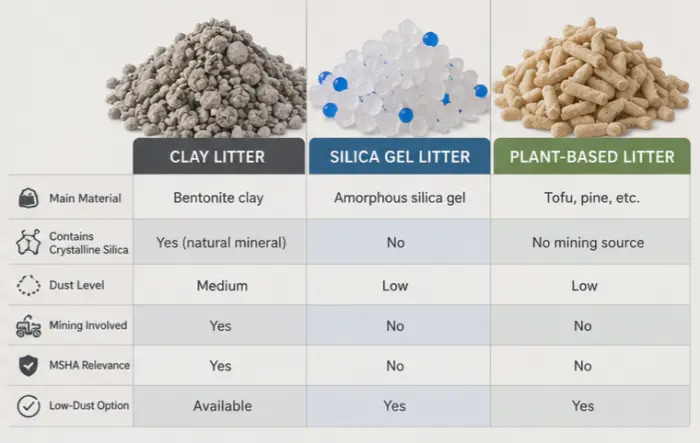
Bentonite and other clay litters are mined minerals that naturally contain crystalline silica ( quartz). The health concern is respirable crystalline silica dust created when the clay is crushed, dried, and milled. Silica-gel crystal litter, by contrast, uses amorphous silica and is a different material with its own handling profile. The regulatory and safety conversation about “silica in cat litter” almost always refers to the crystalline form in clay.
Where the Dust Comes From
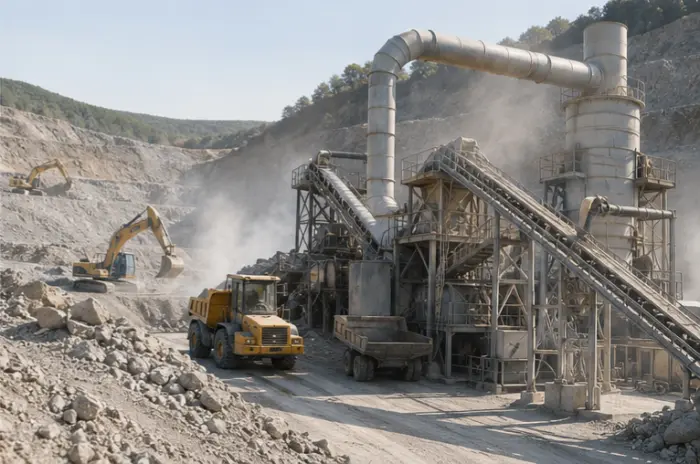
Dust is generated at the mining and processing end of the supply chain, not in the cat’s box. A low-dust finished product still originates from a quarry where airborne crystalline silica is a recognized occupational hazard. That distinction matters for B2B buyers because it shifts the risk from the end user to the supplier’s production controls.
The U.S. MSHA Crystalline Silica Rule
In the United States, the Mine Safety and Health Administration (MSHA) finalized a rule lowering the permissible exposure limit (PEL) for respirable crystalline silica to 50 micrograms per cubic meter (8-hour time-weighted average), with an action level of 25 micrograms, for metal and nonmetal mines. The compliance date for those mines was April 8, 2026.
Compliance Date and Exposure Limits
The rule requires exposure monitoring, engineering controls (such as ventilation and wet methods), and medical surveillance for affected miners. For context, the full final rule and its technical thresholds are published in the Federal Register. Importers do not directly comply with MSHA, but the rule signals a global direction of tighter dust regulation at mineral processing sites.
The Sorptive Minerals Institute Lawsuit
An industry association representing sorptive clay producers — the companies that mine and process absorbent clays used in cat litter and similar products — filed a legal challenge to portions of the rule in the U.S. Court of Appeals. Trade coverage indicates the challenge centers on compliance cost and feasibility for smaller clay operations. A Federal Register notice in April 2026 also delayed some conforming amendments amid the litigation. For a practical summary of the 30 CFR Part 60 obligations, McCraren Compliance’s FAQ breaks down the engineering and monitoring requirements.
What It Means for Bentonite Supply
Tighter rules raise the cost of compliant U.S. clay production, which can push up prices for domestically mined bentonite litter and encourage import substitution. For global buyers, the practical effect is a stronger reason to evaluate a supplier’s dust-control maturity regardless of which country the clay comes from.
Is Silica Cat Litter Safe for Cats and Homes?
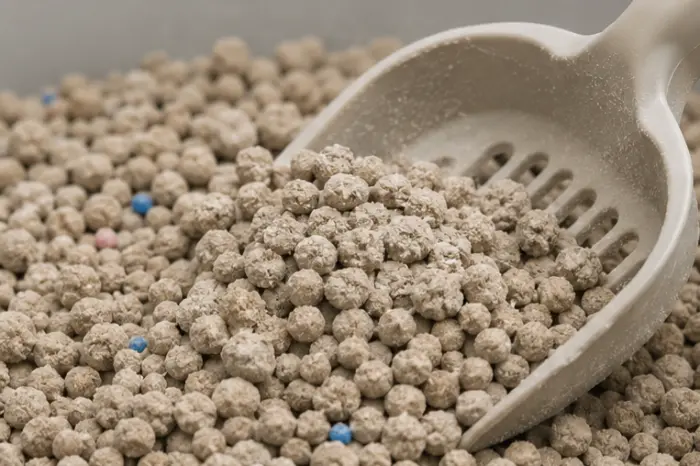
For ordinary household use, finished clay litter presents minimal respiratory risk to cats or owners. The documented hazard is occupational exposure to airborne dust at mines and mills, not occasional scooping at home.
Household Exposure vs Mining Exposure
Home exposure is intermittent and at low concentrations, especially with low-dust formulations. Mining exposure is sustained, concentrated, and the basis for the MSHA limits. Buyers should keep this proportion in mind rather than treating the product as hazardous to pets.
Asthma and Respiratory-Sensitive Cats
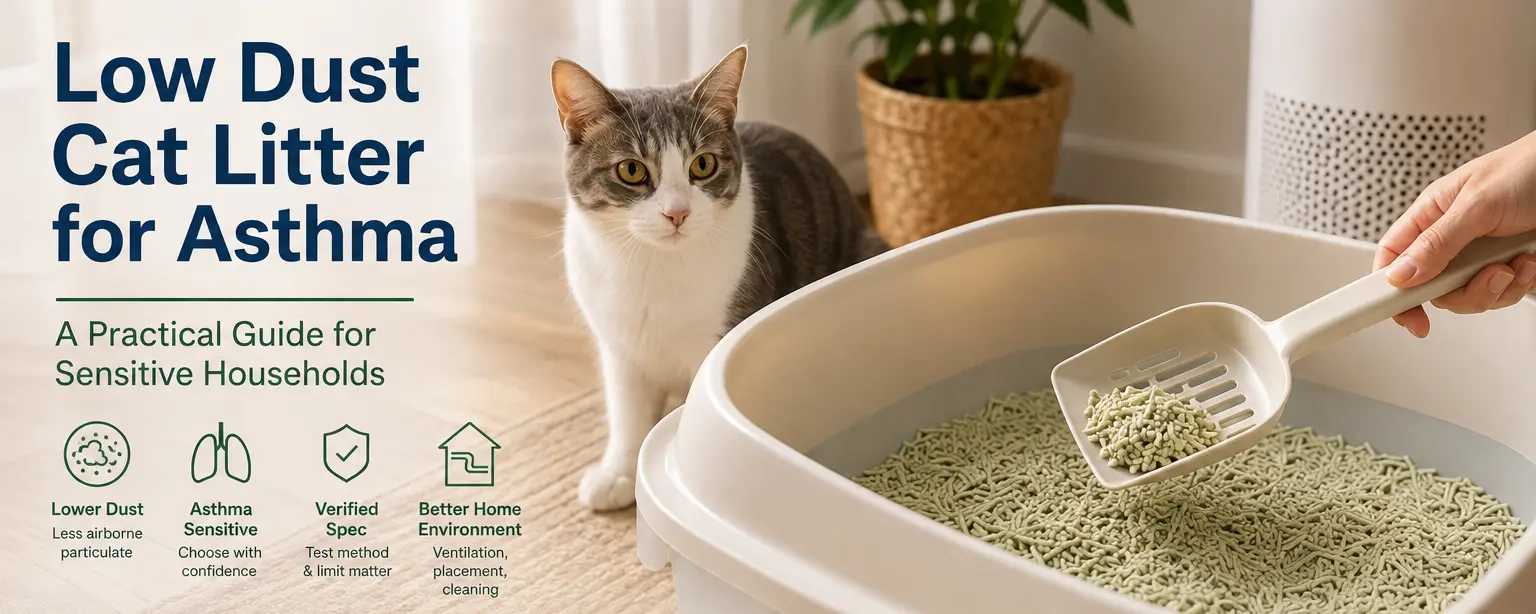
Households with asthma or cats with respiratory sensitivity often prefer lower-dust formats regardless of material. This is a comfort and air-quality choice, not a response to a ban. Our tofu cat litter and pine lines are positioned as low-dust plant-based options for exactly this segment.
Low-Dust Alternatives and What B2B Buyers Should Require
Plant-Based Litters Avoid Mining Silica
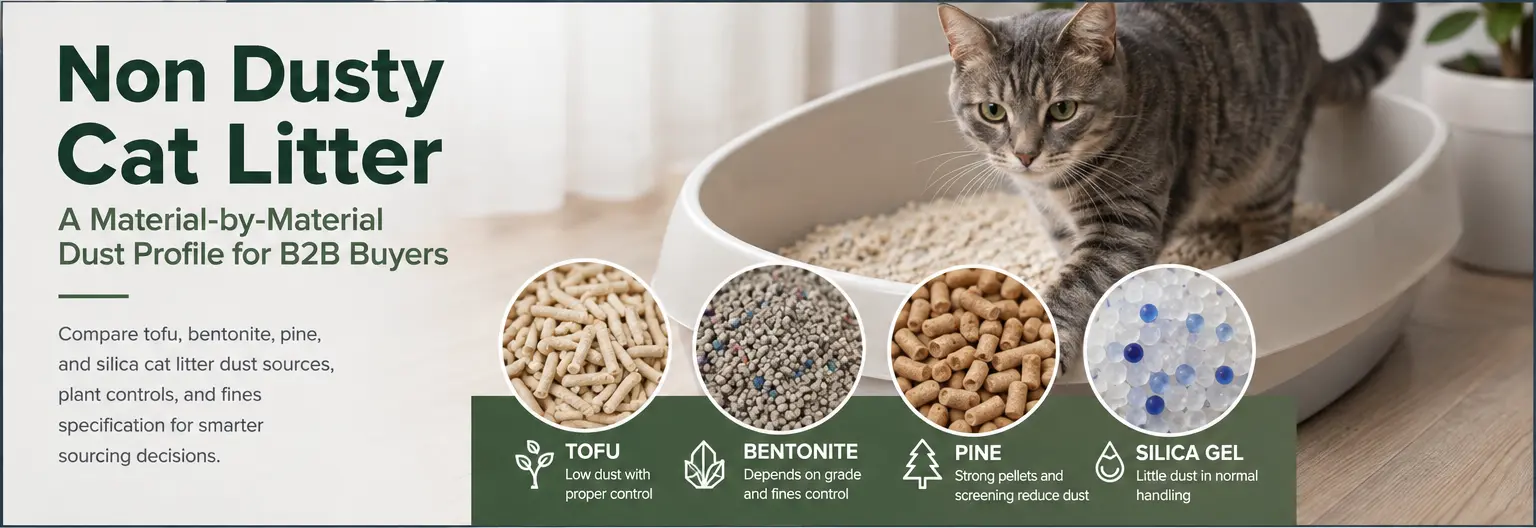
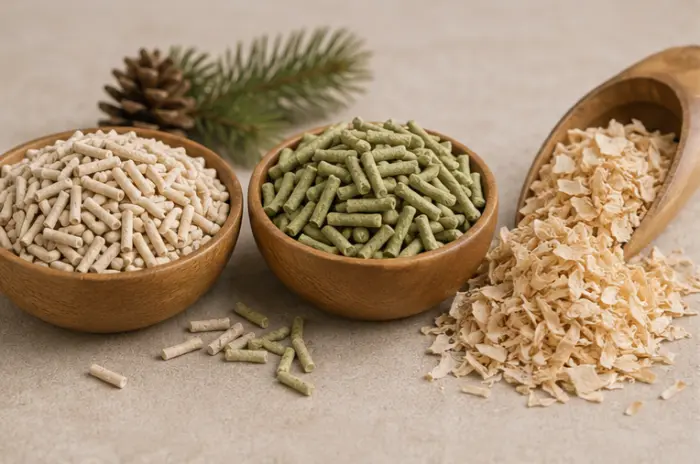
Plant-based litters made from soy, wood, or grain by-products do not involve mining crystalline silica, which removes that specific supply-chain exposure entirely. They are not “silica-free” in a chemical sense (trace naturally occurring silica exists in many materials), but they sidestep the mining-dust pathway that MSHA regulates.
Comparison: Bentonite Clay vs. Plant-Based Litter
| Feature / Parameter | Bentonite Clay Litter | Plant-Based Litter (Tofu / Pine) |
|---|---|---|
| Silica Source | Naturally occurring Crystalline Silica (Mined) | Trace natural silica only (No Mining Pathway) |
| Regulatory Impact | Subject to MSHA 2026 Occupational Rules (50 µg/m³) | Exempt from Mining Dust Regulations |
| Dust Profile | Requires Suppression & Controlled Milling | Inherently Low-Dust Pellets |
| Best B2B Target | Traditional Clumping Performance Buyers | Eco-Friendly & Respiratory Sensitive Markets |
Dust-Control Specifications to Request
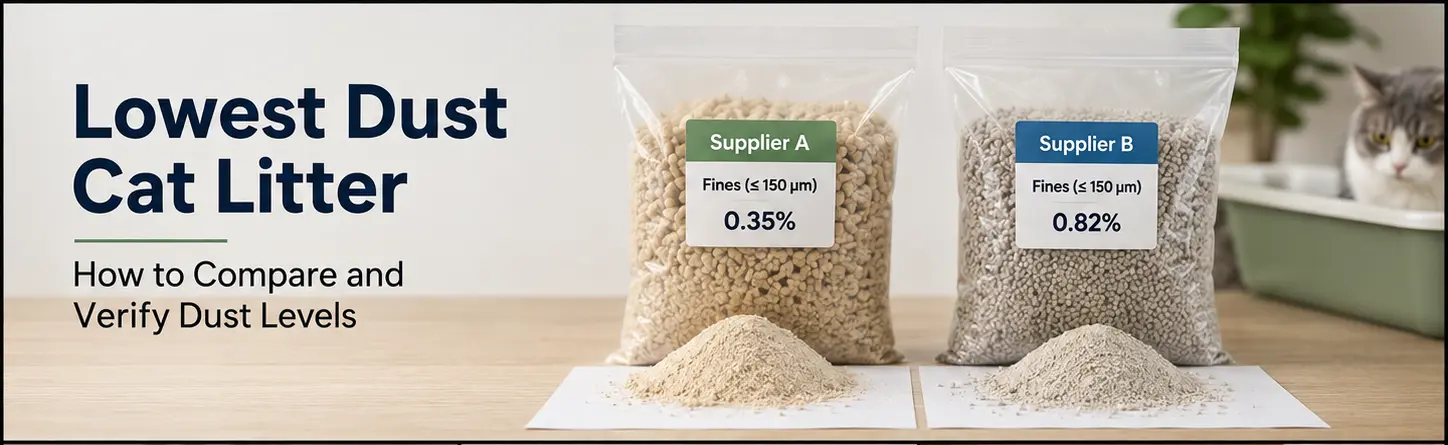
- Dust fraction test reports (often measured by sieving or air classification).
- MSDS or SDS documenting handling and composition.
- A description of milling and dust-suppression controls at the plant.
- Low-dust grade confirmation for private-label or OEM orders.
Common Mistakes Buyers Make on Silica Concerns
- Confusing silica-gel crystal litter with crystalline silica in clay.
- Assuming bentonite cat litter is banned (it is not; mining exposure is regulated, not the product).
- Ignoring supplier dust-control documentation during sourcing.
- Overlooking plant-based low-dust alternatives that avoid the mining pathway.
How Pet Horizon Controls Dust in Cat Litter Manufacturing
Pet Horizon has more than 20 years in the cat litter industry and over 10 years of OEM and ODM experience, shipping to more than 80 countries. On the bentonite side, production uses dust-suppression and controlled milling practices; on the plant-based side, tofu and pine formats avoid mined crystalline silica entirely. Buyers evaluating a bentonite cat litter program can request dust-fraction reports, while those prioritizing a low-dust profile can review our full manufacturing process overview. MOQ starts at one 20-foot container and is negotiable.
Key Takeaways
- Silica safety concerns relate primarily to mining dust, not household litter use.
- Crystalline silica and silica gel are different materials.
- MSHA rules affect mining operations rather than consumer products.
- Low-dust manufacturing is becoming an important supplier qualification.
- Plant-based litters avoid the mining pathway associated with crystalline silica.
Conclusion
Silica in cat litter is a supply-chain and dust-control topic, not a consumer scare. The April 2026 MSHA rule changes how clay is mined and milled in the United States, but the takeaway for global B2B buyers is universal: require dust-control documentation, understand the difference between silica types, and consider low-dust plant-based formats where respiratory sensitivity matters. Working with a transparent manufacturer turns a regulatory headline into a sourcing advantage.
Frequently Asked Questions
For typical household use, yes. The documented hazard is occupational dust exposure at mines and mills, not normal scooping at home.
Bentonite and other clay litters contain crystalline silica in the mined mineral. Silica-gel crystal litter is a different, amorphous material.
MSHA tightened the permissible exposure limit for respirable crystalline silica to 50 micrograms per cubic meter for metal and nonmetal mines, with an April 8, 2026 compliance date.
Yes. The Sorptive Minerals Institute, representing absorbent-clay producers, challenged portions of the rule in a U.S. Court of Appeals.
No. MSHA regulates miner exposure during mining and processing; it does not prohibit bentonite cat litter as a product.
It is litter with a controlled, low dust fraction, achieved through milling and suppression controls. Plant-based formats are often lower dust by nature.
Plant-based litters such as tofu and pine avoid the mined crystalline silica pathway, though trace naturally occurring silica may be present in many materials.
Request a dust-fraction test report, SDS, and a description of milling and dust-suppression controls at the plant before placing an OEM or wholesale order.
Plant-based litters such as tofu and pine generally produce less airborne dust than traditional clay litter, although product quality and manufacturing processes also affect dust levels.
No. Silica gel litter is made from amorphous silica, while the mining concern involves respirable crystalline silica. They are chemically and structurally different.