





Buyers searching for bentonite cat litter brands may be comparing retail names, exploring private-label opportunities, or looking for the manufacturer behind an established product. For importers, distributors, and private-label owners, the more useful question is whether the supplier can deliver consistent bentonite litter at the required specification, volume, packaging format, and landed cost. A recognizable brand can be a useful market reference, but B2B sourcing decisions should ultimately rest on the manufacturer’s product specification, quality control, production capacity, and commercial terms. Buyers can review our bentonite cat litter product overview for the material basis, and our bentonite cat litter wholesale guide for the distribution side of the same decision.
Quick Answer: For B2B buyers comparing bentonite cat litter brands, the key is to evaluate both the brand positioning and the manufacturer behind the product. Compare the written specification, clumping performance, dust or fines limit, moisture range, particle-size distribution, packaging, production capacity, QC records, MOQ, lead time, and landed cost. A recognizable retail brand can provide a useful market benchmark, but supplier consistency and documented specifications matter more when sourcing wholesale, OEM, or private-label cat litter.
What “Brand” Means in B2B Bentonite Litter
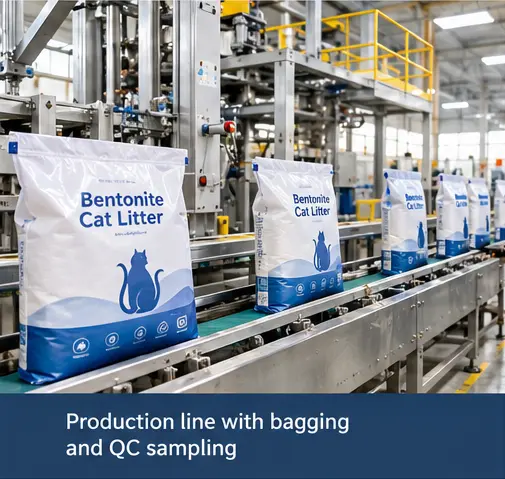
In retail, a brand is the name on the shelf. In B2B sourcing, the brand is frequently the buyer’s own private label, and the manufacturer operates behind it. That changes how you should assess a supplier. A strong consumer brand does not automatically mean reliable OEM output, and a capable contract manufacturer may have little retail visibility. The evaluation should focus on the manufacturing and quality system that will produce your SKU.
A retail brand can be useful for benchmarking packaging, particle size, clumping performance, fragrance positioning, and price level, but the brand itself may not manufacture the litter. A strong consumer reputation can indicate market acceptance, but it does not prove factory capacity or batch consistency. For private-label and OEM sourcing, buyers should trace the product back to the manufacturer or contracted producer and verify the specification, QC evidence, production capacity, and commercial terms before selecting a supply partner.
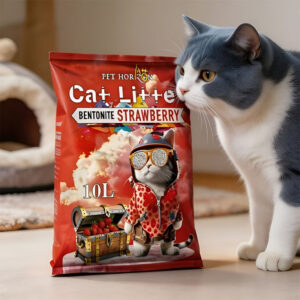
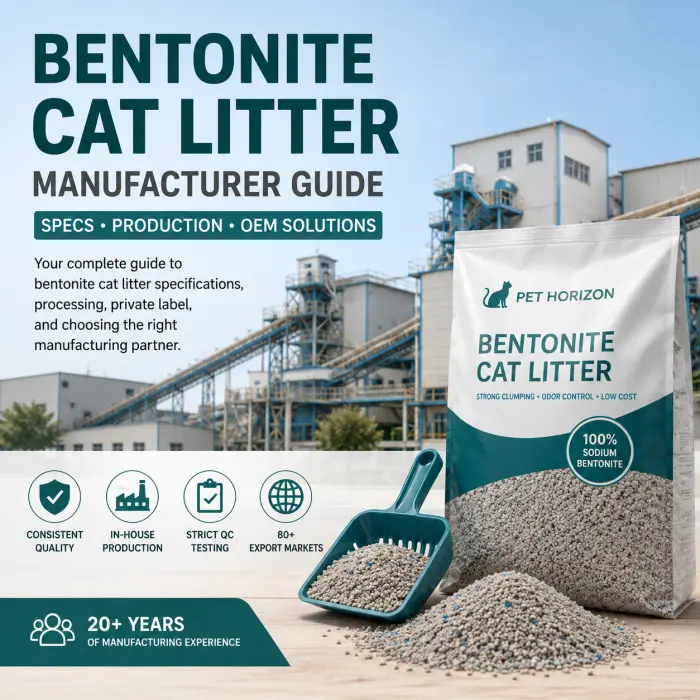
This distinction matters even for suppliers that operate both ways. Pet Horizon, for example, runs an OEM and private-label manufacturing operation while also building its own bentonite cat litter brand, so the brand name is only useful once the underlying manufacturer’s specification, QC, and production discipline are verified.
| Brand-level signal | What it can tell a B2B buyer | What it cannot prove |
|---|---|---|
| Product positioning | Target market and price tier | Manufacturing capability |
| Packaging format | Retail positioning and pack sizes | Factory consistency |
| Clumping claims | Product performance positioning | Actual batch performance |
| Low-dust claims | Product marketing direction | Measured fines level |
| Retail price | Market positioning | B2B landed cost |
| Brand reputation | Consumer acceptance signal | OEM production capability |
Build the Specification Before You Compare Suppliers
A written specification is the foundation of any fair supplier comparison. Without it, two suppliers can both claim “premium bentonite” while shipping material with very different clumping, dust, and hardness profiles. The specification should be product-specific, not a generic wish list.
| Specification element | Why it matters for B2B | What the buyer should require |
|---|---|---|
| Clumping speed and strength | Affects user experience and returns | Defined test method + pass/fail criterion |
| Dust or fines | Affects handling, complaints, and product positioning | Defined sieve/classification method + maximum limit |
| Moisture range | Can affect clumping and storage stability | Agreed test method + acceptable range |
| Granule size distribution | Affects flow, tracking, dust, and filling | Defined mesh bands + tolerance |
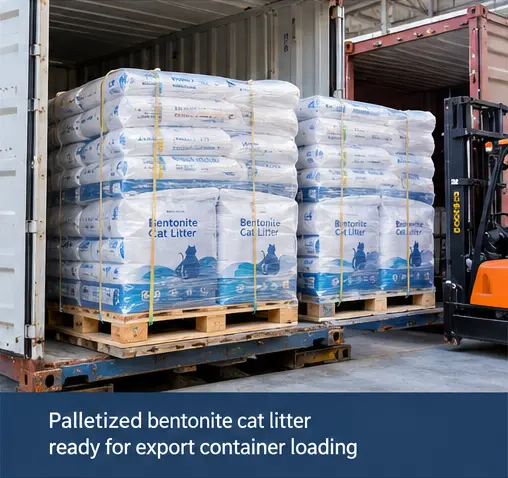
| Packaging and palletization | Affects freight, handling, and retail presentation | Approved artwork + pack weight + unit count + pallet standard |
For export programs, the written specification should be supplemented by the packaging, labeling, documentation, and product requirements applicable in the destination market. Buyers should separate voluntary industry guidance from mandatory legal requirements and confirm market-specific requirements before finalizing artwork or shipment documentation. The supplier specification should then translate those requirements into measurable product and packaging criteria.
OEM vs Private Label: Two Sourcing Models
Buyers often use “OEM” and “private label” interchangeably, but the commercial structures differ. Understanding both helps you brief a supplier correctly.
OEM (Original Equipment Manufacturer) Supply
In cat litter sourcing, OEM generally refers to a manufacturer producing a product for a buyer under an agreed specification, brand, or product configuration. Depending on the supplier and contract, the buyer may control some or all of the formula, particle size, performance requirements, packaging, and artwork. This model is suited to buyers that need tighter control over product specifications and quality targets. Buyers building an OEM cat litter program can start from our OEM cat litter program overview for the commercial structure.
Private Label Supply
Private label cat litter typically means the supplier offers an existing or established formula that is sold under the buyer’s brand, with customization focused on packaging, labeling, fragrance, particle specifications, or other agreed product features. It can shorten the development process compared with a fully customized product, but buyers should still verify the supplier’s actual specification, batch consistency, MOQ, lead time, and quality records before committing to regular supply.
QC and Test Methods Buyers Should Ask About
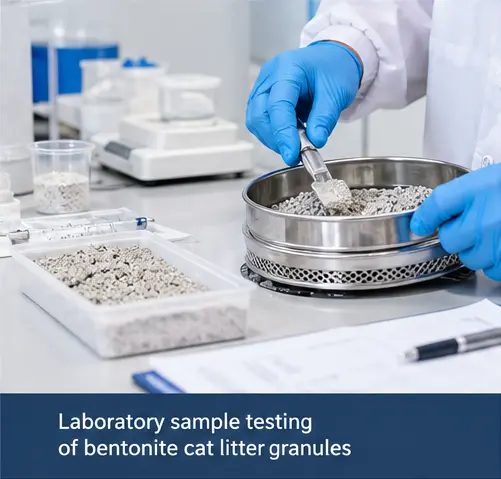
Spec compliance is only meaningful when the supplier uses a defined and repeatable test method. Ask each supplier how clumping performance, dust or fines, moisture, and particle-size distribution are measured, and request results from multiple production batches rather than a single showcase sample. Standards bodies such as ASTM International publish test methods for particulate and bulk-solid materials that laboratories may reference; if a recognized standard or laboratory method is used, record the exact method or reference in the product specification so that different suppliers are tested on the same basis.
Do not accept a bare percentage or performance claim as proof. A dust or fines specification should identify the measurement method, sample preparation or size, reporting basis, and acceptance threshold. The same principle applies to moisture, particle size, and clumping performance. Without a defined method and pass/fail criterion, supplier results may not be directly comparable.
Red Flags When Screening Suppliers
Several signals suggest a supplier may not be ready for consistent B2B supply:
- No written specification or refusal to define test methods.
- Only single-batch photos as “proof” instead of ongoing QC records.
- Inability to provide a credible production capacity range, normal lead time, or evidence supporting the quoted capacity.
- Vague answers on moisture, dust, or clumping acceptance.
- Unclear responsibility for export documentation or limited familiarity with destination-market requirements.
These signals do not necessarily indicate that a supplier is unreliable, but they make it harder for a buyer to verify supply consistency before committing to a larger order. For a new relationship, a smaller trial order with full testing is a lower-risk way to verify performance than a full container commitment.
Regional Sourcing and Capacity Checks
Bentonite litter is produced in several regions, and lead time, freight, and raw-material consistency vary by origin. Rather than choosing a bentonite litter manufacturer based only on retail visibility, evaluate each bentonite cat litter supplier against the same specification and evidence requirements: verified production capacity, raw material source stability, export experience to your destination, and the ability to hold specification across seasons. A supplier that can show consistent batch data over several months provides stronger evidence of production reliability than one with an impressive single sample.
Conclusion
When comparing bentonite cat litter brands for B2B sourcing, use the brand as a market reference and the manufacturer as the supply decision point. Define the specification first, verify it through batch-level QC using stated test methods, and choose OEM or private label based on the level of product control required. Treat brand recognition as a minor signal and the written, tested specification as the real decision basis.
Frequently Asked Questions
For B2B sourcing, evaluate the manufacturer behind the brand rather than the brand name alone. Compare the written specification, clumping performance, dust or fines limit, moisture range, particle-size distribution, packaging, production capacity, QC records, MOQ, lead time, and landed cost. A recognizable retail brand can serve as a market reference, but supplier consistency and documented specifications matter more for private-label or wholesale programs.
For B2B private label or OEM programs, the contract manufacturer’s quality system and specification discipline matter more than consumer brand fame. Evaluate the producer behind the product, not the retail name.
OEM generally involves producing a cat litter product under specifications or product requirements agreed with the buyer, while private label typically uses an existing or established supplier product sold under the buyer’s brand with less product customization. The exact structure depends on the supplier and contract, so buyers should confirm which product characteristics, formula changes, packaging elements, and quality requirements they control.
Where possible, test samples from two or three separate production batches from the same supplier rather than relying on one showcase sample. Batch-to-batch consistency is an important indicator of production reliability, but it should be evaluated together with capacity, lead time, and quality records.
There is no single dust or fines limit that fits every bentonite cat litter product. Set the limit according to your product positioning and handling requirements, then define the sieve or air-classification method, sample basis, and maximum acceptable result in the specification. Avoid relying on a generic “low dust” claim without a measurable acceptance criterion.
You do not need a specific standard, but you do need a defined, repeatable method. Referencing a recognized standard such as those from ASTM helps different suppliers report comparable results.
Ask for verified production capacity, typical monthly output, raw-material sourcing stability, and export experience to your market. Consistent multi-month batch records and production evidence provide stronger support than a capacity number published on a website.
No. The landed cost, reject rate, and return risk matter more than unit price. A slightly higher unit cost with stable specification often costs less than a cheap supplier that fails batches.
The supplier should clearly define which export documents and shipping responsibilities are included in the quotation and contract. Depending on the Incoterm and transaction structure, the supplier, buyer, freight forwarder, or customs broker may handle different parts of the process. Confirm commercial invoices, packing lists, certificates or test records, labeling requirements, and any destination-specific documents before shipment.