




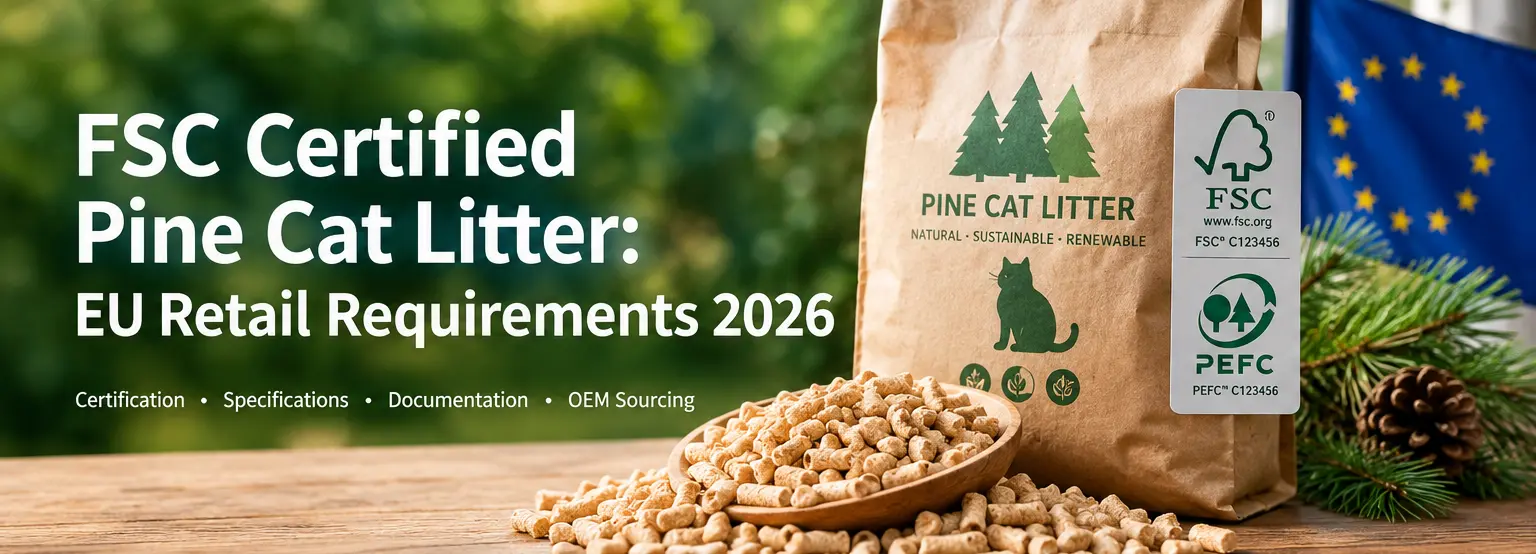
FSC certified pine cat litter can help importers and private-label buyers document responsible wood sourcing for EU retail programs. However, FSC and PEFC chain-of-custody certification are voluntary certification systems rather than universal EU retail licenses, so buyers should separate certification requirements from product specifications and applicable EU compliance obligations.
Quick Answer
FSC or PEFC certification is not a universal EU legal requirement for pine cat litter, but EU retailers and private-label buyers may request chain-of-custody evidence, defined product specifications, and applicable import or plant-health documentation. Exact requirements depend on the product, packaging, origin, destination, tariff classification, and buyer program.
Why EU Buyers Consider Pine Cat Litter
Natural-material positioning can make pine and wood-based cat litter relevant to EU buyers looking for alternative litter formats. However, demand varies by country, retail channel, product format, and price point, so importers should validate local demand rather than rely on a single market-growth forecast.
FSC and PEFC Chain of Custody Certification
What Buyers Check
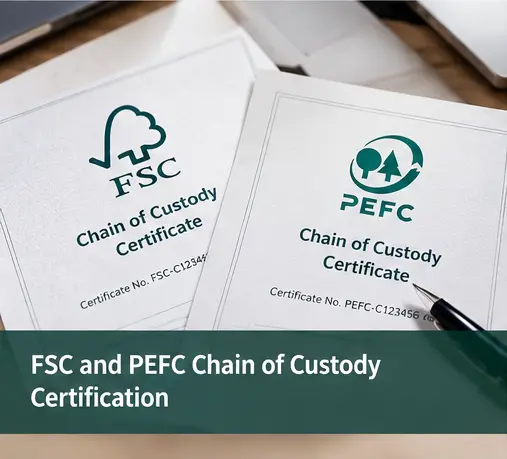
Some EU and North American retailers request FSC or PEFC chain-of-custody evidence for wood-based products and may verify the certificate status through the relevant certification system. Whether certification is required depends on the retailer, private-label program, product claim, and sourcing policy rather than on a universal EU retail rule.
How FSC and PEFC Support Responsible-Sourcing Claims
An FSC or PEFC chain-of-custody certificate can provide documented evidence for a responsible-sourcing claim when the claim matches the certified product and applicable trademark and communication rules. It should not be treated as automatic proof that every environmental claim complies with EU requirements. See our cat litter export compliance guide for broader compliance considerations.
Typical Technical Specs for Pine Cat Litter
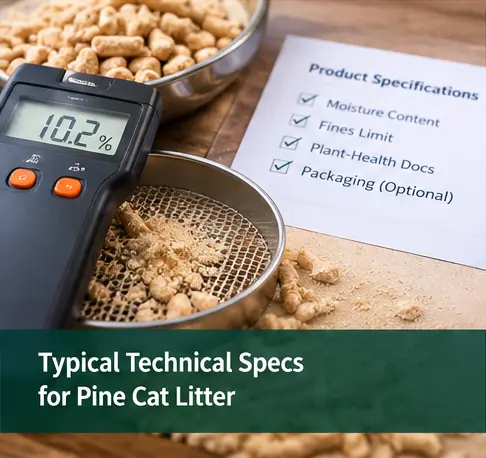
Buyer specifications vary by product format, retailer, and private-label program. For each specification, importers should agree on the test method, acceptance limit, sampling procedure, and documentation required for shipment approval.
- Kiln-dried moisture content, with the target range and test method agreed in the product specification.
- Screening limits for fines and oversized particles, supported by an agreed test method.
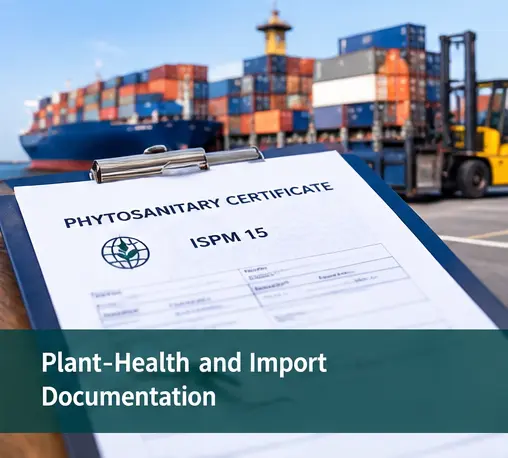
- Applicable plant-health, import, and wood-packaging documentation based on the product, packaging, origin, and destination.
- Optional compostable packaging requirements, such as alignment with applicable EN 13432 or certification-scheme criteria, when the buyer makes a compostability claim.
Sourcing FSC Certified Pine Cat Litter for OEM
Pet Horizon supplies pine cat litter for OEM and private-label programs with product specifications and supporting quality documentation. Where FSC or PEFC certification is required, certification scope and documentation should be confirmed for the applicable product and supply chain. See our pine cat litter product page for the product range and specifications.
What Importers Should Check Before Ordering
Importers building a pine litter program should use a sourcing checklist covering certification scope, product specifications, testing methods, documentation, packaging, and logistics before committing volume. Our cat litter sourcing and buying guide provides a broader framework for supplier evaluation.
Conclusion
FSC certified pine cat litter can strengthen a responsible-sourcing proposition for EU retail and private-label programs, but certification is not a universal EU retail license. Buyers should evaluate FSC or PEFC status alongside product specifications, applicable import and plant-health requirements, packaging claims, and retailer-specific sourcing policies before approving a supplier.
Frequently Asked Questions
FSC certified pine cat litter refers to a pine or wood-based litter product covered by an applicable FSC certification and chain-of-custody system. The FSC claim should match the certified product scope and the supporting chain-of-custody documentation.
PEFC can serve as an alternative forest-certification system to FSC for buyers whose sourcing policies accept PEFC claims. Acceptance depends on the retailer, private-label program, and the specific certification or sourcing requirements.
EU demand for pine and wood-based cat litter varies by country, retail channel, and product format, so importers should validate local demand rather than rely on a single market-growth forecast.
Moisture limits are normally buyer- or product-specific rather than a universal EU requirement. A pine litter specification may set a target moisture range and identify the agreed test method, such as ASTM D4442, for quality control.
Fines limits help buyers control loose particles and handling performance, but the acceptable level should be defined in the product specification and supported by an agreed screening or dust-test method.
Not necessarily in every shipment. Plant-health and import documentation depends on the product, degree of wood processing, origin, destination, tariff classification, and applicable EU or national requirements. ISPM 15 specifically concerns regulated wood packaging material, so it should not be treated as a universal certificate requirement for pine cat litter itself.
Compostable packaging may support premium positioning when it meets the buyer’s packaging and claim requirements, but any price premium depends on the market, retailer, packaging cost, product positioning, and consumer response.
Screening can reduce fines and visible loose particles in pine litter, but whether a product qualifies as low-dust should be determined by an agreed dust-test method and acceptance limit.