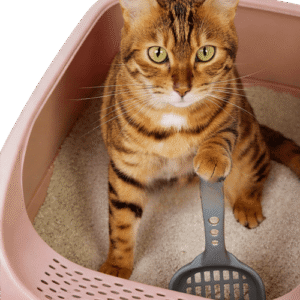





The daily routine of owning a cat is full of small, repetitive tasks — and cleaning the litter box tends to be the one that wears people down fastest. Many cat owners find themselves asking the same questions over and over: Why does the smell linger even when the box is scooped every day? Why are stray granules tracked across the floor no matter how often the area is swept? And why does the cat keep sneezing, or show up with irritated paw pads, without any obvious explanation?
In most cases, the answer isn’t the cat — it’s the litter. Choosing the best cat litter for easy cleaning makes a measurable difference in how much time and effort the whole routine actually takes. Cat litter is a high-contact, daily-use product that your cat interacts with multiple times a day. Its quality directly determines your home’s hygiene, your cat’s health, and how manageable the daily maintenance feels. The market is full of options at every price point, but the quality gap between products is significant. Cheap litter appears to save money upfront while consistently compounding your workload: weak clumps that crumble mid-scoop, dust that coats every nearby surface, and odor that builds faster than any reasonable scooping schedule can address. This guide cuts through the noise so you can find a litter that genuinely reduces your cleaning burden — and keeps it that way.
Why the Wrong Cat Litter Turns Cleaning Into a Daily Battle
A common assumption — especially among newer cat owners — is that all litter is basically the same, and any bag off the shelf will get the job done. This is the root cause of most litter box frustration. Problems created by poor-quality litter rarely appear all at once. They accumulate gradually, slowly adding to the daily burden until the whole routine feels like more effort than it should be.
High dust output makes everything harder to keep clean. Inferior raw materials and minimal processing leave granule surfaces rough and powdery. Pouring the bag raises a visible cloud; a cat digging and covering does the same. That airborne dust doesn’t just settle on furniture and floors — with repeated exposure it irritates your cat’s respiratory tract, contributing to chronic sneezing and watery eyes. Fine particles collect in the fur and between paw pads, and when cats groom themselves, those particles get ingested. This is why a genuinely low dust cat litter is not a luxury feature — it is a baseline health and hygiene requirement for any household.
Poor clumping performance multiplies cleaning time. When litter can’t bind quickly and firmly around urine, liquid seeps through the granule layer and pools at the bottom of the box, forming stubborn, hard-to-remove scale. The soft, fragile clumps that result from weak binding crumble when scooped, leaving contaminated residue mixed into the clean litter below. That residue is nearly invisible, breeds bacteria, and generates ammonia odor over time. You end up scraping, sifting, and replacing litter far more often than necessary. The best cat litter for easy cleaning forms dense, compact clumps within seconds and lifts away from the box without leaving residue — keeping the remaining litter hygienic for longer.
Inadequate cat litter odor control degrades your entire living space. Some manufacturers skip proper deodorization processes entirely, relying on heavy artificial fragrance to mask the smell of waste. This works briefly — until the fragrance dissipates, at which point the underlying odor floods out, mixed with the chemical residue of the perfume itself. That compound smell clings to fabric, upholstery, and clothing. Effective cat litter odor control works the opposite way: physical encapsulation and activated carbon adsorption lock odors inside the clump before they can spread, keeping the air genuinely fresh rather than temporarily masked.
The Standards That Make Cat Litter Actually Easy to Clean
You don’t need technical expertise to evaluate cat litter quality. The indicators that matter are simple, and most can be assessed at home by hand or observation.
Low Dust Output
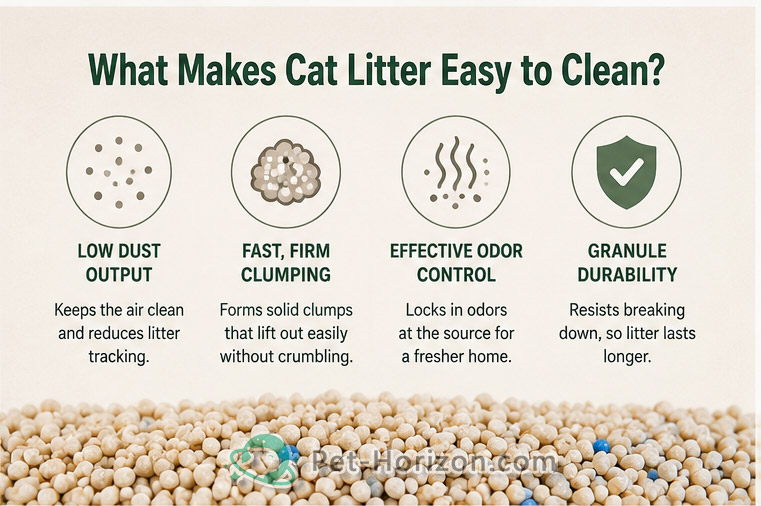
Quality litter goes through multiple rounds of polishing, dust extraction, and drying before packaging. The result is a smooth, dry granule with no excess surface powder. After handling, your palm should come away clean. When a cat digs in the box, there should be no visible dust cloud. Choosing a low dust cat litter protects your cat’s respiratory system and keeps floors and surfaces noticeably cleaner between wipe-downs — reducing cleaning effort beyond just the box itself.
Fast and Firm Clumping
Reliable litter begins binding around urine within three to five seconds, forming a dense clump that holds its shape when scooped. It should separate cleanly from the bottom of the box without leaving residue behind. Clump integrity is the single most important factor in how often you need to deep-clean or fully replace the litter — the firmer and more intact the clump, the longer the litter stays genuinely hygienic between full changes.
Long-Lasting Cat Litter Odor Control
Effective odor management is achieved through physical and chemical mechanisms — activated carbon, mineral adsorption, or plant-fiber encapsulation — not perfume. Under normal home ventilation, quality litter should keep the box area odor-neutral for at least half a day between scoops in a single-cat household, and meaningfully slow odor buildup in multi-cat homes.
Granule Durability
Softer granules grind down quickly under normal digging and movement, turning to powder faster than expected. The more wear-resistant the granule, the slower the overall litter consumption — reducing how often you need to top off or fully replace the fill, and directly lowering long-term cost and effort.
Tofu, Bentonite, or Mixed? Choosing the Right Type for Easier Cleaning
The mainstream market breaks down into three material categories. Understanding how each performs in real daily use makes it far easier to match the right litter to your specific household.
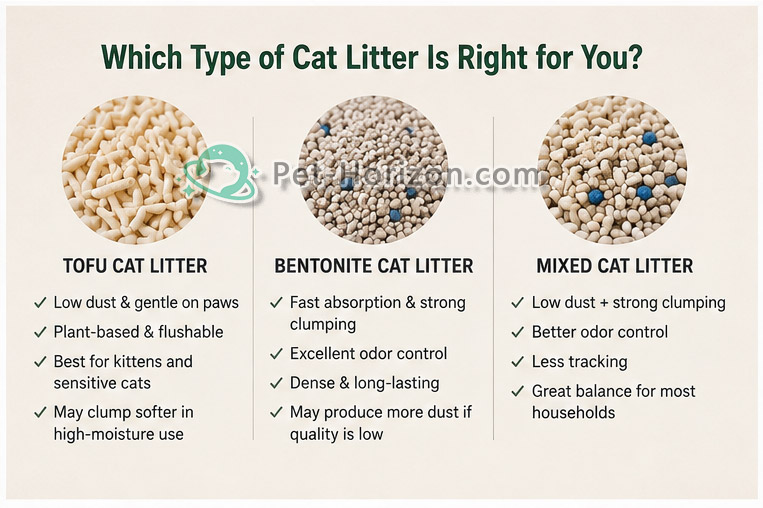
Tofu Cat Litter
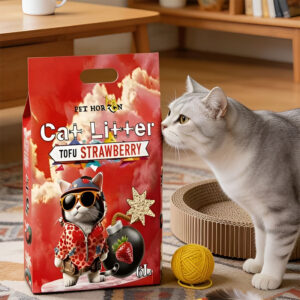
Tofu cat litter is made from plant-based fiber — typically soy byproduct — and produces virtually no dust. The granules are smooth and soft underfoot, making this material especially well-suited for kittens, pregnant cats, and cats with sensitive skin or respiratory systems. It contains no chemical additives, so even if a cat accidentally ingests a small amount during grooming, it passes through the digestive system without harm. A practical bonus for apartment dwellers: tofu litter is flushable, which means waste can go straight down the toilet rather than into the bin — simplifying the cleaning process considerably.
Its limitations show up in high-frequency use environments. Tofu cat litter absorbs liquid more slowly than mineral alternatives, and its clumps can soften when moisture levels are high. In multi-cat households or with a cat that eliminates frequently, urine can reach the bottom of the box before clumps fully form. For single-cat homes or lower-traffic situations, it performs reliably and remains one of the gentlest, cleanest options available.
Bentonite Cat Litter
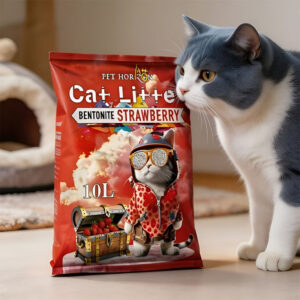
Bentonite cat litter is a mineral clay product and has been the category standard for decades. Its water absorption rate is fast, its clumps are hard and compact, and its physical structure naturally suppresses ammonia and sulfur compounds — making it one of the strongest performers for cat litter odor control straight out of the bag. Bentonite granules are dense, stable, and resistant to mold or moisture degradation, which is a practical advantage in humid climates.
The primary risk with bentonite lies in product quality variation. Lower-grade bentonite cat litter can generate significant dust, which is hard on cats’ airways with prolonged exposure. This category is not recommended for young kittens or flat-faced breeds with more sensitive respiratory systems. When choosing bentonite, prioritize products from established manufacturers that test and certify dust levels — the quality gap between properly processed bentonite and cheap bulk product is substantial.
Mixed / Blended Cat Litter
Mixed litter — typically a combination of plant fiber, bentonite clay, and activated carbon — delivers the most balanced overall performance and suits the widest range of households. The plant fiber component keeps dust low and granules gentle on paws; the bentonite component provides fast, firm clumping; and activated carbon handles cat litter odor control without artificial fragrance. The result is a litter that is less likely to stick to the bottom of the box, more resistant to crumbling during scooping, and more consistent at keeping the box area fresh throughout the day.
For most cat owners — whether managing a single cat in a small apartment or multiple cats in a larger home — a well-formulated mixed litter offers the easiest daily cleaning experience. It handles high-frequency use without the specific weaknesses of either pure plant fiber or pure mineral litter, and is the most practical starting point for anyone looking for the best cat litter for easy cleaning without extensive trial and error.
Cat Litters That Sound Good But Create More Work
Knowing what to avoid is just as useful as knowing what to look for. Several categories of litter consistently underperform despite appealing packaging.
Heavily scented litters add odor rather than removing it. Strong floral, citrus, or sweet fragrances may seem like a solution to litter box smell, but they are not. A cat’s sense of smell is far more acute than ours — fragrances that seem mild to humans can be overwhelming to cats, leading some to avoid the box entirely. More importantly, fragrance does not neutralize odor; it layers on top of it. Once the scent fades, the underlying waste smell returns, often mixed with chemical fragrance residue. The compound odor that results is frequently harder to live with than the base smell would have been. Consistent cat litter odor control is better achieved through material properties and adsorption technology than through masking agents.
Ultralight, low-density budget litters cost more in the long run. Some products achieve a low price point by reducing actual material density, resulting in granules that break down almost immediately under normal use. Within days the box is filled with powder rather than functional litter. Despite the low per-bag price, the rapid consumption rate means actual long-term costs are higher — and the ongoing dust exposure adds a health cost not reflected in the price at all.
Novelty formats — crystal, color-change, and bead-based litters — rarely deliver. Crystal litter (silica gel) does not clump, meaning urine cannot be removed between full litter changes. Once saturated, the crystals release rather than retain odor. Color-changing litters may incorporate dyes that are not safe for cats who ingest residue during grooming. Decorative bead additives crush to powder quickly and contribute minimally to actual odor management. These formats are not suitable as primary daily litter for cats in any household size.
Building a Cleaning Routine That Actually Stays Manageable
Choosing the best cat litter for easy cleaning is the foundation — but daily habits determine how well it performs over time.
Match the litter type to your household. Single-cat homes with standard ventilation do well with a quality low-dust mixed litter. Multi-cat households or adult males with heavier-smelling output benefit from a higher-proportion bentonite blend that provides stronger clumping and odor suppression under greater load. Kittens, senior cats, or cats with documented sensitivities are best served by food-grade tofu cat litter — the safest, lowest-irritation choice available.
Buy from quality-verified sources. Look for a published ingredient list, a production batch number, and ideally third-party quality certification. Avoid unbranded bulk products — the absence of quality control introduces significant variance in dust levels, clump integrity, and odor performance, sometimes within the same purchase.
Avoid switching brands frequently. Cats rely heavily on smell and texture when deciding to use their litter box. Repeatedly changing litter types creates stress that can result in box avoidance or inappropriate elimination — problems far more difficult to manage than the original litter issue. When a switch is necessary, blend the new litter into the existing fill over five to seven days, increasing the new proportion gradually.
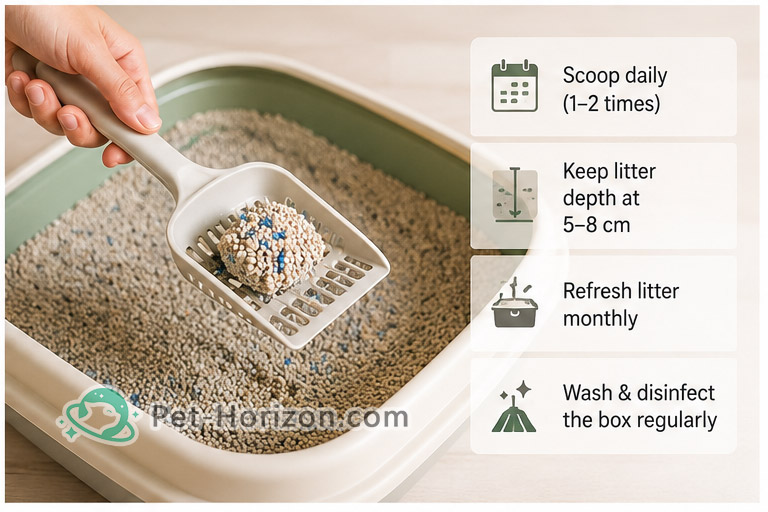
Keep fill depth and scooping schedule consistent. A depth of five to eight centimeters gives cats enough material to dig and cover comfortably, and allows clumps to form fully without urine reaching the base of the box. Scoop at least once daily — twice for multi-cat homes. A monthly full refresh, combined with thorough washing and disinfection of the box itself, prevents bacterial buildup that even the best litter cannot compensate for on its own.
The Right Litter Makes Every Cleaning Session Shorter
For every cat owner, the part of the daily routine that feels most tedious almost always traces back not to the cat, but to the litter. A well-made cat litter for easy cleaning cuts dust pollution, prevents urine from pooling at the bottom of the box, keeps odors locked in rather than drifting through the room, and lasts long enough per fill to keep costs manageable. An inferior product does the opposite on every count — while quietly adding to your cat’s health risks in the process.
Set aside the marketing language on the packaging. Focus on three core indicators: dust output, clump firmness, and odor longevity. Select a product from a manufacturer with transparent quality standards, and match the formula to your household situation — your cat count, your cat’s age and health, and your home’s ventilation. The right low dust cat litter with solid clumping and genuine cat litter odor control turns litter box maintenance from a dreaded chore into a two-minute daily task. That shift — quiet, unglamorous, and entirely practical — is what choosing the best cat litter for easy cleaning actually delivers.
FAQ
What makes a cat litter genuinely easy to clean?
Three factors matter most. First, fast and firm clumping — litter that binds urine into a compact, scoopable clump within seconds means you can remove waste cleanly without disturbing the litter around it. Second, low dust output — less powder in the air and on surfaces means less secondary cleaning beyond the box itself. Third, effective cat litter odor control through adsorption rather than fragrance, which keeps the box area fresh between scoops without adding chemical residue that’s harder to manage over time.
How deep should the litter be to make scooping easier?
A depth of five to eight centimeters (roughly two to three inches) is the practical standard. Shallower than this, and urine reaches the bottom of the box before clumps fully form, causing clumps to stick and making scooping much harder. Deeper than this uses more litter than necessary without meaningful benefit. Maintaining the right depth consistently is one of the simplest adjustments that makes daily scooping noticeably faster and cleaner.
How does tofu cat litter compare to bentonite for everyday cleaning?
Tofu cat litter is plant-based, produces minimal dust, is gentle on paws, and is flushable — making disposal as simple as flushing waste down the toilet, which many owners find significantly easier than bagging and binning. Bentonite cat litter absorbs faster, clumps harder, and handles odor more aggressively, making it better suited for multi-cat homes or cats with heavier output. For most single-cat households, tofu litter offers the cleanest, lowest-effort experience. For higher-demand situations, bentonite or a mixed litter performs more reliably.