




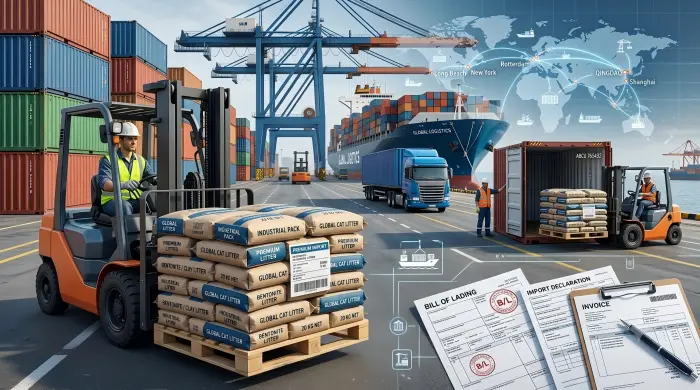
Importing cat litter involves more than arranging ocean freight and booking containers. Because cat litter is a heavy, moisture-sensitive product with different import requirements across markets, buyers need to carefully plan every stage of the shipment process.
Common issues such as incorrect customs documents, unsuitable packaging, moisture damage, overweight containers, and delayed clearance can increase costs and affect supply chain reliability. These risks are especially important for international buyers importing tofu cat litter, bentonite cat litter, or private label cat litter from overseas manufacturers.
This cat litter import shipping guide explains the key shipping, customs, and logistics considerations that global buyers should understand before placing an order. By preparing the right documents, selecting suitable packaging solutions, and working with an experienced supplier, importers can reduce risks and improve shipment efficiency.
Quick Answer: What Should Importers Consider Before Shipping Cat Litter Internationally?
Cat litter importers should consider customs documentation, HS code classification, moisture protection, container loading efficiency, destination-country regulations, and shipping costs before arranging international shipments. Proper preparation helps prevent customs delays, cargo damage, and unexpected logistics expenses.
Why Cat Litter Requires Special Shipping Planning
Unlike many lightweight pet products, cat litter requires special shipping planning because of its weight, material characteristics, and sensitivity to transportation conditions. A successful international shipment depends not only on freight arrangements but also on product preparation, packaging design, and compliance with import regulations.
Different cat litter materials create different logistics challenges. Bentonite cat litter has a higher density, which means container weight management is often a key concern during ocean transportation. Tofu cat litter is lighter and easier to optimize for container capacity, but its plant-based ingredients require better moisture protection during long-distance shipping.
Understanding the differences between different cat litter materials can help importers select suitable products and develop better shipping strategies. For more information about product characteristics, buyers can also review our guide on tofu cat litter vs bentonite cat litter.
Bentonite Cat Litter Shipping Considerations
Bentonite cat litter is widely used in global markets because of its strong clumping performance and absorbency. However, its high density means importers need to carefully evaluate container loading plans to avoid exceeding destination port weight restrictions.
For heavy products such as bentonite cat litter, maximizing loading quantity is not always the best solution. The correct loading plan should balance product quantity, container weight limits, transportation safety, and final delivery requirements.
Importer’s Tip
Before shipment, buyers should confirm the loading quantity, container type, and destination port weight limitations with their supplier. A professional supplier should provide a loading plan based on actual shipping conditions.
Tofu Cat Litter Shipping Considerations
Tofu cat litter is becoming increasingly popular among international buyers because of its renewable ingredients and lightweight structure. However, compared with mineral-based litter, tofu cat litter requires additional attention to moisture control during long-distance ocean transportation.
Long transit times, high humidity environments, and improper packaging may affect product quality. Moisture-proof inner packaging and suitable container protection are important considerations for overseas shipments.
Importer’s Tip
Ask your supplier whether moisture-control measures such as PE inner liners, sealed packaging, and container desiccants are included for long-distance shipments.
Destination Market Considerations
Import requirements and shipping risks vary depending on the destination market. Buyers shipping to regions with high humidity may need stronger moisture protection, while markets with strict customs controls may require more detailed documentation and compliance preparation.
Understanding destination-specific requirements before production helps importers avoid unnecessary delays after the goods arrive at the port.
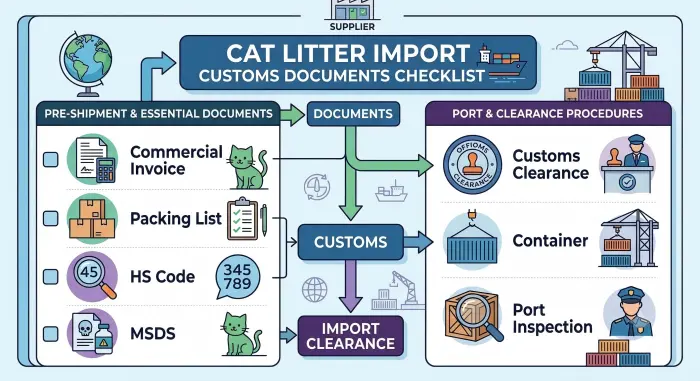
Customs Documents Every Cat Litter Importer Should Prepare
Customs documentation is one of the most critical parts of international cat litter shipping. Even when product quality and packaging meet customer expectations, incomplete or incorrect documents can cause customs delays, additional inspection costs, storage fees, or cargo rejection.
For cat litter importers, preparing the correct documentation before shipment is not only a compliance requirement but also an important step in protecting supply chain reliability. Before production begins, buyers should confirm that their supplier can provide complete export documents and meet the requirements of the destination market.
1. Verify the Correct HS Code for Cat Litter
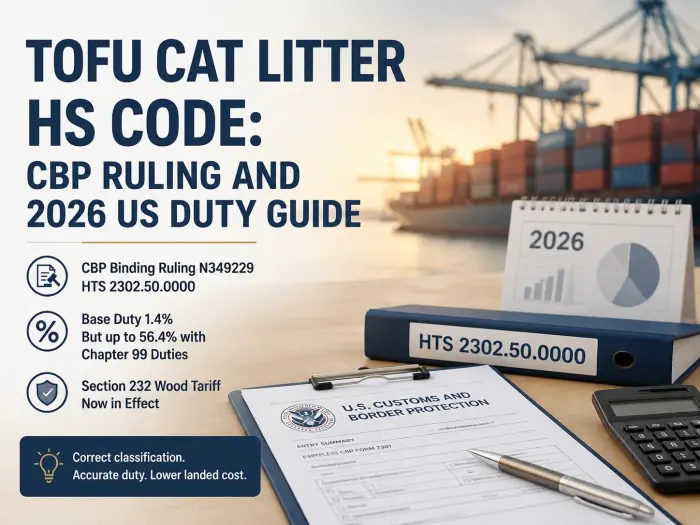
The HS code is one of the first documents that customs authorities review when imported goods arrive at the destination port. Using an incorrect HS code may result in classification disputes, delayed clearance, additional duties, or further inspection.
Different cat litter materials may have different classification considerations depending on product composition, including bentonite cat litter, tofu cat litter, pine cat litter, and mixed cat litter. Importers should confirm the product classification with their supplier and, when necessary, consult local customs professionals before shipment.
Importer’s Tip
Do not wait until the goods arrive at the port to check HS code information. Before placing an order, request the supplier’s proposed HS code and confirm whether it matches your country’s import requirements.
2. Prepare MSDS and Product Safety Documents
MSDS (Material Safety Data Sheet) is an important document used during international transportation and customs procedures. Although cat litter products are generally not classified as hazardous cargo, shipping partners and customs authorities may still require product information, composition details, and handling instructions.
Missing, outdated, or incomplete MSDS documents can slow down shipment processing and create unnecessary communication between suppliers, logistics providers, and customs authorities.
Importer’s Tip
Importers should request the latest English version of MSDS documents before shipment. If product formulas, raw materials, or packaging specifications change, document updates should also be confirmed before the next shipment.
3. Check Destination-Specific Import Requirements
Customs requirements vary between countries and regions. A document package that works for one market may not be sufficient for another destination.
European and North American markets often have stricter compliance requirements, while humid regions may place greater attention on moisture protection, packaging quality, and cargo condition after arrival. Importers should understand local regulations before production and shipping to avoid unexpected clearance problems.
| Market Consideration | Possible Requirements |
|---|---|
| Europe | Product compliance, packaging requirements, customs documentation |
| North America | Import declaration, customs classification, shipment records |
| Humid Regions | Moisture protection and cargo condition control |
4. Verify Wooden Packaging and IPPC Requirements
If wooden pallets, crates, or other wood packaging materials are used during transportation, importers should confirm whether IPPC treatment and marking requirements apply in the destination country.
Missing or incorrect wooden packaging certification marks may create customs problems, including inspection delays or additional handling costs.
Importer’s Tip
Before loading the container, confirm the packaging materials used for the shipment and ensure that any required treatment or certification has been completed.
Protect Cat Litter Quality During Ocean Transportation
Ocean transportation often takes several weeks, exposing cat litter shipments to changing temperatures, humidity, and repeated handling throughout the logistics process. Even when customs documents are prepared correctly, poor packaging or inadequate shipping protection can still result in damaged products, customer complaints, and additional replacement costs.
To maintain product quality throughout international transportation, importers should evaluate shipping risks before production and confirm that appropriate protection measures are included in the export packaging plan.
Control Moisture Before and During Shipment
Moisture is one of the most common causes of quality problems during international cat litter transportation. High humidity inside containers, seasonal weather changes, and long ocean transit times can increase the risk of moisture absorption, particularly for plant-based cat litter products.
Excessive moisture may reduce product performance, damage packaging, or in severe cases affect product quality after arrival. These issues not only affect customer satisfaction but may also create additional logistics and replacement costs.
Best Practices
- Use moisture-resistant packaging materials.
- Add suitable container desiccants for long-distance shipments.
- Store finished products in a dry warehouse before loading.
- Avoid container loading during heavy rain whenever possible.
- Check product moisture levels before final packaging.
Importer’s Tip
If your shipment travels through tropical or high-humidity regions, ask your supplier whether moisture-control measures are included as part of the standard export packaging specification.
Prevent Packaging Damage During Transit
Cat litter bags are frequently stacked, moved, and handled multiple times before reaching the final destination. Weak packaging materials or unsuitable pallet arrangements can increase the risk of torn bags, product leakage, and damaged cartons during transportation.
Choosing packaging that matches the shipping distance and transportation method helps reduce cargo loss throughout the supply chain.
Best Practices
- Use strong outer bags suitable for international transportation.
- Select pallet configurations designed for container loading.
- Apply proper pallet protection to improve stability.
- Perform packaging strength checks before mass production.
- Confirm unloading requirements at the destination warehouse.
Reduce Dust and Product Contamination
Dust control is not only a manufacturing issue but also an important consideration during transportation. Damaged packaging, repeated handling, and poor shipment protection may increase dust generation after the products leave the factory.
Importers sourcing premium cat litter products should verify that suppliers implement low-dust production processes together with suitable transportation protection.
For more information about dust control standards and production practices, buyers can review our guide on low-dust cat litter manufacturing.
Best Practices
- Ensure packaging is properly sealed before shipment.
- Reduce unnecessary product handling during loading.
- Inspect damaged bags before container sealing.
- Confirm quality control procedures with suppliers.
Consider Climate Conditions Along the Shipping Route
Shipping conditions vary significantly between destinations. Routes passing through tropical regions may experience high humidity, while winter transportation can expose products to condensation caused by temperature changes.
Understanding the expected shipping environment allows importers to choose more suitable packaging materials and moisture protection methods before shipment begins.
| Shipping Condition | Potential Risk | Recommended Protection |
|---|---|---|
| High humidity | Moisture absorption | Moisture barrier packaging and desiccants |
| Long transit time | Packaging fatigue | Reinforced bags and stable pallet loading |
| Multiple handling points | Bag damage | Stronger outer packaging protection |
| Temperature changes | Condensation risk | Proper moisture-control planning |
Shipping Characteristics of Different Cat Litter Types
Different cat litter materials require different shipping strategies. Understanding these differences helps importers select suitable packaging and loading methods.
| Item | Tofu Cat Litter | Bentonite Cat Litter |
|---|---|---|
| Moisture sensitivity | Higher due to plant-based ingredients | Medium, but requires dry storage conditions |
| Product weight | Lower density | Higher density |
| Container planning focus | Space utilization | Weight management |
| Main packaging concern | Moisture protection | Bag strength and loading stability |
Optimize Container Loading and Logistics Planning
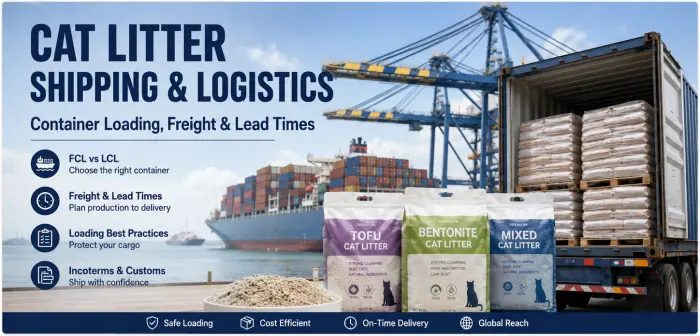
Container loading is one of the most important factors affecting the total cost and reliability of cat litter imports. Because cat litter is a heavy and space-sensitive product, improper loading plans can lead to overweight penalties, inefficient container utilization, additional handling costs, and delayed delivery.
A professional shipping plan should consider product type, container capacity, destination port regulations, pallet requirements, and transportation conditions before the goods are loaded.
Manage Container Weight According to Destination Port Requirements
Different countries and ports apply different container weight restrictions. This creates additional challenges for cat litter shipments, especially for dense products such as bentonite cat litter.
A loading plan that works for one market may not be suitable for another destination. If a container exceeds local weight limits, importers may face additional unloading costs, storage charges, or delivery delays.
| Product Type | Main Loading Concern | Recommended Planning |
|---|---|---|
| Bentonite Cat Litter | High density and container weight | Calculate loading quantity based on destination weight limits |
| Tofu Cat Litter | Lower density but larger volume requirement | Optimize container space utilization |
| Mixed Cat Litter | Balance between weight and volume | Create customized loading plans |
Importer’s Tip
Before production starts, ask your supplier for a container loading plan based on your destination port requirements. Maximum loading quantity should not be decided only by factory capacity or available container space.
Improve Container Space Utilization with Proper Pallet Planning
Container space utilization directly affects the landed cost of imported cat litter. Poor pallet arrangements, inconsistent pallet sizes, or unsuitable loading methods can reduce container efficiency and increase the cost per unit product.
Different markets may also have different warehouse requirements. Importers should confirm pallet standards and unloading conditions before production begins.
Best Practices
- Confirm pallet requirements before production.
- Use pallet sizes suitable for destination warehouses.
- Optimize stacking patterns before container loading.
- Ensure pallet stability during ocean transportation.
- Keep loading records and shipment photos.
Balance Shipping Cost and Product Protection
Maximizing container capacity should not come at the expense of product protection. Over-stacking, excessive compression, or unsuitable loading methods may increase the risk of damaged bags, product leakage, and quality issues during transportation.
The best loading strategy balances three factors: container utilization, cargo safety, and destination handling requirements.
| Loading Problem | Possible Impact | Solution |
|---|---|---|
| Overweight container | Extra unloading costs and delays | Adjust loading quantity according to port limits |
| Poor pallet arrangement | Lower container efficiency | Standardize pallet loading methods |
| Excessive stacking pressure | Damaged bags and leakage | Optimize stacking height |
Choose a Supplier with Export Logistics Experience
Successful cat litter imports depend not only on product quality but also on the supplier’s export management capability. Experienced manufacturers usually have standardized procedures for container loading, packaging protection, export documentation, and shipment preparation.
A reliable supplier should be able to provide loading recommendations based on different destination markets rather than applying the same shipping method to every order.
Questions Importers Should Ask Suppliers
- What is the recommended loading quantity for my destination port?
- Are pallet requirements different for my market?
- What moisture protection measures are included?
- Can you provide container loading photos before shipment?
- How do you prevent overweight issues?
Cat Litter Import Shipping Checklist: A Step-by-Step Guide
A complete shipping checklist helps cat litter importers identify potential problems before the goods leave the factory. Many shipping issues, including customs delays, moisture damage, and unexpected logistics costs, can be prevented through proper preparation before shipment.
The following checklist covers the key steps buyers should review before ordering, during production, before container loading, and after shipment departure.
1. Before Placing Your Cat Litter Order
Confirm Product Specifications
Before starting an import order, buyers should confirm all product details with the supplier, including cat litter type, raw materials, particle size, packaging format, and private label requirements.
- Confirm product type: tofu cat litter, bentonite cat litter, pine cat litter, or mixed cat litter.
- Confirm packaging specifications and labeling requirements.
- Confirm private label or OEM requirements.
- Confirm target market expectations.
Verify Supplier Export Capability
A reliable supplier should provide more than competitive pricing. Export experience, documentation capability, packaging standards, and logistics support are equally important factors for successful international shipments.
- Supplier can provide export documents.
- Supplier understands international shipping procedures.
- Supplier can recommend suitable packaging solutions.
- Supplier has experience working with overseas buyers.
Importer’s Tip
Before placing a large order, request product specifications, shipping document examples, and packaging information to evaluate the supplier’s export readiness.
2. Before Production Begins
Prepare Customs and Compliance Documents
Importers should confirm documentation requirements before production begins. Preparing documents early helps prevent delays after the goods arrive at the destination port.
- Confirm HS code classification.
- Prepare MSDS documents when required.
- Check destination-country import requirements.
- Confirm special certification requirements.
Confirm Packaging Protection
Packaging is not only a product presentation factor but also an important part of international shipping protection.
- Confirm moisture-resistant packaging.
- Confirm inner protection layers if required.
- Confirm bag strength and sealing quality.
- Confirm pallet requirements.
- Confirm dust-control requirements.
Importer’s Tip
Packaging standards should be determined based on shipping distance, climate conditions, and destination warehouse requirements rather than only product appearance.
3. Before Container Loading
Check Container Loading Plan
- Confirm container type.
- Confirm loading quantity.
- Check destination port weight requirements.
- Verify pallet arrangement.
- Confirm loading photos will be provided.
Inspect Product Condition Before Shipment
- Product moisture level checked.
- Packaging condition inspected.
- Labels verified.
- Quantity confirmed.
- Container sealing completed correctly.
Importer’s Tip
Request container loading photos and final packing lists before shipment departure. These records are useful for quality tracking and claim handling if problems occur after arrival.
4. After Shipment Departure
Prepare for Customs Clearance
- Receive shipping documents.
- Confirm bill of lading details.
- Prepare import declaration.
- Coordinate with customs broker.
- Monitor shipment status.
Prepare Overseas Warehouse Conditions
International shipping does not end when the container arrives at the destination port. Proper storage conditions are also important for maintaining cat litter quality after delivery.
- Ensure dry storage conditions.
- Avoid long-term exposure to humidity.
- Prepare suitable unloading equipment.
- Inspect packaging condition after unloading.

Common Cat Litter Import Mistakes to Avoid
Even with proper planning, many cat litter import problems occur because key details are overlooked before shipment. These mistakes can lead to customs delays, cargo damage, additional logistics costs, and reduced customer satisfaction.
Understanding common import mistakes allows buyers to evaluate suppliers more effectively and take preventive actions before goods leave the factory.
Mistake 1: Choosing a Supplier Based Only on Product Price
One of the most common mistakes in international cat litter sourcing is focusing only on the lowest quotation while ignoring export capability and logistics experience.
A supplier may offer competitive pricing, but if they cannot provide accurate shipping documents, suitable packaging protection, or reliable loading plans, the final import cost may increase due to delays, damage, or additional handling expenses.
What Importers Should Check
- Export experience.
- Documentation capability.
- Packaging standards.
- International shipment experience.
- Communication and quality control process.
Mistake 2: Preparing Customs Documents Too Late
Incorrect or incomplete customs documents are among the most common causes of shipment delays. Issues such as incorrect HS code classification, missing MSDS documents, or incomplete product information can affect customs clearance.
Importers should confirm required documents before production begins instead of solving compliance issues after shipment departure.
Mistake 3: Ignoring Moisture Protection During Ocean Shipping
Ocean transportation exposes cat litter shipments to humidity, temperature changes, and long transit periods. Without suitable protection, moisture may affect product performance and packaging quality after arrival.
This is especially important for plant-based products such as tofu cat litter, where moisture-control planning should be considered before shipment.
Mistake 4: Overloading Containers Without Considering Destination Limits
Because cat litter is a heavy product, container weight management is a critical part of international shipping. A loading plan that maximizes quantity without considering destination port restrictions may create overweight problems and additional costs.
Importers should request loading plans based on actual destination requirements rather than using the same loading standard for every market.
Mistake 5: Ignoring Packaging and Warehouse Requirements
Products may experience problems even after successful customs clearance if packaging does not match warehouse handling requirements.
Standardized pallets, suitable packaging materials, and proper storage conditions help reduce problems during overseas distribution.
Future Trends in Cat Litter Import Logistics
The international cat litter supply chain is becoming more structured, transparent, and compliance-focused. For global buyers, successful importing increasingly depends on more than product quality and price.
Importers are paying greater attention to supplier export capability, documentation accuracy, sustainable packaging solutions, and logistics efficiency.
Greater Focus on Export Compliance and Documentation Accuracy
International trade requirements continue to become more standardized. Importers increasingly expect suppliers to provide complete documentation, accurate product information, and consistent shipment records before goods leave the factory.
Sustainable Packaging and Environmentally Responsible Shipping
Sustainability is becoming an increasingly important consideration in the pet product industry. Buyers are paying more attention to packaging materials, waste reduction, and environmentally responsible supply chains.
For more information about packaging development trends, buyers can review: sustainable cat litter packaging trends.
More Efficient Supply Chain Planning
Production capacity alone is no longer enough. International buyers increasingly value suppliers that can support packaging optimization, container planning, shipment coordination, and delivery preparation.
Increasing Demand for OEM and Private Label Solutions
More buyers are developing their own cat litter brands instead of relying only on standard products. This trend increases demand for manufacturers that can support customized formulas, packaging designs, and export processes.
For buyers interested in customized products, learn more about our private label cat litter solutions.
Key Takeaways: Cat Litter Import Shipping Best Practices
Successful cat litter imports require careful planning across the entire supply chain. From supplier selection and documentation preparation to container loading and final delivery, every step can affect shipment reliability and total import costs.
| Area | Key Consideration |
|---|---|
| Product | Quality consistency and product specifications |
| Documentation | Correct customs and shipping records |
| Packaging | Moisture and transportation protection |
| Logistics | Efficient loading and shipment planning |
| Supplier | Export capability and communication |
Frequently Asked Questions About Cat Litter Import Shipping
What documents are required to import cat litter?
The documents required to import cat litter vary by destination country but commonly include commercial invoices, packing lists, shipping documents, HS code information, and product documents such as MSDS when required.
Can cat litter be shipped internationally?
Yes, cat litter can be shipped internationally by ocean freight. Successful shipments require proper packaging, documentation preparation, container planning, and compliance with destination-country requirements.
Is cat litter considered hazardous cargo?
Most cat litter products are generally not classified as hazardous cargo. However, shipping requirements may vary depending on product composition, documentation, and transportation regulations.
How can importers prevent moisture damage during cat litter shipping?
Importers can reduce moisture risks by using suitable packaging materials, moisture protection layers, container desiccants, and proper warehouse storage conditions before and after shipment.
How much cat litter can fit in one shipping container?
The loading quantity depends on product type, packaging format, container size, pallet requirements, and destination port weight limits. Dense products such as bentonite cat litter require careful weight planning.
What causes customs delays when importing cat litter?
Common causes include incorrect HS codes, incomplete documents, missing product information, and failure to meet destination-country import requirements.
What should I ask a cat litter supplier before importing?
Importers should ask about production capability, export experience, packaging standards, shipping documents, loading plans, and quality control procedures.
How can I reduce cat litter shipping costs?
Importers can reduce shipping costs by optimizing container loading, selecting suitable packaging, avoiding overweight issues, planning shipments early, and working with experienced suppliers.
What packaging is best for international cat litter shipments?
The best packaging depends on product type, shipping distance, climate conditions, and destination requirements. Moisture protection and transportation durability are key considerations.
Why is choosing an experienced cat litter manufacturer important?
An experienced manufacturer can support not only production but also export documents, packaging recommendations, logistics planning, and international shipment coordination.
Build a More Reliable Cat Litter Supply Chain with Pet Horizon
Successful cat litter imports require more than finding a competitive supplier. Buyers need a manufacturing partner that understands product quality, export documentation, packaging protection, and international logistics requirements.
Pet Horizon is a cat litter manufacturer specializing in tofu cat litter, bentonite cat litter, OEM, and private label solutions for global importers and distributors.
Learn more about our OEM cat litter solutions and contact us for international sourcing support.