




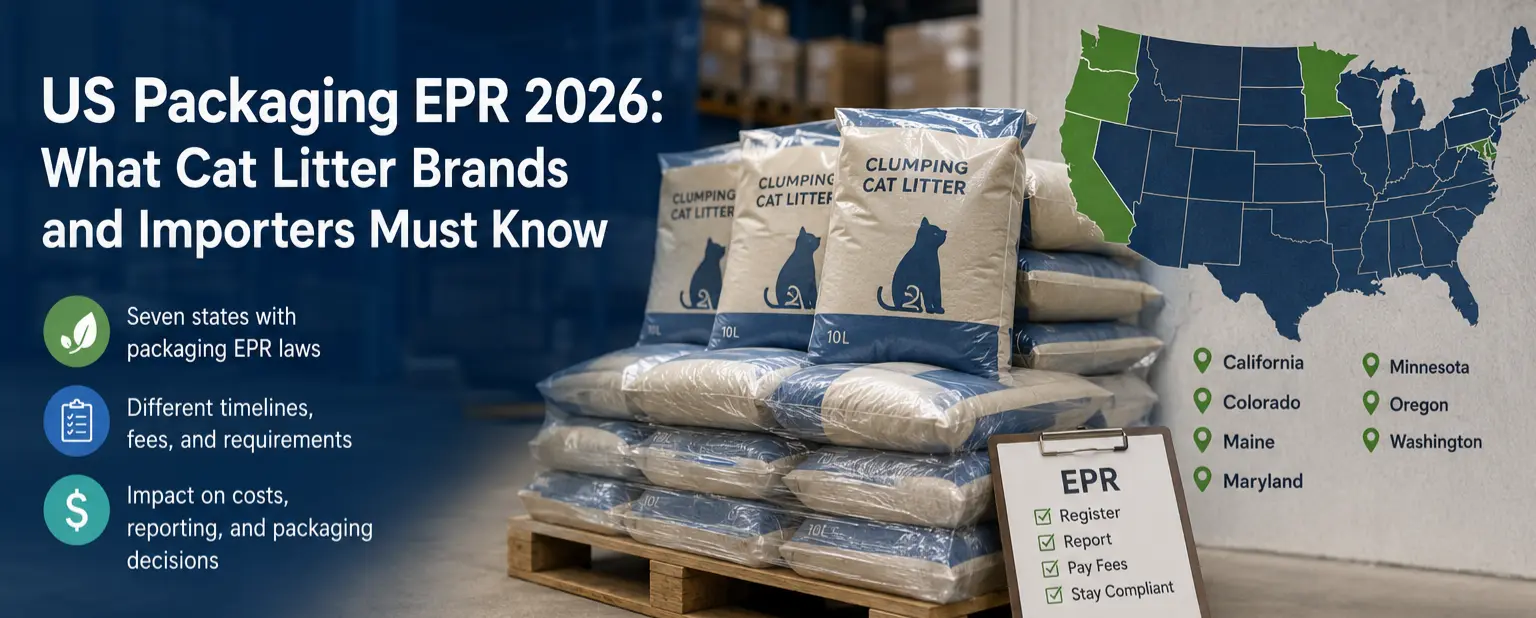
Packaging Extended Producer Responsibility (EPR) is a system that requires producers to help fund and manage the collection, recycling, or end-of-life management of covered packaging placed on a market. As of August 2026, seven U.S. states have enacted packaging EPR laws: California, Colorado, Maine, Maryland, Minnesota, Oregon, and Washington. Their implementation timelines differ significantly: Oregon and Colorado already have producer fee obligations, California is in active reporting and early-fee implementation, while Maine, Minnesota, Maryland, and Washington are progressing through different stages of program development and implementation. For cat litter brands and importers, packaging EPR can affect landed cost, reporting requirements, and packaging decisions, particularly when products use plastic film or multilayer structures. This guide explains which state programs are live, how producer responsibility and eco-modulation work in practice, and how a manufacturer or OEM partner can help importer-brands stay compliant.
Quick Answer
Seven U.S. states — California, Colorado, Maine, Maryland, Minnesota, Oregon, and Washington — have enacted packaging EPR laws, but their implementation schedules differ and there is no single federal packaging EPR standard. Oregon and Colorado already have producer fee obligations, while California is in its registration, reporting, and early-fee phase. Maine, Maryland, Minnesota, and Washington are at different stages of program development and implementation, with Washington’s producer-funded recycling system scheduled to begin in 2030. For cat litter brands, packaging material, weight, recyclability, and state-specific fee rules can all affect EPR costs, so packaging should be evaluated together with the applicable state requirements rather than assumed to fall into one universal fee tier.
What Packaging EPR Actually Means
Extended Producer Responsibility shifts the cost of collecting, sorting, and recycling packaging from taxpayers and municipalities to the producers who place packaged goods on the market. In the United States, the responsible “producer” is defined by each state’s law and may be the brand owner, importer, manufacturer, retailer, or another entity depending on the applicable rules — it is not automatically the factory that filled the bag. Depending on the state program, producers may be required to participate in a Producer Responsibility Organization (PRO), report covered packaging by material type and weight, and pay program fees or dues. Important for importers: being the importer of record does not automatically make a company the EPR producer in every state, so brands should determine which entity is responsible before registering or reporting.
For cat litter, the relevance is immediate: the product is heavy, low-value per kilogram, and often sold in pouches or bags. That combination makes packaging compliance a recurring consideration for importers, particularly when packaging material, weight, and destination-state requirements must be tracked across high-volume shipments.
Seven U.S. States With Packaging EPR Laws
There is no single federal packaging EPR standard in the United States. Instead, packaging EPR requirements are established and implemented at the state level, with different definitions, deadlines, reporting requirements, fee structures, and program launch dates.
| State | Law | 2026 status | PRO / implementation | Key importer concern |
|---|---|---|---|---|
| California | SB 54 | Active implementation | CAA | Registration, reporting, early fees |
| Colorado | HB 22-1355 | Fees active | CAA | Annual dues and reporting |
| Maine | LD 1541 | Program development | State-specific | Stewardship framework |
| Maryland | SB 901 | Program development | CAA | Reporting and rulemaking |
| Minnesota | HF 3911 | Pre-program implementation | CAA | Producer reporting |
| Oregon | SB 582 | Fees active | CAA | Annual supply reporting and fees |
| Washington | SB 5284 | Implementation | CAA | 2030 program launch |
The seven enacted laws are:
- California — SB 54 (Plastic Pollution Prevention and Packaging Producer Responsibility Act).
- Colorado — HB 22-1355 (Producer Responsibility Program for Statewide Recycling).
- Maine — LD 1541 (Extended Producer Responsibility for Packaging).
- Maryland — SB 901.
- Minnesota — HF 3911.
- Oregon — SB 582.
- Washington — SB 5284 (Recycling Reform Act).
The Circular Action Alliance (CAA) is currently the approved Producer Responsibility Organization (PRO) for California, Colorado, Maryland, Minnesota, Oregon, and Washington. Maine has a separate program development process. Although CAA’s multi-state coverage can simplify administration for brands selling across several states, producers must still determine their obligations, registration status, reporting requirements, and fees separately under each applicable state law.
Oregon: Fees Already Live
Oregon’s program is among the furthest along, with producer fees already in effect and annual supply reporting required. Oregon uses an eco-modulated fee structure in which packaging material categories and environmental performance can affect producer fees. Flexible plastic and multilayer packaging can face different fee treatment from fiber-based materials, depending on the applicable material category and current fee schedule. Because Oregon fee rates can change by program year, importers should use the current CAA fee schedule rather than relying on a fixed per-pound estimate when calculating landed cost.
Colorado: Fees Began in January 2026
Colorado began charging producer responsibility dues in January 2026, with annual reporting and recordkeeping requirements. CAA lists 31 May 2026 as the 2026 reporting date for 2025 supply data. Because producer dues depend on covered-material supply and program rules, importers should obtain accurate packaging material and weight data from their supplier before estimating Colorado EPR costs.
California: The Largest Market, Phasing In
California is the largest packaging EPR program by scale. The SB 54 permanent regulations took effect on 1 May 2026. California producers are subject to multiple registration and reporting requirements, including the state-required source reduction baseline report due 1 July 2026, while CAA is also administering producer reporting and 2026 early-fee requirements. The program continues toward its statutory 2032 packaging and source-reduction targets, so importers should treat California compliance as an active 2026 requirement rather than a future 2027-only obligation. Willful noncompliance can carry statutory penalties of up to $50,000 per day.
Maine, Minnesota, Maryland, Washington
- Maine (LD 1541) is still progressing through its stewardship-program development and implementation process.
- Minnesota (HF 3911) and Maryland (SB 901) have already entered producer reporting and program-development stages, while their broader program obligations continue to phase in.
- Washington (SB 5284), enacted as the Recycling Reform Act, requires producers to participate in a PRO, with producer-funded collection and processing beginning in 2030.
How Eco-Modulation Works in Practice
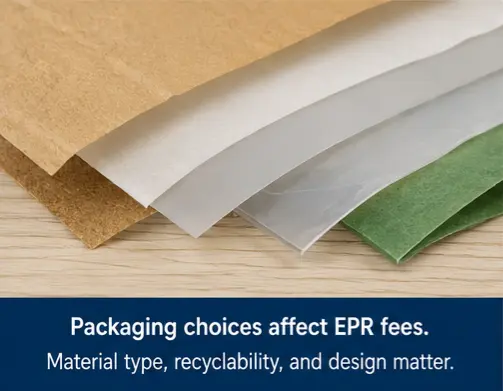
Eco-modulation can make packaging design financially relevant because some EPR programs adjust fees or provide incentives based on factors such as material type, recyclability, environmental performance, or other statutory criteria. For cat litter, plastic film and multilayer structures may receive different treatment from fiber-based packaging, but the exact fee impact depends on the state, material category, and applicable fee schedule. Importers should therefore compare packaging options using the current state-specific rules rather than assuming that one material always carries the highest fee.
Why Cat Litter Is Exposed
Several structural facts explain the exposure:
- Packaging material type and construction can affect EPR classification and cost, but the treatment varies by state and fee schedule.
- Fiber-based, mono-material, multilayer, and other packaging structures may receive different treatment depending on their covered-material classification and recyclability criteria.
- Cat litter’s relatively high product weight means packaging fees can become material when multiplied across large shipment volumes.
- Moisture and barrier requirements can make packaging selection more complex, so cost, product protection, recyclability, and compliance should be evaluated together.
The practical implication is that packaging EPR costs can become significant for high-volume cat litter importers because even a relatively small fee per unit or kilogram of covered packaging can accumulate across large annual sales volumes. Importers should model EPR cost at the SKU level using actual packaging weight, material classification, destination states, and the applicable program-year fee schedule.
How a Manufacturer or OEM Partner Supports Compliance
EPR compliance is a shared task between the responsible producer under each state’s law and the factory, which controls the physical packaging. An experienced OEM can support compliance in four concrete ways:
- Format selection. Offering recyclable kraft, paper-based, or appropriately designed mono-material options can give brands additional packaging choices that may receive more favorable treatment under some EPR fee structures. However, the final classification and cost depend on the applicable state rules, while packaging must still meet the product’s moisture, strength, sealing, and shelf-life requirements.
- Material data. Supplying accurate material composition, packaging weight, component specifications, and relevant recyclability information helps the brand classify and report packaging correctly and determine whether the packaging qualifies for any applicable fee adjustments or eco-modulation incentives.
- Label support. Aligning pack copy with state labeling expectations reduces downstream correction costs.
- Documentation. Providing batch-level packaging specs simplifies the annual data reports every producer must file.
Brands building a private-label range should discuss recyclable packaging options with their supplier up front. For example, a buyer sourcing clumping tofu cat litter can evaluate kraft, paper-based, or mono-material packaging with the OEM while checking moisture protection, durability, recyclability, and applicable EPR treatment — packaging decisions should be made alongside product specifications rather than assumed to lower fees automatically.
Common Compliance Mistakes
The errors we see most often among first-time U.S. importers are predictable:
- Assuming the factory automatically handles EPR — the responsible “producer” is defined by each state’s law and may be the brand owner, importer, manufacturer, retailer, or another entity depending on the applicable rules.
- Waiting until a fee notice arrives before checking registration and reporting obligations can create avoidable compliance risk and potential penalties.
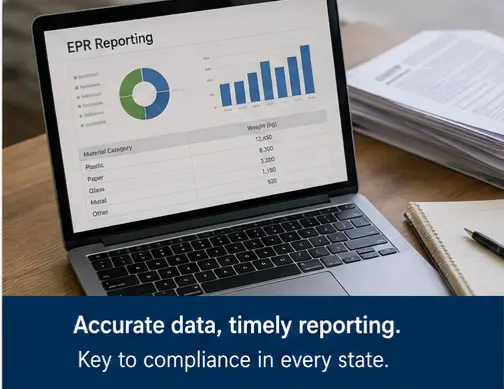
- Reporting only finished units and omitting the packaging weight.
- Choosing the cheapest film bag without modeling the lifetime EPR cost.
Your Compliance Roadmap
If you import or brand cat litter into the United States, treat EPR as a recurring operating cost, not a one-time hurdle. A sensible sequence:
- Determine your producer status in each state where you sell.
- Identify the applicable Producer Responsibility Organization (PRO) and complete registration or participation requirements before the relevant state deadline. CAA currently serves as the approved PRO in California, Colorado, Maryland, Minnesota, Oregon, and Washington, while other states may use a different stewardship organization or implementation structure.
- Collect packaging specs from your manufacturer now, before the first data report.
- Model the fee delta between plastic-film and recyclable formats for your top SKUs.
- Build applicable EPR fees and dues into landed-cost forecasts for 2026, 2027, and beyond.
The cat litter export compliance hub covers broader market-access rules, and the cat litter sourcing and buying guide walks through supplier selection for private-label programs.
Conclusion
U.S. packaging EPR is already creating producer obligations in Oregon and Colorado, while California is in active registration, reporting, and early-fee implementation. Maine, Minnesota, Maryland, and Washington are progressing on different timelines, with Washington’s producer-funded recycling system scheduled to begin in 2030. For cat litter importers, the key issue is not simply choosing a “recyclable” package, but matching packaging material, weight, recyclability, reporting data, and producer responsibility status to the rules in each state where the product is placed on the market.
Frequently Asked Questions
Seven states have enacted packaging EPR laws: California, Colorado, Maine, Maryland, Minnesota, Oregon, and Washington. However, the programs are at different implementation stages, so having an enacted law does not mean that producers in every state are already paying the same type of EPR fees.
No. The United States has no federal packaging EPR statute. Each state runs its own program with its own deadlines, PROs, and fee schedules.
The responsible “producer” varies by state. Depending on the law and supply chain structure, it may be the brand owner, importer, manufacturer, retailer, or another entity that places covered packaging on the market. Importers should check the producer definition in each applicable state before registering or reporting.
Cat litter is often sold in plastic film or multilayer packaging, and those materials can receive different EPR treatment from fiber-based packaging. The actual fee depends on the material classification, state program, and applicable fee schedule.
Potentially. Packaging material and recyclability can affect EPR fees or incentives in some state programs, but the exact treatment depends on the state, material classification, and current fee methodology. Brands should compare packaging options using the applicable state fee schedule rather than assuming that one material will always be cheaper.
Oregon’s producer fees began on 1 July 2025. Producers must submit annual supply data, with the 2025 supply data reporting deadline set for 31 May 2026. Fee payment timing varies by program year, so importers should confirm the current payment schedule with CAA.
Implementing rules took effect 1 May 2026, PRO registration is due 1 June 2026, the source reduction baseline report is due 1 July 2026, an early-fee process also applies in 2026, and the program builds toward its statutory 2032 packaging and source-reduction targets.
Willful noncompliance under SB 54 carries a statutory penalty of up to $50,000 per day, making timely registration and reporting essential.
Circular Action Alliance (CAA) is a nonprofit Producer Responsibility Organization (PRO) that currently serves as the approved PRO for packaging EPR programs in California, Colorado, Maryland, Minnesota, Oregon, and Washington. It provides registration, reporting, fee administration, and compliance resources for obligated producers in those states.
A cat litter OEM can support EPR compliance by providing accurate packaging material composition, packaging weights, component specifications, recyclability information, packaging samples, and production documentation. The OEM can also help brands evaluate alternative packaging structures, although the legal responsibility for determining producer obligations remains with the responsible entity under each state’s law.