




Every cat owner eventually faces the same dilemma: how to choose cat litter from the overwhelming number of options available on the market. Today, different types of cat litter—including bentonite, tofu, mixed, pine, and crystal litter—are promoted with claims such as “instant clumping,” “advanced odor control,” “low dust,” and “flushable convenience.” For many cat owners, especially beginners, comparing these products can quickly become confusing.
Some people purchase expensive “viral” products expecting perfect performance, only to encounter problems like excessive dust, unpleasant odors, litter tracking, weak clumping, or cats refusing to use the litter box altogether. In reality, there is no universally perfect litter. The key to making the right decision is understanding the strengths and weaknesses of each cat litter type and matching them to your cat’s behavior, your home environment, and your cleaning habits.
As long-term professionals in the pet supply industry, we communicate with cat owners every day who are searching for practical answers about cat litter comparison and how to choose cat litter properly. Through discussions with manufacturers, R&D specialists, and real household users, one conclusion remains consistent: the best litter is not necessarily the most expensive or the most popular—it is simply the one most suitable for your cat and home.
This guide combines industry manufacturing insights, laboratory testing data, and practical user experience to compare different types of cat litter in detail. We will examine raw materials, production processes, clumping ability, dust levels, odor control performance, environmental friendliness, feline acceptance, and ideal usage scenarios. Whether you are searching for low dust cat litter, flushable cat litter, natural cat litter, or cat litter for odor control, this article will help you make a more informed decision.
One important point should always be remembered: expensive does not automatically mean better. According to cat litter manufacturers and pet industry researchers, high-quality cat litter should balance three essential factors:
- Ingredient safety
- Functional performance
- Feline compatibility
When your cat is comfortable, your litter box stays clean, and your home environment remains fresh, you have found the right litter.
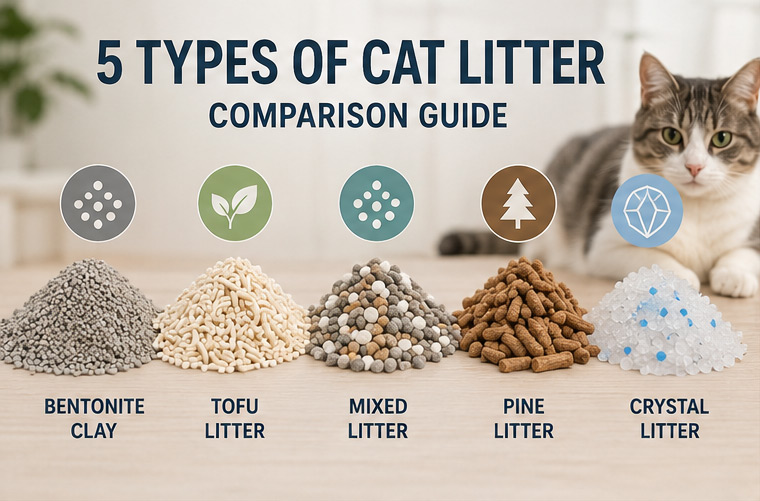
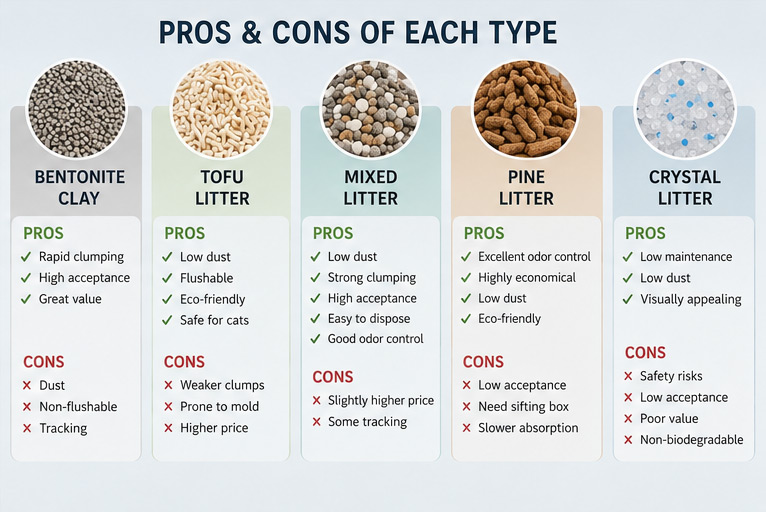
According to industry data, five major categories currently dominate more than 90% of the cat litter market:
- Bentonite Cat Litter
- Tofu Cat Litter
- Mixed Cat Litter
- Pine Cat Litter
- Crystal Cat Litter
Below is a complete cat litter comparison guide to help you understand the pros, cons, and best uses of each type.
Bentonite Cat Litter Comparison: Pros, Cons & Best Uses
The Classic Clumping Cat Litter with High Feline Acceptance
Bentonite cat litter is considered the “classic” choice in the cat litter industry and remains one of the most widely used products worldwide. Many experienced cat owners still consider it the benchmark for clumping cat litter because of its rapid absorption, firm clumping performance, and affordable pricing.
Its long-standing popularity is closely related to feline behavior. The texture of bentonite closely resembles natural sand, making it highly appealing to cats’ instinctive digging and covering behaviors.
Raw Materials and Manufacturing Process
The primary ingredient in bentonite cat litter is natural bentonite clay. During production, the clay is mined, crushed, screened, purified, and professionally dedusted. Premium bentonite products contain high concentrations of montmorillonite, a mineral known for powerful water absorption and strong viscosity.
According to laboratory testing from manufacturers, this mineral structure is the key reason premium bentonite litter can form solid clumps within just 2–3 seconds after liquid contact.
Core Advantages of Bentonite Cat Litter
Excellent Clumping Ability
One of the biggest advantages of bentonite litter is its fast and firm clumping performance. Once liquid is absorbed, the litter quickly forms hard clumps that are easy to scoop without breaking apart.
Strong Odor Control
Rapid clumping helps lock moisture and waste inside the litter, reducing odor spread and improving litter box hygiene.
High Feline Acceptance
Because its texture resembles natural outdoor sand, most cats adapt to bentonite litter immediately without litter box rejection.
Cost-Effective for Daily Use
Compared with many newer alternatives, bentonite litter remains highly affordable, making it especially suitable for multi-cat households.
Disadvantages of Bentonite Cat Litter
Higher Dust Levels
Dust remains the most common complaint associated with bentonite litter. Low-quality products may release excessive airborne particles during pouring or digging, potentially irritating respiratory-sensitive cats.
Tracking Problems
Small particles easily stick to paws and spread outside the litter box area.
Non-Flushable
Bentonite litter cannot be flushed and must be disposed of as household waste.
Best Uses for Bentonite Cat Litter
Bentonite litter is best suited for:
- Budget-conscious cat owners
- Multi-cat households
- Adult cats without respiratory sensitivities
- Owners prioritizing strong clumping performance
Manufacturer Recommendation
Always choose professionally dedusted premium bentonite litter instead of low-cost untreated products to reduce dust and improve cleanliness.
Tofu Cat Litter Comparison: Low Dust & Eco-Friendly Convenience
A Popular Choice for Modern Cat Owners
Tofu cat litter has become one of the fastest-growing categories in recent years. Many cat owners searching for low dust cat litter or eco friendly cat litter prefer tofu-based formulas because they address two major problems associated with traditional clay litter: dust and environmental impact.
Raw Materials and Production Process
Tofu litter is primarily made from soybean fiber, corn starch, cassava starch, and other natural plant fibers. The ingredients are processed through sterilization, drying, grinding, and extrusion molding.
Premium tofu litter may also include activated carbon or natural deodorizing additives to improve cat litter for odor control performance.
Industry R&D specialists note that most tofu litter ingredients are food-grade or pet-safe materials, making them safer if accidentally ingested in small amounts.
Core Advantages of Tofu Cat Litter
Extremely Low Dust
One of tofu litter’s biggest advantages is its low dust performance. Premium products can maintain dust levels below 0.1%, significantly reducing airborne particles during pouring and digging.
Flushable Convenience
Most tofu litter qualifies as flushable cat litter when disposed of in small amounts, making cleanup easier for apartment owners and high-rise residents.
Eco-Friendly and Biodegradable
Plant-based ingredients make tofu litter a more environmentally friendly alternative to traditional clay litter.
Gentle Texture for Sensitive Cats
The softer texture is suitable for kittens and senior cats with sensitive paws.
Disadvantages of Tofu Cat Litter
Softer Clumps
Compared with bentonite litter, tofu litter clumps are generally less firm and may break apart under heavy liquid loads.
Sensitive to Humidity
Because it is plant-based, tofu litter may absorb moisture from humid environments and become moldy if improperly stored.
Higher Cost
Long-term usage costs are generally higher than traditional bentonite litter.
Best Uses for Tofu Cat Litter
Tofu litter is ideal for:
- Respiratory-sensitive cats
- Kittens and senior cats
- Apartment owners
- Homes prioritizing low dust and environmental sustainability
Manufacturer Recommendation
Choose tofu litter without strong artificial fragrances and store it in a dry, ventilated area.
Mixed Cat Litter Comparison: Balanced Performance for Most Homes
Combining the Strengths of Different Materials
Mixed cat litter combines multiple litter materials, most commonly bentonite and tofu litter. This category has become increasingly popular because it balances clumping performance, dust reduction, and odor control.
Many manufacturers consider mixed litter one of the most versatile options available today.
Common Formula Ratios
Typical blending ratios include:
- 7:3 Bentonite to Tofu
- 8:2 Bentonite to Tofu
- 5:5 Balanced Blends
R&D testing suggests that scientifically balanced formulas can maintain the strong clumping performance of bentonite while reducing dust through tofu components.
Core Advantages of Mixed Cat Litter
Better Dust Control
Compared with pure clay litter, mixed litter produces significantly less dust.
Strong Clumping Performance
The bentonite component helps maintain firm clump integrity even under heavy moisture loads.
Strong Odor Control
Many mixed litters include activated carbon or deodorizing ingredients to improve odor suppression.
High Feline Acceptance
Because the texture still resembles sand, most cats transition to mixed litter easily.
Disadvantages of Mixed Cat Litter
Slightly Higher Price
Mixed litter is often more expensive than single-material products.
Minor Tracking
Some small clay particles may still track outside the litter box.
Best Uses for Mixed Cat Litter
Mixed litter is suitable for:
- Most households
- Multi-cat families
- Owners wanting balanced performance
- Homes needing both low dust and strong clumping
Manufacturer Recommendation
Balanced formulas with higher bentonite ratios often provide the best combination of clumping strength and dust reduction.
Pine Cat Litter Comparison: The Odor Control Specialist
Long-Lasting and Highly Efficient
Pine litter is a more specialized category developed primarily for owners sensitive to litter box odors.
Raw Materials and Manufacturing
Pine litter is produced from compressed natural pine wood fibers that expand into sawdust after absorbing liquid.
Manufacturers report that pine litter can maintain odor control effectiveness for 24–48 hours under proper conditions.
Core Advantages of Pine Cat Litter
Excellent Odor Control
Natural pine fragrance helps neutralize unpleasant smells without harsh chemical scents.
Low Dust Production
Compressed pellet structure minimizes airborne particles.
Long-Lasting Usage
Pine litter absorbs several times its own weight in liquid, reducing overall consumption.
Eco-Friendly Disposal
Because it is wood-based, pine litter is biodegradable.
Disadvantages of Pine Cat Litter
Lower Feline Acceptance
Some cats dislike the hard pellet texture and may refuse to use it.
Requires a Sifting Litter Box
Pine litter performs best with dual-layer litter systems.
Slower Liquid Absorption
Absorption speed is slower than bentonite litter.
Best Uses for Pine Cat Litter
Pine litter is ideal for:
- Owners highly sensitive to odors
- Homes with sifting litter systems
- Adult cats comfortable with pellet litter
Crystal Cat Litter Comparison: Low Maintenance but Limited Popularity
Minimal Scooping and Modern Appearance
Crystal litter uses silica gel beads instead of traditional absorbent materials.
Its biggest advantage is low maintenance because urine is absorbed directly into the crystals instead of forming clumps.
Core Advantages of Crystal Cat Litter
Very Low Dust
Crystal litter produces almost no airborne particles.
Attractive Appearance
The translucent beads create a cleaner visual appearance than traditional litter.
Reduced Daily Scooping
Owners only need to remove solid waste regularly.
Disadvantages of Crystal Cat Litter
Low Feline Acceptance
Many cats dislike the hard texture and unnatural feel.
Safety Concerns
If swallowed, silica beads may pose digestive risks for kittens.
Higher Long-Term Cost
Crystal litter is relatively expensive and requires full tray replacement.
Best Uses for Crystal Cat Litter
Crystal litter is best suited for:
- Busy owners
- Single-cat households
- Calm adult cats under supervision
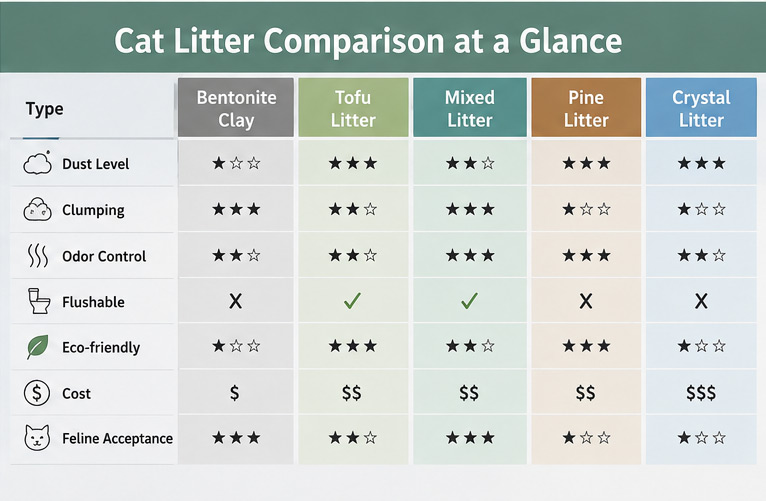
Comprehensive Cat Litter Comparison Summary
Bentonite Cat Litter
Best for strong clumping, affordability, and natural feline acceptance.
Tofu Cat Litter
Best for low dust performance, flushable convenience, and eco-friendliness.
Mixed Cat Litter
Best overall balance between clumping, odor control, and dust reduction.
Pine Cat Litter
Best for maximum odor suppression and long-lasting efficiency.
Crystal Cat Litter
Best for low-maintenance cleaning routines.
3 Types of Cat Litter You Should Avoid
1. Litters with Unclear Ingredients or No Testing Certification
Low-quality products may contain harmful chemicals, industrial adhesives, or contaminated materials.
2. Litters with Excessive Dust or Strong Artificial Fragrances
Heavy dust may irritate feline respiratory systems, while overpowering fragrances can cause litter box avoidance.
3. Weak Clumping or Poorly Formulated Litters
Poor-quality litter breaks apart easily, increasing bacteria buildup and making cleanup more difficult.
Final Thoughts: Choosing the Right Cat Litter for Your Home
There is no universally perfect cat litter. The best choice depends on your cat’s preferences, your home environment, and your cleaning habits.
If affordability and strong clumping are your priorities, bentonite cat litter remains a reliable option. If you need low dust cat litter or flushable cat litter, tofu litter may be a better fit. For many households, mixed cat litter provides the best balance between clumping, odor control, and convenience.
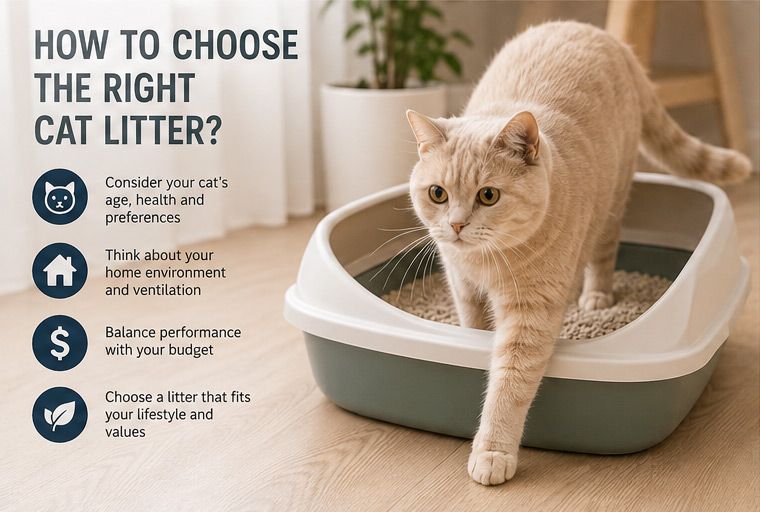
The most important thing is not to blindly follow trends or marketing hype. A truly suitable cat litter should keep your cat comfortable, your home clean, and your daily maintenance routine manageable.
If you are still unsure how to choose cat litter, start with small trial packs and observe your cat’s preferences carefully. Testing different types of cat litter is often the most practical and reliable way to find the perfect match for your cat and lifestyle.
FAQ
Which cat litter controls odor best?
Pine litter and mixed cat litter are generally considered the best options for strong odor control because of their high absorbency and deodorizing performance.
What is the best low dust cat litter?
Premium tofu cat litter and mixed cat litter are among the best low dust options available for reducing airborne particles.
Which cat litter is best for multiple cats?
Bentonite litter and mixed litter are often recommended for multi-cat households because of their strong clumping ability and odor control performance.
Why do some cats reject new litter?
Cats are highly sensitive to texture, scent, and dust levels. Sudden changes in litter type may cause litter box avoidance.