

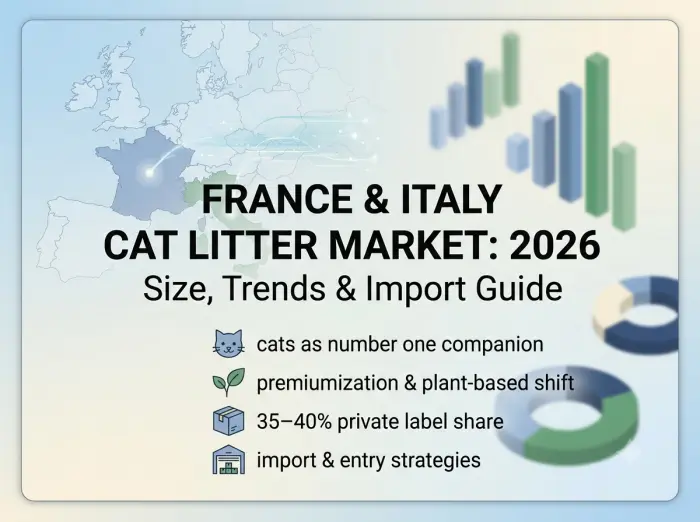
Southern Europe is one of the cat litter industry’s steadiest growth zones. France and Italy together form a large, premiumizing and increasingly plant-based market where private-label and import brands still hold meaningful share. For importers, distributors and OEM buyers, the two markets reward different entry tactics but share the same regulatory and formulation backbone.
Quick answer:
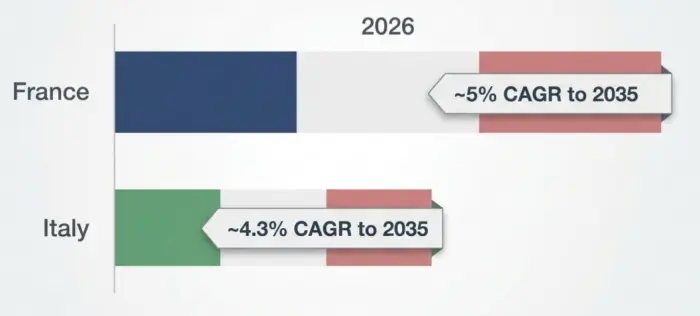
Based on publicly available market research estimates, the France cat litter market is valued at roughly US$390–500 million in 2026 and is forecast to reach US$590–820 million by 2035, a CAGR near 5%. Italy follows at about US$285–360 million in 2026, growing toward US$415–480 million by 2035 at roughly 4.3% CAGR. Both markets are pulled by rising cat ownership, urbanization, plant-based substitution and private-label expansion, inside the same EU regulatory frame already covered in our EU cat litter export compliance guide.
France & Italy Cat Litter Market Quick Facts
| Market | 2026 Estimate | Main Opportunity |
|---|---|---|
| France | US$390–500M | Premium, private label, plant-based litter |
| Italy | US$285–360M | Import brands, lightweight and sustainable formats |
Why Southern Europe Matters for Cat Litter Importers
France and Italy extend the European country cluster already mapped in our Germany cat litter market and Japan cat litter market analyses. Together they show a consistent Western-European pattern: cats are the number-one companion animal, premiumization is strong, and plant-based plus unscented formats are taking share from conventional clay. The difference is entry cost — Southern Europe is less saturated than Germany and offers more room for focused import and private-label plays.
France Cat Litter Market — Size and Drivers
Market Size and Growth
France is Western Europe’s largest companion-animal market by cat population, with cats the most popular household pet. Third-party market research estimates vary by methodology and coverage: Morgan Reed sizes the category at US$497 million in 2026 rising to US$816 million by 2035 (5.67% CAGR), while MarkWide places 2026 nearer US$385 million and 2035 near US$588 million (4.8% CAGR). We present a prudent range of US$390–500 million in 2026 and US$590–820 million by 2035; the direction is unambiguous regardless of the base used.
What Drives French Demand
- Cats as the top pet — stable, high-density cat ownership across urban households.
- Premiumization — French buyers pay more for clumping, dust-free and naturally sourced litter; plant-based commands a 15–20% price premium.
- Regulation — ANSES frameworks and EU circular-economy directives pressure conventional bentonite toward biodegradable substrates.
- Channels — Carrefour, Leclerc and specialty pet stores compete with rapidly growing e-commerce and subscription.
Channels and Private Label
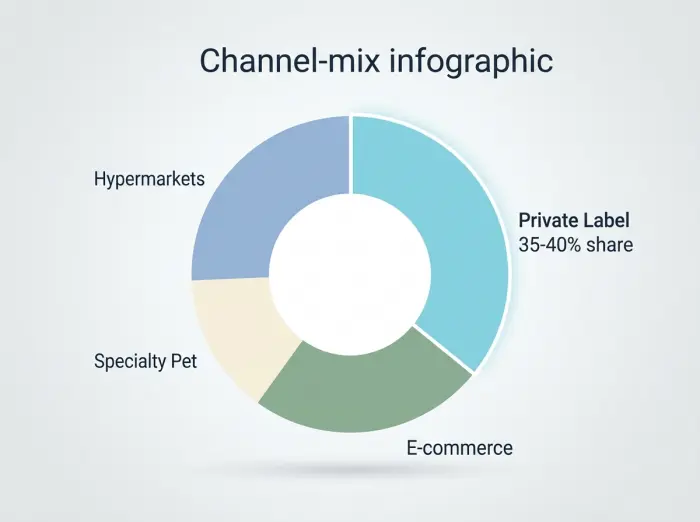
Private label holds an estimated 35–40% of the French market, leaving real space for importer-owned and distributor brands. Plant-based substrates are the fastest-growing segment at roughly 8–12% annual volume growth, and lightweight litter already accounts for an estimated 25–30% of volume, favored by apartment dwellers who value easier carrying and lower dust.
Italy Cat Litter Market — Size and Drivers
Market Size and Growth
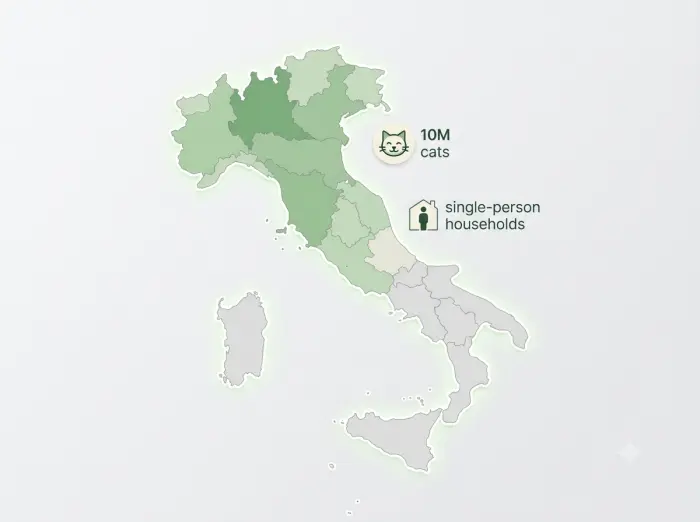
Third-party estimates place Italy’s cat litter market in the range of US$285–360 million in 2026, projected toward US$415–480 million by 2035 at a CAGR near 4.3%. With roughly 10 million household cats and a rising share of single-person households, Italy combines a large base with structural demand for smaller, convenient pack formats.
What Drives Italian Demand
- 10 million cats — one of Europe’s largest feline populations (FEDIAF-class authority on European pet populations).
- Single-person households — urban living favors smaller packs and lighter formulas.
- Regional concentration — northern and central Italy are the demand core, simplifying distribution.
- EU sustainability push — directives accelerate tofu, wood and corn-based innovation over conventional clay (framework tracked by ISTAT and EU packaging rules).
France vs Italy — A Side-by-Side View
| Factor | France | Italy |
|---|---|---|
| 2026 market (est.) | US$390–500M | US$285–360M |
| CAGR to 2035 | ~5% | ~4.3% |
| Cat population | Largest in W. Europe | ~10 million |
| Private label | 35–40% share | Growing, less dense |
| Plant-based premium | 15–20% over clay | Rising via EU directives |
| Entry difficulty | Competitive, brand-led | Lower competition density |
Plant-Based and Unscented: The Shared Southern Europe Signal
Both markets are converging on the same formulation priorities seen across the category: lower dust, plant-based substrates and unscented positioning. For a supplier, this means a single export grade — low-dust, plant-based, fragrance-free — can serve both France and Italy with only pack-size and language adjustments. That standardization is what makes Southern Europe an efficient region for a first serious export commitment.
Market Entry Considerations for B2B Buyers
For Manufacturers
Configure export grades to the low-dust + plant-based + unscented combination Southern Europe rewards. Italian demand concentration in the north and center allows consolidated distribution, while French private-label strength means being ready to supply retailer-specific pack and claim requirements.
For Importers and Distributors
France’s 35–40% private-label share is the entry lever: distributor and importer-owned brands can win shelf without outspending national brands. In Italy, lower competition density favors a focused import brand with clean EU documentation.
For Brand Owners and OEM Buyers
France’s 15–20% plant-based premium supports higher-margin positioning; Italy’s single-person household structure favors small-pack SKUs. Both markets let an OEM buyer build a market-entry business plan on shared EU regulations already documented in our export compliance guide, reducing compliance overhead.
What Importers Should Evaluate When Selecting a Cat Litter Manufacturer
For France and Italy, selecting a manufacturer is not only about FOB price. Importers should evaluate production consistency, dust-control capability, private-label flexibility, packaging compliance, export experience and the ability to adapt formulas for EU consumers.
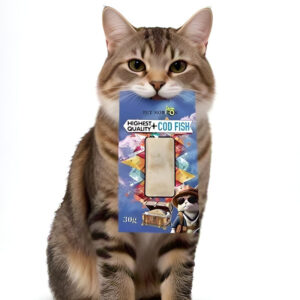
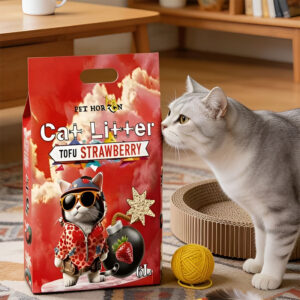
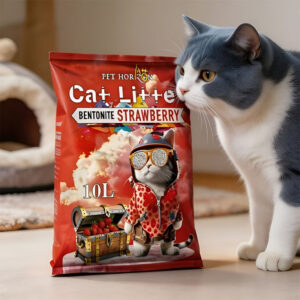
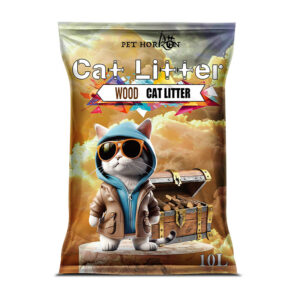
A reliable OEM partner should provide stable supply of low-dust tofu cat litter, bentonite cat litter or other plant-based formats while supporting multilingual packaging and market-specific SKU development.
For international buyers, private label cat litter Europe opportunities are expanding as retailers seek flexible OEM suppliers with compliant packaging and differentiated formulas.
Conclusion
France and Italy are not side markets — they are core Southern-European growth for cat litter, with France the larger and more premium, Italy the less saturated and demographically tailwinded. Both reward low-dust, plant-based, unscented formulas and both sit inside one EU compliance frame. Importers and OEM buyers who enter with a shared export grade and country-specific channel tactics can capture durable share through 2035.
Frequently Asked Questions
Estimates range from about US$385 million (MarkWide) to US$497 million (Morgan Reed). A prudent 2026 range is US$390–500 million, growing toward US$590–820 million by 2035 at roughly 5% CAGR.
Italy is estimated at US$285–360 million in 2026, projected to US$415–480 million by 2035 at about 4.3% CAGR, supported by roughly 10 million household cats.
Yes. Private label holds an estimated 35–40% of the French market, creating real space for importer-owned and distributor brands versus national brands.
Low-dust, plant-based and unscented formats are gaining share from conventional clay. Plant-based carries a 15–20% premium in France, and EU directives are accelerating substitution in Italy.
Not fundamentally. A single low-dust, plant-based, fragrance-free export grade serves both; differentiate mainly by pack size (smaller for Italy’s single-person households) and local-language labeling.
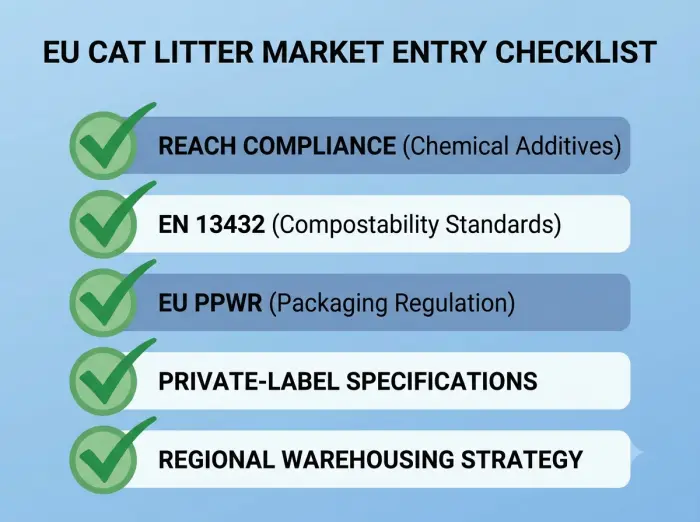
Both fall under the EU frame: REACH for chemical additives, EN 13432 for compostable claims, and the EU Packaging and Packaging Waste Regulation for packaging. Our export compliance guide details the documentation importers must hold.
Italy typically shows lower competition density and a concentrated northern demand core, which can simplify a first entry. France offers larger scale but a more brand-led, private-label-heavy shelf.
France supports premium plant-based positioning (15–20% over clay); Italy favors value-plus-small-pack strategies for single-person households. Both reward clean EU documentation and stable supply over aggressive discounting.