




Choosing cat litter may seem simple, but for many cat owners, it quickly becomes confusing. The market is filled with products that claim stronger clumping, zero dust, and better odor control. Prices range from inexpensive bulk products to premium formulas, and marketing descriptions often make every product appear to be the perfect option.
In reality, the quality of cat litter directly affects both a cat’s comfort and the cleanliness of your home. Poor litter performance can lead to loose clumps, airborne dust, persistent odors, and more frequent cleaning.
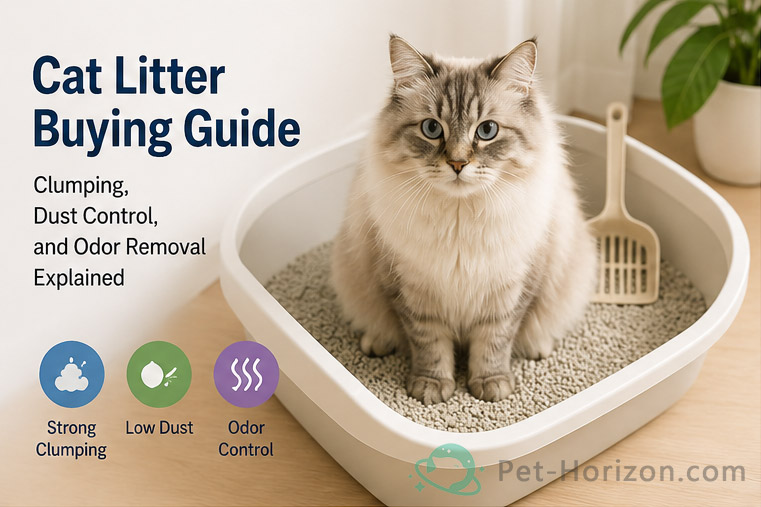
This cat litter buying guide focuses on the three factors that matter most in everyday use: clumping performance, dust control, and deodorization. By understanding how these core features work, you can avoid misleading claims and select cat litter based on practical performance rather than advertising language.
Why Clumping Cat Litter Matters in Daily Use
Clumping performance is often the first thing cat owners notice during everyday use. Most modern products, including bentonite cat litter, mixed cat litter, and some tofu cat litter, rely on clumping technology to absorb urine and isolate waste.
When clumping quality is poor, several problems can appear:
- Urine reaches the bottom of the litter box
- Wet litter sticks to the base
- Clumps break during scooping
- Waste particles remain mixed with clean litter
- Odors gradually become stronger
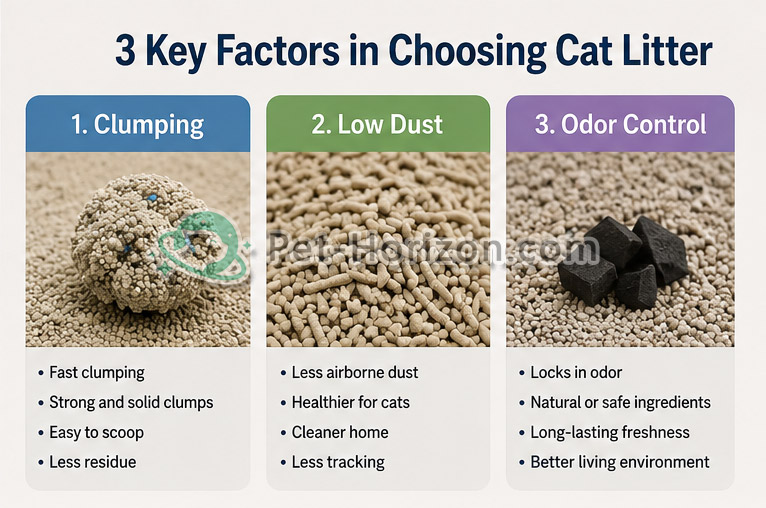
Good clumping cat litter generally has three characteristics.
The first is a reasonable clumping speed. After contact with liquid, litter should quickly absorb moisture and form a stable clump within a few seconds without allowing urine to spread through the box.
The second characteristic is clump strength. Strong clumps remain intact during scooping and transportation without crumbling into smaller particles.
The third feature is minimal sticking. High-quality clumps should lift easily from the litter box without leaving heavy residue behind.
Low-quality products often struggle with these areas. Some inexpensive litter products absorb liquid too slowly, allowing moisture to collect underneath. Others form weak clumps that easily break apart and contaminate the surrounding litter.
Professional manufacturers often improve performance by adjusting particle density and optimizing formulas. These production details may not be visible to consumers, but they often create major differences in actual use.
In places with multiple cats and frequent litter box use, stronger clumping becomes especially important. Stable clumps help reduce maintenance and improve hygiene.
For most households, choosing cat litter with balanced clumping ability is usually more practical than simply looking for the fastest possible clumping speed.
How to Identify Low Dust Cat Litter
Dust is one of the most overlooked issues when purchasing cat litter. Many cat owners focus only on odor control and clumping performance while ignoring airborne particles.
Cats naturally spend time digging and covering waste. During this process, dust particles can spread into the surrounding environment.
Excessive dust may contribute to:
- Sneezing
- Respiratory discomfort
- Dust accumulation on furniture
- Powder residue on fur and paws
- Increased household cleaning
A truly low dust cat litter or dust free cat litter does not mean complete absence of dust. Small amounts of particles are unavoidable. The important factor is whether dust remains controlled during normal use.
A simple home test can help identify excessive dust.
Place a small amount of litter into a transparent container and gently shake it. Observe the amount of floating particles. A smaller amount of suspended dust often indicates better production quality.
You can also touch the litter directly. High-quality litter usually feels dry and smooth and leaves very little powder residue on your hands.
Dust usually comes from two sources.
The first is raw material quality. Low-grade materials may contain more impurities and irregular particle sizes.
The second is manufacturing quality. Insufficient compression and weak surface treatment can make litter particles fragile and more likely to release dust.
Traditional low-cost bentonite cat litter often produces more dust because some products undergo minimal dust-removal processing.
By comparison, premium tofu cat litter and mixed cat litter products often use multiple dust-removal and polishing procedures, resulting in cleaner daily use.
Large-scale breeding environments often use strict dust standards because high concentrations of airborne particles can affect multiple animals at the same time.
For household users, pursuing products with low visible dust is usually more realistic than searching for “100% dust-free” marketing claims.
How Deodorizing Cat Litter Controls Odors
Odor control directly affects the overall experience of keeping cats indoors. Cat waste naturally contains strong-smelling compounds that can quickly spread throughout the home if litter performance is poor.
Most deodorizing cat litter products currently use one of three methods.
Physical odor control
Physical deodorization works by tightly wrapping waste materials and reducing odor release.
Because this method often avoids additional chemicals, it is generally considered a safer option for kittens and sensitive cats.
Adsorption odor control
Many cat litter for odor control products contain activated carbon or natural mineral materials that trap odor molecules through microscopic pores.
This approach usually provides longer-lasting odor management and has become one of the most common solutions in modern litter products.
Fragrance masking
Some products rely on strong artificial scents to cover unpleasant smells.
Although this method may temporarily reduce noticeable odor, strong perfumes can sometimes create an even more unpleasant mixture when combined with waste smells.
Many cat owners assume stronger fragrance automatically means better deodorization. However, premium products often use little or no artificial fragrance.
One practical way to evaluate deodorization is to observe the litter box after use. If no obvious unpleasant odor spreads into the surrounding area after waste has been buried, the litter is usually performing effectively.
Choosing Cat Litter for Different Household Needs
Different households often require different litter characteristics.
Single-cat apartments
Smaller living spaces with limited ventilation often benefit from low dust cat litter with moderate clumping ability and natural odor control.
Multi-cat homes
Families with several cats often need stronger odor management and durable clumps.
Many owners prefer mixed cat litter because it combines the strengths of different materials and reduces cleaning frequency.
Kittens and sensitive cats
Young kittens, elderly cats, and cats with respiratory sensitivity should avoid heavily scented and dusty products.
Soft-textured litter with natural deodorization is often a safer choice.
Healthy adult cats
Adult cats without special needs usually have more flexibility and can choose products according to cost, litter box size, and waste volume.
Common Mistakes to Avoid When Buying Cat Litter
When purchasing cat litter, many people focus heavily on price while ignoring actual product quality.
Reliable manufacturers typically provide:
- Transparent ingredient information
- Standardized production processes
- Dust-removal procedures
- Sterilization systems
- Stable quality control
Extremely inexpensive products may appear cost-effective at first, but they can sometimes create long-term problems such as excessive dust, weak clumping, and poor odor performance.
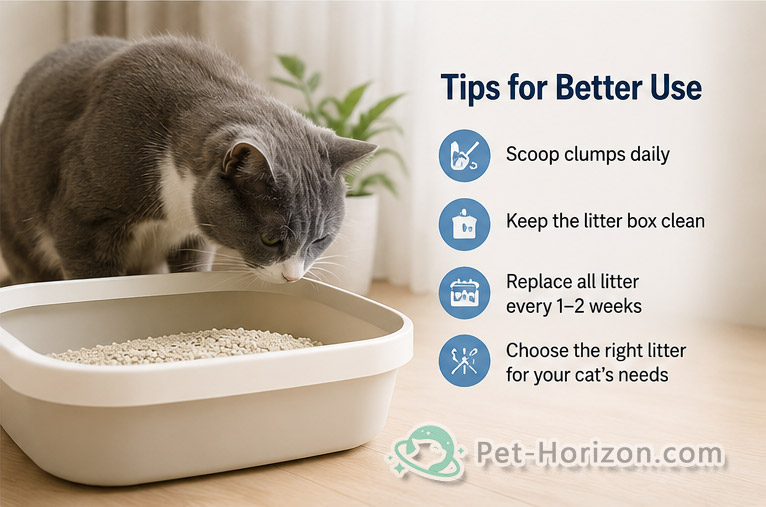
No matter which litter type you choose, regular maintenance remains essential. Even high-quality cat litter can accumulate bacteria and odor if the litter box is not cleaned regularly.
Final Thoughts
This cat litter buying guide shows that selecting cat litter does not have to be complicated. Instead of being influenced by attractive packaging or exaggerated claims, focus on three practical factors: clumping performance, dust control, and odor management.
Understanding how these features work helps you choose products that fit your cat’s needs and your home environment.
A good cat litter product does more than simplify cleaning. It supports your cat’s comfort, improves indoor air quality, and helps create a cleaner living space. Over time, choosing the right litter becomes one of the simplest and most valuable decisions for both cats and owners.
FAQ
What’s the difference between bentonite clay, tofu, and blended cat litters?
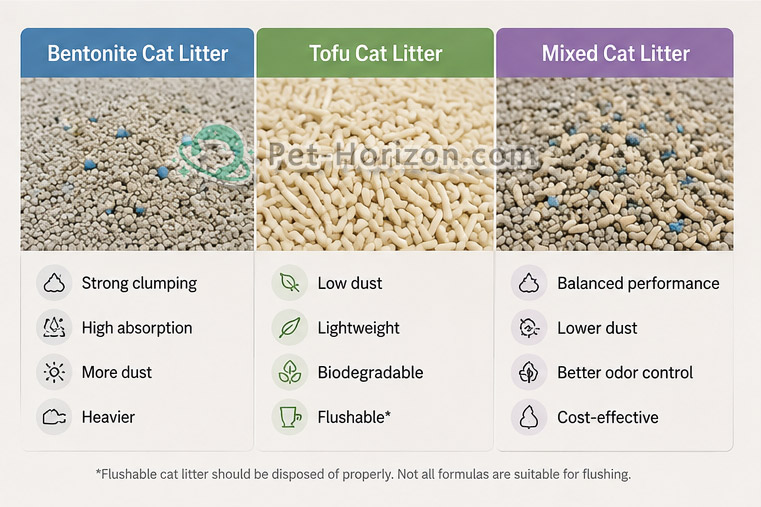
Bentonite clay litter offers very strong clumping and odor adsorption but tends to be heavier and can produce more dust if not properly processed. Tofu-based litter is lightweight, low dust, and biodegradable, but may clump less firmly. Blended litters combine materials to balance clumping strength, dust level, and odor control — making them a versatile choice for most indoor cat households.
Can cheap cat litter actually harm my cat?
Low-cost, unbranded cat litters frequently cut corners in ways that can affect your cat’s health over time. Common issues include excessive dust (a respiratory irritant), loose clumps that allow bacterial growth, and heavy artificial fragrances used to mask poor odor control. Choosing a reputable brand with transparent ingredient labeling and verified production standards is one of the more impactful things you can do for your cat’s long-term wellbeing.
How often should clumping cat litter be completely replaced?
Even with daily scooping of clumps, the entire litter box should be emptied, cleaned, and refilled with fresh litter regularly — typically every two to four weeks for a single cat, more frequently in multi-cat households. No clumping cat litter, regardless of quality, remains hygienic indefinitely without a full change.
Why does some cat litter smell worse over time even when it’s scented?
Many scented litters use artificial fragrances to mask odor rather than neutralize it. Over time, the fragrance compounds interact with waste odors and can produce a more unpleasant combined smell than either alone. Litters that rely on physical encapsulation and adsorption (such as activated charcoal) tend to maintain genuine freshness much longer.